

Theophylline-Ciprofloxacin Interaction Calculator
This calculator helps you understand how ciprofloxacin affects your theophylline levels. Remember, this is for informational purposes only. Always consult your doctor for medical advice.
Current Theophylline Information
Imagine you’re an older adult with COPD, taking theophylline every day to keep your lungs open. Then you get a bad cough, and your doctor prescribes ciprofloxacin to fight the infection. Sounds routine, right? But what if this common combination could send you to the hospital - or worse - because your body can’t clear the theophylline anymore? This isn’t a rare accident. It’s a well-known, preventable drug interaction that still happens far too often.
Why This Interaction Is So Dangerous
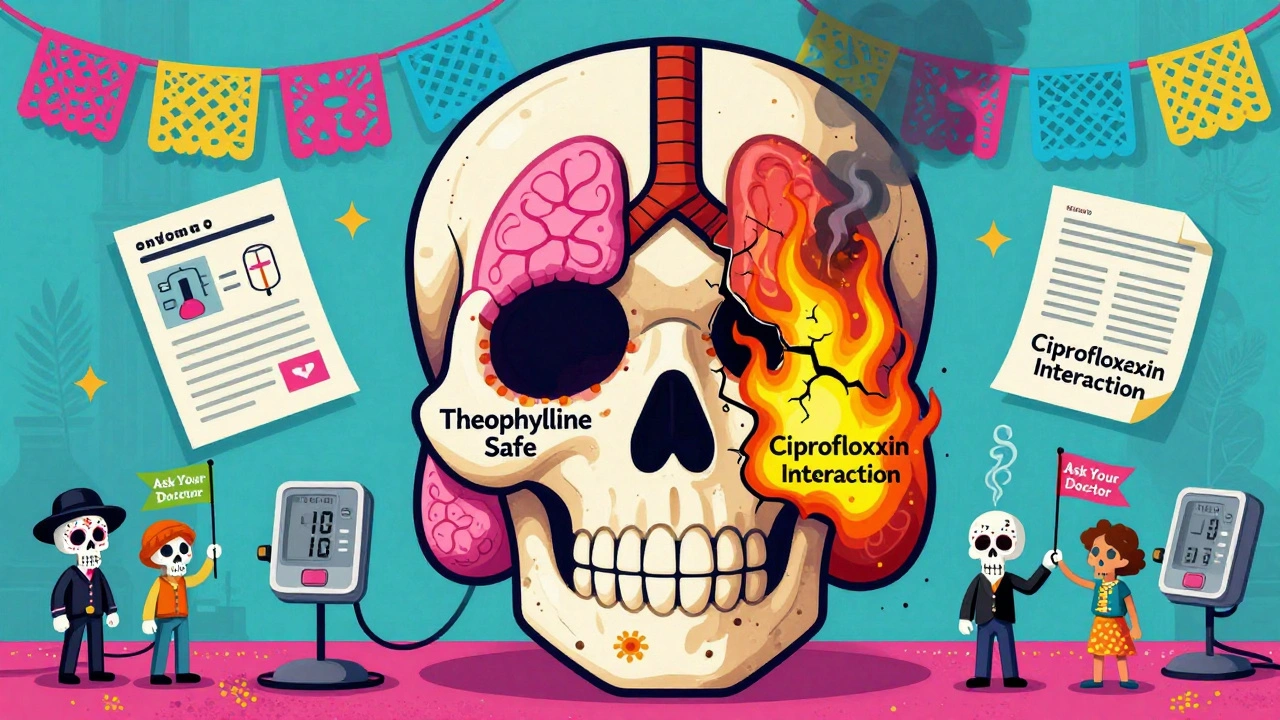
Theophylline is a powerful bronchodilator. It’s been used for decades to treat asthma and COPD. But here’s the catch: it has a narrow therapeutic index. That means the difference between a helpful dose and a toxic one is tiny - just 10 to 20 mg/L in your blood. Go above 20 mg/L, and you start seeing nausea and vomiting. Hit 25-30 mg/L, and your heart can start beating irregularly. Cross 30 mg/L, and seizures become a real risk. Ciprofloxacin, a fluoroquinolone antibiotic, doesn’t just kill bacteria. It also shuts down an enzyme in your liver called CYP1A2. That enzyme is responsible for breaking down theophylline. When ciprofloxacin blocks it, theophylline builds up - fast. Studies show the drug’s concentration in your blood can jump by 40% to 80%. Your half-life - the time it takes for half the drug to leave your system - stretches from 8-9 hours to 12-15 hours. That’s like pouring water into a sink with the drain plugged. This isn’t theoretical. In 1990, a 93-year-old woman with no history of seizures had a grand mal seizure after starting ciprofloxacin. Her theophylline level? Over 30 mg/L. She didn’t have a seizure because she was old or frail. She had one because her medication combo turned a safe drug into a poison.The Evidence Is Rock Solid
Back in 2011, researchers looked at over 77,000 older adults in Ontario who were taking theophylline. They found 180 cases of hospitalization due to theophylline toxicity. Of those, nearly twice as many were linked to ciprofloxacin use compared to people taking other antibiotics like levofloxacin or amoxicillin. The adjusted odds ratio? 1.86. That’s not a small risk. That’s a near doubling. And it’s not just ciprofloxacin. Norfloxacin - another fluoroquinolone - shows similar effects. But levofloxacin? It only bumps theophylline levels by 10-15%. Moxifloxacin? Even less. That’s why guidelines now say: if you need a fluoroquinolone, pick one that doesn’t wreck theophylline metabolism. The FDA put a black box warning on ciprofloxacin labels in 1994 - the strongest possible alert. It says: monitor theophylline levels. Reduce the dose by 33%. Yet, a 2018 study found that over 12% of older adults on theophylline were still getting ciprofloxacin. Why? Because doctors didn’t know. Or they thought, “She’s taken it before.” Or they were in a hurry.Who’s at Highest Risk?
Elderly patients are the most vulnerable. Their livers don’t clear drugs as efficiently. A 2015 meta-analysis found that in people over 65, ciprofloxacin reduces theophylline clearance by about 45%. In younger adults? Around 35%. That’s a big difference. So if you’re 70 and on theophylline, your body is already working harder to process it. Add ciprofloxacin, and you’re asking for trouble. People with liver disease, heart failure, or those who smoke (yes, smoking boosts CYP1A2 activity) are also at higher risk. And here’s something new: genetics. Researchers at the University of Toronto are studying a gene variant called CYP1A2*1F. People with this variant clear theophylline 65% slower when on ciprofloxacin. That’s not just a little slower - it’s a dangerous drop. Genetic testing isn’t routine yet, but it’s coming.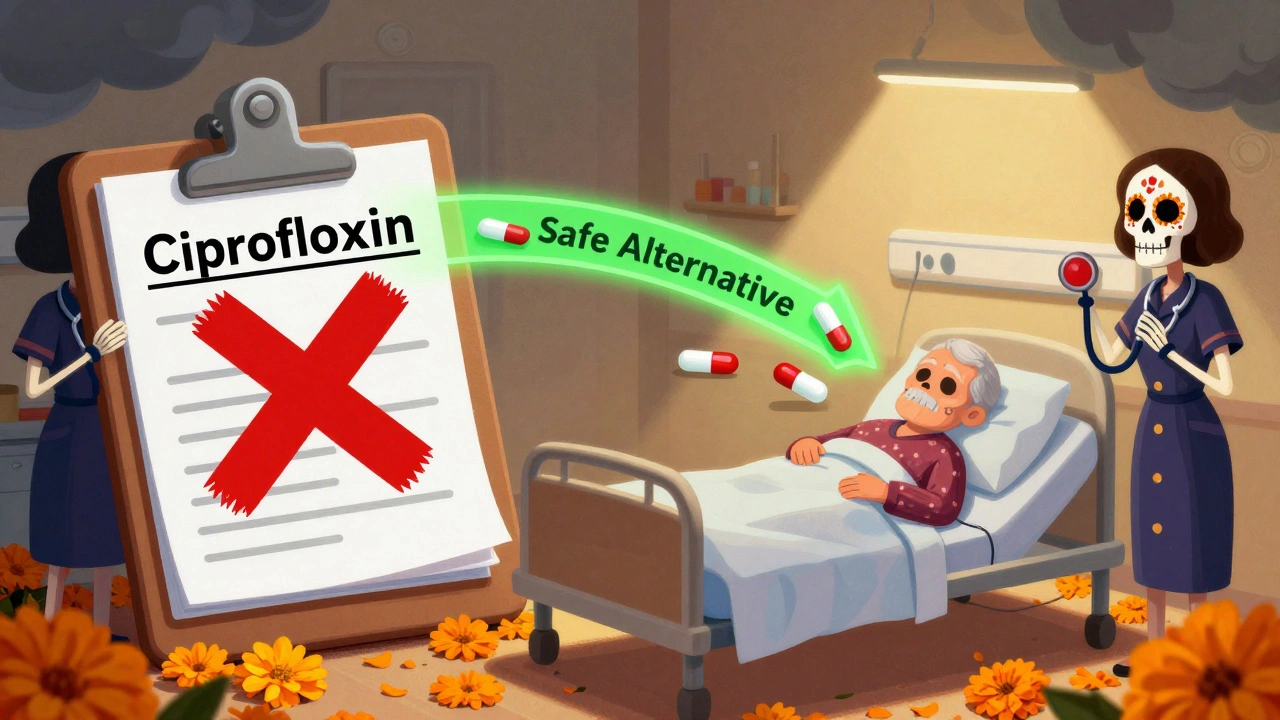
What Should You Do?
If you’re on theophylline and your doctor wants to prescribe ciprofloxacin, ask: Is there another option? There are plenty.- Amoxicillin-clavulanate - no interaction, great for respiratory infections.
- Azithromycin - minimal effect on theophylline, often used for bronchitis.
- Levofloxacin or moxifloxacin - if you absolutely need a fluoroquinolone, these are safer.
- Check your theophylline level before starting ciprofloxacin.
- Reduce your theophylline dose by 30-50% right away.
- Test your blood level again within 24-48 hours.
- Watch for early signs: nausea, vomiting, rapid heartbeat, jitteriness.
- Call your doctor immediately if you feel dizzy, have chest pain, or notice muscle twitching.
Why Is This Still Happening?
You’d think after 35+ years of documented cases, this would be a non-issue. But here’s the reality: in a 2017 study, nearly 7 out of 10 electronic alerts warning doctors about this interaction were ignored. Why? Two reasons dominated:- 78.5% of clinicians said they overrode the alert because they felt the antibiotic was urgently needed.
- 12.2% said, “The patient took this combo before and was fine.”
What’s the Bottom Line?
Ciprofloxacin and theophylline don’t mix. Not safely. Not reliably. Not even with dose adjustments. The risk isn’t theoretical. It’s proven. It’s documented. It’s deadly. If you’re on theophylline:- Know your current level.
- Know the names of antibiotics that are safe.
- Speak up if your doctor prescribes ciprofloxacin.
- Check your loved one’s meds list.
- Ask the pharmacist: “Is this combo safe?”
- Keep a list of side effects to watch for.
Alternatives That Work
You don’t have to choose between treating the infection and protecting your lungs. Here’s a quick reference:| Antibiotic | Effect on Theophylline | Recommendation |
|---|---|---|
| Ciprofloxacin | Increases levels by 40-80% | Avoid - high risk of toxicity |
| Norfloxacin | Similar to ciprofloxacin | Avoid |
| Levofloxacin | Increases levels by 10-15% | Use with caution; monitor levels |
| Moxifloxacin | Minimal change | Preferred fluoroquinolone |
| Amoxicillin-clavulanate | No interaction | First-line choice |
| Azithromycin | No significant interaction | Preferred for respiratory infections |
What to Do If You’ve Already Taken Both
If you’ve taken ciprofloxacin and theophylline together - even once - watch closely for these signs:- Nausea or vomiting that doesn’t go away
- Heart palpitations or chest fluttering
- Headache, dizziness, or confusion
- Shaking hands or muscle twitching
- Seizures (convulsions)
Final Thoughts
This interaction has been known since 1987. We have guidelines. We have alerts. We have safer alternatives. Yet, it still happens. Why? Because we treat drug interactions like background noise - something the computer warns you about, but you click past. But this isn’t just a warning. It’s a warning that kills. If you’re on theophylline, treat ciprofloxacin like a loaded gun. Don’t just assume it’s safe. Ask questions. Demand alternatives. Know your numbers. Your lungs - and your life - depend on it.Can I take ciprofloxacin if I’m on theophylline?
It’s not recommended. Ciprofloxacin can cause theophylline levels to rise dangerously - increasing the risk of seizures, heart rhythm problems, and death. If no other antibiotic works, your doctor must reduce your theophylline dose by 30-50% and monitor your blood levels closely. But safer options like amoxicillin-clavulanate or azithromycin are almost always available.
How long does the interaction last?
The interaction starts as soon as you take ciprofloxacin and can last for several days after you stop. Theophylline clearance doesn’t return to normal until the antibiotic is fully cleared from your system - usually 2-3 days. But because theophylline builds up, you need to keep monitoring levels for at least 48-72 hours after finishing ciprofloxacin.
Are all fluoroquinolones dangerous with theophylline?
No. Ciprofloxacin and norfloxacin strongly inhibit CYP1A2 and should be avoided. Levofloxacin causes a mild increase (10-15%) and can be used with caution. Moxifloxacin has almost no effect and is the safest fluoroquinolone option if one is needed.
What are the early warning signs of theophylline toxicity?
Early signs include nausea, vomiting, rapid heartbeat, restlessness, tremors, and insomnia. These often appear before more serious symptoms like seizures or arrhythmias. If you’re on theophylline and start feeling unusually jittery or your heart races after starting an antibiotic, get your levels checked immediately.
Should I get a genetic test for CYP1A2 before taking ciprofloxacin?
Not routinely - yet. Testing for the CYP1A2*1F variant is still in research phases. But if you’ve had a bad reaction to theophylline before, or if you’ve had toxicity with ciprofloxacin in the past, discussing genetic testing with your doctor may help personalize your care in the future.
Can I take ciprofloxacin if I stopped theophylline a week ago?
Even if you stopped theophylline, your body may still be adjusting. Theophylline has a long half-life, especially in older adults. It can take 3-5 days to fully clear. To be safe, wait at least 5-7 days after your last theophylline dose before starting ciprofloxacin - and only if your doctor confirms it’s safe.





11 Comments
Stacy Natanielle December 3, 2025
⚠️ THIS ISN’T A DRILL. I’ve seen this exact scenario in the ER three times last year. One 78-year-old woman coded because her cipro dose wasn’t adjusted. Her theophylline level? 38 mg/L. She survived. But only because her grandson noticed her hands were shaking before the seizure. 🚨 Always check levels. Always. No exceptions. 📊🩸
kelly mckeown December 4, 2025
i just found out my mom’s on both of these… i had no idea. thank you for posting this. i’m calling her doctor first thing tomorrow. she’s 72 and has copd. i’m so scared. 😢
Tom Costello December 5, 2025
Let’s be clear: this isn’t just about ciprofloxacin. It’s about systemic failure in prescribing culture. We’ve had black box warnings since 1994. We have EHR alerts. We have guidelines from the FDA, AAFP, and ATS. Yet clinicians still override them. Why? Because medicine has normalized risk normalization. The real crisis isn’t the drug interaction-it’s the erosion of clinical diligence. If you’re a prescriber reading this: your arrogance is killing people. Slow down. Check. Verify. You’re not saving time-you’re gambling with lives.
dylan dowsett December 5, 2025
Ugh. Of course this is still happening. People are lazy. They don’t read the damn labels. I work in pharmacy and I’ve had to call 12 doctors this month alone because they prescribed cipro to someone on theophylline. And they all say, ‘Oh, she’s taken it before.’ NO. SHE’S LUCKY. NOT SAFE. 🤦♀️
Susan Haboustak December 6, 2025
Everyone who ignores this warning is either incompetent or negligent. There’s no middle ground. The data is irrefutable. The mortality rate is high. The alternatives are abundant. If your doctor prescribes this combo without checking levels and adjusting dose? Fire them. Immediately. This isn’t ‘medical error.’ This is criminal negligence wrapped in a white coat.
Chad Kennedy December 6, 2025
why do we even have to think about this? just give me a simple antibiotic. why can’t doctors just pick one that doesn’t mess with my lungs? this is too much work. i’m tired.
Siddharth Notani December 6, 2025
As a pharmacist in Delhi, I’ve seen this interaction claim lives in elderly patients with COPD. Ciprofloxacin is overprescribed for simple bronchitis. We need better education at the medical school level. Also, in India, many patients buy antibiotics without prescriptions-this interaction becomes a silent killer. Please share this with your community. 🙏
Cyndy Gregoria December 8, 2025
YOU CAN DO THIS. You are not powerless. If your doctor says ‘it’s fine,’ say ‘I’ve read the FDA warning. I need a safer option.’ You have the right to ask. You have the right to demand. Your lungs matter. Your life matters. Don’t let fear silence you. 💪❤️
Akash Sharma December 8, 2025
This is fascinating from a pharmacokinetic standpoint. The CYP1A2 inhibition by fluoroquinolones is well-documented, but what’s rarely discussed is the cumulative effect when combined with age-related hepatic decline and polypharmacy. In geriatric patients, the clearance half-life extension isn’t linear-it’s exponential when combined with renal impairment or concurrent use of cimetidine or oral contraceptives. Also, the genetic component of CYP1A2*1F is more prevalent in East Asian populations than previously thought, which may explain why some patients develop toxicity even with low-dose ciprofloxacin. We need population-specific dosing algorithms, not just blanket warnings. And frankly, the FDA’s 30-50% reduction recommendation is outdated-it should be 50-70% for patients over 70 with any comorbidity.
Mark Gallagher December 8, 2025
Only Americans let this happen. In my country, doctors don’t just prescribe antibiotics like candy. We have protocols. We have checks. We have respect for the science. This kind of negligence wouldn’t fly here. You people need to stop treating medicine like a buffet.
Wendy Chiridza December 10, 2025
My dad had a seizure last year after taking cipro. They didn’t check his levels. He’s fine now but I’ll never forgive the doctor. I’m sharing this with everyone I know. This needs to stop