
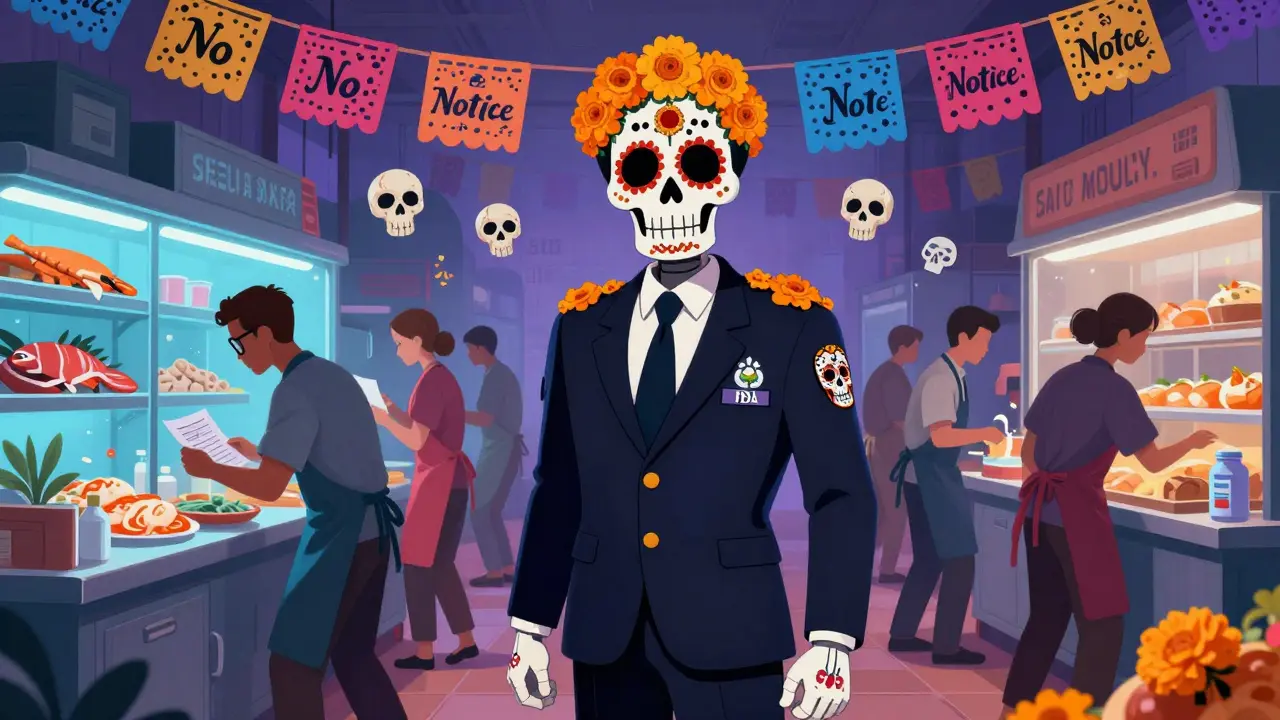
Why the FDA Inspects Food Factories Overseas
Every bite of food you eat - whether it’s spinach from Mexico, fish from Vietnam, or spices from India - could have come from a factory thousands of miles away. The U.S. Food and Drug Administration (FDA) doesn’t just watch over food made in America. It also checks on more than 300,000 foreign facilities that ship food to the U.S. This isn’t optional. It’s law. And starting in 2024, the rules changed dramatically.
Before, foreign factories got weeks of notice before an FDA inspector showed up. They cleaned up, trained staff, printed documents, and made sure everything looked perfect. Meanwhile, American factories? No warning. Random visits. No prep time. That wasn’t fair. And the FDA admitted it.
In May 2024, the agency announced: foreign inspections now happen without notice. Just like in the U.S. If you’re making food for American consumers, you must be ready - every single day.
How the FDA Picks Which Factories to Check
The FDA doesn’t inspect every foreign plant. There are too many - over 300,000 registered facilities - and not enough inspectors. So they pick based on risk.
Three things decide if your factory gets flagged:
- What you make - High-risk foods like sprouts, seafood, or infant formula get more attention than canned beans.
- How you make it - Complex processes with multiple steps, like adding preservatives or pasteurizing milk, raise red flags.
- Your record - If the FDA has denied your products before, or if you’ve had complaints, you’re on the list.
Under the FDA Food Safety Modernization Act (FSMA), passed in 2011, the agency was supposed to double foreign inspections every year for five years. That plan stalled during budget cuts in the late 2010s. But now, with new funding and political will, inspections are climbing again.
What Happens During an Unannounced Inspection
Imagine waking up one morning and seeing FDA inspectors walking through your factory. No call. No email. Just them - in your production area, asking for records, watching your workers, taking photos.
They’re looking for one thing: Are you following U.S. food safety rules right now? Not what you did last week. Not what you prepared for. Right now.
Inspectors check:
- Employee hygiene - Are hands washed? Are gloves used?
- Equipment cleanliness - Are machines sanitized between batches?
- Storage conditions - Is refrigerated food kept below 41°F?
- Recordkeeping - Can you pull up batch logs, sanitation logs, or supplier approvals in 10 minutes?
- Supply chain traceability - Can you show where your raw ingredients came from?
They don’t ask for permission. They don’t wait for translators. They take photos. They review digital files. And if you try to block them - delay, hide records, turn off cameras - you’re breaking the law.
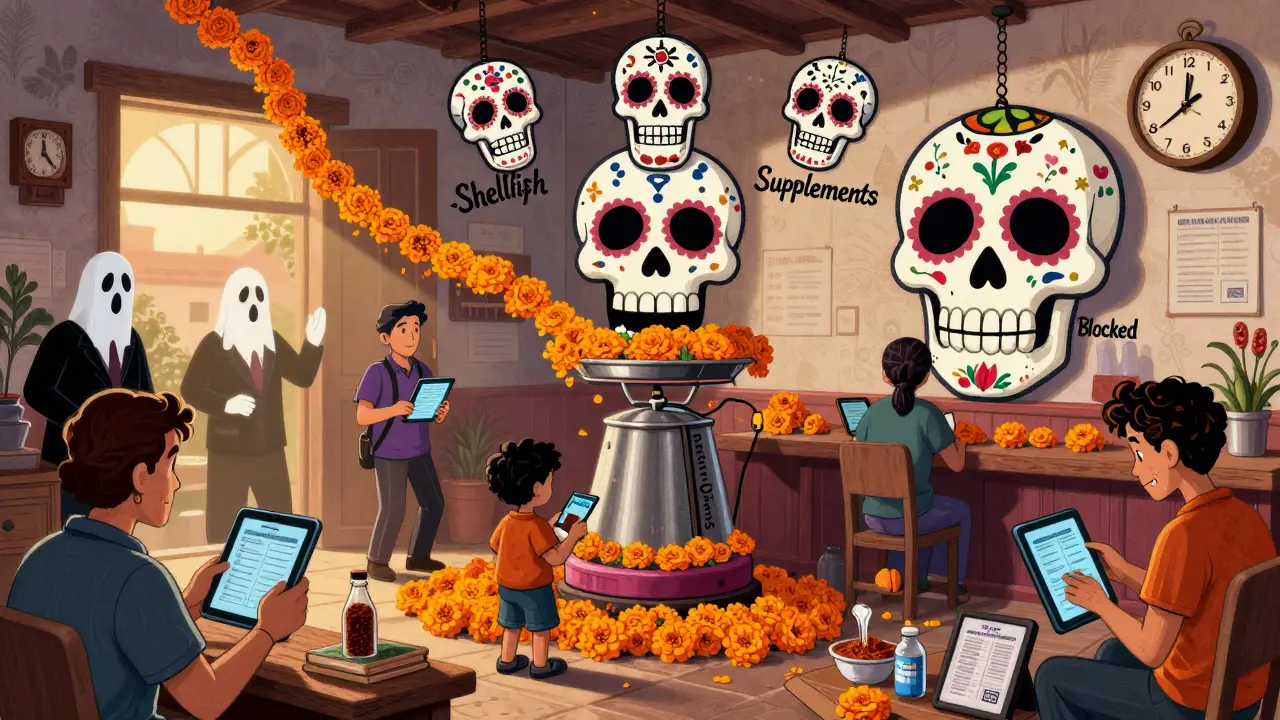
The New Rules: No More Free Passes
Before 2024, foreign factories could schedule inspections around holidays, vacations, or slow production periods. Now, that’s gone.
The FDA also banned inspectors from accepting rides, hotels, or meals from the companies they inspect. No more luxury treatment. No more cozy arrangements. The goal is to remove any chance of bias or influence.
For foreign companies, this means:
- You need bilingual quality staff on-site 24/7 - not just during business hours.
- Your digital records must be instantly accessible - no logging in, no waiting for IT.
- Your cleaning and safety procedures must be flawless every day - not just when you think someone’s coming.
Some factories in China and India are already adapting. They’ve hired full-time FDA compliance officers. They run weekly mock inspections. They train workers to expect inspectors at any time.
What Happens If You Fail?
Failing an inspection doesn’t mean you get a warning. It means your products get blocked at the border.
Under FSMA Section 306, the FDA can refuse entry to any food from a facility that:
- Refuses inspection
- Delays inspection
- Limit access to areas
- Redacts or hides records
That’s not just a delay. That’s a total shutdown. Your shipment sits at the port. Your customers cancel orders. Your brand gets damaged.
Worse - if you lie, obstruct, or tamper with records, the U.S. Department of Justice can bring criminal charges. Fines. Asset seizures. Corporate bans. Even prison time for executives in extreme cases.
There’s no appeals process during the inspection. You can’t call your lawyer. You can’t ask for time. You either comply - or you lose access to the U.S. market.
Who’s Most at Risk?
Small and medium-sized factories are hit hardest. Big companies have compliance teams, legal departments, and digital systems ready to go. But family-owned spice mills, small seafood processors, or mom-and-pop supplement packagers? They often don’t have the resources.
Many still think: “We’ve never had a problem. Why do we need to be ready all the time?”
Because the FDA isn’t waiting. In 2023, nearly 15% of all food consumed in the U.S. came from overseas. That’s $170 billion in imports. And the FDA knows: one bad batch can make thousands sick.
Facilities exporting high-risk items - like raw shellfish, infant formula, or herbal supplements - are under the most pressure. But even low-risk products like canned tomatoes or pasta are being checked more often.
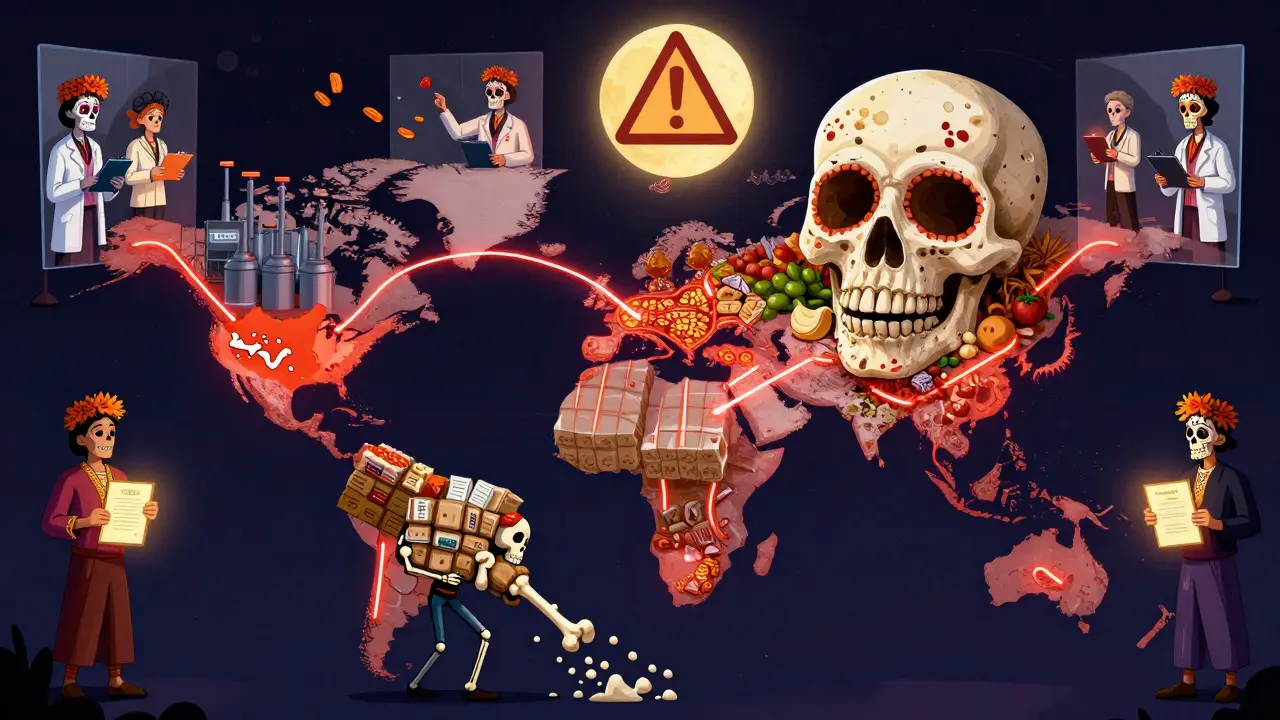
How to Prepare - Even If You’re Not Inspected Yet
You don’t have to wait for an inspector to show up. Start now.
Here’s what to do:
- Digitize your records - Use cloud-based systems to store sanitation logs, batch records, and supplier certificates. Make sure they’re accessible from anywhere.
- Hire bilingual staff - At least one person who can speak English and understand FDA terminology.
- Run monthly mock inspections - Pretend the FDA is coming. See how fast you can pull records. Can your team answer questions without panicking?
- Train everyone - Not just managers. Cleaners, packers, and drivers need to know what to do if someone walks in.
- Review your supply chain - Can you trace every ingredient back to its source? If not, fix it.
Don’t wait until you’re flagged. The FDA doesn’t give second chances. If you’re exporting to the U.S., you’re already under their radar.
The Bigger Picture: Why This Matters
This isn’t just about rules. It’s about trust.
When people buy food labeled “Made in the USA,” they expect safety. But when they buy imported food, they expect the same. The FDA’s job is to make sure that promise holds.
Other countries are watching. The EU, Canada, and Japan are tightening their own rules too. The FDA’s unannounced inspections are becoming the global standard.
If you want to sell food to Americans - you need to play by American rules. No exceptions. No shortcuts. No advance notice.
Do all foreign food facilities have to register with the FDA?
Yes. Any facility that manufactures, processes, packs, or holds food for sale in the U.S. must register with the FDA every two years. Registration includes a legal certification that the facility will allow FDA inspections. Failure to register means your products can’t enter the country.
Can the FDA inspect a facility without a warrant?
Yes. Under the Federal Food, Drug, and Cosmetic Act (FDCA), the FDA has the legal right to inspect any facility that produces food for U.S. consumption - without a warrant. This applies to both U.S. and foreign facilities. Refusing inspection is a federal offense.
What if a foreign facility doesn’t speak English?
The FDA doesn’t provide translators. It’s the facility’s responsibility to have someone on-site who can communicate clearly with inspectors. If language barriers prevent the inspection, the FDA can refuse entry to your products. Many companies now hire permanent bilingual compliance staff to avoid this risk.
How often does the FDA inspect foreign facilities?
There’s no fixed schedule. Inspections are risk-based. High-risk facilities may be inspected every 1-2 years. Low-risk ones might go 5-10 years between visits. But with the new unannounced policy, even rarely inspected facilities must be ready at all times.
Can the FDA shut down a foreign facility?
The FDA can’t shut down a facility directly. But it can refuse entry to all its products. That’s effectively a shutdown. If a facility repeatedly refuses inspections or violates safety rules, the FDA can add it to a public “Import Alert” list. That means every future shipment gets automatically detained until proven safe - a costly and reputation-damaging outcome.
Final Thought: Ready or Not, the FDA Is Coming
If you make food for Americans, you’re not just a business. You’re part of a global food safety system. The days of preparing for inspections are over. The new standard is constant readiness.
It’s not about fear. It’s about responsibility. The food you produce could end up on a child’s plate, in a hospital meal, or in a senior’s pantry. The FDA’s job is to protect those people. Your job is to make sure you’re not the reason they get sick.
Start today. Check your records. Train your team. Assume the inspector is already in your building - because next time, they might be.


10 Comments
Aaron Mercado January 3, 2026
This is insane. The FDA just shows up? No warning? No courtesy? I mean, seriously-how is this even legal?! They’re treating foreign factories like criminals before trial! And don’t even get me started on the language barrier-no translator?! That’s not enforcement-that’s harassment! Someone’s gonna get sued for this!
Vikram Sujay January 4, 2026
The shift toward unannounced inspections reflects a mature understanding of food safety as a non-negotiable global standard. While the transition may be challenging for smaller producers, it is a necessary evolution toward accountability. The absence of prior notice eliminates performative compliance and ensures that safety is embedded in daily operations, not merely staged for auditors. This is not punitive-it is principled.
Shanna Sung January 5, 2026
They’re using this to control the food supply. You think this is about safety? Nah. It’s about corporate consolidation. Big agribusiness owns the FDA. They want small farms and mom-and-pop spice shops out so they can monopolize everything. Watch-next they’ll mandate all food be packaged in biodegradable plastic made by Monsanto. And you’ll thank them for it.
Clint Moser January 5, 2026
The FSMA Title 21 CFR Part 1, Subpart P protocols are now being enforced with zero tolerance for non-conforming GMPs. The unannounced inspection regime is a direct application of risk-based preventive controls under 21 USC § 350d. If your HACCP plan isn’t digitally archived with real-time audit trails and your bilingual QA lead isn’t on-site 24/7 with FDA 2024-compliant documentation, you’re already in violation. No wiggle room. Period.
Ashley Viñas January 6, 2026
Honestly? This is long overdue. I’ve seen too many imported products with mold, weird odors, or just… wrong textures. People think ‘foreign’ means ‘cheaper’-but it shouldn’t mean ‘riskier.’ If you’re selling food to Americans, you owe it to us to be ready. No excuses. No last-minute clean-ups. Just do it right every day. And if you can’t? Then maybe you shouldn’t be in this business.
Justin Lowans January 7, 2026
This is actually one of the most thoughtful and necessary updates in food regulation in decades. The idea that a factory can prepare for an inspection like it’s a school play is absurd. Food safety isn’t theater-it’s science. I’ve worked in labs overseas, and the ones that thrive under this new system are the ones who treat compliance like breathing: constant, unconscious, essential. Kudos to the FDA for finally leveling the playing field.
Michael Rudge January 9, 2026
Oh wow, so now we’re punishing developing nations for not having corporate-grade IT departments? How noble. Let’s just send in our inspectors with clipboards and expect a village spice mill in Kerala to have a cloud-based sanitation log. Meanwhile, Walmart’s own private-label chicken nuggets from China have been recalled 3 times in 2 years. But hey-let’s make the small guy sweat while the big guys get a pass.
Ethan Purser January 10, 2026
I’ve been waiting for this my whole life. The FDA is the last line of defense between us and food poisoning apocalypse. I remember when that baby formula scandal happened-kids dying because someone didn’t wash their hands. That’s not negligence-that’s betrayal. And now? Now they’re finally acting like adults. I’m crying. I’m so proud. The system works. It’s not perfect-but it’s alive. Thank you, FDA. You’re the real MVP.
Doreen Pachificus January 10, 2026
I work in logistics. We get shipments held at the port all the time for ‘documentation issues.’ Never knew it was because of FDA inspections. This makes sense. If you’re shipping food here, you gotta play by our rules. But I wonder how many small businesses are just giving up now? I mean, imagine being a family-run curry powder maker in Kerala and suddenly needing a full-time compliance officer. That’s not regulation-that’s economic displacement.
Cassie Tynan January 10, 2026
So let me get this straight-you’re telling me I have to be ready for inspectors at 3 a.m. because some FDA agent might decide to swing by my uncle’s spice factory in Chennai? And if I don’t have a bilingual person on call? My entire business gets blocked? That’s not food safety. That’s corporate colonialism dressed up as ‘global standards.’