
When a hospital decides to switch from a brand-name drug to a generic, it’s not just about saving money. It’s a clinical decision wrapped in economics, logistics, and patient safety. The hospital formulary is the living document that makes this call - and it’s far more complex than simply picking the cheapest option.
What Is a Hospital Formulary, Really?
A hospital formulary isn’t a static list you print and hang on the wall. It’s a dynamic, committee-driven system that decides which drugs are available, how they’re used, and who gets to prescribe them. Developed and updated by the Pharmacy and Therapeutics (P&T) committee, it includes anywhere from 300 to 1,000 drug products - mostly generics - and is reviewed every month or quarter. Unlike retail pharmacies, where patients choose based on copays, hospital formularies are designed for controlled, clinical environments. Nurses administer the drugs. Pharmacists monitor for interactions. Doctors rely on the formulary to guide treatment. The goal? Safe, effective, and affordable care. But affordability doesn’t mean lowest list price. It means lowest net cost after rebates, service agreements, and supply chain risks. And that’s where things get messy.The Tiered System: How Generics Are Ranked
Most hospitals use a tiered formulary structure, usually with three to five levels. Here’s how it typically breaks down:- Tier 1: Preferred generics - These are the first-line choices. Low cost, high reliability, proven track record. Often the only option unless there’s a clinical exception.
- Tier 2: Non-preferred generics or preferred brands - Slightly higher cost. Used when a brand has unique benefits or when a generic has had supply issues.
- Tier 3: Non-preferred brands - Expensive. Require prior authorization. Only used if generics fail or aren’t suitable.
- Tiers 4-5: Specialty drugs - High-cost biologics or complex generics. Often require step therapy or special monitoring.
The Clinical Bar: Proving Sameness in a Hospital Setting
Just because the FDA approves a generic doesn’t mean a hospital will add it. The P&T committee demands more. They want proof that the generic performs the same way in real-world hospital conditions. For simple oral tablets, that’s often straightforward. But for complex generics - like inhalers, injectables, or topical creams - bioequivalence isn’t enough. A 2023 survey of 1,247 hospital pharmacists found that 68% struggled to assess therapeutic equivalence for these products. Why? Because delivery matters. A generic inhaler might deliver the same dose, but if the particle size or spray pattern is off, it won’t reach the lungs the same way. That can mean worse outcomes for asthma or COPD patients. Dr. John Smith, chair of the P&T committee at UCSF Medical Center, puts it bluntly: “The clinical case for generics must now address nuanced concerns about bioequivalence in critical care settings where small pharmacokinetic differences can have significant clinical impacts.” Hospitals don’t rely on FDA labels alone. They demand AMCP dossiers - detailed submissions that include clinical studies, pharmacology data, stability testing, and even real-world outcomes. Without this, even a generic with the lowest price gets rejected.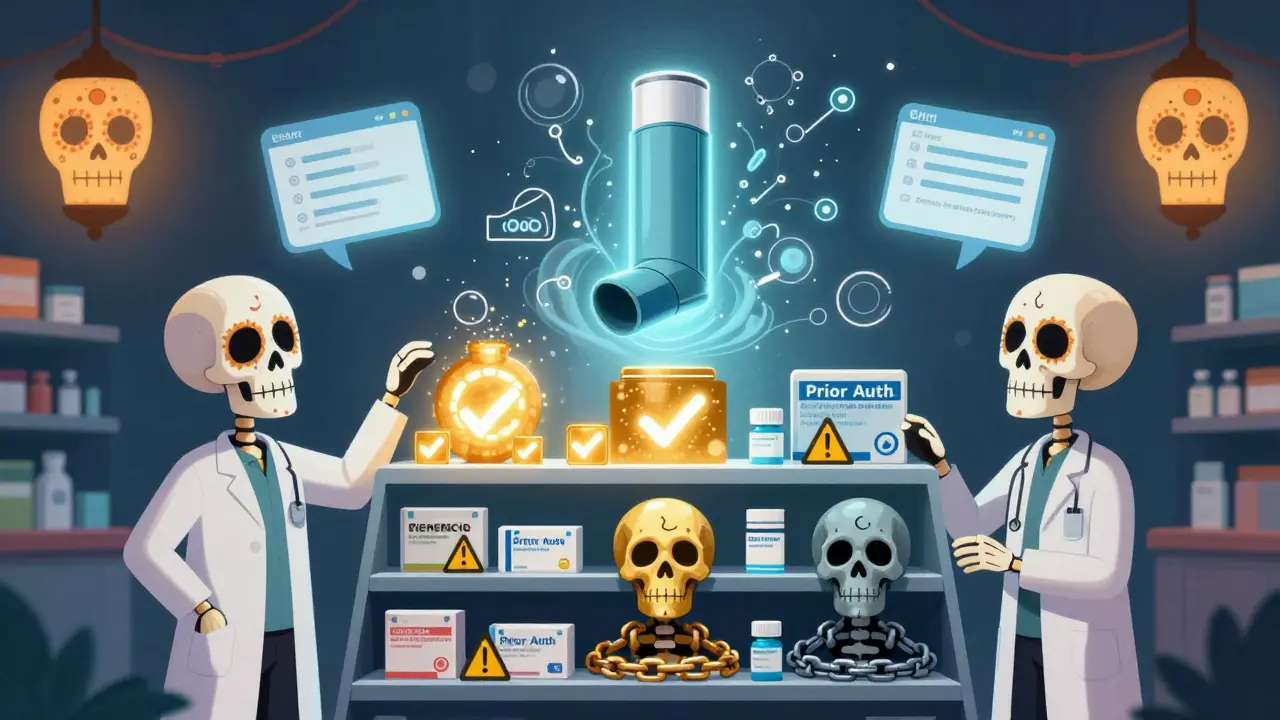
Why Hospitals Are Different from Retail or Medicare
Retail pharmacies and Medicare Part D formularies are built for patients who self-administer drugs at home. They care about copays, mail-order discounts, and convenience. Hospitals care about something else: control. - Hospitals can enforce quantity limits - no more than 30 tablets per discharge. - They can require prior authorization before a non-formulary drug is given. - They can mandate step therapy - try the generic first, then escalate only if needed. These tools don’t exist in retail. And they’re why 78% of academic medical centers use closed formularies - where only approved drugs are stocked - compared to just 42% of commercial health plans. Plus, Medicare Part D is legally required to include at least two drugs in each of 57 therapeutic categories. Hospitals? No such rule. They pick what works - and that often means one trusted generic per class.The Hidden Cost of Cheap Generics
It’s tempting to assume the lowest-priced generic wins. But in hospitals, that’s rarely true. Dr. Emily Chen of Massachusetts General Hospital explains: “The economic calculus for generics has shifted as multi-source generics create complex rebate landscapes where the lowest list price doesn’t always translate to lowest net cost after rebates and service agreements.” Here’s how it works: A manufacturer might offer a 40% rebate if the hospital buys 80% of its volume from them. But if another generic has better reliability, fewer shortages, and requires less nursing time to monitor - it might cost more upfront but save more overall. And then there’s the supply chain. In Q3 2023, 84% of hospital pharmacists reported at least one critical generic shortage. When that happens, hospitals are forced to buy non-formulary drugs - sometimes at 5x the price. One hospital in Ohio paid $1,200 per vial for a generic antibiotic that normally costs $45 because the usual supplier ran out. That’s not savings. That’s chaos.Success Stories: When Generics Actually Save Money - and Lives
The Mayo Clinic didn’t just switch to generics. They built a system around it. In 2022, they launched a targeted program to replace brand-name cardiovascular drugs with generics - but only after validating therapeutic equivalence through rigorous monitoring. They tracked blood pressure control, lab values, and readmission rates. The result? $1.2 million in annual savings - and no drop in clinical outcomes. Cleveland Clinic did something similar. They created a “therapeutic interchange committee” - a subgroup of pharmacists and clinicians who developed protocols for switching patients from brand to generic. Their goal wasn’t just cost reduction. It was safe cost reduction. They cut acquisition costs by 18.3% while keeping patient outcomes steady. These aren’t outliers. They’re best practices.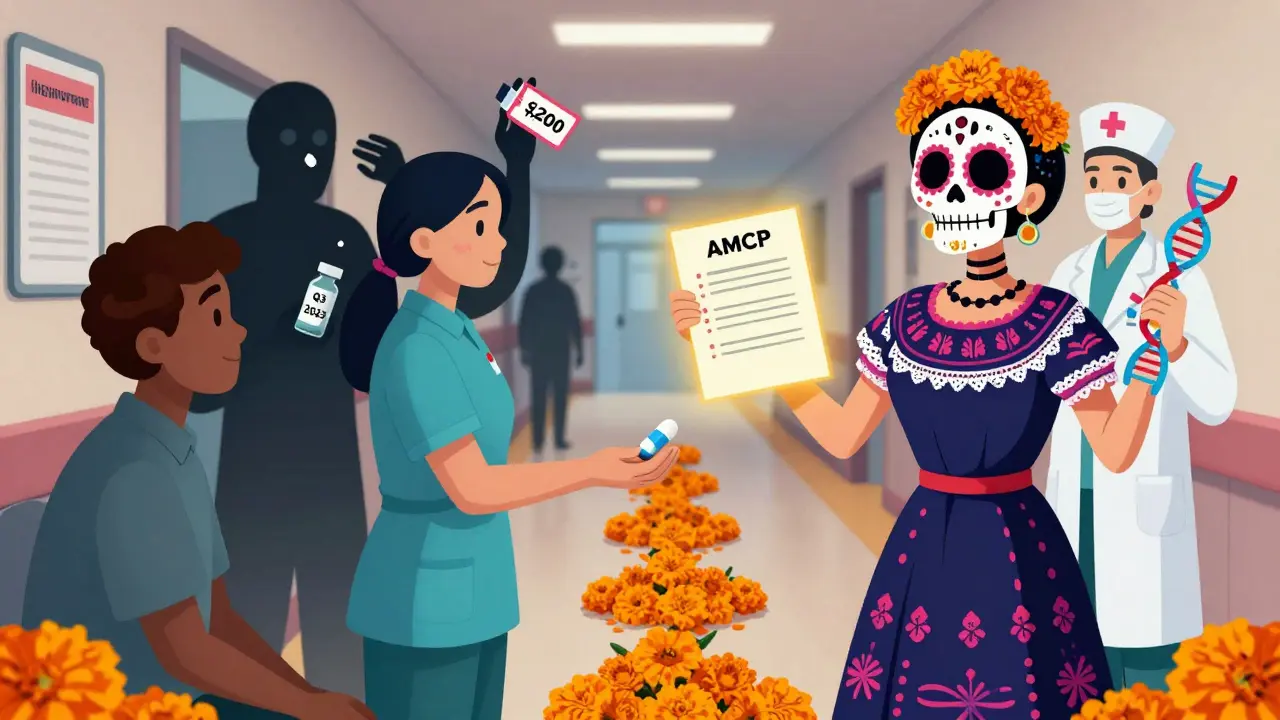
The Real Barriers to Better Generic Selection
Even with clear evidence, hospitals struggle to implement smart formulary policies. - Only 37% of hospitals have automated formulary alerts in their electronic health records. That means 63% of prescribers don’t get real-time guidance - leading to 15-20% non-adherence to formulary rules. - New P&T committee members need 6-9 months to become competent. Many still don’t know how to read bioequivalence studies or interpret rebate structures. - Regulatory pressure is rising. The FDA’s GDUFA III program is pushing for better data on complex generics - but approval rates for these drugs are still only 62% on first submission, compared to 88% for simple ones. - The 340B Drug Pricing Program lets certain hospitals buy generics at steep discounts. But that creates imbalance - hospitals that qualify can offer cheaper drugs, while others can’t. That’s not fair. It’s not efficient. And it’s not sustainable.What’s Next? The Future of Formulary Economics
The rules are changing. - Starting January 2025, the Consolidated Appropriations Act will force manufacturers to disclose hidden rebates and pricing deals. That transparency could end the era of “rebate-driven formularies” - where decisions are based on kickbacks, not clinical value. - Pharmacogenomics is creeping in. 28% of academic medical centers now consider genetic data when selecting generics for drugs with narrow therapeutic indices - like warfarin or clopidogrel. A patient’s DNA might tell you which generic they’ll respond to best. - The FDA is investing $4.3 million annually to speed up approval of complex generics. By 2026, we should see more reliable injectables, inhalers, and topical products on hospital shelves. But the biggest challenge remains: balancing cost with care. Hospitals can’t afford to buy the cheapest drug. But they also can’t afford to keep paying brand prices for drugs that have generics available. The winners? Institutions that treat the formulary as a clinical tool - not a purchasing spreadsheet.How to Know If Your Hospital’s Formulary Is Working
Ask these questions:- Are P&T committee meetings held monthly or quarterly? (If it’s yearly, you’re behind.)
- Is at least half the committee made up of clinical pharmacists?
- Do prescribers get real-time alerts when they try to order a non-formulary drug?
- Are you tracking not just cost, but also readmission rates, adverse events, and nursing time spent monitoring?
- Have you mapped your top 10 most-used generics to their supply chain risks?
Are hospital formularies the same as retail pharmacy formularies?
No. Hospital formularies are closed, controlled systems designed for clinical environments where nurses administer drugs, and pharmacists monitor outcomes. Retail formularies focus on patient copays, mail-order discounts, and convenience. Hospitals can enforce prior authorization, step therapy, and quantity limits - tools rarely used in retail.
Why do some generics get rejected even if they’re FDA-approved?
Because FDA approval only means the generic is bioequivalent in lab conditions. Hospitals need proof it works the same in real-world settings - especially for complex drugs like inhalers, injectables, or those with narrow therapeutic indices. P&T committees demand detailed clinical data, stability studies, and real-world outcomes - not just regulatory paperwork.
Is the cheapest generic always the best choice for a hospital?
No. The lowest list price doesn’t account for rebates, service agreements, supply chain risks, or increased nursing time. A cheaper generic that causes more side effects or requires extra monitoring can end up costing more than a slightly more expensive, reliable one. Net cost - not list price - drives decisions.
How do hospitals handle generic drug shortages?
Hospitals track shortages through systems like the University of Utah Drug Information Service. When a generic runs out, they may temporarily switch to a non-formulary brand - even at 5x the cost - to avoid treatment delays. Some hospitals maintain backup suppliers or use therapeutic interchange protocols to substitute with another generic in the same class.
What role do pharmacists play in hospital formulary decisions?
Pharmacists are the backbone. At least 50% of a P&T committee should be clinical pharmacists. They review bioequivalence studies, interpret rebate structures, assess supply chain risks, and develop monitoring protocols. Without their expertise, formulary decisions become financial guesses - not clinical ones.




12 Comments
Siobhan K. December 22, 2025
This is exactly why I hate when people think 'generic = cheap = bad'. It's not about the price tag-it's about the data. Hospitals aren't buying drugs at a garage sale. They're running clinical trials on their formularies every quarter.
Brian Furnell December 22, 2025
The P&T committee’s mandate is not fiscal optimization-it’s therapeutic integrity. The bioequivalence gap in complex generics-particularly for inhalers and injectables-is not a statistical artifact; it’s a clinical liability. Without AMCP dossiers, pharmacokinetic variability becomes a silent killer.
Hannah Taylor December 23, 2025
theyre all just in bed with the pharma giants anyway. the fda is a joke. you think they really test these generics? nah. they just sign the papers and take the bribes. i saw a vid on tiktok where a guy said the same stuff as this post but with more emojis and he had 2m views so its probably true
Teya Derksen Friesen December 24, 2025
The institutional prioritization of net cost over list price reflects a sophisticated understanding of value-based procurement. This paradigm, grounded in pharmacoeconomic modeling and outcome surveillance, represents a significant evolution from the transactional procurement models of prior decades.
Sandy Crux December 25, 2025
I find it deeply offensive that anyone would suggest hospitals are 'smart' about this. The truth? They're just scared of lawsuits. If a patient dies on a generic, it's 'clinical decision-making.' If it's brand name? 'Corporate greed.' The entire system is a performance of competence.
Southern NH Pagan Pride December 26, 2025
you ever wonder why all the cheap generics come from india and china? they dont even have real labs. the fda lets them ship poison because theyre scared of trade wars. i work in a hospital and we had to throw out 3 pallets last year because the tablets were falling apart. this is biowarfare.
Jon Paramore December 28, 2025
Tier 1 generics aren't chosen for price. They're chosen for reliability. One batch of bad generic warfarin can send a whole ICU into anticoagulation chaos. The math isn't about cents per pill-it's about avoiding a $200k readmission.
Swapneel Mehta December 29, 2025
This is actually really well explained. I work in a small clinic in Mumbai and we don't have a formal formulary, but we do the same thing-pick the generic that doesn't make patients sick. It's not about money, it's about trust. If the drug doesn't work the same way twice, no one uses it.
Stacey Smith December 30, 2025
America is the only country that lets drug companies run the hospitals. If we had single-payer, we'd just buy the cheapest thing and move on. Stop overthinking this. We're not in Switzerland.
Ben Warren December 31, 2025
The systemic failure of formulary governance is not merely a function of inadequate data or poor committee composition-it is the inevitable consequence of a healthcare infrastructure that has been commodified to the point of epistemological collapse. The P&T committee, as currently constituted, operates within a framework of institutionalized cognitive dissonance, wherein clinical outcomes are subordinated to opaque rebate structures that are neither transparent nor accountable to the patient. The 340B program, far from being a benevolent subsidy, functions as a regressive mechanism of market distortion, privileging institutions with bureaucratic capacity while exacerbating disparities among those without. The Consolidated Appropriations Act of 2025, while a step toward transparency, fails to address the foundational pathology: the conflation of pharmaceutical procurement with profit maximization.
Adrian Thompson January 1, 2026
the fda approves generics but the real test is when the nurses start complaining. i work in a VA and the last generic we got made patients drowsy as hell. we had to switch back to brand. they said it was 'bioequivalent'. yeah, bioequivalent to a nap.
John Hay January 3, 2026
I’ve seen this play out in three different hospitals. The ones that treat formularies like clinical tools? They’re the ones with the lowest error rates. The ones that just pick the lowest bid? They’re the ones with the lawsuits. It’s not complicated. Trust the pharmacists. They’re the ones who actually know what’s in the vial.