
MAOI Dietary Safety Checker
Check Food Safety for MAOIs
MAOIs require strict dietary restrictions to avoid dangerous hypertensive crisis. Check if your food is safe.
Search for foods to see safety status
When most people think of antidepressants, they picture SSRIs like Prozac or Zoloft - pills with minimal fuss, few food restrictions, and straightforward side effects. But there’s another class of antidepressants that’s been around since the 1950s, works differently, and can change lives - if you’re willing to play by very strict rules. These are Monoamine Oxidase Inhibitors, or MAOIs. They’re not first-line treatments. In fact, they make up less than 1% of all antidepressant prescriptions in the U.S. But for people who’ve tried five or six other meds and still feel stuck in depression, MAOIs can be the breakthrough they’ve been waiting for.
How MAOIs Actually Work
Your brain uses chemicals like serotonin, norepinephrine, and dopamine to regulate mood. These are called monoamine neurotransmitters. Normally, an enzyme called monoamine oxidase breaks them down after they’ve done their job. MAOIs block that enzyme. Not just a little - they shut it down. That means more of these mood-lifting chemicals stick around in your brain, longer than usual.
There are two types of this enzyme: MAO-A and MAO-B. MAO-A is the big player in depression. It breaks down serotonin and norepinephrine. That’s why most MAOIs target MAO-A. Drugs like phenelzine (Nardil) and tranylcypromine (Parnate) bind permanently to MAO-A. Your body has to grow new enzyme molecules - which takes about two weeks. That’s why you can’t just stop and restart these meds like you would with an SSRI.
There’s one exception: the selegiline patch (Emsam). It’s a transdermal version that delivers the drug through your skin. At the lowest dose (6 mg/day), it barely touches MAO-A in your gut, which means you don’t need to change your diet. That’s why it’s become the most popular MAOI today - not because it’s stronger, but because it’s easier to live with.
The Tyramine Trap: Why Your Cheese Might Be Dangerous
If you’re on an oral MAOI, you’re not just taking a pill - you’re entering a world of food labels, expiration dates, and kitchen rules that feel like survival training. The reason? Tyramine.
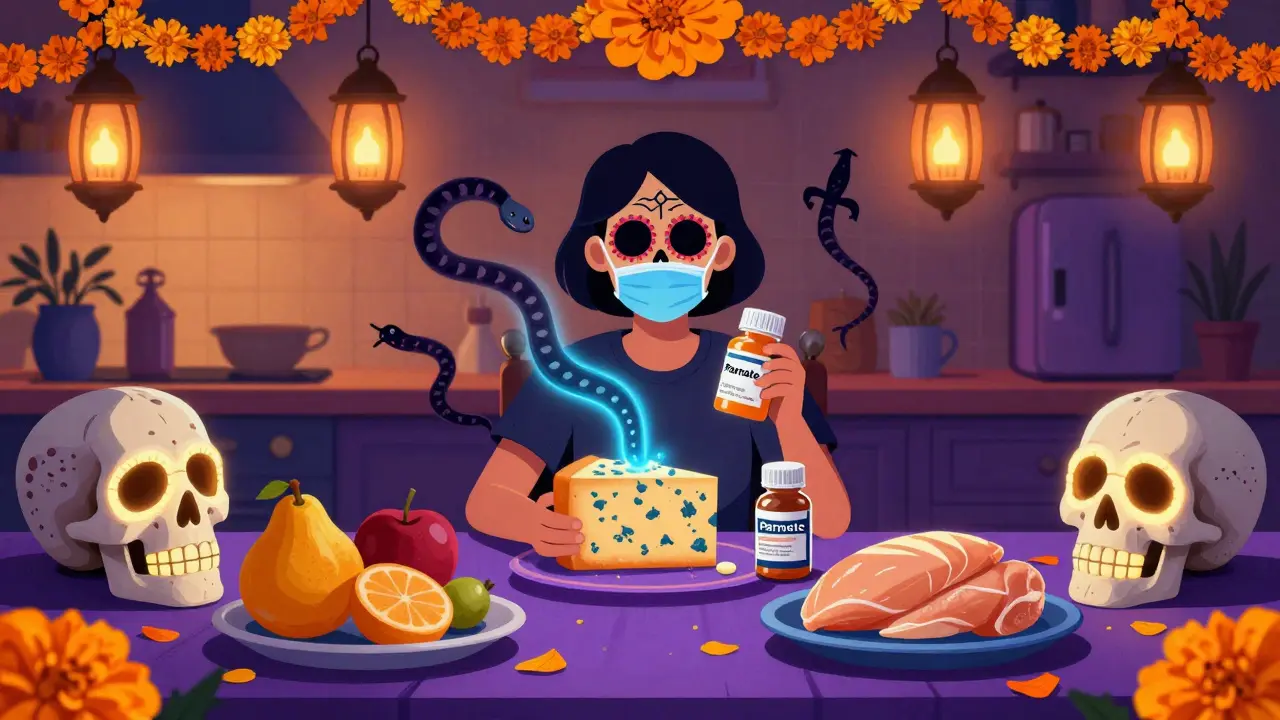
Tyramine is a natural compound found in aged, fermented, or spoiled foods. It’s in blue cheese, salami, soy sauce, tap beer, and even some overripe bananas. Normally, your gut uses MAO-A to break down tyramine before it enters your bloodstream. But when MAO-A is blocked by an MAOI, tyramine slips through. Once it hits your blood, it triggers a massive release of norepinephrine - your body’s natural adrenaline.
The result? A hypertensive crisis. Blood pressure spikes. Systolic readings can hit 200 mmHg or higher. Symptoms include pounding headache, blurred vision, chest pain, nausea, and in extreme cases, stroke or death. It’s rare - less than 1 in 10,000 patient-years - but when it happens, it’s sudden and dangerous.
So what can you eat? Fresh meats, poultry, and fish are fine. Cottage cheese, cream cheese, and fresh mozzarella? Safe. Yogurt? Usually okay. But anything aged more than 48 hours? Avoid it. That includes:
- Aged cheeses (cheddar, parmesan, gouda, blue cheese - anything with visible mold or strong smell)
- Cured or smoked meats (pepperoni, pastrami, salami)
- Fermented soy products (miso, tempeh, soy sauce)
- Tap beer, draft wine, and home-brewed alcohol
- Overripe fruits (especially bananas and avocados)
- Leftovers stored more than two days
Even a single bite of blue cheese can trigger symptoms. One Reddit user, ChronicDepressor87, shared that after 12 years of failed treatments, Parnate lifted their depression - then they had two ER visits from accidentally eating aged cheese. The relief was real. The risk? Real too.
Drug Interactions: The Hidden Landmines
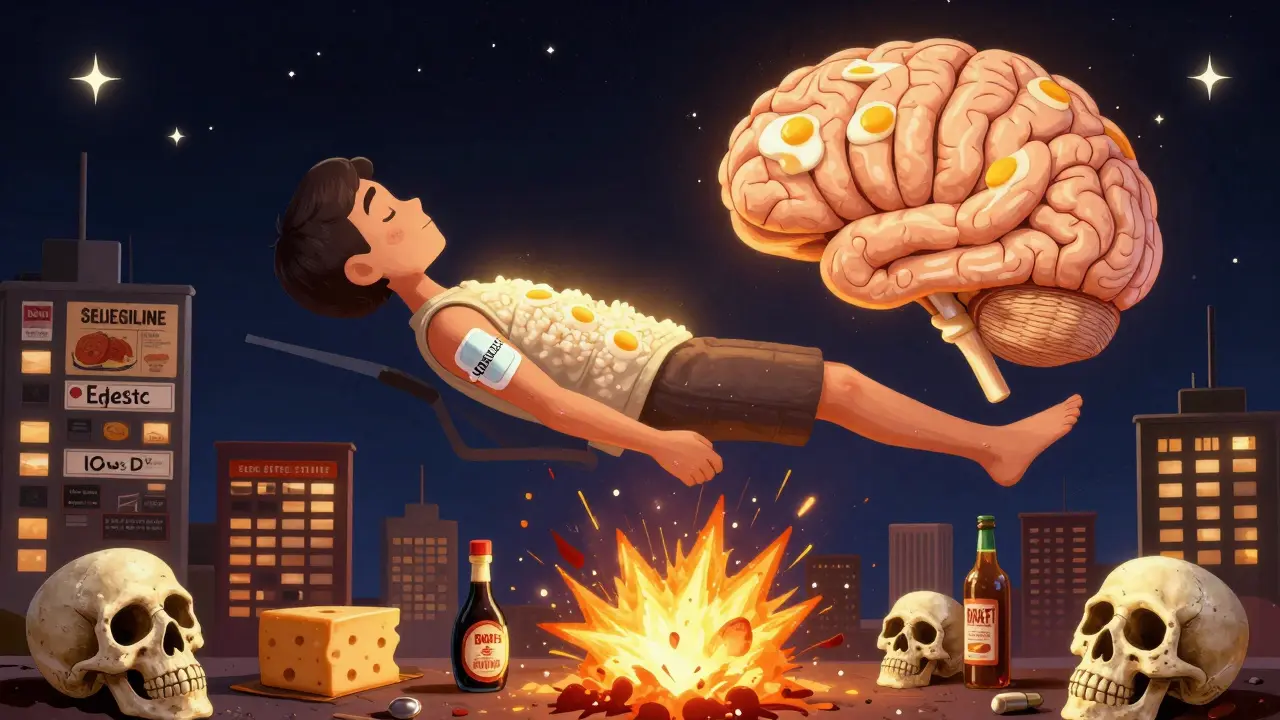
MAOIs don’t just play nice with food. They’re explosive around other medications. Mixing them with SSRIs or SNRIs can cause serotonin syndrome - a potentially fatal condition where your brain gets flooded with serotonin. Symptoms: confusion, rapid heartbeat, high fever, muscle rigidity, seizures. It can happen if you switch too quickly. The rule? Wait at least two weeks (and sometimes up to five) after stopping an SSRI before starting an MAOI. And vice versa.
Even common over-the-counter meds can be dangerous. Pseudoephedrine (in Sudafed), dextromethorphan (in cough syrups), and certain painkillers like meperidine (Demerol) can all trigger dangerous spikes in blood pressure or serotonin. That’s why pharmacists now ask if you’re on an MAOI before filling any prescription - even a simple antibiotic.
And don’t forget herbal supplements. St. John’s Wort, 5-HTP, and even some energy drinks with high caffeine and herbal extracts can interfere. One 2022 study found that 18% of MAOI users had at least one dangerous interaction in their first year - and half of them didn’t even realize the supplement was a risk.
Who Really Benefits From MAOIs?
MAOIs aren’t for everyone. But for certain people, they’re the only thing that works.
They’re especially effective in atypical depression - a subtype where you feel heavy, tired, oversleep, overeat, and react intensely to rejection. Studies show MAOIs have a number needed to treat (NNT) of 4.2 - meaning for every 4 people treated, one has a full response. For SSRIs, it’s 7.8. That’s a big difference.
They’re also the go-to for treatment-resistant depression. A 2021 meta-analysis found that 50-60% of people who’d tried four or more other antidepressants finally responded to an MAOI. In a 2022 survey by the Depression and Bipolar Support Alliance, 65% of MAOI users stuck with treatment for over two years - even with the restrictions - compared to just 42% of SSRI users in the same group.
One user on Reddit said: ‘I was suicidal for 15 years. I tried everything. Then I tried Parnate. I slept through the night for the first time in a decade. I cried because I forgot what peace felt like.’ That’s the kind of story that keeps psychiatrists prescribing MAOIs - despite the risks.
The Patch That Changed Everything
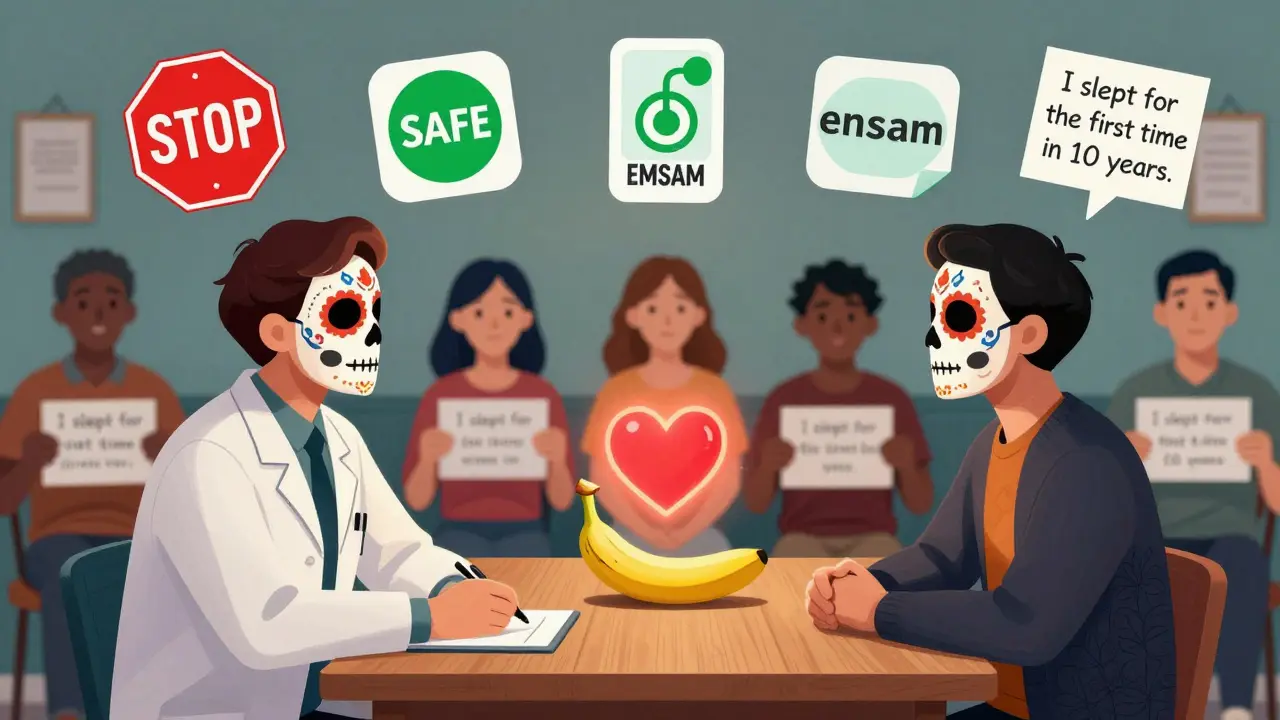
The selegiline patch (Emsam) is the only MAOI that doesn’t require full dietary restrictions at its lowest dose. At 6 mg/24hr, it barely affects the enzyme in your gut, so tyramine gets broken down normally. That means you can eat aged cheese, drink wine, and have soy sauce without fear.
At higher doses (9 mg and 12 mg), dietary restrictions kick in again - but even then, they’re less strict than with oral MAOIs. A 2023 study found that only 8% of patch users needed full dietary changes, compared to 92% of those on pills.
The downside? Cost. Emsam costs $850-$1,200 a month. Generic phenelzine? $30-$50. So while the patch is safer and easier, it’s not accessible to everyone. Insurance coverage varies wildly. Many patients start on the patch, then switch to oral MAOIs if they can’t afford it - and that’s when the real education begins.
Living With MAOIs: The Real-World Challenges
It’s not just about food. It’s about identity. One user said, ‘Dating is nearly impossible. Explaining you can’t have soy sauce on a first date? It’s a mood killer.’ Another: ‘I stopped going to restaurants. I cook everything. My kitchen is my sanctuary.’
Travel is another minefield. Airplane meals? Often contain soy or aged cheese. International food? Even safer-looking dishes can hide hidden tyramine. One woman in Seattle told me she once got sick after eating a ‘fresh’ sushi roll - the fish had been stored too long. She ended up in the ER with a blood pressure of 210/105.
That’s why many MAOI users carry phentolamine - a fast-acting blood pressure drug - in their purse or pocket. It’s not a cure, but it can buy time until help arrives. The Cleveland Clinic now requires all patients to complete a 12-hour education class before prescribing MAOIs. And many clinics pair patients with dietitians who specialize in MAOI diets.
Support groups are growing. The MAOI Information Project has over 5,000 members on Reddit, Facebook, and Discord. They share recipes, travel tips, and emergency protocols. One of the most common threads? ‘What’s safe to eat when you’re in a pinch?’ The answer: plain rice, eggs, fresh veggies, and chicken breast - all boiled or baked, no sauces.
Is It Worth It?
There’s no sugarcoating it: MAOIs are high-risk. But for some, they’re the only low-risk option left.
They’re not a first choice. They’re not a quick fix. But they’re not obsolete. They’re a lifeline. A 2023 Lancet Psychiatry review called them the most effective antidepressant for atypical depression - period. And with new research underway (like the AZD7325 compound that reduces tyramine sensitivity by 70%), we might see safer versions in the next five years.
If you’ve tried everything else and you’re still drowning in depression - talk to a psychiatrist who specializes in treatment-resistant cases. Don’t assume MAOIs are too dangerous. Ask: ‘What if this is the one?’
The restrictions are real. The risks are real. But so is the relief.




13 Comments
Diane Croft March 2, 2026
I've been on Emsam for 18 months. No dietary restrictions at 6mg. I can eat sushi, drink wine, and even have a slice of blue cheese without panic. It's not magic, but it's the first thing that let me feel human again. I cook less now. I live more.
Matt Alexander March 3, 2026
MAOIs aren't scary if you know what you're doing. The real danger is people skipping the education. I work in pharmacy. I've seen too many patients get hit because they thought 'it's just one bite.' Don't be that person. Read the damn list.
Deborah Dennis March 4, 2026
I hate how people romanticize MAOIs. 'It changed my life!' Sure. But at what cost? You can't go out to dinner. You can't travel. You can't even have a glass of wine without checking the label like a spy. It's not a miracle. It's a cage with a really good view.
Tobias Mösl March 5, 2026
They're hiding something. The FDA knows how dangerous MAOIs are. Why aren't they banned? Why is the patch so expensive? Someone's making money off people's suffering. Big Pharma doesn't care if you live or die - as long as you keep buying pills and paying for emergency rooms.
Jeff Card March 6, 2026
I used to think MAOIs were for people who couldn't handle SSRIs. Then I met someone who'd tried 11 meds. They told me Parnate was the first thing that made them laugh without forcing it. That's not a side effect. That's a return to life. I don't care about the cheese rules. I care about the silence breaking.
Donna Zurick March 7, 2026
I started on phenelzine. The first month was hell. I read every label. I cooked everything. I even called the grocery store to ask if their chicken was fresh. But after three months? I felt calm. Not happy. Just calm. And that was enough to keep going.
John Cyrus March 8, 2026
MAOIs are outdated. Modern meds are safer. Why are we still using 1950s drugs? The fact that you need a PhD in nutrition just to take an antidepressant says everything. This isn't medicine. It's medieval punishment dressed in science
Sharon Lammas March 10, 2026
There's a quiet dignity in surviving this. The way you learn to read a label like poetry. The way you learn to say no to a friend's dinner because you're afraid of soy sauce. It changes how you see the world. Not just your brain. Your relationships. Your trust. It's not just treatment. It's a whole new way of being.
Shivam Pawa March 10, 2026
In India, MAOIs are rarely used. But I've seen patients in rural clinics who can't afford SSRIs. They take phenelzine. They eat fresh food. They avoid fermentation. They survive. No dietitian. No patch. Just knowledge and will. That's resilience.
marjorie arsenault March 11, 2026
To anyone thinking about MAOIs: talk to someone who's been on it for years. Join a group. Ask for recipes. Learn what 'safe' really means. It's not about fear. It's about adaptation. You're not giving up your life. You're rebuilding it with new rules. And that's okay.
Chris Beckman March 12, 2026
I took Parnate for 6 months. I lost 20 pounds because I couldn't eat anything. I stopped seeing friends. I cried every night because I was so lonely. Then I got better. But I don't know if it was the drug or just time. Maybe I just needed to stop trying to be normal.
Helen Brown March 13, 2026
They say the patch is safer. But what if the patch leaks? What if the FDA is lying? What if the tyramine levels are higher than they say? I carry phentolamine. I check my BP twice a day. I don't trust anyone. Not even my doctor.
Ethan Zeeb March 14, 2026
I'm the author. I didn't write this to scare anyone. I wrote it because I almost died from a cheese sandwich. I want people to know: this isn't a last resort. It's a tool. And tools need respect. Not fear. Not romance. Just care.