

Personalized Antiplatelet Selection Tool
Your Health Profile
When you’ve had a heart attack or a stent placed, your doctor gives you a blood thinner to keep your arteries clear. But not all blood thinners are the same - especially when it comes to side effects. Three drugs - clopidogrel, prasugrel, and ticagrelor - are the go-to choices for most patients after a cardiac event. They all block platelets from clumping together, but how they do it, how fast they work, and what problems they cause are very different. Choosing the wrong one can mean the difference between preventing another heart attack and ending up in the hospital with dangerous bleeding.
How These Drugs Work - And Why It Matters
All three drugs target the P2Y12 receptor on platelets, stopping them from sticking together and forming clots. But their chemistry changes everything. Clopidogrel is a prodrug - your liver has to convert it into its active form. That’s where things get messy. About 30% of people, especially those with a common genetic variation called CYP2C19 loss-of-function, can’t activate it properly. That means the drug doesn’t work well for them. In fact, some patients on clopidogrel still have heart attacks because their platelets aren’t blocked enough. Prasugrel and ticagrelor don’t have that problem. Prasugrel is activated faster and more completely - about 80% of the dose becomes active, compared to just 50% with clopidogrel. Ticagrelor doesn’t need liver conversion at all. It works directly and reversibly, which means its effects wear off faster if you stop taking it. That’s a big deal if you need emergency surgery.The Big Risk: Bleeding
The most serious side effect of all three is bleeding. It’s not just nosebleeds or cuts that won’t stop. We’re talking about internal bleeding - stomach bleeds, brain bleeds, even bleeding into muscles that can crush nerves. The TRITON-TIMI 38 trial showed prasugrel reduced heart attacks and stent clots by 19% compared to clopidogrel, but it also increased major bleeding by 33%. Fatal bleeding was three times higher. Ticagrelor, in the PLATO trial, lowered heart-related deaths by 21% but still caused more major bleeding than clopidogrel - 2.6% vs. 2.3%. That might sound small, but in a population of 10,000 patients, that’s 30 extra people with life-threatening bleeds. Gastrointestinal bleeding happens in about 1% of users, but prasugrel raises that risk the most - 32% higher than clopidogrel. Age and weight matter too. If you’re over 75 or weigh less than 60 kg (132 lbs), prasugrel is often avoided. One cardiologist told me about an 82-year-old woman who went from a hemoglobin of 12 to 8 in just two weeks on prasugrel. She needed two blood transfusions. That’s not rare.Ticagrelor’s Hidden Problem: Feeling Like You Can’t Breathe
Ticagrelor has a side effect no other antiplatelet drug has - dyspnea. That’s medical talk for shortness of breath. It affects 14% to 16% of people taking it. That’s about 1 in 7 patients. It usually starts within days, feels like you’re suffocating, and can be terrifying. One patient described it as “like drowning while lying down.” The good news? Most of these people don’t stop the drug. Studies show that when doctors explain this side effect upfront - that it’s not a heart problem, not an allergy, and usually goes away or gets better - 60-70% stick with it. But if you’re not warned, you might quit on your own. And that puts you at risk for a clot. Ticagrelor also causes brief heart pauses - about 3% of people have them. These aren’t dangerous for most, but if you have a pacemaker or a slow heart rhythm, your doctor needs to know.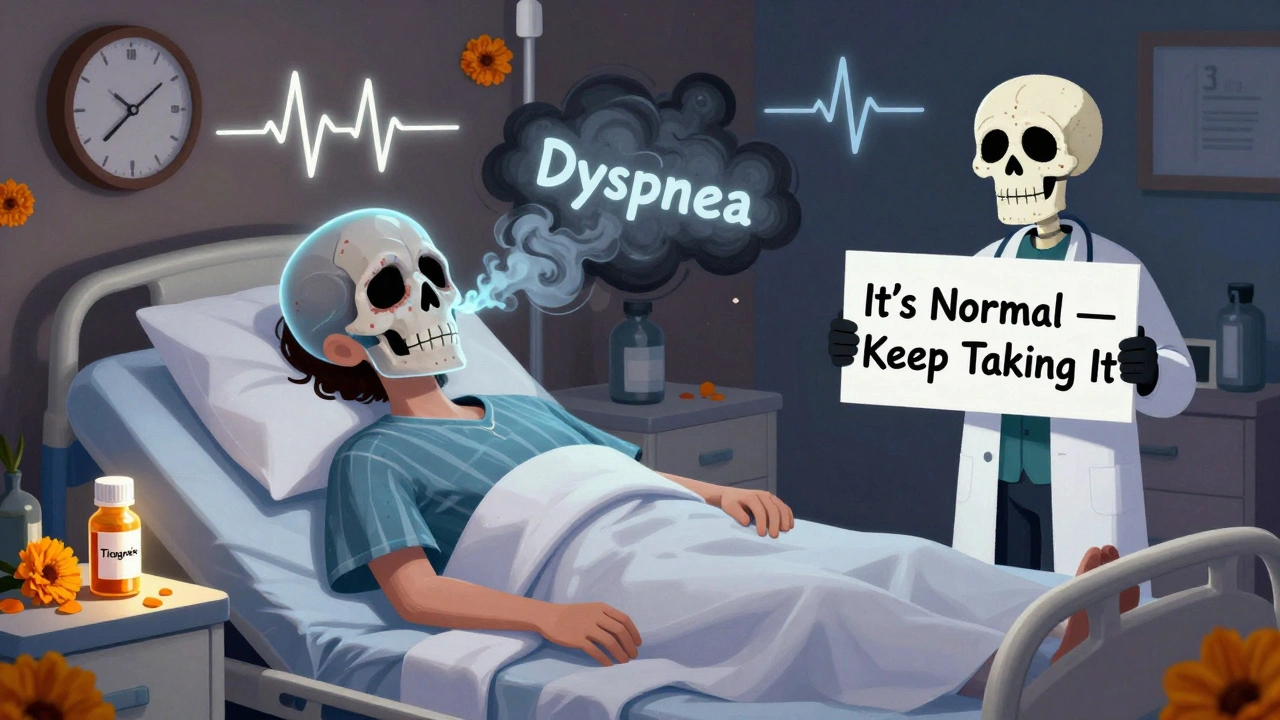
Clopidogrel: The Cheap Option With a Hidden Flaw
Clopidogrel is still the most used because it’s cheap - about $10 a month as a generic. It’s been around since 1997, and doctors know how to manage it. But its biggest flaw is unpredictability. If you’re a poor metabolizer of CYP2C19, it’s like taking a sugar pill. You think you’re protected, but your platelets are still active. Testing for this gene costs $200-$300. Guidelines don’t recommend it for everyone, but if you’ve had a stent clot or a second heart attack on clopidogrel, testing makes sense. Some hospitals do it automatically for high-risk patients. If you’re Asian, your odds of being a poor metabolizer are even higher - up to 50%.When to Choose Which Drug
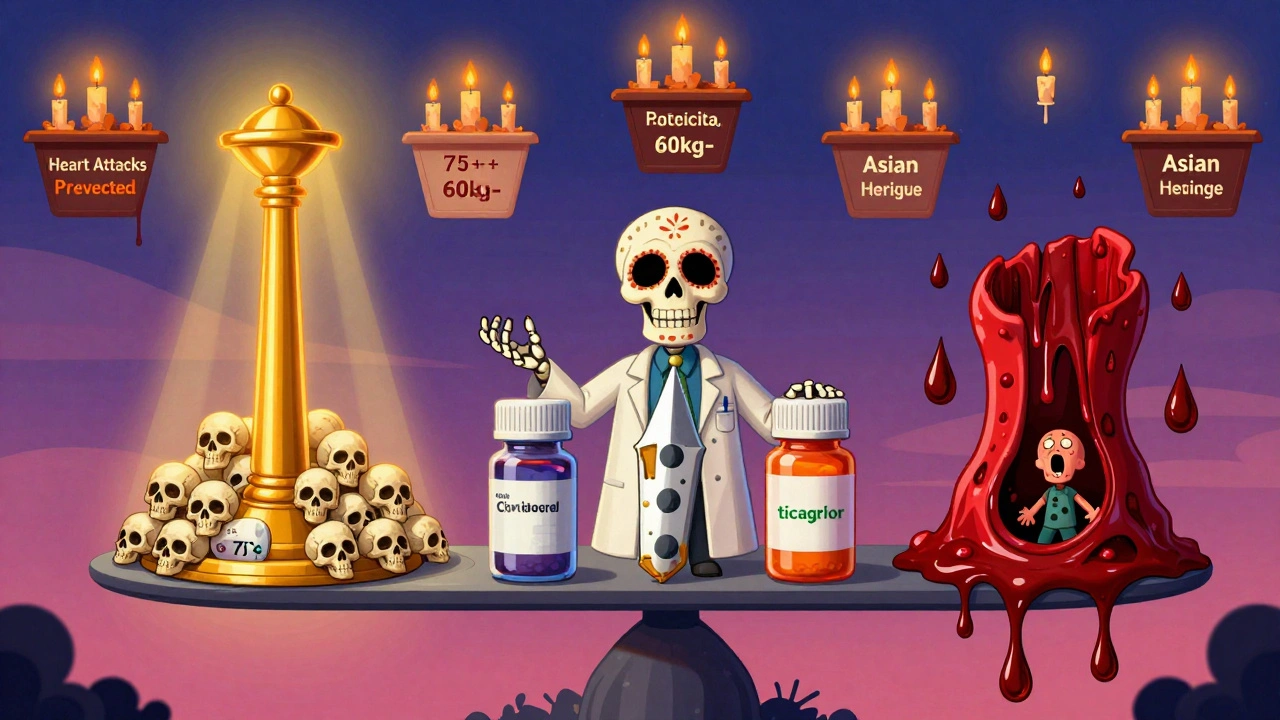
There’s no one-size-fits-all answer. Here’s how most cardiologists decide:- Choose prasugrel if you’re under 75, weigh more than 60 kg, have no history of stroke or TIA, and are having a stent placed for a heart attack. You need the strongest protection.
- Choose ticagrelor if you’re older, have other health problems, or might need surgery soon. Its reversible action means you can stop it safely three days before a procedure. It’s also the top choice for all ACS patients, regardless of treatment path.
- Choose clopidogrel if cost is a barrier, you’re not a candidate for the others, or you’re on long-term maintenance therapy. It’s not ideal, but it’s better than nothing.
What Happens After You Start?
Once you’re on one of these drugs, you’re on it for a while. Most people take them with aspirin for at least 6 to 12 months after a heart attack or stent. After that, your doctor might switch you to just aspirin - or keep you on a lower dose of ticagrelor (60 mg twice daily), which was approved in 2023 for long-term use. That lower dose cuts bleeding risk by 25% without losing much protection. You’ll need to avoid NSAIDs like ibuprofen or naproxen. They increase bleeding risk and can interfere with clopidogrel. Stick to acetaminophen for pain. Also, don’t stop these drugs suddenly. If you do, your risk of a clot spikes within days.Practical Tips for Patients
- If you’re on ticagrelor and feel short of breath, don’t panic. Call your doctor - don’t quit. They’ll likely reassure you it’s normal.
- If you’re on prasugrel and you’re over 75 or under 132 lbs, ask if you’re still the right candidate.
- If you’ve had a bad reaction to clopidogrel or your heart event came back, ask about genetic testing.
- Always tell every doctor you see - even dentists - that you’re on a blood thinner. You might need to delay a procedure.
- Know your stop times: clopidogrel = 5 days before surgery, prasugrel = 7 days, ticagrelor = 3 days.
What’s Next?
New drugs are coming. Selatogrel, a subcutaneous P2Y12 inhibitor, is in late trials. It could be injected like insulin and worn off quickly - perfect for emergencies. But for now, clopidogrel, prasugrel, and ticagrelor are the options you have. The bottom line? The best antiplatelet isn’t the strongest. It’s the one that keeps you alive without putting you at risk of bleeding or side effects you can’t live with. Talk to your doctor about your risks, your lifestyle, and your concerns. Don’t just accept the first prescription. This is one decision that can change your next five years.Which antiplatelet has the least bleeding risk?
Among clopidogrel, prasugrel, and ticagrelor, clopidogrel has the lowest bleeding risk overall. However, this comes with a trade-off: it’s less effective at preventing clots, especially in people with certain genetic variations. Prasugrel carries the highest bleeding risk, particularly in older adults or those with low body weight. Ticagrelor has a moderate bleeding risk but is still more effective than clopidogrel at reducing heart-related deaths.
Can ticagrelor cause breathing problems even if I don’t have asthma?
Yes. Ticagrelor can cause shortness of breath even in people with no history of lung disease. This side effect, called dyspnea, affects about 1 in 7 users and isn’t related to asthma or lung damage. It’s thought to be caused by increased levels of adenosine in the blood. It usually starts within the first week and may improve over time. Many patients continue taking it after their doctor explains it’s a known, non-dangerous side effect.
Why is prasugrel not recommended for people over 75?
Prasugrel significantly increases the risk of major and fatal bleeding in patients over 75. In clinical trials, elderly patients on prasugrel had more than double the rate of severe bleeding compared to younger patients. Because older adults often have thinner blood vessels, slower healing, and other health conditions, the bleeding risk outweighs the benefit for most in this age group. Guidelines recommend avoiding prasugrel in patients over 75 unless they have a very high risk of clotting and weigh more than 60 kg.
Do I need genetic testing before taking clopidogrel?
Routine genetic testing for CYP2C19 is not recommended for everyone starting clopidogrel. However, if you’ve had a stent clot or a second heart attack while on clopidogrel, testing is strongly advised. About 30% of people, especially those of Asian descent, have genetic variants that make clopidogrel less effective. If you’re a poor metabolizer, switching to ticagrelor or prasugrel can cut your risk of another event by up to 40%.
How long should I stay on these drugs after a stent?
Most patients take dual antiplatelet therapy (aspirin plus one of these drugs) for 6 to 12 months after a stent. If you’re at high risk for another clot - like if you had a heart attack or have diabetes - your doctor may extend it to 12 months or longer. For lower-risk patients, 6 months may be enough. After that, you’ll typically switch to low-dose aspirin alone, or sometimes low-dose ticagrelor (60 mg twice daily) for extended protection with less bleeding risk.
Can I take ibuprofen with clopidogrel or ticagrelor?
No. Ibuprofen and other NSAIDs like naproxen can interfere with clopidogrel’s ability to block platelets and increase your risk of stomach bleeding. They can also raise bleeding risk with ticagrelor and prasugrel. Use acetaminophen (Tylenol) instead for pain or fever. If you need an NSAID for arthritis or chronic pain, talk to your doctor - they may switch your antiplatelet or prescribe a stomach-protecting medication.






15 Comments
George Taylor December 8, 2025
Ugh. Another one of those "here's 10 pages of medical jargon" posts that make me want to throw my phone out the window. I just want to know which pill doesn't make me bleed or feel like I'm drowning, but nooo, gotta read about CYP2C19 and PLATO trials like I'm in med school. 😩
Nikhil Pattni December 10, 2025
I am a cardiology resident from India and I must say this is one of the most comprehensive summaries I have seen in a long time! The genetic variability in CYP2C19 is especially critical in our population where up to 50% are poor metabolizers, so clopidogrel is often useless. We routinely test high-risk patients now. Also, dyspnea with ticagrelor is underreported-many patients think it's asthma and stop it, then have stent thrombosis. Always warn them upfront! 🙏
Arun Kumar Raut December 12, 2025
Hey everyone, just wanted to say this post is super helpful. I'm a nurse and I see so many patients scared to take these meds because they don't understand them. The part about telling people that ticagrelor breathlessness isn't a heart attack? That’s gold. Just explain it like you're talking to a friend. No jargon. They’ll stick with it. 💙
precious amzy December 14, 2025
One cannot help but observe the profound epistemological dissonance inherent in the contemporary medical paradigm: the reduction of complex human physiology to pharmacological algorithms. One wonders whether the pursuit of efficacy has eclipsed the ontological dignity of patient experience-particularly when dyspnea, a phenomenological state, is dismissed as 'non-dangerous.'
Carina M December 15, 2025
I find it deeply irresponsible that physicians are still prescribing clopidogrel as a default option. This is not 1997. We have evidence. We have alternatives. To continue using a drug with 30% non-response rates in the general population is not just lazy-it’s negligent. Patients deserve better than a gamble with their lives.
William Umstattd December 16, 2025
Let me be crystal clear: if you are over 75 and your doctor prescribes prasugrel, demand a second opinion. Immediately. I watched my uncle die from a GI bleed on prasugrel. He was 78. Weight: 58 kg. No history of stroke. They didn’t even check. He was dead in 11 days. This isn’t theoretical. It’s a death sentence for the elderly. Don’t let it happen to you.
Angela R. Cartes December 16, 2025
I mean… I get it. But why does everything have to be so dramatic? Like, ‘drowning while lying down’? 😅 I took ticagrelor. Felt a little winded. Got a cup of tea. Did yoga. It was fine. Chill out, people.
Andrea Beilstein December 18, 2025
We treat drugs like magic bullets but forget the body is a river not a machine. The real question isn’t which pill works best-it’s which one lets you live without becoming a stranger to yourself. Breathing hard isn’t a side effect-it’s your body screaming it’s not used to being chemically tamed
Courtney Black December 19, 2025
Clopidogrel is cheaper. That’s it. That’s the whole reason it’s still used. Not because it’s better. Not because it’s safer. Just because insurance won’t cover the others. We’re not choosing drugs-we’re choosing budgets.
iswarya bala December 21, 2025
I took ticagrelor for 6 months after my stent and the shortness of breath was scary at first but my doc said its normal and it got better after 2 weeks. I was scared to tell anyone because I thought I was crazy. So glad someone wrote about this. You're not alone 💪
Anna Roh December 22, 2025
I think the real problem is no one tells you what happens after 12 months. They just say ‘keep taking it’ and then suddenly you’re on low-dose ticagrelor and you’re like… wait, what? No one warned me.
Raja Herbal December 24, 2025
Oh wow, so prasugrel kills old people and ticagrelor makes you feel like you’re being smothered by a pillow. And clopidogrel? The placebo with a price tag. Thanks for the summary. I’m just gonna eat garlic and hope for the best.
Delaine Kiara December 25, 2025
I just got diagnosed with a 90% blockage and was put on prasugrel. I’m 72, weigh 125 lbs, and now I’m terrified. I read the side effects and I cried. I asked my cardiologist if I could switch and she said ‘we’ll see how you tolerate it.’ TOLERATE IT? I’m supposed to TOLERATE bleeding to death? This system is broken.
Noah Raines December 27, 2025
Been on ticagrelor for a year. Shortness of breath? Yep. Felt like I forgot how to breathe for a week. But I didn’t stop. Now I barely notice it. Don’t panic. Talk to your doc. They’ve seen it a thousand times. Also, NO IBUPROFEN. I learned that the hard way. 😅
Lola Bchoudi December 28, 2025
As a cardiac nurse practitioner, I can confirm: the 60mg ticagrelor maintenance dose is a game-changer for long-term secondary prevention. Bleeding risk drops 25% with no significant loss in efficacy. Yet, 80% of my patients have never heard of it. We need better patient education. This isn’t just pharmacology-it’s health equity.