
Blood Thinner & NSAID Risk Calculator
Risk Assessment Results
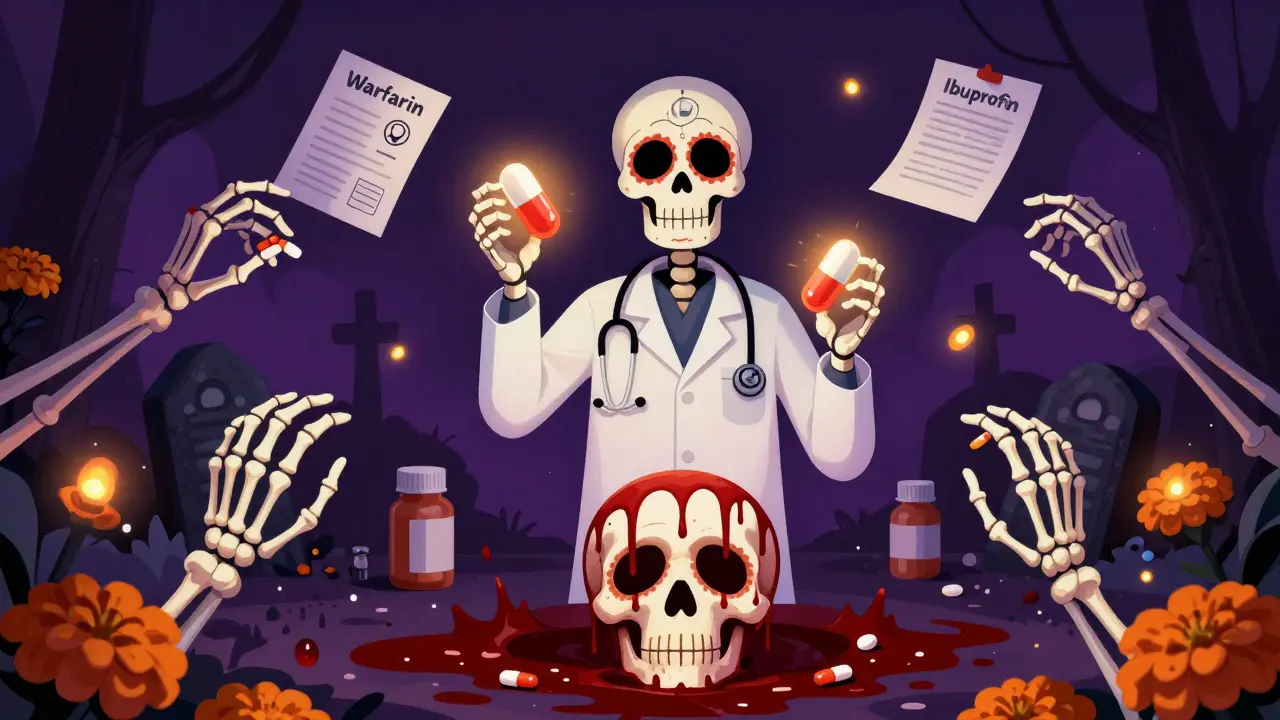
Every year, millions of Americans take blood thinners to prevent strokes or clots. At the same time, just as many reach for ibuprofen or naproxen to ease aching joints, headaches, or back pain. What they don’t realize is that combining these two types of medications can turn a simple pain reliever into a silent killer.
The danger isn’t theoretical. It’s backed by hard data from real patients, hospital records, and long-term studies. When you take a blood thinner like warfarin, Eliquis, or Xarelto along with an NSAID like ibuprofen or naproxen, your body loses its ability to stop bleeding - not just in one place, but in multiple organs at once. The result? Internal bleeding that can happen without warning, sometimes with fatal consequences.
How Blood Thinners and NSAIDs Work - and Why They Don’t Mix
Blood thinners don’t actually thin your blood. They slow down the clotting process. Warfarin works by blocking vitamin K, which your liver needs to make clotting factors. Newer ones like apixaban and rivaroxaban block specific proteins that help clots form. These drugs are life-saving for people with atrial fibrillation, deep vein thrombosis, or mechanical heart valves.
NSAIDs - nonsteroidal anti-inflammatory drugs - work differently. They reduce pain and swelling by blocking enzymes called COX-1 and COX-2. But here’s the catch: COX-1 is also needed for platelets to stick together and seal up small cuts in your blood vessels. When NSAIDs shut down COX-1, platelets can’t do their job. That’s why taking aspirin daily can help prevent heart attacks - it keeps platelets from clumping. But if you’re already on a blood thinner, that same effect becomes dangerous.
And it gets worse. NSAIDs also irritate the lining of your stomach and intestines. Over time, they can cause tiny ulcers. With normal clotting, those ulcers heal quickly. But when blood thinners are in the mix, even a small ulcer can start bleeding - and keep bleeding. The combination isn’t just additive; it’s multiplicative.
The Numbers Don’t Lie: How Much More Dangerous Is This Combo?
A 2020 study tracking over 200,000 people for 10 years found that those taking both a blood thinner and an NSAID had more than double the risk of serious internal bleeding compared to those on blood thinners alone. That’s not a small increase. That’s a major leap in danger.
The risk varies depending on which NSAID you take:
- Naproxen: 4.1 times higher risk of bleeding
- Diclofenac: 3.3 times higher risk
- Ibuprofen: 1.8 times higher risk
And it’s not just your stomach at risk. Bleeding can happen in your brain (intracranial hemorrhage - 3.2 times more likely), lungs (1.4 times more likely), or urinary tract (1.6 times more likely). One patient in a study saw their hemoglobin drop from 14.2 to 8.7 g/dL after taking ibuprofen for dental pain while on apixaban. That’s a drop so severe they needed a blood transfusion.
Even more alarming: acetaminophen (Tylenol) is often recommended as a safer alternative. But even that has limits. Taking more than 3,000 mg of Tylenol a day while on a blood thinner can still raise your bleeding risk. So, it’s not a free pass.
Who’s Most at Risk - And Why It’s More Common Than You Think
You might think this only affects older adults with chronic conditions. But the reality is more widespread. About 12 million Americans are on blood thinners. Nearly 17 million use NSAIDs daily - many without a prescription. That means millions of people are unknowingly combining these drugs.
The biggest group at risk? Older adults with arthritis. Many are on warfarin or Eliquis to prevent strokes, but also have osteoarthritis in their knees or hips. They reach for Advil or Aleve because it works. They don’t realize the danger. A 2021 study found that 20-30% of people on anticoagulants still take NSAIDs regularly.
And here’s the kicker: most don’t know they’re at risk. A 2022 study in JAMA Internal Medicine found only 43% of patients on blood thinners were aware that NSAIDs could increase bleeding. Two out of three thought occasional use was fine. That’s not ignorance - it’s misinformation. Pharmacists warn patients, but the message gets lost in the noise of over-the-counter labels and TV ads.
What Happens When You Combine Them - Real Stories
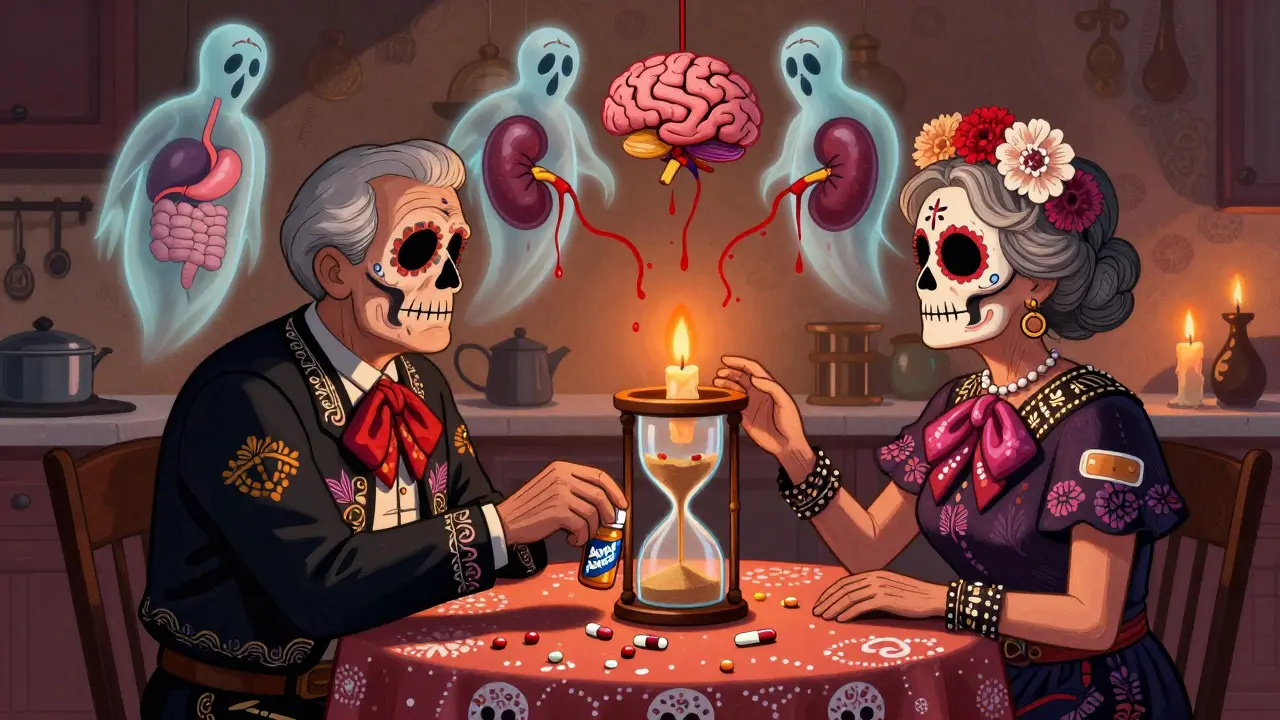
Reddit threads like r/anticoagulants are full of harrowing posts. One man took ibuprofen after a root canal. Two days later, he passed out at home. His wife found him pale and sweaty. His hemoglobin had crashed. He ended up in the ICU. Another woman on Eliquis took naproxen for back pain. She started passing dark stools - a classic sign of GI bleeding. By the time she went to the ER, she was anemic and needed two units of blood.
These aren’t rare cases. CDC data from 2021 shows that 12% of emergency visits for bleeding related to blood thinners involved NSAID use. That’s one in every eight cases. And those are just the ones that made it to the hospital. How many more went undiagnosed? How many people wrote off fatigue, dizziness, or dark stools as “just getting older”?
What Should You Do Instead? Safer Pain Relief Options
If you’re on a blood thinner, your pain management options are limited - but not nonexistent.
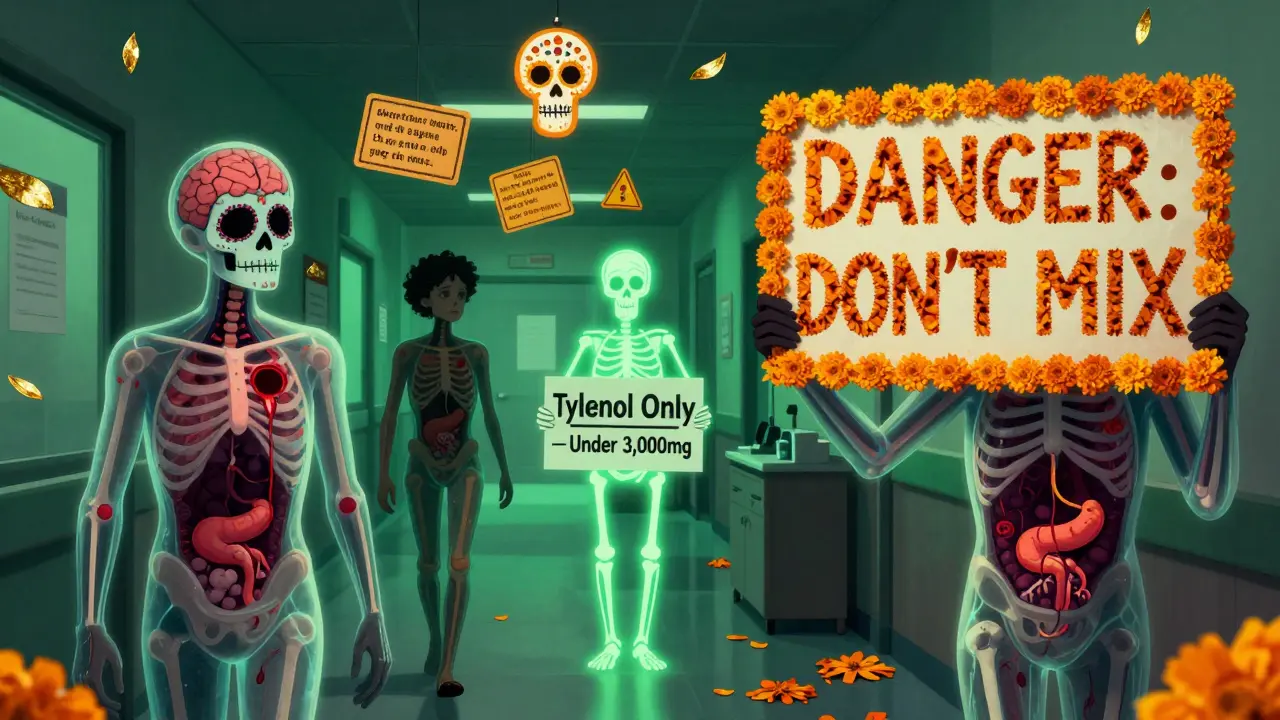
Acetaminophen (Tylenol) is still the top recommendation. But stick to 3,000 mg or less per day. Higher doses can strain your liver - especially if you drink alcohol or have other liver issues.
Physical therapy and heat/cold therapy can help with joint and muscle pain. A heating pad, ice pack, or even a short walk can reduce inflammation without drugs.
Topical NSAIDs - like diclofenac gel - may be safer. Since they’re absorbed through the skin, they don’t hit your bloodstream as hard. But even these aren’t risk-free. Talk to your doctor before using them.
Low-dose celecoxib (Celebrex) has shown slightly lower bleeding risk than traditional NSAIDs in recent studies. But it’s still an NSAID. It’s not safe - just less dangerous. And it requires a prescription.
For short-term pain - like after a dental procedure - your doctor might recommend skipping your blood thinner for a day or two. But never do this on your own. Stopping your anticoagulant without supervision can trigger a stroke or clot.
What to Do If You’ve Already Combined Them
If you’ve taken ibuprofen or naproxen while on a blood thinner, don’t panic - but don’t ignore it either.
- Stop the NSAID immediately. Even one dose can increase your risk.
- Watch for signs of bleeding: Unexplained bruising, black or tarry stools, blood in urine, severe headaches, dizziness, or sudden weakness.
- Call your doctor. They may want to check your INR (if you’re on warfarin) or run blood tests to see if you’re anemic.
- Don’t wait for symptoms. Bleeding can be silent until it’s too late.
If you’re on warfarin, your doctor might adjust your dose. If you’re on a newer anticoagulant like apixaban, they’ll likely monitor you more closely for signs of bleeding. Either way, you need professional guidance.
Why This Problem Won’t Go Away - And What’s Being Done
Pharmaceutical companies know this interaction is dangerous. The FDA has had black box warnings on NSAID packaging since 2005. Yet, people still buy them over the counter without understanding the risk.
Doctors are trying. Guidelines from the American Heart Association, the American College of Chest Physicians, and the European Society of Cardiology all say: avoid NSAIDs completely if you’re on a blood thinner. But in real life, patients keep taking them. Why? Because pain is real. Arthritis doesn’t care about drug labels.
The FDA’s 2024 pain management initiative is starting to focus on safer alternatives for this high-risk group. Researchers are testing new compounds that reduce inflammation without affecting platelets. But those are years away.
Until then, the only real solution is awareness. If you’re on a blood thinner, treat NSAIDs like a loaded gun. Don’t just assume they’re safe because they’re sold next to aspirin at the pharmacy.
Final Takeaway
You don’t need to suffer in pain just because you’re on a blood thinner. But you do need to be smart about how you manage it. Ibuprofen, naproxen, and diclofenac aren’t just painkillers - they’re bleeding accelerants when combined with anticoagulants. The risk isn’t theoretical. It’s measurable. It’s documented. And it’s deadly.
If you’re unsure, ask your pharmacist or doctor. Don’t guess. Don’t rely on labels. And never assume that because a drug is available without a prescription, it’s safe to use with your other meds.
Your body doesn’t distinguish between prescriptions and over-the-counter drugs. It just responds - and sometimes, that response can be fatal.


13 Comments
Dean Jones March 4, 2026
Look, I get it. You’re on a blood thinner because your heart’s acting up, and now your knee is screaming like a banshee. You grab Advil because it’s there, it’s cheap, and your grandma swore by it. But here’s the thing nobody tells you: your body doesn’t care if it’s prescription or OTC. It just sees two things trying to stop clotting, and it goes, ‘Cool, let’s bleed everywhere.’
Studies show this combo isn’t just risky-it’s a statistical nightmare. Naproxen? Four times more bleeding. Ibuprofen? Almost double. And don’t even get me started on how many people think ‘occasional use’ is fine. Occasional is still enough to rupture a tiny ulcer in your gut that you didn’t even know was there.
I’ve seen ER reports. One guy took two ibuprofen after a tooth extraction. Two days later, he’s in the ICU with a hemoglobin of 7. He didn’t feel anything until he passed out. No pain. No warning. Just… silence. That’s the scariest part. This isn’t a ‘maybe’ danger. It’s a guaranteed ticking clock.
And yeah, Tylenol’s the ‘safe’ alternative. But even that’s a minefield if you’re drinking or have liver issues. So what’s left? Ice packs. Physical therapy. Maybe a damn massage. Or better yet-stop pretending pain is something you can out-medicine. Sometimes, you just gotta sit with discomfort until your body figures it out.
It’s not about being perfect. It’s about being aware. And right now, awareness is the rarest drug on the shelf.
Chris Beckman March 4, 2026
you guys are overreacting. i took ibuprofen with warfarin for 3 years and never had a problem. my dr never even mentioned it. if it was that dangerous theyd put it on the bottle like a cigarette. its just fearmongering.
Richard Elric5111 March 6, 2026
One must consider the ontological paradox inherent in pharmaceutical risk assessment: if a substance is deemed dangerous by empirical data yet remains legally accessible, does its danger exist independently of institutional recognition, or is it merely a social construct of medical hegemony? The FDA’s black box warning, while statistically valid, functions as a performative gesture-a symbolic barrier against collective negligence. The real pathology lies not in the pharmacological interaction, but in the epistemological vacuum wherein the layperson is left to navigate a labyrinth of commercialized health information, where convenience is commodified as safety.
Dean Jones March 7, 2026
Chris, your story is why this is a problem. You’re lucky. Not everyone is. Luck isn’t a medical guideline. There are thousands of people who didn’t survive their ‘occasional’ ibuprofen. And now their families are left wondering why no one told them.
It’s not fearmongering. It’s data. It’s hospital records. It’s a man who bled out in his sleep because he thought ‘it’s just Advil.’
If your doctor didn’t warn you, they failed you. Not because they’re evil-but because they’re overwhelmed, underpaid, and assuming you read the pamphlet. You didn’t. Most people don’t. That’s the system’s failure-not your fault. But now you know. So don’t let others learn the hard way.
Helen Brown March 8, 2026
i think big pharma made this up so we’d buy their new expensive pills. they dont want us using ibuprofen because its cheap. they want us on their $500/month drug. its all a scam. also i heard the blood thinner is just a government mind control thing.
Betsy Silverman March 10, 2026
I’ve been on Eliquis for AFib since 2020, and I’ve had knee pain for years. I used to take naproxen until my pharmacist sat me down and said, ‘You’re one ibuprofen away from a transfusion.’
It hit me like a ton of bricks. I thought I was being smart-taking it only on bad days. Turns out, even one dose can trigger bleeding you don’t feel until it’s too late.
Now I use heat wraps, do daily stretches, and if I absolutely need something, I take 650mg of Tylenol max. No more guessing. I even have a note on my phone: ‘NO NSAIDS. EVER.’
It’s not glamorous. But I’m still here. And I’d rather be uncomfortable than in a coffin.
Mike Dubes March 10, 2026
big shoutout to the doc who wrote this. finally someone gets it. i used to take ibuprofen for my back and didnt even think twice. then my mom had a GI bleed and it hit me-wait, i do that too.
switched to tylenol and started yoga. yeah, it’s slower. yeah, it’s not magic. but i’m alive and my liver’s happy. also, i tell everyone i know on blood thinners. no shame in being the guy who says ‘nah, dont do that.’
your body doesn’t care if it’s ‘just OTC.’ it just bleeds. and once it starts, it dont stop till you’re in the ER.
Gretchen Rivas March 10, 2026
Topical diclofenac gel is a game-changer. I use it for my arthritis and it barely enters my bloodstream. Still, I check with my pharmacist every time I refill. Better safe than sorry.
Zacharia Reda March 11, 2026
So let me get this straight. You’re telling me the same drug that’s sold next to cough drops in the pharmacy aisle can silently kill someone on blood thinners… and yet, no one’s screaming from the rooftops?
It’s like having a nuclear reactor in your medicine cabinet and calling it ‘harmless’ because it’s blue and has a smiley face on the label.
Pharmacists are the unsung heroes here. They’re the ones trying to stop this carnage one customer at a time while CVS plays ‘I’m a Lovin’ It’ on loop. Kudos to them. And to the people who actually listen.
For the rest? You’re not dumb. You’re just surrounded by noise. And noise doesn’t care if you live or die.
John Smith March 12, 2026
NSAIDs are a slow suicide for people on blood thinners and everyone knows it. The FDA has warnings. The studies are clear. But we still act like it’s a game of Russian roulette with a pharmacy receipt.
I’ve seen it firsthand. My uncle took naproxen for a sprained ankle. Two weeks later, he was dead. No warning. No pain. Just gone.
And now his kids are stuck with medical bills and a funeral they didn’t see coming.
It’s not about being ‘scared.’ It’s about being responsible. Stop being lazy. Your pain isn’t worth a funeral.
Stephen Vassilev March 13, 2026
Have you considered that the entire blood thinner/NSAID narrative is a coordinated disinformation campaign by the American Medical Association, in collusion with pharmaceutical conglomerates, to drive up demand for high-margin anticoagulants while suppressing low-cost alternatives? The fact that Tylenol is recommended-despite its own hepatotoxicity risks-suggests a deeper agenda: to create dependency on a class of drugs that require constant monitoring, lab work, and refill prescriptions. The bleeding risk? A distraction. The real goal? Profit. And the public? The mark.
Ivan Viktor March 13, 2026
so you're telling me i can't take advil for my headache after i take my blood thinner? what am i supposed to do, scream into a pillow? i'm just trying to live, man. not be a lab rat.
John Cyrus March 13, 2026
if you take blood thinners and you're still using ibuprofen you're an idiot and you deserve what happens to you. no one forced you to take it. the warnings are everywhere. if you're dumb enough to ignore them then don't come crying when you bleed out. your life is your problem not mine.