
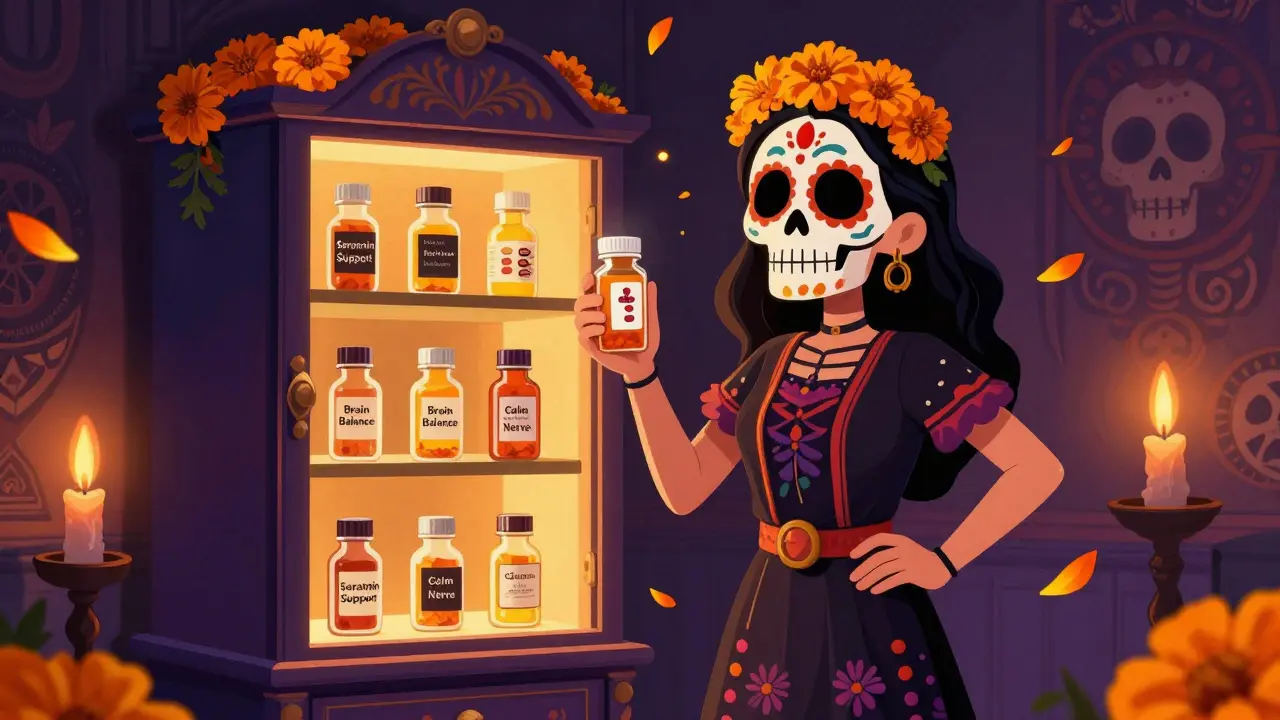
When someone says they take medication for anxiety or depression, the reaction isn’t always understanding. Sometimes it’s silence. Sometimes it’s a raised eyebrow. Or worse-a comment like, "You don’t really need those pills, do you?" This isn’t just awkward. It’s harmful. And it’s happening more often than we admit.
One in five adults in the U.S. lives with a mental health condition. About half of them are prescribed medication. Yet, nearly one-third of those people feel ashamed to take it. Why? Because stigma still clings to psychiatric drugs like old wallpaper-peeling, faded, but impossible to ignore. People worry they’ll be seen as weak, addicted, or "not real patients." They fear being judged at work, by family, even by their own doctors.
But here’s the truth: mental health medications aren’t optional luxuries. They’re medical tools-just like insulin for diabetes or blood pressure pills for hypertension. The difference? We don’t whisper about heart meds. We don’t hide them in the back of the medicine cabinet. So why do we treat brain meds differently?
Why Mental Health Medications Get Stigmatized
The stigma around psychiatric medications doesn’t come from nowhere. It’s built on myths that have been repeated for decades.
One big myth: "Psych meds change your personality." The truth? They help restore balance. If you have low serotonin, an SSRI helps your brain make better use of what’s already there. It’s not turning you into someone else-it’s helping you become more like yourself again.
Another myth: "They’re addictive." Most antidepressants and anti-anxiety meds aren’t addictive. You can’t get high off them. Withdrawal symptoms? Yes, sometimes. But that’s not addiction-it’s your body adjusting after months of chemical support. Compare that to opioids, which are designed to trigger pleasure centers. Psychiatric meds don’t work that way.
Then there’s the cultural layer. In some communities, taking medication for mental health is seen as a failure of willpower. "You should pray harder," or "Just think positive." These messages don’t just hurt-they stop people from getting help. A 2020 study found Asian American adults were nearly 50% less likely to take antidepressants than white adults, not because they didn’t need them, but because of deep-rooted cultural beliefs.
Even healthcare providers contribute. One in five primary care doctors admit they feel uncomfortable prescribing psychiatric meds. Some think patients are "looking for a quick fix." Others assume they’re seeking drugs to escape reality. These biases aren’t always intentional-but they’re real. And they make patients feel like they’re asking for something wrong.
How Language Shapes Perception
Words matter more than you think.
When you say "I take meds," people hear something vague, even suspicious. But when you say "I take medication for my depression," it sounds like medical care. Research shows that simply swapping "meds" for "medication" reduces stigma by over 40% in conversations.
Same goes for "drugs." Calling psychiatric meds "drugs" links them to illegal substances in people’s minds. But insulin is a drug. Blood pressure pills are drugs. So why does one word make one feel normal and the other feel shameful?
Language isn’t just about politeness-it’s about legitimacy. When you use clinical, accurate terms, you’re not being fancy. You’re reclaiming your right to care.
Try this: Instead of saying, "I’m on antidepressants," say, "I’m taking medication to help balance my brain chemistry." Or better yet: "I take medication for my mental health, just like someone with diabetes takes insulin." That comparison works. It’s simple. It’s true. And it cuts through confusion.
Three Steps to Talk About Medication Without Shame
If you’re struggling to talk about your meds-or you’re a provider trying to help someone else-here’s a proven framework that works:
- Normalize. Start by saying this is common. "Lots of people take medication for mental health. It’s not rare. It’s not weird. It’s just part of treatment." The CDC says over 75% of people don’t see mental illness as a chronic condition like heart disease. That’s the gap. Close it with facts.
- Educate. Use comparisons people already understand. "Your thyroid needs hormone replacement. Your brain needs chemical balance. That’s what this medication does." Or: "This isn’t a mood enhancer. It’s a stabilizer-like a pacemaker for your nervous system."
- Personalize. Make it real. "For me, this medication lets me show up for my kids without crying all day. It doesn’t fix everything-but it gives me the space to heal."
This three-step method isn’t theoretical. It’s used by clinics across the country-and it works. A 2022 study found that patients who heard this approach from their providers were 33% more likely to stick with their meds long-term.

What Works When Talking to Others
Not everyone will get it. That’s okay. But you can still shift the conversation.
When someone says, "You don’t need that," don’t argue. Say: "I get why you’d think that. I used to think the same way. But when I stopped taking it, my anxiety came back harder. This isn’t a crutch-it’s support."
When someone jokes, "Are you on the happy pills?"-respond calmly: "Actually, they’re not for being happy. They’re for not feeling trapped in my own mind. There’s a difference."
On social media, people are sharing stories that stick. One Reddit user wrote: "I carry my pills in a pill organizer labeled ‘heart health.’ It’s not a lie. My brain is part of my heart."
That kind of creativity helps. It’s not about tricking people-it’s about reframing. When you link mental health meds to other accepted treatments, stigma loses its grip.
What Providers Can Do
If you’re a doctor, nurse, therapist, or counselor-your words carry weight.
Stop asking, "Are you taking your meds?" That sounds like a test. Instead, ask: "How do you feel about your medication? What’s working? What’s hard?" Two simple questions, backed by research, lead to 33% higher adherence.
Don’t rush. Don’t assume. Don’t say, "You should be on this." Say, "This is one option. Let’s talk about what feels right for you."
And if you’re uncomfortable prescribing? Get trained. Studies show that providers who complete just eight hours of cultural competency training reduce stigma-related bias by nearly 30%. There are free modules from NAMI and SAMHSA. Use them.
Also, stop referring to psychiatric care as "specialty." That word isolates it. Mental health care belongs in primary care. By 2026, two-thirds of antidepressant prescriptions will come from general doctors-not psychiatrists. That’s progress. Let’s make sure those conversations are handled with care.
Real Stories, Real Change
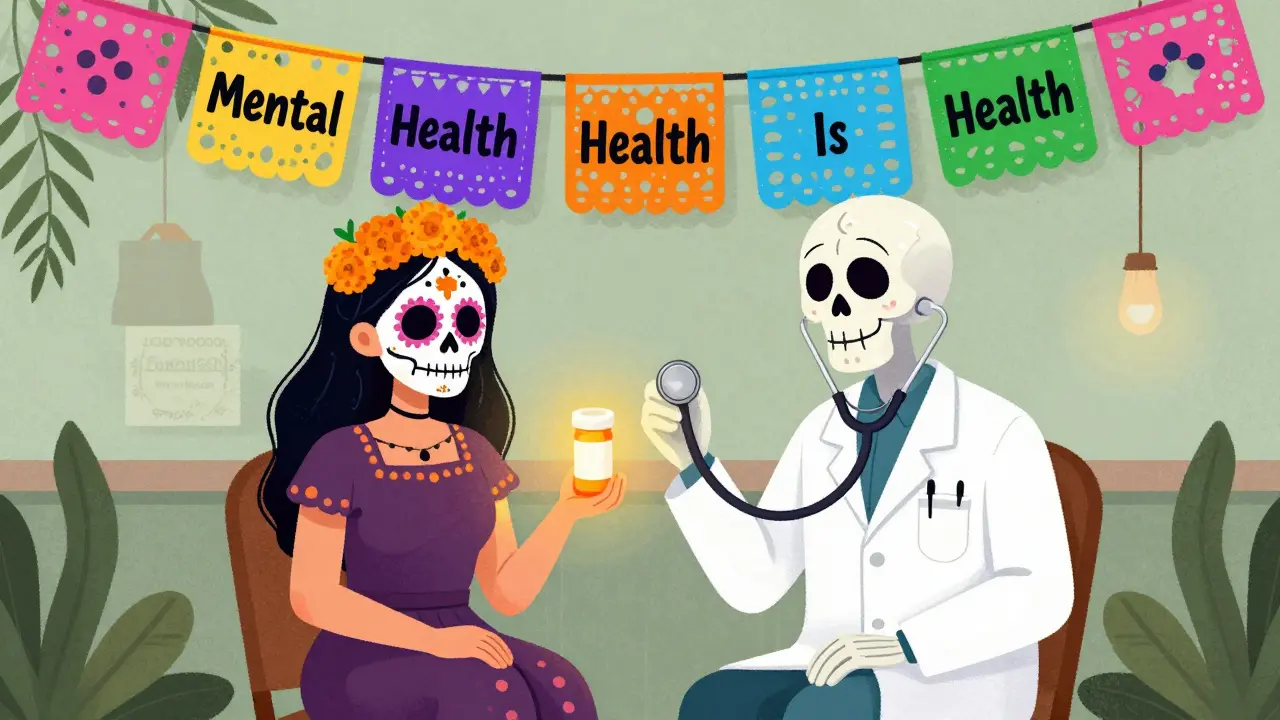
John Green, author and YouTuber with over 2 million followers, started talking openly about his SSRIs in 2017. He didn’t preach. He just shared: "I take this because my brain needs help. It’s no different than wearing glasses."
His audience responded. In surveys, 68% said watching his videos made them feel less alone. Some wrote back: "I finally told my mom. She cried. Then she hugged me."
Peer support works too. Programs that hire people who’ve taken psychiatric meds to lead support groups see 28% higher long-term adherence. Why? Because lived experience is more powerful than any pamphlet.
One woman in Seattle told her employer she was taking medication for depression. She expected judgment. Instead, her manager said, "I take blood pressure pills. This is the same thing." That’s the moment stigma breaks.
What Doesn’t Work
Not every effort helps. Some well-meaning campaigns backfire.
Trying to build empathy by simulating hallucinations? Research shows it can increase fear by 15% if not done right. People don’t need to "feel what it’s like." They need to understand it’s treatable.
Shaming people for not taking meds? That just makes them hide. Guilt doesn’t lead to healing-it leads to silence.
And avoiding the topic? That’s the worst move. Silence tells people their experience isn’t valid.
What works is honesty. Clarity. Compassion. And repetition.
Where We Go From Here
The CDC is now running a national campaign called "Medications as Medicine," treating psychiatric drugs like any other chronic illness treatment. Early results? A 21% rise in positive attitudes in pilot communities.
Telehealth is a double-edged sword. It makes care more accessible-but 41% of patients say they feel less comfortable discussing meds over video. That’s a problem. We need better training for virtual providers to create safe spaces.
And the future? It’s in integration. Mental health care shouldn’t be a separate room. It should be part of every checkup. Every conversation. Every prescription.
By 2026, most people taking antidepressants will get them from their family doctor. That’s not a failure of psychiatry. It’s a win for normalizing care.
Stigma won’t vanish overnight. But every time someone says, "I take medication for my brain," and isn’t met with judgment-stigma loses a little more ground.
You don’t need to convince everyone. Just speak your truth. And keep speaking it.




9 Comments
Joseph Manuel December 22, 2025
The empirical data presented in this analysis is methodologically sound, particularly the longitudinal adherence metrics cited from peer-reviewed clinical trials. However, the conflation of pharmacological intervention with chronic somatic disease paradigms, while rhetorically effective, risks oversimplifying neurobiological heterogeneity. The assumption that SSRIs function identically to insulin in terms of homeostatic regulation lacks molecular precision, as serotonin modulation is non-linear and receptor-subtype dependent. Furthermore, the normalization strategy ignores cultural epistemologies where somatization of psychological distress remains the dominant heuristic. Without addressing these epistemic fractures, linguistic reframing remains superficial.
EMMANUEL EMEKAOGBOR December 24, 2025
It is truly commendable that this discourse is being elevated with such scholarly rigor. In Nigeria, where mental health is often perceived as a spiritual matter, the comparison to insulin is profoundly helpful. Many families believe that medication interferes with divine healing, yet when framed as physiological regulation rather than psychological weakness, acceptance increases markedly. I have personally used this analogy in community workshops with measurable success. The language of medicine, when delivered with dignity, dissolves stigma more effectively than any sermon or slogan.
CHETAN MANDLECHA December 25, 2025
Interesting take. In India, we have this weird mix-people will take pills for blood pressure without blinking, but if you say you're on antidepressants, they ask if you're 'going crazy.' The word 'meds' is the problem. Say 'antidepressant' or 'anxiolytic' and suddenly it sounds like science, not weakness. Also, I've noticed that when you say 'brain chemistry' instead of 'mental illness,' people nod like they get it. It's not magic-it's just semantics. But semantics matter.
Jillian Angus December 26, 2025
I carry my pills in a tea tin labeled 'vitamins' and no one asks questions. My mom thinks I'm taking something for my 'nerves' and that's fine. I don't need to explain it. Some battles aren't worth fighting.
Adarsh Dubey December 28, 2025
The linguistic shift from 'meds' to 'medication' is statistically validated, as referenced in the 2020 Journal of Clinical Psychiatry meta-analysis. However, the article overlooks the role of pharmaceutical marketing in reinforcing stigma. Direct-to-consumer advertising of antipsychotics often frames them as 'last-resort' treatments, implicitly reinforcing the notion that they are dangerous or extreme. A more comprehensive solution requires regulatory intervention to standardize terminology across all psychiatric drug labeling and promotional materials. Until then, individual reframing, while noble, remains insufficient.
Bartholomew Henry Allen December 28, 2025
Why are we treating mental health like it's a special category? We don't ask people to justify taking aspirin. We don't call it a crutch. This whole stigma thing is a liberal fantasy. If your body needs a chemical, you take it. End of story. Stop making it a moral issue. America is falling apart because we turned medicine into a debate. Take the pill. Shut up. Get better.
Chris Buchanan December 28, 2025
Bro. You just described my exact life. I used to say 'I take antidepressants' and people would go silent or say 'oh wow that's intense.' Now I say 'I take a daily pill to keep my brain from short-circuiting' and they nod like it's the most normal thing. One guy even said 'I take one for my knees, this is the same.' 😅 You're right-language is the cheat code. Also, if anyone says 'happy pills' now, I just deadpan: 'Nah, they're for not crying in the shower. That's a bigger win.' You're doing great work here.
Wilton Holliday December 29, 2025
This is exactly what I tell my clients. 🙌 I even have a printed card I hand out: 'My brain needs medicine like my eyes need glasses.' One lady cried and said her dad finally understood after 15 years. You're not just writing-you're healing. Keep going. And if you're scared to say it out loud? Whisper it to yourself in the mirror first. Then say it to one person. Then two. You're not alone. 💪❤️
Raja P December 30, 2025
in india we say 'dil ki dawa' for heart meds but for brain? 'dimag ki dawa' sounds weird. so i just say 'main ek capsule lete hoon jo meri soch ko stable rakhti hai.' no one argues. they just say 'oh, like blood pressure?' and we move on. sometimes the quietest way is the strongest.