

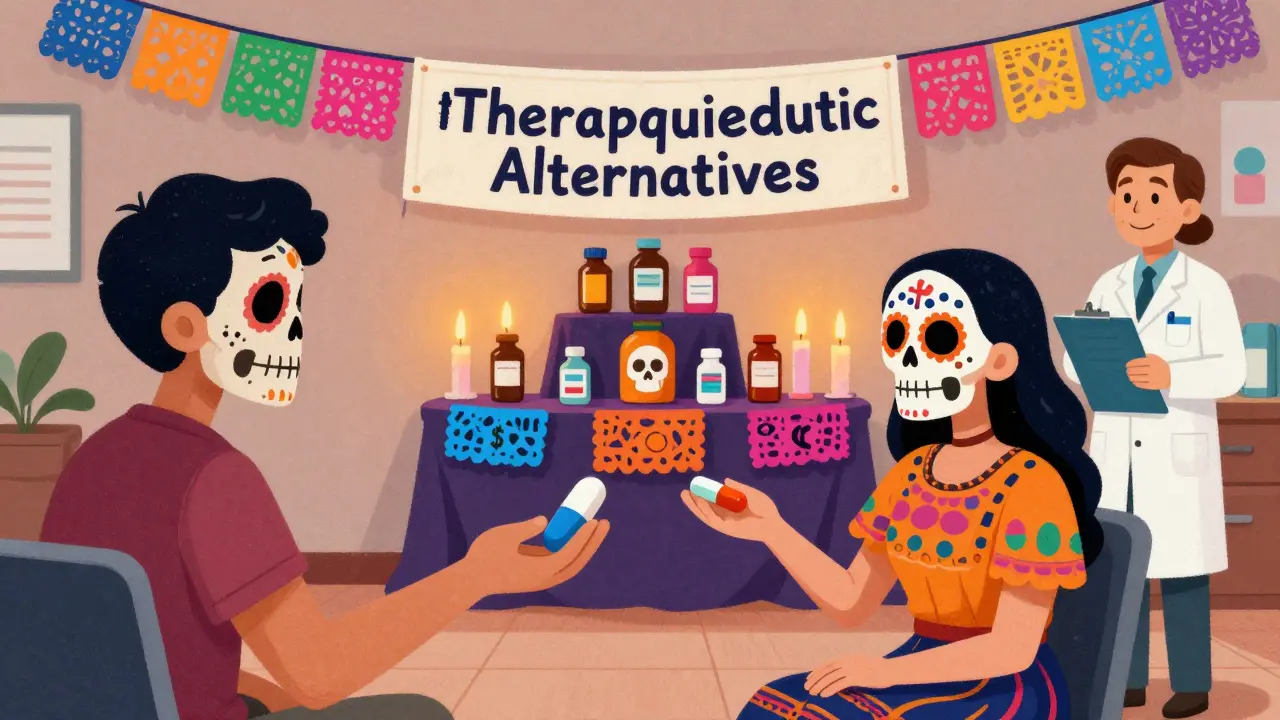
Getting prescribed a medication you can’t afford is more common than you think. In 2024, nearly 3 in 10 Americans skipped doses, cut pills in half, or didn’t fill a prescription because of cost. If you’re one of them, you’re not alone-and there’s a proven way to fix it without sacrificing your health: asking for a therapeutic alternative.
Therapeutic alternatives aren’t generics. They’re different drugs that work just as well for your condition but cost a fraction of the price. For example, switching from brand-name Eliquis (apixaban) to generic warfarin can drop your monthly cost from $450 to under $10. Or trading Nexium (esomeprazole) for omeprazole cuts an annual bill from $365 to $15. These aren’t rare cases-they happen every day in clinics across the country.
What Is a Therapeutic Alternative?
A therapeutic alternative is a different medication that treats the same condition as your current drug, but belongs to a different chemical class or is a different version within the same class. It’s not just a generic version of the same pill-it’s a different drug with similar effectiveness and safety.
For example:
- If you’re on Lyrica (pregabalin) for nerve pain, your doctor might suggest gabapentin, which works similarly and costs 95% less.
- If you’re taking Crestor (rosuvastatin) for cholesterol, atorvastatin (Lipitor) is often just as effective and much cheaper.
- For type 2 diabetes, switching from Jardiance (empagliflozin) to metformin can save hundreds per month.
The key is that these drugs have been tested head-to-head in clinical studies and shown comparable results. The American College of Physicians says they must meet three standards: similar effectiveness, similar side effect profiles, and matching dosing schedules.
Why Don’t Doctors Always Suggest These?
Many doctors know about therapeutic alternatives-but they don’t always bring them up. Why? Three reasons:
- They’re busy. A 15-minute appointment doesn’t leave room to review every drug’s price tag.
- They’re used to prescribing what’s familiar. If a drug worked for a patient last year, they assume it’s the best choice.
- They worry about side effects. Some patients respond better to one drug than another-even within the same class.
But here’s the truth: if you don’t ask, you won’t get the option. A 2023 survey by the American Academy of Family Physicians found that 37% of patients who wanted a cheaper alternative were initially turned down by their doctor. But when patients came prepared with data, 68% succeeded.
How to Ask for a Lower-Cost Alternative
Asking for a therapeutic alternative isn’t about pushing back-it’s about partnering with your doctor. Here’s how to do it right.
Step 1: Know Your Current Drug’s Cost
Check your copay. If it’s over $30 a month for a chronic condition, you’re likely paying more than necessary. Use GoodRx (or similar tools) to compare prices at nearby pharmacies. Prices can vary by over 5,000% between stores for the same drug. A pill that costs $120 at one pharmacy might be $15 at another.
Step 2: Research Alternatives
Look up your drug and search for “therapeutic alternatives.” For common conditions, here are proven swaps:
| Current Drug | Therapeutic Alternative | Estimated Monthly Savings |
|---|---|---|
| Eliquis (apixaban) | Warfarin | $440+ |
| Nexium (esomeprazole) | Omeprazole | $30+ |
| Lyrica (pregabalin) | Gabapentin | $435+ |
| Crestor (rosuvastatin) | Atorvastatin | $380+ |
| Jardiance (empagliflozin) | Metformin | $250+ |
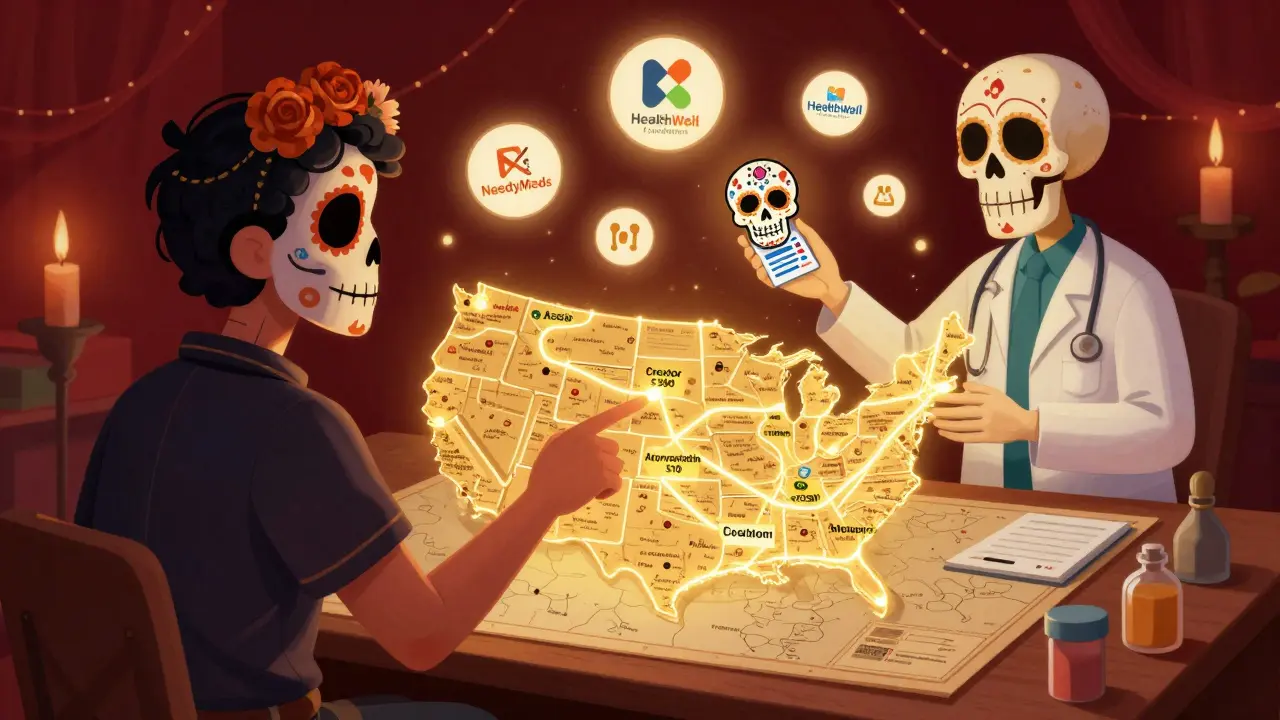
Use trusted sources like the NeedyMeds database or the RxAssist program to find low-cost options and patient assistance programs.
Step 3: Prepare Your Ask
Don’t just say, “This is too expensive.” Be specific. Say:
- “I’m having trouble affording my medication. Is there a similar drug that costs less?”
- “I saw that gabapentin works for nerve pain like Lyrica. Could we try that instead?”
- “My copay is $450 a month. Is there a generic or alternative that’s covered at a lower tier?”
Bring printed info or show your phone screen. Studies show doctors are more likely to agree when patients come with data.
Step 4: Ask About Formulary Tiers and Exceptions
Your insurance puts drugs into tiers. Tier 1 = cheap. Tier 4 = expensive. If your drug is on Tier 4, ask if there’s a Tier 1 alternative. If not, request a tiering exception. For Medicare Part D, you can file this request-your doctor just needs to write a note saying the current drug isn’t working or is unaffordable.
By law, insurers must respond within 72 hours for urgent cases or 14 days for routine ones. Many people don’t know this-and miss out on savings.
Step 5: Use Patient Assistance Programs
Even if there’s no therapeutic alternative, you might still qualify for help. Many drugmakers offer free or $0 copay cards if your income is under $60,000/year. Programs like:
- NeedyMeds (free database of assistance programs)
- RxAssist (search by drug name)
- HealthWell Foundation (covers 1,200+ drugs)
These aren’t charity-they’re standard industry practice. Over 8,000 people used the HealthWell Foundation’s program in 2024 alone, saving an average of $312 per month.
When It Won’t Work
Therapeutic alternatives aren’t magic. They don’t exist for every drug. About 15% of specialty medications-especially biologics for cancer, autoimmune diseases, or rare conditions-have no close substitutes.
Also, not everyone responds the same way. One patient might switch from Jardiance to metformin and see perfect blood sugar control. Another might need the original drug to avoid complications. That’s why your doctor’s judgment matters.
If a switch doesn’t work, don’t give up. Go back. Try another alternative. Or ask about extended prescriptions. Getting a 90-day supply instead of 30 can cut your copay by 25%.
Real Stories, Real Savings
One patient in Ohio switched from Lyrica to gabapentin after showing her doctor a GoodRx printout. Her monthly bill dropped from $450 to $15. She said, “I didn’t even notice a difference in how I felt.”
A man in Texas was paying $380 a month for Crestor. His doctor agreed to switch him to atorvastatin. He saved $380 a month-and kept his cholesterol under control.
But not all stories end well. One woman with psoriasis switched from Taltz to methotrexate because of cost. Her condition flared. She ended up in the ER with $18,000 in bills. That’s why communication matters-don’t switch without your doctor’s input.
What to Do If Your Doctor Says No
If your doctor refuses, ask why. Is it because:
- They don’t know the alternative?
- They think it’s less effective?
- They’re worried about side effects?
Then give them the facts. Bring a printed copy of a clinical guideline from the Institute for Clinical Systems Improvement or a study from the American Society of Health-System Pharmacists. Many doctors will change their mind when shown evidence.
If they still say no, ask for a referral to a pharmacist who specializes in medication therapy management. Most hospitals and clinics have one. They’re trained to find cost-saving options and can often write a letter to your doctor supporting the switch.
Bottom Line: You Have Power
You don’t have to pay what you’re told. Prescription drug prices in the U.S. are wildly inconsistent-and you can use that to your advantage. Therapeutic alternatives are legal, safe, and widely supported by medical guidelines. They’ve been shown to save patients hundreds per month without harming outcomes.
Start today. Check your next prescription’s price on GoodRx. Write down one alternative you’d like to try. Bring it to your next appointment. Say it clearly. You’ve paid for your healthcare-you deserve to get the most value from it.
And remember: if you can’t afford your medication, it’s not your fault. It’s a broken system. But you’re not powerless. You have the right to ask-and the data to back it up.
Can I switch to a cheaper medication without my doctor’s approval?
No. Never stop or switch medications on your own. Even if a drug seems similar, changing without medical supervision can be dangerous. Always talk to your doctor or pharmacist first. They’ll check for interactions, proper dosing, and whether the alternative is truly appropriate for your condition.
Are therapeutic alternatives as effective as brand-name drugs?
Yes, when chosen correctly. Clinical studies show that drugs like gabapentin and omeprazole work just as well as their brand-name counterparts for most patients. The American College of Physicians requires that therapeutic alternatives have proven effectiveness in head-to-head trials. But effectiveness can vary by individual-what works for one person might not work for another. That’s why doctor oversight is critical.
Does insurance cover therapeutic alternatives?
Usually, yes-and often at a lower cost. Insurance plans favor drugs on their preferred formulary list, which typically includes generics and cost-effective alternatives. If your current drug is expensive and there’s a cheaper alternative, your insurer may require you to try the alternative first. This is called step therapy. But you can also request an exception if your doctor says the alternative won’t work for you.
How long does it take to get a therapeutic alternative approved?
If your doctor prescribes it and it’s on your plan’s formulary, you can get it the same day. If you need a tiering exception from your insurer, it takes up to 72 hours for urgent cases and 14 days for standard requests. Some pharmacies can fill the new prescription immediately while the exception is being processed-ask your pharmacist.
What if I can’t afford even the alternative?
You still have options. Many drug manufacturers offer free or low-cost programs if your income is below $60,000/year. Organizations like NeedyMeds and RxAssist help you find these. Also, ask your doctor about 90-day prescriptions-they often lower your copay by 25%. And if you’re on Medicare, you may qualify for Extra Help, a federal program that reduces drug costs for low-income seniors.




11 Comments
Aditya Kumar December 15, 2025
I read this and just sighed. I've been on gabapentin for years, cost me $5 a month. My doc never mentioned it when I was on Lyrica. Guess I had to figure it out myself. Now I'm stuck with the same old script because I'm too tired to fight the system.
Colleen Bigelow December 16, 2025
This is how the pharmaceutical cartel keeps us docile. They pay doctors to push expensive pills while you're left picking up the tab. They don't want you to know about warfarin because it's been around since the 1950s and costs less than your morning coffee. The FDA? In bed with Big Pharma. Wake up. This isn't healthcare-it's a rigged game.
Billy Poling December 17, 2025
While the information presented is statistically sound and empirically supported by multiple peer-reviewed studies including those published in the Journal of the American Medical Association and the Annals of Internal Medicine, I must express concern regarding the potential for therapeutic substitution to lead to suboptimal clinical outcomes in patients with comorbidities or polypharmacy regimens. The pharmacokinetic and pharmacodynamic profiles of alternatives such as atorvastatin versus rosuvastatin are not always interchangeable in elderly populations with renal impairment, and the absence of individualized risk stratification in this guidance may inadvertently contribute to iatrogenic harm. A more nuanced, patient-centered approach incorporating shared decision-making and pharmacogenomic data is warranted.
Kim Hines December 18, 2025
I used to pay $400 for Eliquis. Switched to warfarin. Monthly blood tests? Annoying. But I saved $4,000 a year. Worth it. My doctor didn't bring it up either. Had to Google it.
Joanna Ebizie December 19, 2025
People still don't get it. If your doctor doesn't mention cheaper options, they're either lazy or getting kickbacks. I had a doc who literally said 'I don't care what it costs, this is what works.' So I switched doctors. Don't be a doormat. You're not a customer-you're a patient. Demand better.
Mike Smith December 20, 2025
This is one of the most practical, actionable guides I’ve seen on this topic. You’ve broken down a deeply frustrating system into clear, doable steps. I’ve shared this with my aging parents and my friends on Medicare. Knowledge is power-and you’ve given people real power. Thank you for not sugarcoating the truth but still offering hope.
Ron Williams December 20, 2025
As someone who grew up in India and now lives in the U.S., I can tell you this: in my home country, we use generics without stigma. Here, brand names are treated like status symbols. It’s ridiculous. Gabapentin isn’t ‘lesser’-it’s just cheaper. We need to change the culture around meds, not just the pricing.
Kitty Price December 21, 2025
I saved $300/month switching from Nexium to omeprazole 😌 I didn’t even feel different. My doctor was like ‘huh, cool’ and wrote the script. Why is this not common knowledge? 🤔
Randolph Rickman December 22, 2025
You're not alone. I was paying $450 for Jardiance until I found out metformin was just as good for me. My doctor was skeptical at first, but I brought the studies. He changed his mind. Now I’m saving $250 a month and feel better than ever. You’ve got this. Bring the data. Be calm. Be persistent. It works.
sue spark December 23, 2025
I tried to switch from Lyrica to gabapentin and my insurance denied it because they said it was not first line even though the guidelines say it is so I had to get my doctor to appeal and it took three weeks and I was in pain the whole time but I got it and now I pay 12 dollars a month and I dont regret it
SHAMSHEER SHAIKH December 24, 2025
I am from India, and in my country, we have been using generic alternatives for decades without any stigma. The fact that in the United States, patients are being forced to pay hundreds of dollars for drugs that have been available for pennies elsewhere, is not just tragic-it is a moral failure. I have personally helped three friends here switch to therapeutic alternatives, and each time, their relief was palpable. This is not rocket science. It is basic human dignity. Please, share this. Spread it. It is time to end the pharmaceutical exploitation.