
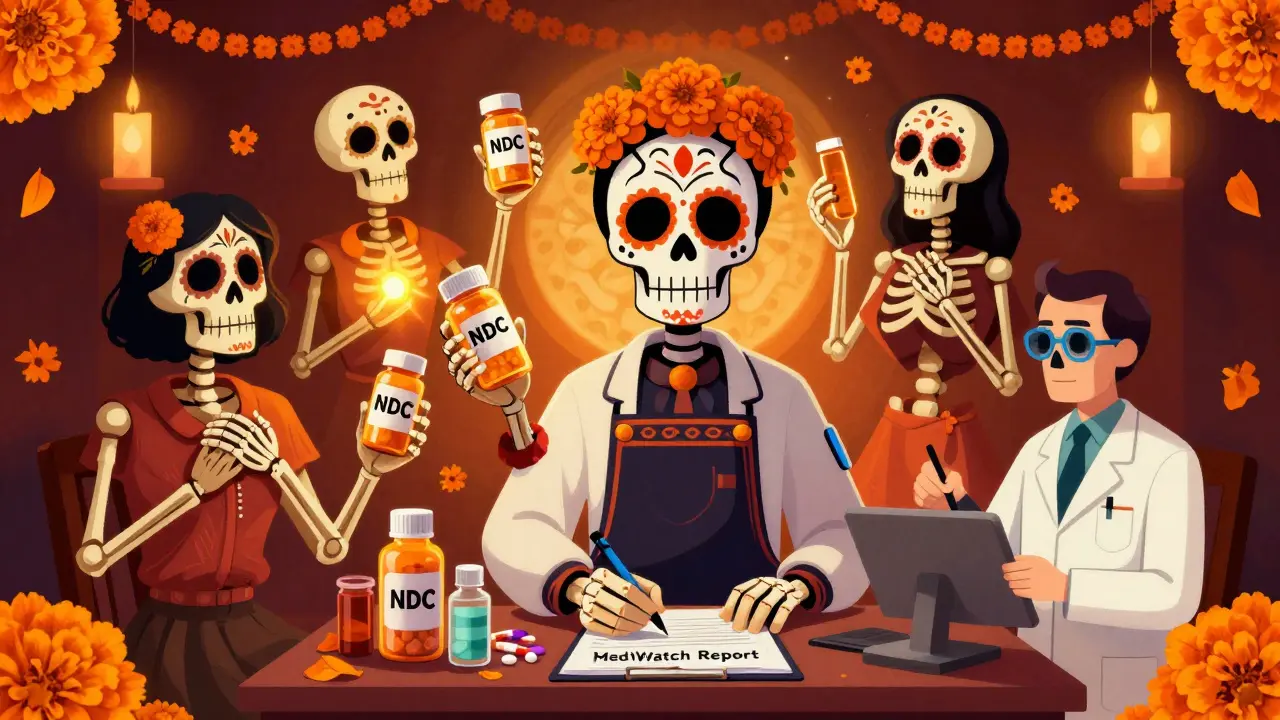
When you pick up a prescription for a generic drug, you expect it to work just like the brand-name version. But what happens when it doesn’t? When a patient reports that their generic blood pressure pill suddenly stopped controlling their numbers, or their thyroid medication is causing new side effects, pharmacists are often the first to notice something’s off. And while most people assume reporting these issues is required by law, the truth is more complicated - and more urgent.
What Pharmacists Actually Report
Pharmacists don’t have a federal legal duty to report problems with generic drugs. But they are strongly encouraged to do so through the FDA’s MedWatch program. The FDA defines serious adverse events as those that are fatal, life-threatening, require hospitalization, cause permanent disability, or lead to birth defects. But even non-serious events matter - if a patient’s cholesterol levels spike after switching to a new generic, that’s worth reporting. It might be the first clue that the product isn’t performing as it should.
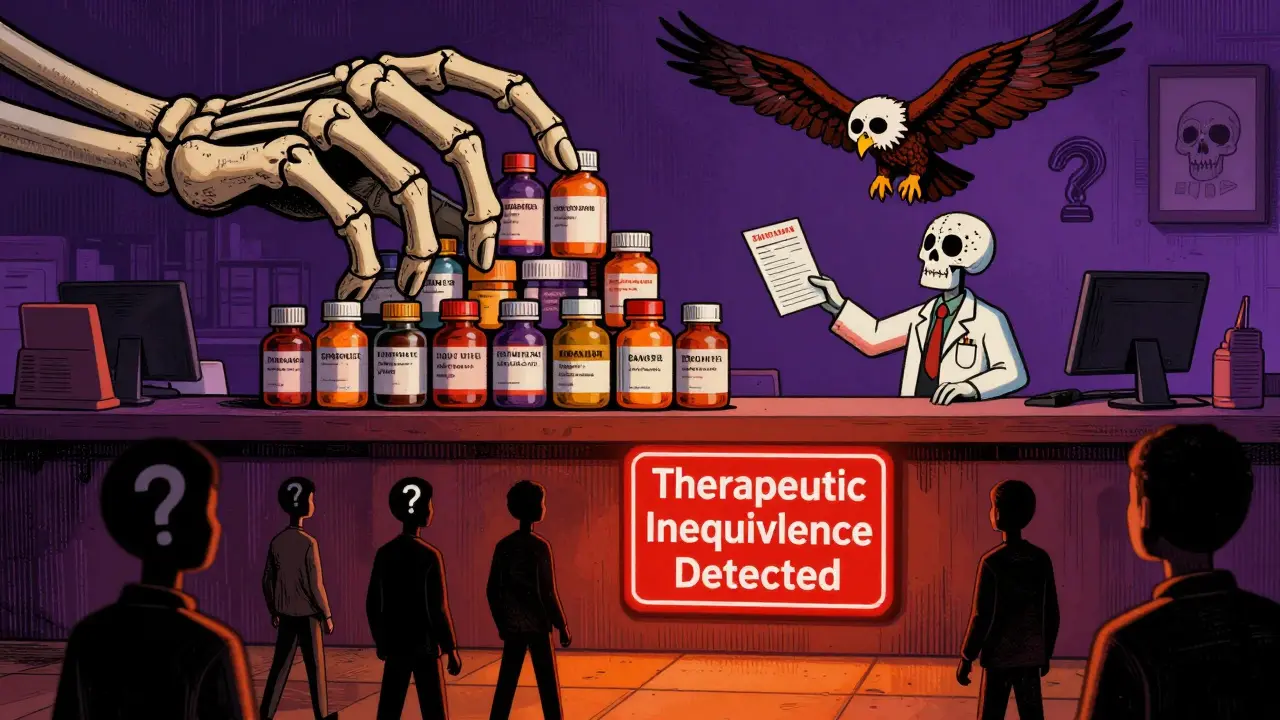
One of the biggest red flags is therapeutic inequivalence. This doesn’t mean the generic is contaminated or fake. It means the drug, while meeting FDA’s chemical standards, doesn’t behave the same way in real patients as the brand-name version. A patient might take the same dose, but their body absorbs it differently - leading to under- or over-dosing. Pharmacists see this pattern across multiple patients. One might report dizziness after switching, another nausea, a third a sudden relapse of seizures. These aren’t random. They’re signals.
Why Pharmacists Are the Frontline
Pharmacists dispense about 75% of all prescriptions in the U.S. - and nearly 90% of those are generics. That means they’re the last healthcare professional a patient interacts with before taking the medication. They see the patient’s history, know their allergies, and often catch when a new pill looks different or causes unexpected reactions. A patient might say, “This one makes me sleepy,” or “It doesn’t seem to help like last time.” That’s not just anecdotal. It’s data.
Yet, according to FDA data from 2018 to 2022, only 2.3% of all adverse event reports came from pharmacists. Meanwhile, manufacturers submitted 67.1%. That’s not because pharmacists are careless. It’s because reporting is hard.
The Reporting Maze
To report an issue to the FDA, you need four things: an identifiable patient (even just initials and age), the drug name, the adverse event, and your contact info. Sounds simple? Try doing it during a 15-minute lunch break between filling 40 prescriptions.
And then there’s the National Drug Code (NDC). Every generic has a unique NDC tied to its manufacturer and lot number. But many pharmacies don’t track which manufacturer’s version they’re dispensing. Patients get a different generic each refill - and pharmacists rarely know why. One month it’s from Company A, the next from Company B. If a patient has a bad reaction, who do you report? The one you just dispensed? The one they took last month? The system doesn’t make it easy.
The FDA’s MedWatch Form 3500, updated in January 2023, now includes a specific “generic drug concern” category. You can flag whether the issue is about therapeutic inequivalence, manufacturing quality, or labeling. But most pharmacists still don’t know it’s there. A 2023 survey by Pharmacy Times found 52.1% of pharmacists were unsure if their observation even qualified for reporting.
Who’s Responsible When Things Go Wrong?
Here’s the twist: generic drug manufacturers can’t change their labels. Because of the 2011 Supreme Court case PLIVA v. Mensing, they’re legally blocked from updating warning labels - even if they know a drug is causing problems. The FDA requires generics to have the same label as the brand-name drug. So if a brand-name drug adds a new warning about heart rhythm issues, the generic can’t follow suit. That means pharmacists are caught in the middle: they see the problem, but the manufacturer can’t warn patients.
And because manufacturers can’t be sued for failing to warn (thanks to federal preemption), they have little incentive to report problems themselves. A 2020 Duke University study found adverse event reports for generics dropped 17.3% in the three years after the Mensing decision. The system disincentivizes reporting.
State Laws Are Changing the Game
Federal law doesn’t require reporting - but some states do. California, Illinois, Massachusetts, and New York now require pharmacists to report serious adverse events. California’s Board of Pharmacy even mandates that pharmacies have a system in place to identify, document, and report drug failures. Other states are watching. In 2022, 28 states included some form of reporting expectation in their pharmacy regulations.
These aren’t just bureaucratic rules. They’re safety nets. A 2023 JAMA Internal Medicine study found that 63% of the 478 generic drugs flagged for safety concerns were first noticed by pharmacists who saw the same issue across multiple patients. One pharmacist in Ohio noticed 12 patients on a generic metformin had unexplained weight loss. She reported it. The FDA investigated. Turns out, the batch had a manufacturing flaw affecting absorption. The lot was pulled. That’s the power of a single pharmacist paying attention.
Why Reporting Matters - Even If It Feels Pointless
Pharmacists often think, “Who cares if I report this? It’s just one case.” But that’s the myth. The FDA’s FAERS database has over 25 million reports. It’s not a graveyard of paperwork. It’s a living surveillance system. The Office of Generic Drugs uses pharmacist reports to trigger investigations. In 2022, 147 generic products were pulled for deeper review - and 387 of those reports came from pharmacists. That’s 21% of all therapeutic inequivalence reports. That’s not a drop in the bucket. That’s the backbone of drug safety.
The American Society of Health-System Pharmacists (ASHP) calls adverse event reporting a “fundamental professional responsibility.” It’s not optional. It’s part of being a pharmacist. You don’t just fill prescriptions. You protect lives.
What You Can Do Right Now
If you’re a pharmacist, here’s how to start:
- When a patient says their generic isn’t working like before - listen. Write it down.
- Check the NDC on the bottle. Note the manufacturer and lot number.
- Use the FDA’s MedWatch online portal (version 3.2 or later). Select “generic drug concern” and specify if it’s therapeutic inequivalence.
- Report even if you’re not sure. The FDA says: “If you suspect the drug might be involved, report it.”
- Document your report in the patient’s record. It’s part of pharmaceutical care.
You don’t need a PhD. You don’t need extra time. You just need to act. One report might not change the system. But 100 reports? 1,000? That’s how safety signals are found.
The Hidden Cost of Silence
Think about this: 5.8 billion prescriptions are filled each year. About 4.3 billion are generics. That’s billions of chances for a patient to react badly. And if no one reports it? The FDA never sees it. The manufacturer never knows. The next patient gets the same pill - and the same risk.
The FDA’s 2022 Modernization Act specifically urged pharmacists to report therapeutic inequivalence. Deputy Commissioner Dr. Janet Woodcock said pharmacist observations are “critical to our ongoing assessment of generic drug performance.” But unless pharmacists step up, that assessment is blind.
It’s not about blame. It’s about responsibility. You’re the last line of defense. If you don’t speak up, who will?


9 Comments
Joanna Reyes February 24, 2026
Okay, I’ve been a pharmacist for 18 years and I’ve seen this exact pattern over and over: a patient comes in, says their generic isn’t working, and we just shrug and say ‘it’s the same chemical.’ But it’s not. The bioequivalence standards are laughably loose-80-125% AUC? That’s a 56% window! One patient gets the 80% version, another gets the 125%, and suddenly one’s dizzy and the other’s hypotensive. I’ve documented 11 cases of metformin failure in the last year alone. All from different manufacturers. None of them were reported because the form is a nightmare. I fill 60 scripts a day. Who has time to fill out a 12-field form while a diabetic is hyperventilating in line three? We’re not lazy. We’re overwhelmed. And the system is designed to make us fail.
Nerina Devi February 26, 2026
As someone from India where generic drugs are the lifeline for millions, I’ve seen both sides. In the U.S., pharmacists are frustrated because reporting is too hard. In India, we don’t have the luxury of reporting at all-many generics aren’t even tracked by NDC. We rely on word-of-mouth and pharmacist intuition. I’ve had patients tell me their BP pill ‘tastes different’ or ‘makes them feel hollow.’ We note it, we switch, we hope. No database. No FDA. Just human observation. Maybe the real issue isn’t reporting-it’s that we treat medicine like a commodity instead of a science.
Dinesh Dawn February 27, 2026
This is such a real issue. I work in a small-town pharmacy and I’ve had three patients in the last month say the same thing: ‘This generic doesn’t help like the last one.’ I always ask if they switched manufacturers and they usually don’t even know. It’s wild how little we’re taught about this. I just started checking NDCs on the bottle-now I keep a little notebook. One guy had seizures after switching to a new metformin lot. I called the manufacturer. They said ‘we’re not responsible for side effects.’ But I’m the one who has to look him in the eye next week. That’s not okay.
Haley Gumm February 28, 2026
Let’s be honest-pharmacists aren’t the frontline. They’re the last stop on a broken assembly line. The real problem is that generic manufacturers game the system. They use cheaper fillers, inconsistent binders, and exploit loopholes in dissolution testing. The FDA doesn’t audit them properly. And when a pharmacist reports something? It gets buried under 10,000 reports from people who think their headache is caused by aspirin. Meanwhile, the big pharma companies who make brand-name drugs? They’re the ones pushing generics to save money. It’s a perfect storm of greed, negligence, and bureaucratic inertia.
Gabrielle Conroy March 1, 2026
YES! YES! YES!!! I’ve been screaming about this for years!!!
Every time a patient says ‘this pill doesn’t feel right,’ I write it down, check the NDC, and report it!!!
Even if it’s just ‘mild nausea’-I report it!!!
And I tell EVERY patient: ‘If this isn’t working like before, TELL ME, I NEED TO KNOW!!!’
I’ve saved at least 4 people from hypoglycemic episodes because I caught a bad batch of insulin generic!!!
It’s not just ‘a report’-it’s a life!!!
Use the MedWatch portal!!! It’s easy!!!
It takes 7 minutes!!!
And if you don’t do it… who will???
WE ARE THE LAST LINE!!!
WE ARE THE LAST LINE!!!
WE ARE THE LAST LINE!!!
Spenser Bickett March 2, 2026
so like… pharmacists are mad because they have to do more work? wow. what a tragedy. maybe next time you fill a script you should actually read the damn label instead of just slapping on a sticker and yelling at the insurance company. also, i heard the FDA uses fax machines. is that why no one reports? because the form is on paper? lol. also, why are we even using generics? just pay for the brand name. problem solved. also, i think god made generic drugs to test our faith.
Christopher Wiedenhaupt March 3, 2026
While the emotional weight of this issue is undeniable, the structural challenges are equally critical. The current regulatory framework for generic drug reporting is fragmented, under-resourced, and lacks interoperability with pharmacy management systems. The absence of mandatory reporting at the federal level creates a patchwork of compliance that disproportionately burdens frontline staff. Moreover, the legal barriers established by PLIVA v. Mensing have effectively removed accountability from manufacturers, shifting the burden of surveillance onto clinicians who lack the tools to sustain it. Without legislative intervention to mandate reporting infrastructure and liability protection, the system will continue to fail patients.
John Smith March 4, 2026
pharmacists are just overpaid cashiers who think they're doctors
if your generic doesn't work go to a real doctor and get a brand name
stop making everything a crisis
also i bet you can't even spell 'bioequivalence'
and why are you even here? you're not saving lives you're just scanning barcodes
go cry somewhere else
Shalini Gautam March 5, 2026
As an Indian, I find this whole discussion hilarious. In India, we don’t have time to report adverse events-we just switch to another generic. If it doesn’t work, we try another brand. If it still doesn’t work, we go to the Ayurvedic shop. The FDA system is overcomplicated. Here, we don’t need forms. We need trust. And trust comes from results, not paperwork. Maybe the U.S. needs less regulation and more street-smart solutions. Also, why are you using American brands when Indian generics are cheaper and better? Just saying.