
Warfarin-Rifampin Dose Adjustment Calculator
Warfarin Dose Adjustment Calculator
Important Note: This calculator provides an estimated adjustment range only. Actual dose adjustments must be determined by a physician based on INR monitoring and individual patient factors. Never adjust your warfarin dose without medical supervision.
When rifampin is added to a patient’s medication list, it doesn’t just fight bacteria-it quietly dismantles the effectiveness of many other drugs. This isn’t a side effect. It’s a powerful, predictable, and often dangerous drug interaction. Rifampin, a first-line antibiotic for tuberculosis and meningitis prophylaxis, is one of the strongest known inducers of liver enzymes that break down medications. For patients on anticoagulants like warfarin or direct oral anticoagulants (DOACs), or antivirals like HIV protease inhibitors, this means their drugs can become nearly useless in days-not because they stopped taking them, but because their body started destroying them faster.
How Rifampin Changes Your Body’s Drug Processing
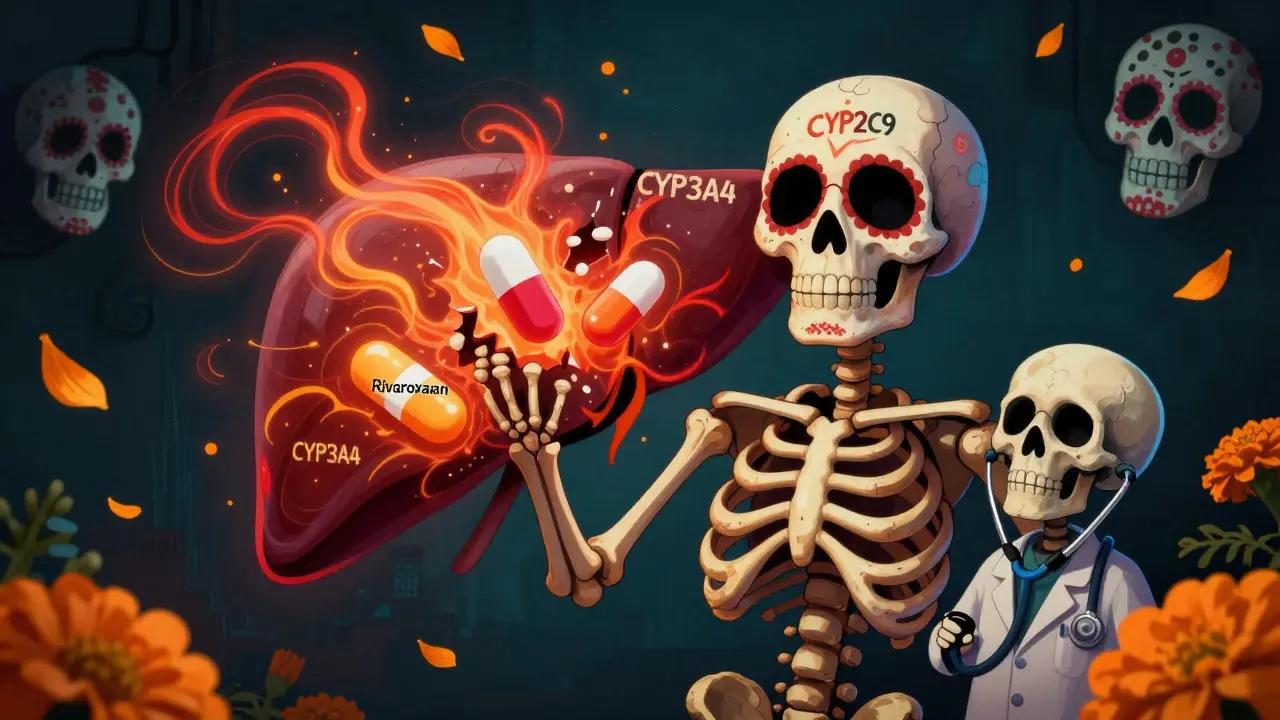
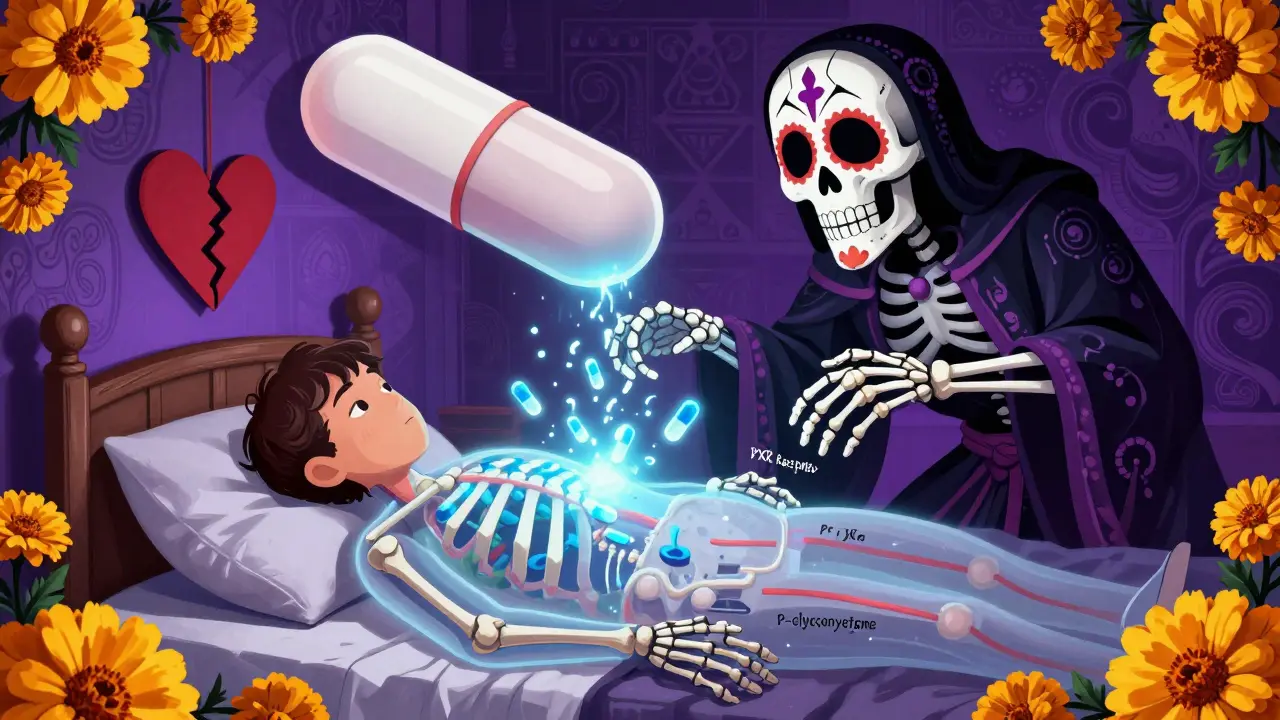
Rifampin doesn’t block enzymes. It turns them on. It activates a receptor in liver cells called the pregnane X receptor (PXR). When PXR turns on, it tells the liver to make more of certain enzymes-mainly CYP3A4 and CYP2C9-that break down drugs. It also ramps up P-glycoprotein, a protein that pumps drugs out of cells before they can do their job. The result? Drugs get cleared from your bloodstream too quickly.
This isn’t a slow process. Within 24 to 48 hours of starting rifampin, enzyme levels begin to rise. By day 5 to 7, they peak. Even after stopping rifampin, it takes 2 to 3 weeks for enzyme levels to return to normal. That means if you’re on warfarin or rivaroxaban and start rifampin for a suspected infection, your anticoagulant levels could crash before you even notice symptoms.
Warfarin and Rifampin: A Dangerous Mix
Warfarin has been the go-to anticoagulant for decades, especially for people with mechanical heart valves or atrial fibrillation. But it’s extremely sensitive to rifampin. Studies show rifampin can reduce warfarin’s blood levels by 15% to 74%. The bigger drop happens with S-warfarin, the more potent isomer, because it’s broken down by CYP2C9-the same enzyme rifampin strongly induces.
One case involved a 57-year-old woman with a mechanical aortic valve. She was stable on phenprocoumon (a warfarin-like drug) for years. When she was started on rifampin for possible endocarditis, her INR-her measure of blood clotting time-plummeted into the normal range. She wasn’t bleeding, but she wasn’t protected from clots either. Her doctors had to switch her to injectable heparin for 15 days until rifampin cleared and her INR returned to therapeutic levels.
Doctors often have to triple or even quadruple warfarin doses to keep INR stable during rifampin use. But even then, it’s risky. Small changes in diet, illness, or other meds can throw the balance off again. The American College of Chest Physicians recommends switching to low molecular weight heparin (LMWH) injections during rifampin treatment and only returning to warfarin after a full 2-week washout period.
DOACs Don’t Escape the Hit
Direct oral anticoagulants (DOACs) like apixaban, rivaroxaban, dabigatran, and edoxaban were marketed as safer, more predictable alternatives to warfarin. But they’re not immune to rifampin.
Research shows:
- Dabigatran: AUC drops by 50-67%
- Apixaban: AUC drops by 50-67%
- Rivaroxaban: AUC drops by 50-67%
- Edoxaban: AUC drops by about 35%, but its active metabolites rise, making the net effect unpredictable
The European Heart Rhythm Association says combining DOACs with rifampin is “not recommended.” Why? Unlike warfarin, DOACs don’t have a routine blood test to check levels. You can’t measure rivaroxaban in your blood like you can with INR. So if your drug level drops by two-thirds, you won’t know until you have a stroke or a pulmonary embolism.
One study followed 2,090 patients on anticoagulants and rifampin. Those on DOACs were older, had less heart disease, but more cancer. That’s telling: cancer patients often need rifampin for tuberculosis, and they’re also at higher risk for clots. Yet, fewer hospitals have protocols to manage this combo. As of 2022, only 12% of U.S. hospitals had written guidelines for handling rifampin-DOAC interactions.
Antivirals Are Also at Risk
Rifampin doesn’t just mess with blood thinners. It wrecks antivirals too. HIV medications like darunavir, atazanavir, and rilpivirine rely on CYP3A4 for their stability. When rifampin is added, their levels can drop by 80% or more. That’s not just a treatment failure-it’s a recipe for drug-resistant HIV.
For hepatitis C, drugs like grazoprevir and elbasvir are also heavily affected. The FDA’s guidelines now require new antivirals to be tested against rifampin before approval. But many older antivirals still lack clear dosing guidance when paired with rifampin.
Some patients with HIV and tuberculosis co-infection are forced to choose: treat the TB and risk HIV resistance, or treat the HIV and risk TB spreading. In these cases, alternatives like rifabutin-a weaker inducer-are sometimes used, but it’s not always available or affordable.
What Should You Do If You Need Both?
If you’re on an anticoagulant or antiviral and your doctor says you need rifampin, here’s what to expect:
- Don’t stop your anticoagulant or antiviral. Stopping suddenly can cause clots or viral rebound.
- Ask about alternatives. Is there another antibiotic that doesn’t induce enzymes? Rifabutin is a weaker inducer and sometimes used in HIV/TB cases.
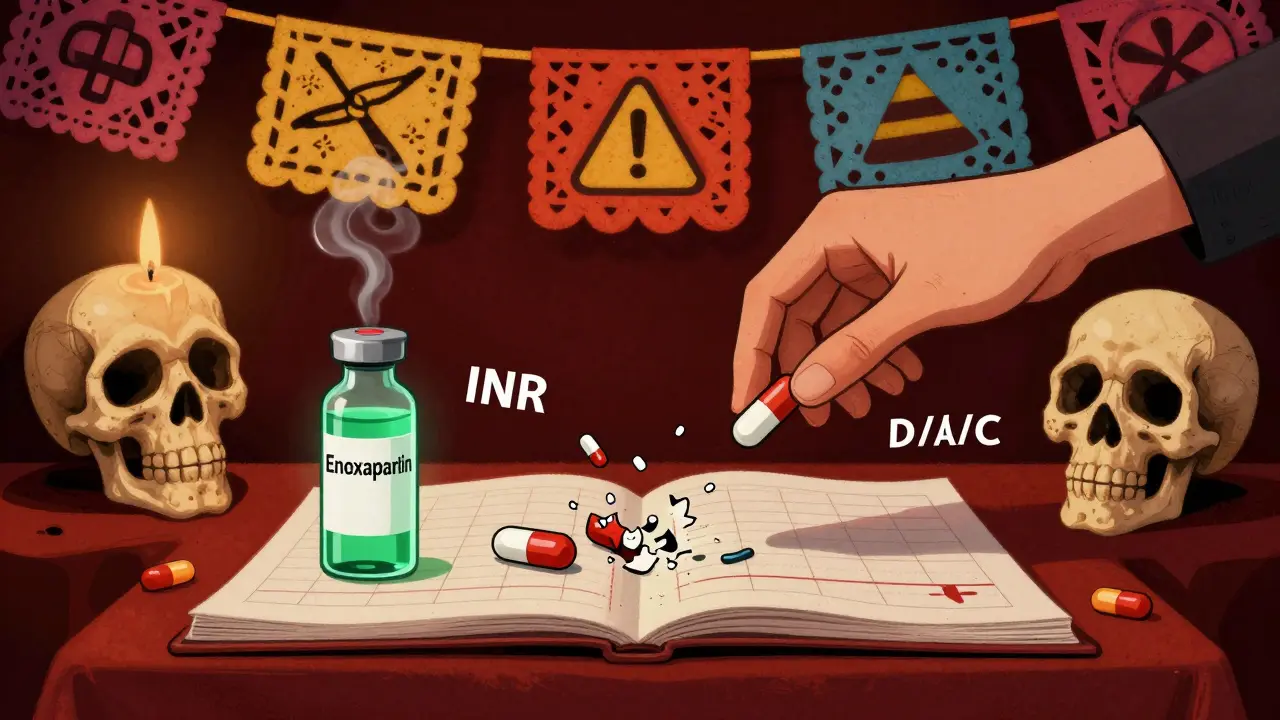
- Switch to injectables. For anticoagulation, low molecular weight heparin (like enoxaparin) is the safest option during rifampin use. It’s not affected by liver enzymes.
- Monitor closely. If you’re on warfarin, expect more frequent INR checks-possibly every few days. For DOACs, there’s no test, so watch for signs of clotting: swelling, chest pain, shortness of breath, sudden headache.
- Wait before restarting. After stopping rifampin, wait at least 2 weeks before returning to your original anticoagulant or antiviral dose. Enzymes don’t shut off overnight.
The Future: Anticoagulants That Won’t Break Down
Researchers are designing next-gen anticoagulants that avoid CYP enzymes entirely. One example is milvexian, a factor XIa inhibitor currently in trials. Early data suggest it’s not significantly affected by CYP3A4 inducers like rifampin. That’s huge. If approved, it could eliminate this dangerous interaction for future patients.
The FDA now requires all new drugs to be tested with strong inducers like rifampin. That means newer antivirals and anticoagulants will come with clearer warnings-and sometimes, safer profiles.
Bottom Line
Rifampin is a lifesaver for tuberculosis and other infections. But it’s also a silent drug destroyer. It doesn’t care if you’re on warfarin for a mechanical valve, rivaroxaban for atrial fibrillation, or darunavir for HIV. If your drug is processed by CYP3A4 or CYP2C9, rifampin will cut its levels by half or more.
There’s no safe way to take them together without careful planning. Avoiding the combo is best. If you can’t avoid it, switch to injectable anticoagulants. Monitor like your life depends on it-because it does. And never assume your doctor knows all the risks. Bring this information to your appointment. Ask: “Is there a safer alternative to rifampin?” and “What will happen to my blood thinner if we use it?”
This isn’t theoretical. People die from this interaction. But with awareness and action, it’s preventable.



11 Comments
Babe Addict December 28, 2025
Rifampin doesn't 'dismantle' anything-it's a CYP3A4/CYP2C9 inducer, period. The real issue is that clinicians still treat anticoagulants like black boxes instead of pharmacokinetic variables. Warfarin's narrow therapeutic index? Yeah, that's why we have INR. DOACs? No monitoring = no safety net. It's not magic, it's enzyme kinetics. Stop acting like this is some new revelation. We've known this since the '80s.
Satyakki Bhattacharjee December 29, 2025
People forget that medicine is not about science alone. It is about balance. Rifampin saves lives from TB. But we give it to people who are already weak, who are already afraid. We forget that the body is not a machine. It is a temple. When we force it to destroy its own healing, we are not curing-we are punishing.
Kishor Raibole December 30, 2025
It is imperative to underscore that the pharmacodynamic interplay between rifampicin and concomitant therapeutics constitutes a paradigmatic exemplar of hepatic enzyme induction-mediated drug-drug interaction. The pregnane X receptor-mediated upregulation of cytochrome P450 isoforms and P-glycoprotein efflux transporters precipitates a profound reduction in plasma bioavailability of substrate medications, thereby compromising therapeutic efficacy and precipitating potentially catastrophic clinical sequelae. This phenomenon is neither idiosyncratic nor unpredictable; it is mechanistically deterministic and clinically preventable with appropriate pharmacokinetic foresight.
John Barron December 31, 2025
As a clinical pharmacologist with 22 years in hospital pharmacy, I’ve seen this kill people. 💔 I had a patient on rivaroxaban for AFib. Got TB. Started rifampin. Three days later-stroke. No warning. No INR. No way to know. The system failed him. We need mandatory alerts in EHRs. We need mandatory pharmacist consults. We need to stop treating this like a footnote. 🚨
Liz MENDOZA January 1, 2026
Thank you for writing this. I’ve had patients panic because their INR dropped and they thought they were bleeding out-when really, their meds were just getting erased. This is the kind of info we need to share with non-medical folks too. My mom’s on warfarin and got prescribed rifampin for a sinus infection last year. She had no idea. We had to rush to the clinic. Please, if you’re reading this and your doctor says ‘just keep taking it’-ask for the alternatives. You deserve to know.
Jane Lucas January 1, 2026
so like… if u r on xarelto and get tb u just gotta do shots for like a month??
Elizabeth Alvarez January 2, 2026
They don’t want you to know this. Big Pharma doesn’t want you to know that rifampin is used to wipe out your meds so they can sell you more. The liver enzyme thing? It’s real-but why is there no warning label that screams ‘THIS WILL KILL YOU IF YOU’RE ON BLOOD THINNERS’? Why do hospitals still use this combo? Because they’re paid by the pill. And because they don’t care about you. They care about profit. The FDA knows. The WHO knows. But they’re silent. You think this is an accident? It’s not. It’s control.
Miriam Piro January 3, 2026
Think about it-rifampin is used in TB programs globally, especially in poor countries where people are on antivirals for HIV. The fact that we don’t have universal protocols? That’s genocide by omission. They let people die quietly because it’s ‘too complicated’ to switch to heparin. And meanwhile, the same people who wrote these guidelines live in gated communities with private doctors who know exactly what to do. This isn’t science. It’s class warfare wrapped in a lab coat. 🧪💔
dean du plessis January 3, 2026
interesting stuff. i had a friend in cape town who got tb and was on warfarin after a heart surgery. they switched him to heparin injections and he said it was a pain but better than the alternative. i never knew why until now. thanks for the clarity. no emoji here but i mean it seriously
Todd Scott January 3, 2026
As someone who’s worked in global health for 15 years across 12 countries, I can tell you this interaction is one of the most under-addressed issues in low-resource settings. In Nigeria, India, and parts of Eastern Europe, rifampin is often the only affordable TB drug available. Patients on DOACs? Rare. But those on warfarin? Common. And there’s zero access to LMWH. So what do they do? They stop the anticoagulant. Or they keep taking it and hope. We need affordable, stable, non-inducible anticoagulants in the global supply chain. Milvexian might be the answer-but only if it’s priced for the Global South, not just for Wall Street.
Chris Garcia January 4, 2026
This is not merely a pharmacological phenomenon-it is a metaphysical test of our collective conscience. The human body, a symphony of biochemical harmony, is forced into dissonance by the arrogance of modern medicine. Rifampin, a gift from nature’s soil, becomes a blade in the hands of institutional haste. We have forgotten that healing is not about dominance over biology, but about listening to its whispers. When we reduce life to enzyme kinetics and AUC curves, we lose the soul of care. Let us not be engineers of destruction disguised as healers. Let us be stewards of balance. Let us choose wisdom over convenience. Let us choose life-not just survival, but dignity.