
When you feel that sudden pop or sharp pain behind your ankle, it’s often the Achilles tendon injury, a tear or inflammation of the thick band connecting your calf muscle to your heel bone. Also known as Achilles tendinopathy, it’s not just for athletes—anyone who walks, runs, or stands a lot can get it, especially if they’ve been taking certain medications without realizing the risk.
This injury isn’t just about overuse. It’s often tied to how your body heals—or doesn’t. NSAIDs, common painkillers like ibuprofen or naproxen might ease the pain, but they can actually slow tendon repair by blocking the inflammation your body needs to rebuild tissue. Even fluoroquinolone antibiotics, like ciprofloxacin or levofloxacin, carry a black box warning for tendon rupture because they weaken collagen fibers. If you’ve been on these drugs and suddenly feel stiffness or pain in your heel, it’s not just coincidence.
Recovery isn’t about resting longer—it’s about moving smarter. Physical therapy isn’t optional; it’s the core of healing. Strengthening your calf muscles, stretching properly, and gradually loading the tendon helps it rebuild strength. Skipping this step and relying on painkillers or injections? That’s how a minor strain turns into a chronic problem. And don’t assume steroids are safe—they may reduce swelling short-term, but they can make the tendon more prone to tearing later.
What you eat matters too. Protein, vitamin C, and collagen-rich foods support tendon repair. Hydration keeps the tissue elastic. And if you’re on statins or antidepressants, you might be at higher risk—some drugs affect tendon metabolism in ways most doctors don’t discuss. You’re not imagining it. There’s science behind why your recovery feels stuck.
Below, you’ll find real posts that break down exactly what’s happening when your Achilles hurts, which drugs could be making it worse, and how to fix it without waiting months—or risking a full rupture. No fluff. Just what works, what doesn’t, and what your doctor might not tell you.
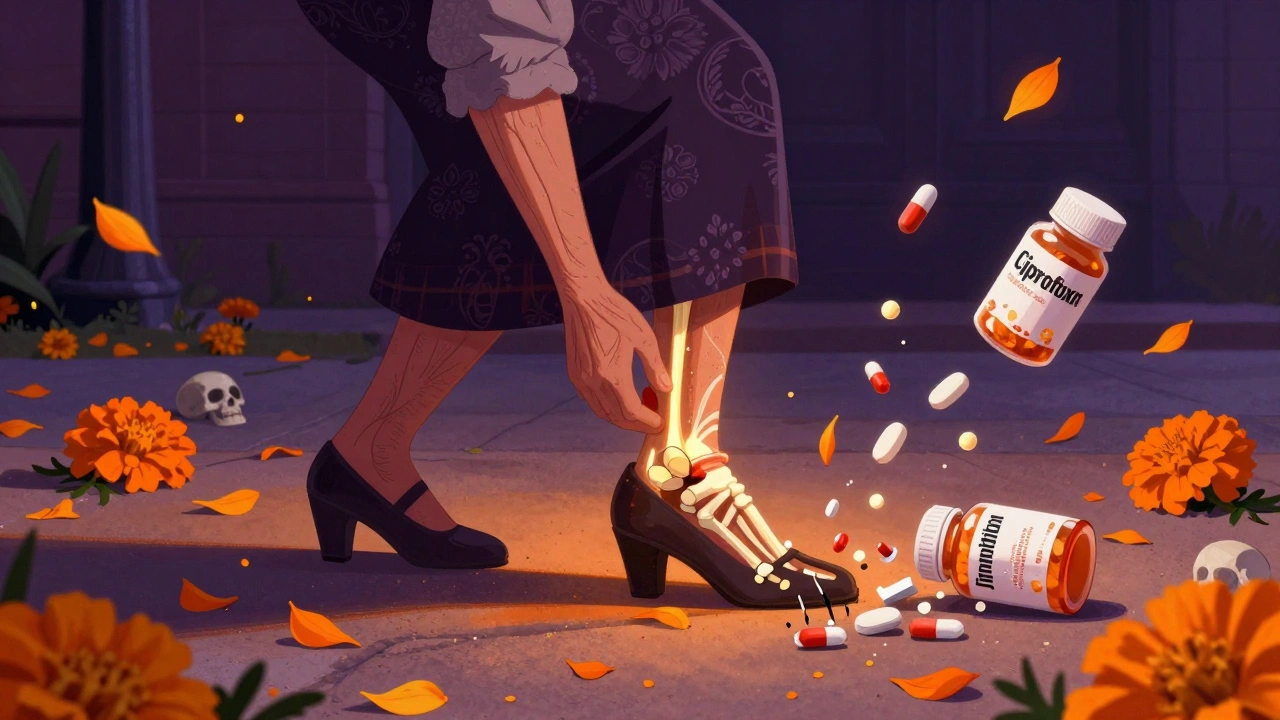
Quinolone antibiotics combined with corticosteroids can increase the risk of tendon rupture by 46-fold, especially in older adults. Learn the signs, who's at risk, and how to avoid this serious, preventable injury.
Read more