
Antibiotic Risk Assessment Tool
Risk Assessment
This tool evaluates your risk of tendon rupture when taking quinolone antibiotics (like Cipro) with corticosteroids. Based on data from the article, combined use increases risk by 46x.
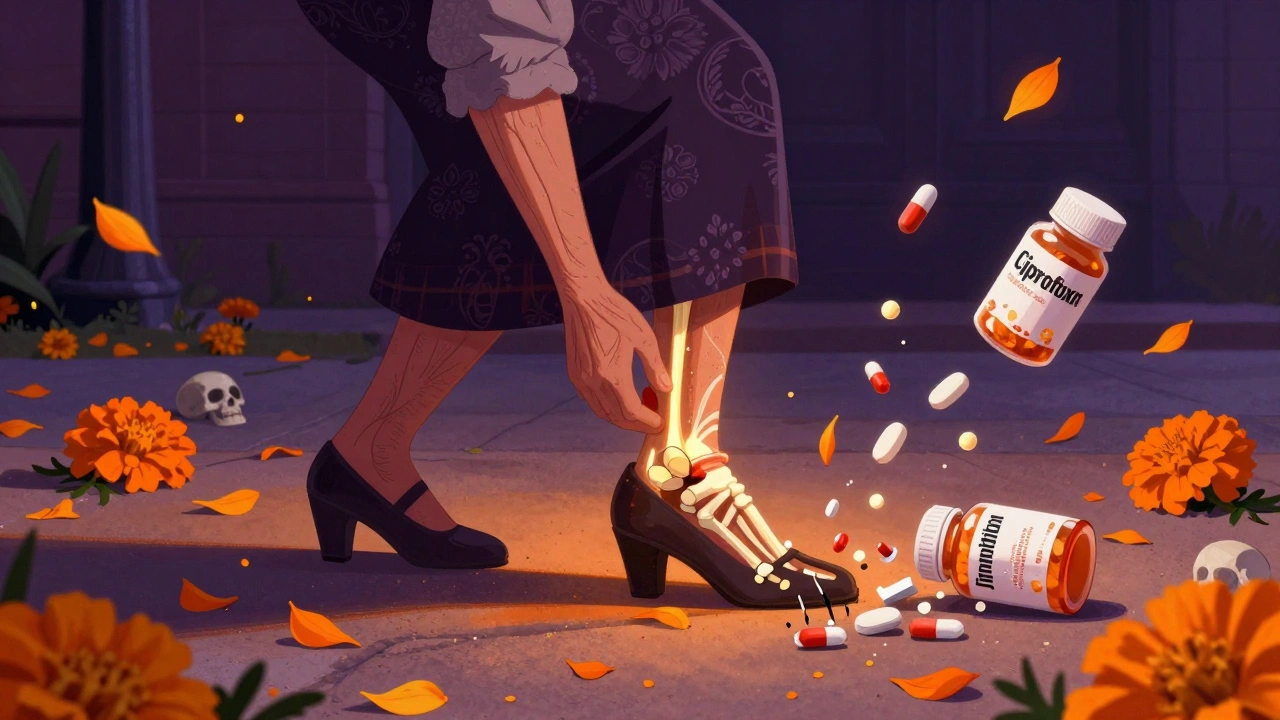
Imagine going for a walk, stepping off a curb, and hearing a loud pop in your heel. Suddenly, you can’t stand on your toes. No fall. No sports injury. Just a routine moment-and your tendon is gone. This isn’t rare. It’s a known, preventable side effect of two common medications: quinolone antibiotics and corticosteroids. When used together, they turn a simple infection treatment into a potential life-altering injury.
What Are Quinolone Antibiotics?
Quinolone antibiotics, especially the fluoroquinolone subclass, are powerful drugs used to treat stubborn infections like urinary tract infections, pneumonia, and sinus infections. Common examples include ciprofloxacin (Cipro), levofloxacin (Levaquin), and norfloxacin. They work by stopping bacteria from copying their DNA, which kills the infection fast. That’s why doctors reached for them in the 1990s and early 2000s-they were broad-spectrum, taken as pills, and worked when other antibiotics didn’t. But there’s a dark side. Since the 1980s, doctors have quietly noticed patients developing tendon pain after taking these drugs. By 2000, a major study in JAMA Internal Medicine confirmed it: fluoroquinolones were linked to tendon disorders. The Achilles tendon, the thick band connecting your calf to your heel, was hit hardest. In fact, nearly 90% of reported cases involved this one tendon.Why Does This Happen?
No one fully understands the exact mechanism, but the evidence points to direct damage. Fluoroquinolones don’t just target bacteria-they interfere with human cells too. Studies suggest they disrupt collagen production in tendons, the protein that gives them strength and flexibility. They may also trigger inflammation in tendon tissue or increase enzymes that break down connective tissue. What’s scary is how fast it can happen. Symptoms can start within days-even after just one dose. The median time to onset is six days. And it doesn’t always happen while you’re still taking the drug. Half of all tendon injuries show up after the patient has stopped taking the antibiotic. That means you might feel fine, think you’re in the clear, and then suddenly-rupture.The Corticosteroid Factor
Now add corticosteroids into the mix. These are powerful anti-inflammatory drugs, often prescribed as pills (like prednisone) or injections for conditions like arthritis, asthma, or back pain. They’re effective. But they also weaken tendons over time by reducing blood flow and slowing tissue repair. When you combine fluoroquinolones with corticosteroids, the risk doesn’t just go up-it explodes. A landmark study using data from the General Practice Research Database found that patients taking both drugs had a 46-fold higher risk of Achilles tendon rupture than those taking neither. That’s not a small increase. That’s a red flag screaming from the medical literature. Even more alarming: patients over 60, those with kidney problems, diabetics, and people who’ve had organ transplants are at even higher risk. One study estimated that 2% to 6% of all Achilles ruptures in people over 60 are directly tied to fluoroquinolone use. In some cases, both tendons rupture at once, making recovery far more complicated.Who’s Most at Risk?
You’re at higher risk if you:- Are over 60 years old
- Are taking corticosteroids (oral or injected)
- Have kidney disease (especially with GFR under 30)
- Have diabetes
- Have had a previous tendon injury or rupture
- Have had a kidney, heart, or lung transplant
What Does a Tendon Rupture Feel Like?
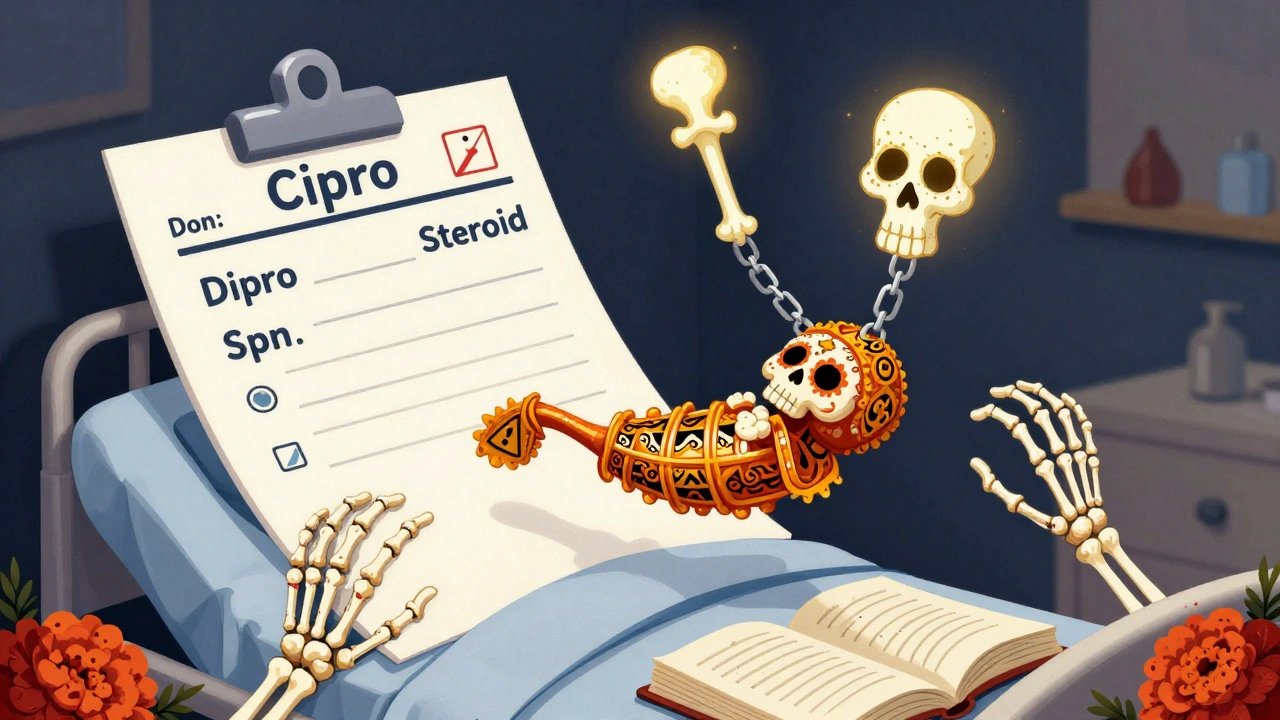
It’s not subtle. Patients describe it as a sudden, sharp pain-like being kicked in the heel. Many hear a pop or snap. Then, they can’t push off their foot. Standing on tiptoes becomes impossible. Swelling and bruising follow quickly. Often, there’s warning. About 85% of tendon injuries occur within the first month of taking the antibiotic. And in many cases, tendon pain and swelling (tendinitis) show up 1 to 2 weeks before the actual rupture. If you feel new, persistent pain in your heel, shoulder, or hand while on a quinolone, don’t wait. Stop the drug and call your doctor.What Happens After a Rupture?
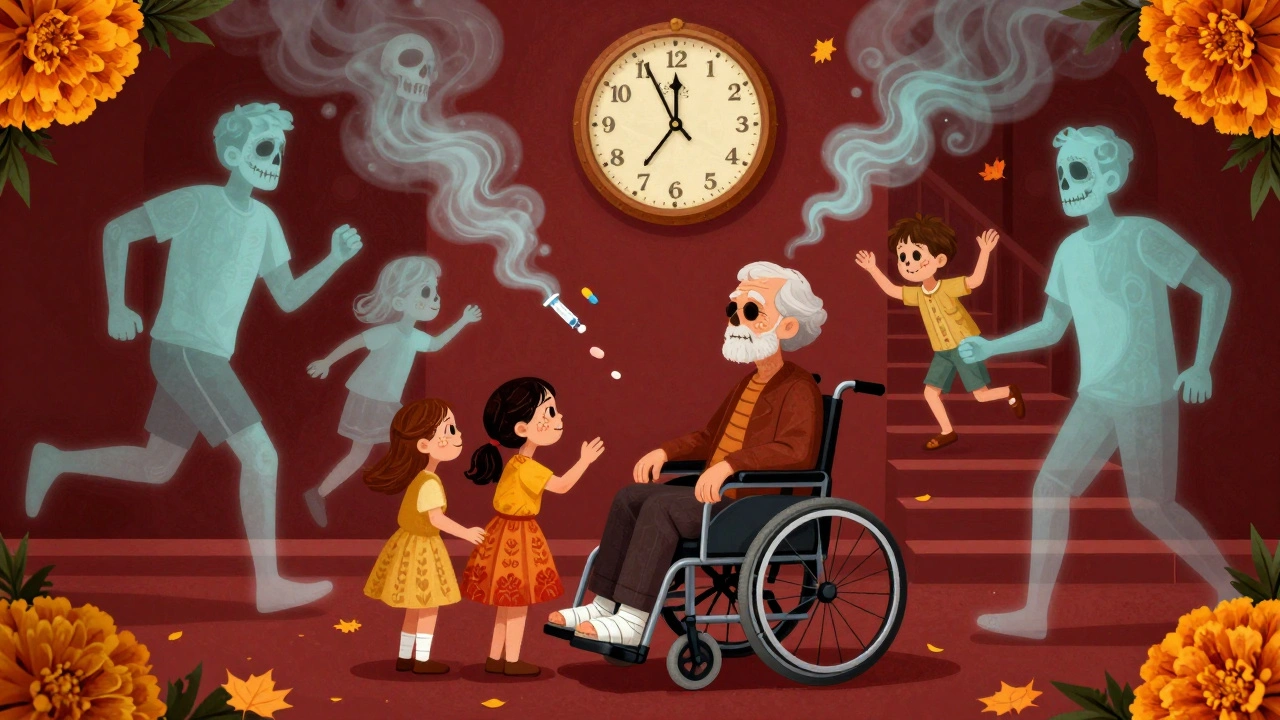
Most ruptures require surgery. Recovery takes 6 to 12 months. Physical therapy is intense. Many people never fully regain their previous strength or mobility. Some can’t return to work, especially if their job requires standing or walking. For older adults, this can mean a loss of independence-no more walking the dog, climbing stairs, or playing with grandchildren. And it’s not just physical. The emotional toll is heavy. People report anxiety, depression, and frustration. One patient described it as “losing your body overnight.”What Should You Do?
If you’re prescribed a fluoroquinolone:- Ask: Is this absolutely necessary? Are there safer alternatives like amoxicillin, doxycycline, or trimethoprim-sulfamethoxazole?
- If you’re on corticosteroids, tell your doctor before they write the script.
- Ask for a shorter course-7 days or less if possible.
- Know the signs: pain, swelling, stiffness in tendons. Stop the drug immediately if they appear.
- Don’t ignore mild tendon pain. It’s not just “muscle soreness.”
Are All Antibiotics This Dangerous?
No. Penicillins, cephalosporins, macrolides like azithromycin, and tetracyclines have no documented link to tendon rupture. If your doctor reaches for ciprofloxacin without explaining why, ask: “Why not use something else?” Many doctors still prescribe fluoroquinolones out of habit. But the data is clear. The risk isn’t theoretical. It’s real, documented, and preventable.What’s Being Done?
Regulators worldwide-FDA, EMA, Medsafe in New Zealand-have issued warnings. Prescription rates have dropped since the 2013 FDA alert. But they haven’t disappeared. Fluoroquinolones are still used for serious infections like complicated UTIs, pyelonephritis, and certain types of pneumonia where alternatives fail. Researchers are now studying why some people are more vulnerable. Is it genetics? Age-related collagen changes? Drug metabolism? The goal is to find biomarkers that can predict who’s at risk before they even take the drug. Until then, the message is simple: quinolone antibiotics and corticosteroids together are a dangerous mix. The benefit rarely justifies the cost.Final Thoughts
You don’t need to avoid antibiotics. But you do need to be smart. If you’re over 60, have diabetes, or take steroids, your next infection treatment shouldn’t be a fluoroquinolone unless there’s literally no other option. Push back. Ask questions. Demand alternatives. Your tendons don’t regenerate easily. Once they’re gone, you’re not just healing from an infection-you’re rebuilding your life.Can quinolone antibiotics cause tendon rupture even after I stop taking them?
Yes. About half of all tendon injuries linked to fluoroquinolones occur after the patient has finished the course. Symptoms can appear days or even weeks after stopping the drug. This is why it’s critical to stay alert to tendon pain even after treatment ends.
Is tendon rupture from quinolones rare?
The absolute risk is low-about 0.1% to 0.4% of patients-but the consequences are severe. For high-risk groups-like those over 60 on steroids-the risk jumps dramatically. When you combine fluoroquinolones with corticosteroids, the chance of rupture increases 46-fold. Rare doesn’t mean harmless.
Which quinolone antibiotic has the highest risk of tendon rupture?
Ciprofloxacin (Cipro) is the most frequently reported culprit, accounting for nearly 68% of tendon injury cases in one study. Norfloxacin is next. All fluoroquinolones carry the risk, but ciprofloxacin appears most often in reports to global drug safety agencies.
Can I take corticosteroids if I’ve had a tendon rupture before?
You should avoid fluoroquinolones entirely if you’ve had a prior tendon rupture. The risk of re-rupture is extremely high. Even if you’re on corticosteroids, using a fluoroquinolone could trigger another injury. Always tell your doctor about your history.
What are safer alternatives to fluoroquinolones for infections?
For many common infections, safer options exist. For urinary tract infections: nitrofurantoin, trimethoprim-sulfamethoxazole, or amoxicillin-clavulanate. For sinus infections: amoxicillin or doxycycline. For pneumonia: azithromycin or doxycycline. Always ask your doctor: "Is there a non-quinolone option?"



14 Comments
Queenie Chan December 11, 2025
Okay, so I just got prescribed Cipro for a UTI last week-same day I started feeling a weird twinge in my Achilles. I thought it was just from walking too much in new shoes. Now I’m terrified. I didn’t know this was a thing. Why don’t doctors just say ‘hey, this might make you fall apart’? I’m lucky I caught it early. Stopped the script, ice, rest, and a very dramatic phone call to my pharmacist. Also, I now own three pairs of orthopedic socks. No regrets.
Stephanie Maillet December 12, 2025
It’s... haunting, isn’t it? That our bodies, which have carried us through decades of laughter, heartbreak, and midnight snacks, can be so quietly betrayed by something we swallow without a second thought. We trust science, we trust prescriptions, we trust the white coat-but sometimes, the system forgets to whisper: ‘This isn’t harmless.’ The tendon isn’t just tissue-it’s memory. It’s the way you danced at your wedding. It’s the way you chased your kid down the sidewalk. And now? It’s a statistical footnote in a drug insert. I feel grief for the people who didn’t get a warning.
Michaux Hyatt December 12, 2025
Hey everyone-I’m a physical therapist with 18 years in the game, and I’ve seen this exact scenario play out way too many times. A 68-year-old on prednisone for RA gets Cipro for a ‘bad sinus infection’-two weeks later, they’re in my clinic, crying because they can’t stand up from the toilet. We’re talking surgery, months of rehab, and often permanent weakness. The worst part? It’s 100% preventable. If your doctor reaches for a fluoroquinolone without discussing alternatives, they’re not being thorough-they’re being lazy. Ask for amoxicillin. Ask for doxycycline. Ask for nitrofurantoin. These work. And they don’t turn your body against you.
Frank Nouwens December 13, 2025
While the clinical evidence supporting the association between fluoroquinolone administration and tendon rupture is statistically significant, it remains imperative to contextualize the absolute risk within the broader framework of therapeutic benefit-risk calculus. The incidence rate, though elevated in comorbid populations, remains quantitatively low in the general population. Therefore, blanket avoidance may result in suboptimal antimicrobial coverage in cases where alternative agents are contraindicated or ineffective. Clinical judgment remains paramount.
Aileen Ferris December 15, 2025
so like… cipro is bad? yeah right. i bet the pharma companies are just hiding the truth… like they did with opioids and vioxx and aspartame and 5g and… also my cousin’s dog got tendonitis after eating chicken jerky so… yeah. also why is everyone so scared of antibiotics? we used to just take them like candy in the 90s. and we were fine. also i think the government is using this to control us. #fluoroquinolonegate
Nikki Smellie December 16, 2025
Did you know that the FDA’s black box warning was pushed through because of a secret meeting between Big Pharma and the WHO in Geneva? I’ve got screenshots. Also, corticosteroids are made from lizard DNA. That’s why they weaken tendons-they’re not anti-inflammatory, they’re anti-human. And Cipro? It’s laced with nanobots that target collagen. They’re testing it on seniors to see how fast we ‘retire’-it’s population control. I’ve been told to stop taking it. I’m not. I’m fighting back. 💉👁️🗨️
David Palmer December 17, 2025
bro i took cipro for a sinus thing last year and my heel started hurting. i just thought i was old. turns out i was lucky. now i can’t even jump over my own dog. and my wife says i walk like a robot. i hate this. why does everyone just take pills like candy? next thing you know we’ll be popping aspirin and getting our bones to turn to dust. also i’m mad. i want my tendon back.
Regan Mears December 19, 2025
I want to echo what Dr. Hyatt said-this isn’t just about antibiotics. It’s about how medicine treats patients like data points instead of people. I’ve had patients cry in my office because they lost their ability to walk their grandkids to the bus stop. That’s not a side effect-that’s a tragedy. And yes, alternatives exist. But doctors don’t always know them-or worse, they don’t care. If you’re over 60, on steroids, or diabetic, don’t just nod and say ‘yes, doctor.’ Say: ‘What else can I take?’ Push back. Your tendons are worth it. And if your doctor rolls their eyes? Get a new one.
Ben Greening December 21, 2025
The epidemiological data supporting fluoroquinolone-associated tendon rupture is robust, particularly in the context of concomitant corticosteroid use. The relative risk increase is well-documented in multiple large-scale cohort studies. However, the absolute risk remains low in healthy, young, non-steroid-using populations. Clinical guidelines reflect this nuance. The key is risk stratification, not elimination.
Neelam Kumari December 21, 2025
Wow. So you’re telling me that after decades of people taking antibiotics like candy, now you’re suddenly shocked they have side effects? Maybe the problem isn’t the drug. Maybe it’s that people think medicine is magic. You didn’t read the label. You didn’t ask questions. You just swallowed it. And now you’re surprised your body broke? Please. The real tragedy is the lack of personal responsibility. Also, you’re all overreacting. Your tendons will be fine. Go drink more kale juice.
Doris Lee December 22, 2025
You’re not alone. I’ve been there. Took Cipro for a UTI. Felt a weird ache. Called my doctor the next day. They were like, ‘Oh yeah, that’s a thing. Stop it.’ I did. No rupture. Just a scare. But now I always ask: ‘Is this the safest option?’ And I tell my mom-74, on prednisone-everything I learn. We’re not helpless. We just need to speak up. You’ve got this. And if you’re scared? That’s okay. Just don’t stay quiet.
Kaitlynn nail December 23, 2025
It’s not the antibiotics. It’s the metaphysics of modern medicine. We’ve outsourced our bodily sovereignty to white coats and pill bottles. The tendon rupture? Just a symptom of our collective existential surrender. We don’t trust our own intuition anymore. We trust the algorithm. The algorithm is wrong. Always has been.
Sarah Clifford December 25, 2025
my mom got tendon rupture from cipro and now she can’t even hold her coffee cup right. and the doctor just shrugged. like it was nothing. so now i’m not taking ANYTHING. no pills. no vaccines. no ibuprofen. i eat only raw cacao and crystals. and i cry every night. i’m so angry. i just want my mom back. and i hate the hospital. they don’t care. they just want to sell you more drugs.
Raj Rsvpraj December 26, 2025
Interesting. But let us not forget: India has been using fluoroquinolones for over three decades without such dramatic reports. This is a Western overreaction fueled by litigation culture and fear-mongering media. In our villages, people take cipro for fever, cough, and even diarrhea-and they walk, run, and lift cows every day. The real issue? Poor healthcare infrastructure in the West. Not the drug. You’re blaming the tool, not the system.