
When you pick up a prescription, the drug appearance, the visual characteristics of a medication including its color, shape, size, and imprint. Also known as pill identification, it's not just about looks—it's a safety feature built into every tablet and capsule. That blue oval with "20" stamped on one side? That’s not random. It’s a code. Pharmacies and manufacturers use these details so you, your doctor, and your pharmacist can quickly confirm you’re getting the right drug at the right dose. Skip checking it, and you risk grabbing the wrong pill—something that happens more often than you think.
Drug appearance ties directly to medication markings, unique imprints, letters, or numbers pressed into pills to distinguish them from others. Also known as pill imprints, these are required by the FDA for most oral medications in the U.S. A pill without a mark? That’s often an over-the-counter product or a foreign drug. Prescription meds? They almost always have one. Think of it like a license plate. Two pills might look identical in color and shape, but if one says "L484" and the other says "101," they’re completely different drugs. One could be acetaminophen. The other could be a powerful antidepressant. Mix them up, and you’re in danger.
Then there’s pill color, the pigment used in a medication’s coating or body, often chosen to help patients remember their regimen. Also known as medication color coding, it’s not just for branding. Blue often means a blood pressure drug. White might be an antibiotic. Yellow could signal a steroid. But don’t assume. The same drug can come in different colors depending on the maker. Citalopram? It can be white, blue, or even pink. What matters is the imprint. That’s the real identifier. And drug shape, whether a pill is round, oval, capsule-shaped, or scored. Also known as pill form, it affects how easy it is to swallow—and sometimes how the drug breaks down in your body. A scored tablet? That means you can split it safely. A capsule? You shouldn’t crush it. Shape tells you how to use it.
You’ll see this in action in the posts below. One article explains how switching phenytoin generics can be dangerous—not because the drug changes, but because the pill looks different. Another shows how people mistake one medication for another because they didn’t check the imprint. There’s even a guide on how to verify your prescription at the pharmacy using the pill’s appearance as a key check. These aren’t abstract ideas. They’re real, everyday checks that stop errors before they happen.
Most people never look at their pills beyond whether they’re the right size. But if you’ve ever been handed a new bottle and thought, "Wait, this doesn’t look right," you’re already thinking like someone who understands drug appearance. You’re not being paranoid. You’re being smart. The system is designed so you can spot a mismatch. All you need to do is look. And know what to look for.
Below, you’ll find real stories, real cases, and real advice from people who’ve been through it—whether it’s confusing a generic version, spotting a counterfeit, or just learning how to read the tiny letters on a pill. This isn’t about memorizing every pill in the world. It’s about learning how to use what’s already there to protect yourself.
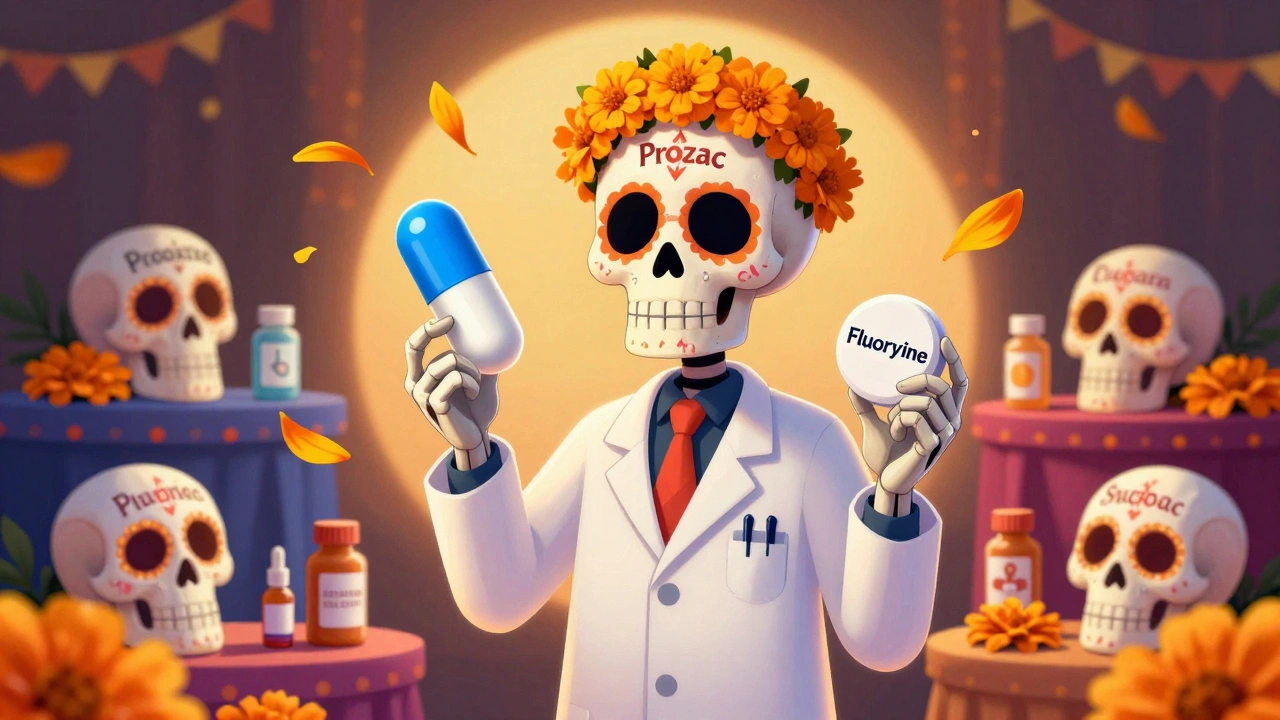
Generic drugs look different from brand-name medicines due to U.S. trademark laws, not because they're less effective. Learn why the color, shape, and size change - and what it really means for your health.
Read more