
When people look for natural ways to feel better, St. John's wort, a herbal supplement often used for mild depression and mood support. Also known as Hypericum perforatum, it's sold in stores without a prescription—but that doesn't mean it's safe for everyone. What most users don’t realize is that this plant can mess with your prescriptions in ways you can’t see or feel until it’s too late.
One of the biggest drug interactions, how one medication changes the effect of another with St. John’s wort involves antidepressants. If you’re taking SSRIs like sertraline or fluoxetine, mixing them with this herb can push your serotonin levels too high. That’s not just a side effect—it’s serotonin syndrome, a dangerous condition that causes confusion, rapid heart rate, muscle rigidity, and can be fatal. You won’t get a warning label on the bottle, but hospitals see this every year. It’s not rare. It’s preventable.
It also interferes with birth control pills, blood thinners, HIV meds, and even some cancer drugs. One study found women on oral contraceptives got pregnant after starting St. John’s wort—not because they forgot a pill, but because the herb made the pill less effective. Same thing happens with warfarin: people start bleeding for no obvious reason. And if you’re on any medication that’s processed by your liver, this herb can throw off how fast or slow it works. That’s why doctors don’t recommend it for people on multiple prescriptions.
There’s also the issue of quality control. Unlike real drugs, herbal supplements aren’t tested for consistency. One bottle might have enough active ingredient to help, and the next might be mostly filler. That’s why some people feel better, others feel worse, and no one knows why. You can’t trust the label. You can’t assume safety just because it’s natural.
And here’s something else: St. John’s wort doesn’t work the same for everyone. For mild, occasional low mood, it might help. But if you have clinical depression, bipolar disorder, or a history of mania, it can trigger a switch into mania or make psychosis worse. There’s no reliable way to know who will respond safely. That’s why it’s not a substitute for professional care.
What you’ll find in the articles below are real-world stories and science-backed warnings about herbal supplements that seem harmless but carry hidden dangers. You’ll learn how St. John’s wort compares to other natural mood aids, what meds it clashes with most, and how to spot early signs of trouble. No fluff. No marketing. Just what you need to protect yourself before you take another pill—or herb—thinking it’s safe.
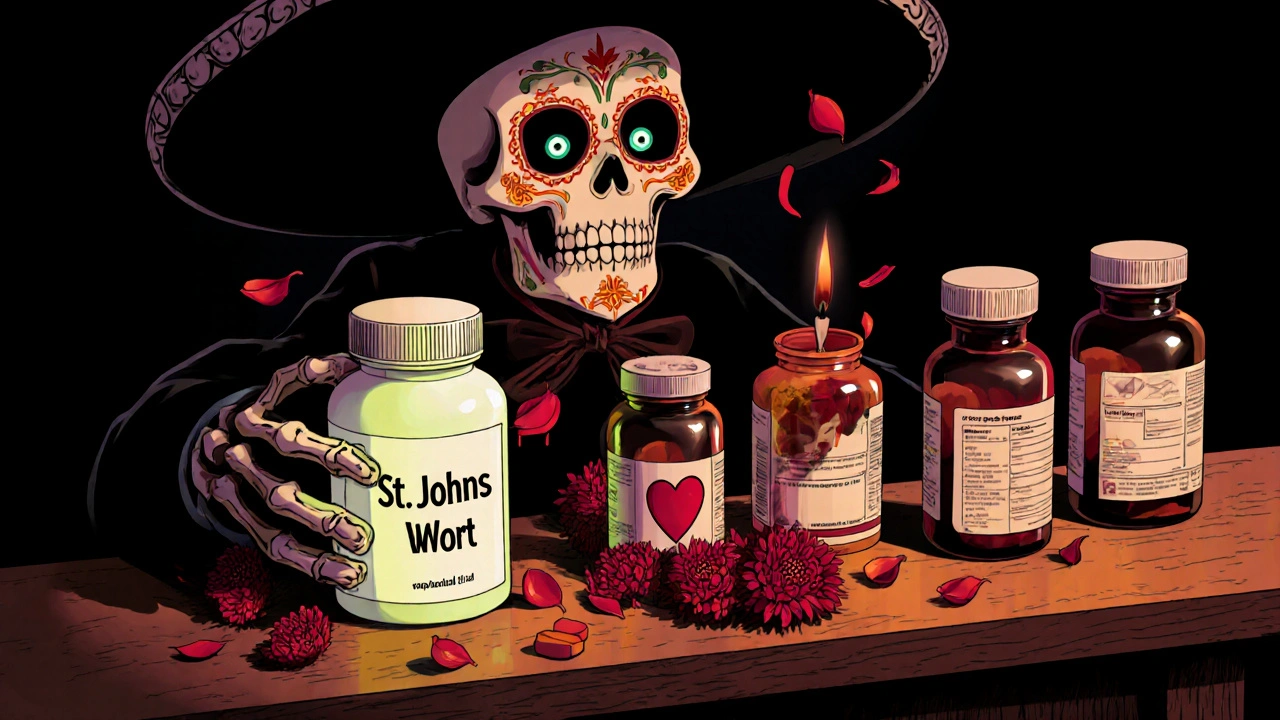
Many supplements can dangerously interact with prescription medications, leading to reduced effectiveness or life-threatening side effects. Learn which ones to avoid, how to check for interactions, and what steps to take to stay safe.
Read more