
When a tendon rupture, a complete tear of the tissue connecting muscle to bone. Also known as tendon tear, it often happens without trauma—especially in people taking certain medications. This isn’t just a sports injury. It can strike someone sitting at their desk, walking the dog, or even getting out of bed. The Achilles tendon is most common, but shoulders, wrists, and hands are also at risk.
One of the biggest hidden causes? fluoroquinolones, a class of antibiotics including ciprofloxacin and levofloxacin. These drugs are commonly prescribed for urinary infections, pneumonia, and sinusitis—but they increase tendon rupture risk by up to 4 times, especially in people over 60 or those on corticosteroids. corticosteroids, oral or injected steroids used for arthritis, asthma, or autoimmune conditions. Also known as steroids, they weaken tendons over time, making them brittle. When you take both together, the risk skyrockets. The FDA issued a black box warning for this exact reason. And it’s not just antibiotics and steroids. Some antidepressants and statins are being studied for possible links, too.
Age matters. After 50, tendons naturally lose water and elasticity. Add a medication that interferes with collagen repair, and you’re playing with fire. Even a minor strain—like lifting groceries or stepping off a curb—can be enough. Many people don’t realize they’re at risk until they hear a pop and can’t stand on their foot. The good news? If caught early, rest and physical therapy can help. But once it’s fully torn, surgery is often needed.
You’ll find real stories and data in the posts below. Some explain how tendon rupture is linked to common prescriptions like ciprofloxacin and prednisone. Others show how to spot early warning signs—aching tendons, stiffness that doesn’t go away—before disaster strikes. You’ll also learn which alternatives exist for antibiotics and pain relief that don’t carry the same risk. This isn’t about fear. It’s about awareness. If you’re on any long-term meds, especially steroids or antibiotics, this collection gives you the facts you need to talk to your doctor before it’s too late.
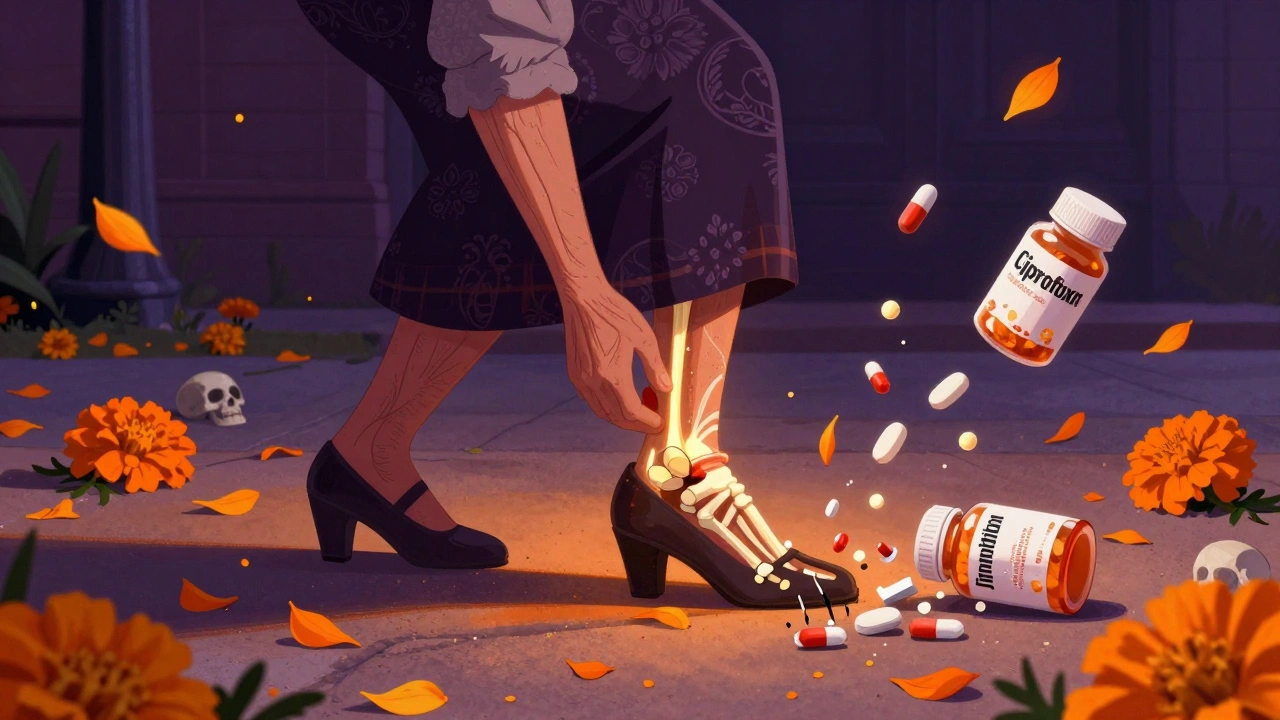
Quinolone antibiotics combined with corticosteroids can increase the risk of tendon rupture by 46-fold, especially in older adults. Learn the signs, who's at risk, and how to avoid this serious, preventable injury.
Read more