
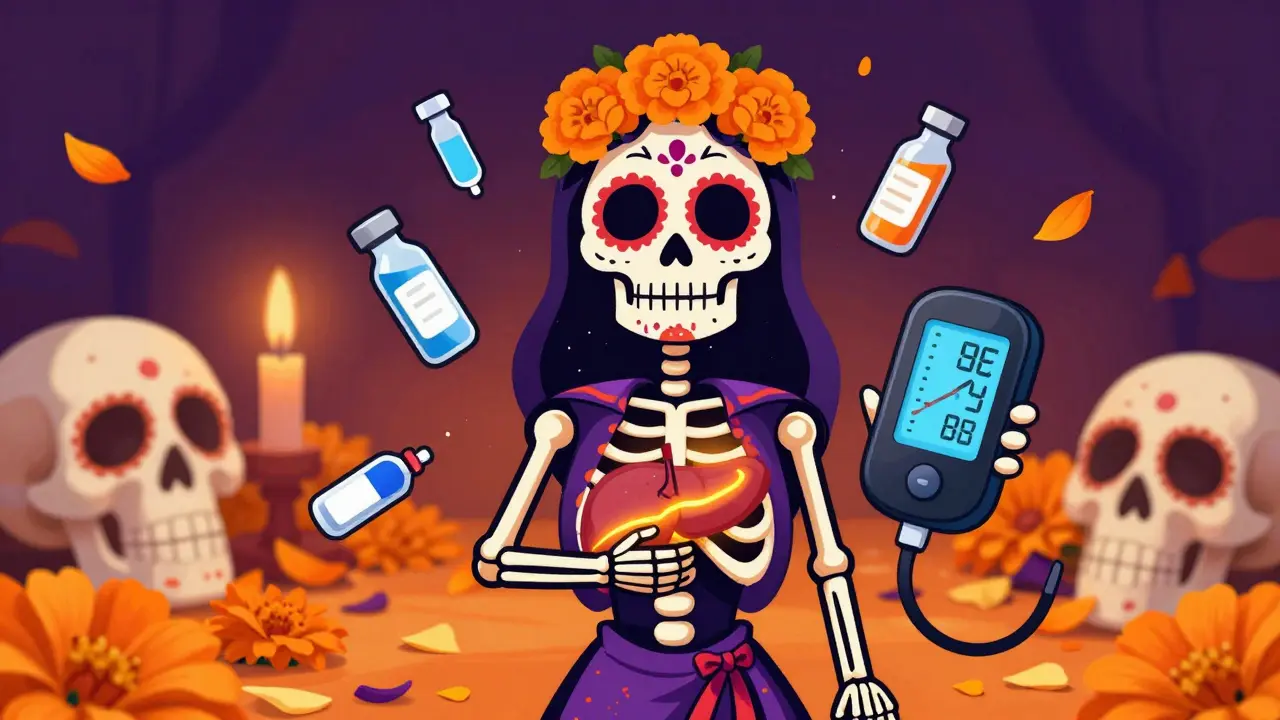
When your body stops making insulin, life changes overnight. No more guessing. No more ignoring symptoms. For someone with type 1 diabetes, every meal, every workout, every sleepless night becomes part of a daily calculation. It’s not about being out of shape or eating too much sugar. It’s an autoimmune attack that destroys the insulin-producing cells in your pancreas - and once they’re gone, they don’t come back. This isn’t a phase. It’s a lifelong condition that affects about 1.6 million Americans, and if you or someone you love has been diagnosed, you need to know what comes next.
How Do You Know If It’s Type 1 Diabetes?
The signs don’t sneak up. They hit hard and fast. You start peeing every hour, even at night. You’re thirsty all the time - drinking gallon after gallon, and still not satisfied. You lose weight even though you’re eating more. Your energy crashes. Your vision blurs. Your cuts take forever to heal. These aren’t just inconveniences. They’re red flags.
Unlike type 2 diabetes, which often develops slowly over years, type 1 symptoms can appear in just days or weeks. Kids get it. Teens get it. Adults in their 30s and 40s get it too. And sometimes, there’s no warning at all. That’s why it’s so dangerous. Without treatment, blood sugar spikes can lead to diabetic ketoacidosis (DKA) - a life-threatening condition where your body starts breaking down fat for fuel, flooding your blood with toxic acids. DKA can develop in under 24 hours. It’s not rare. It’s the reason many people are diagnosed in the emergency room.
How Is It Diagnosed?
There’s no single test that gives you the whole picture. Doctors use a mix of blood tests to confirm type 1 diabetes and rule out type 2. The first one most people hear about is the A1C test. If your result is 6.5% or higher on two separate tests, that’s diabetes. But A1C alone doesn’t tell you if it’s type 1. That’s where autoantibody testing comes in.
Doctors check for GAD65 antibodies - the most common marker in type 1 diabetes. If that’s negative, they test for IA2 or ZNT8 antibodies. These are like fingerprints of the immune system attacking your pancreas. If they’re present, it’s type 1. If they’re not, and you’re overweight with high insulin levels, it’s likely type 2.
Another key test is C-peptide. This measures how much insulin your body is still making. In type 1, C-peptide levels are low - even when blood sugar is sky-high. In type 2, they’re high because the body is still making insulin, just not using it well. A fasting blood sugar of 126 mg/dL or higher, or a random level over 200 mg/dL with symptoms, confirms the diagnosis. If you’re dizzy, nauseous, or breathing fast, they’ll also check for ketones in your blood or urine - a sign DKA is forming.
What Does Insulin Therapy Look Like Today?
There’s no cure yet. But there are better ways to live with it than ever before. Insulin isn’t optional. It’s your lifeline. And there are two main ways to get it into your body: multiple daily injections (MDI) or an insulin pump.
MDI - also called basal-bolus therapy - means taking a long-acting insulin once or twice a day to keep your blood sugar steady between meals and overnight. Then, before every meal, you inject a rapid-acting insulin based on how many carbs you’re eating and what your blood sugar is right now. This gives you control, but it takes work. You’re checking your blood sugar 4 to 10 times a day. You’re counting carbs. You’re adjusting doses. It’s like running a small business every single day.
Insulin pumps - like the Medtronic MiniMed 780G or Tandem t:slim X2 - are small devices worn on your body that deliver insulin continuously. They mimic the pancreas more closely. Modern pumps talk to continuous glucose monitors (CGMs), so they can automatically adjust insulin delivery. Some systems even pause insulin if your sugar drops too low. These hybrid closed-loop systems have been shown to increase the time people spend in the healthy blood sugar range (70-180 mg/dL) from about 50% to 70-75%. That’s not just better numbers - it’s fewer lows, fewer highs, and more sleep.
What Are the Target Blood Sugar Levels?
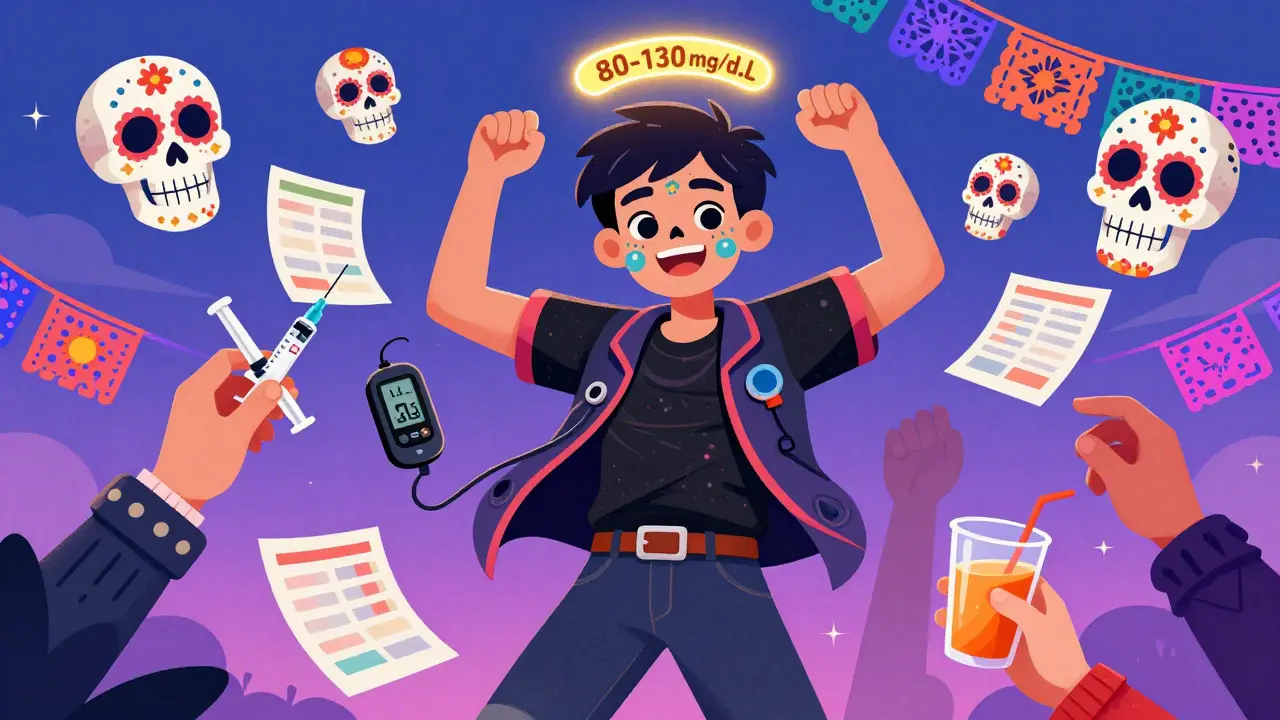
There’s no one-size-fits-all goal. The American Diabetes Association recommends most adults aim for blood sugar between 80-130 mg/dL before meals and under 180 mg/dL two hours after eating. The A1C target is usually under 7%. But if you’re older, have heart disease, or get severe lows, your doctor might set a higher target - maybe 7.5% or even 8%. The goal isn’t perfection. It’s safety and sustainability.
And here’s the truth: no one hits these numbers every day. Some days you’ll be high. Some days you’ll be low. That’s normal. What matters is how you respond. If your blood sugar drops below 70 mg/dL, you treat it fast - 15 grams of glucose, like juice or glucose tabs. Wait 15 minutes. Check again. Repeat if needed. Don’t wait. Don’t guess. Treat it.
What Else Do You Need to Manage?
Insulin isn’t the whole story. You also need to monitor your kidneys, thyroid, liver, and cholesterol. Type 1 diabetes doesn’t just affect blood sugar. It increases your risk for other conditions. That’s why you get blood tests every few months. You’ll need an annual eye exam. You’ll need foot checks. You’ll need to talk to your doctor about your mental health - depression and anxiety are common in people managing chronic illness.
Diabetes education isn’t optional. It’s required. Most people need 10 to 20 hours of training before they feel confident. You learn carb counting, insulin dosing, sick-day rules, how to handle exercise, and how to travel with supplies. You learn how to read your CGM trends, not just the numbers. You learn to trust your body - and your tech.
And yes, it takes time. On average, people with type 1 diabetes spend 2 to 4 hours a day managing their condition. That’s not just injecting insulin. That’s logging meals, checking sensors, recalibrating devices, analyzing patterns, calling insurance, fighting for coverage. It’s exhausting. And it’s why new tools matter so much.
What’s New in Type 1 Diabetes Care?
In November 2022, the FDA approved something no one thought possible: a drug that can delay type 1 diabetes. Teplizumab (Tzield) is a one-time, 14-day IV infusion for people with stage 2 type 1 diabetes - those with autoantibodies and abnormal blood sugar but no symptoms yet. In trials, it delayed the onset of full-blown diabetes by more than two years. It’s not a cure. But it’s the first real step toward prevention.
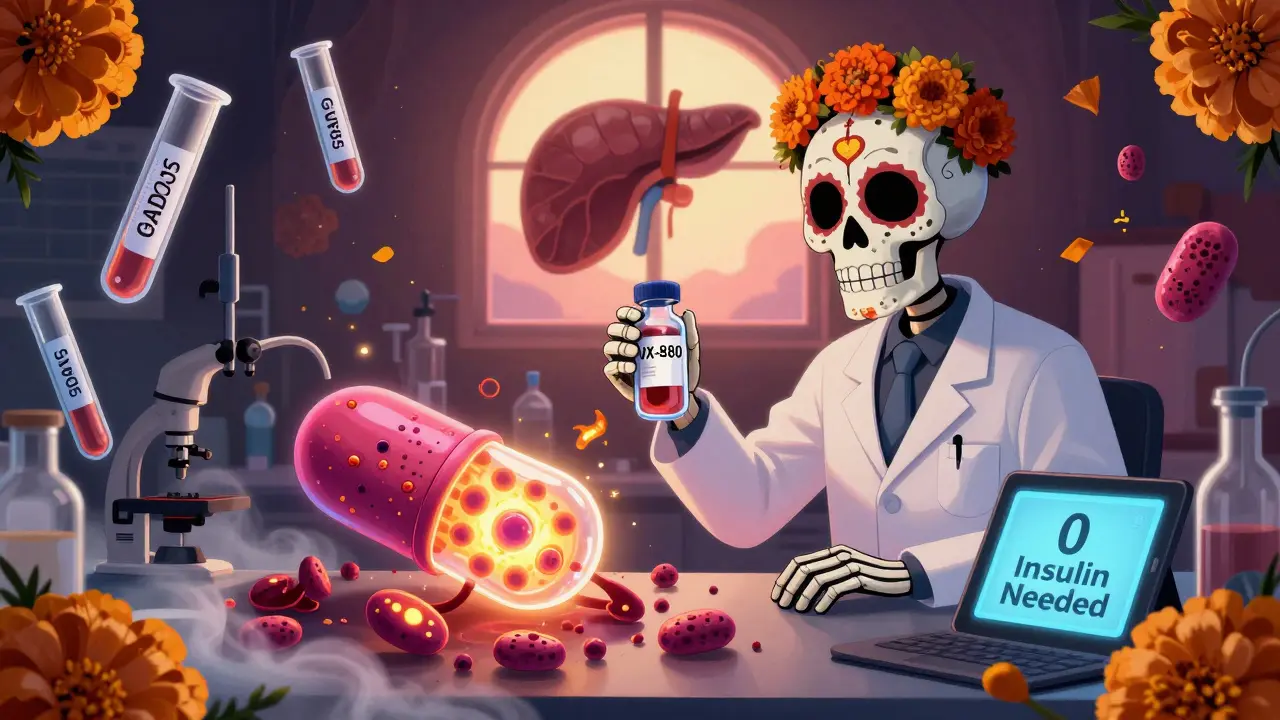
On the treatment side, stem cell therapies are showing promise. Vertex Pharmaceuticals’ VX-880 therapy - which replaces destroyed beta cells with lab-grown ones - helped 89% of participants stop using insulin entirely within 90 days in early trials. It’s still experimental. But it’s real. And it’s coming.
Insulin prices? Still too high. The average person with type 1 diabetes spends over $20,000 a year on care. Insulin alone makes up nearly 30% of that. That’s why so many people ration - and why advocacy groups are pushing for price caps and better insurance coverage.
What Should You Do If You’re Diagnosed?
First, breathe. You’re not alone. There are millions of people living full, active lives with type 1 diabetes. You’ll learn to manage it. You’ll get better at it. You’ll find your rhythm.
Second, find a diabetes care team - an endocrinologist, a certified diabetes care and education specialist (CDCES), a dietitian who knows carbs and insulin. Don’t try to figure it out alone.
Third, get a CGM if you can. Even if you’re on injections, seeing your trends - not just numbers - changes everything. You’ll see how your body reacts to stress, sleep, coffee, alcohol, exercise. You’ll start predicting highs and lows before they happen.
Fourth, join a community. Online forums, local support groups, social media - people with type 1 diabetes are some of the most open, helpful people you’ll ever meet. They’ve been where you are. They know the tricks, the hacks, the horror stories, and the wins.
Fifth, give yourself grace. Some days will be messy. Your numbers will be all over the place. That doesn’t mean you failed. It means you’re human. And you’re still learning.
Can type 1 diabetes be cured?
No, there is no cure yet. Type 1 diabetes is caused by the immune system permanently destroying insulin-producing beta cells. However, new treatments like teplizumab can delay onset in high-risk individuals, and stem cell therapies like VX-880 are showing potential to restore insulin production. These are not cures, but they represent major progress toward one.
Is type 1 diabetes caused by eating too much sugar?
No. Type 1 diabetes is an autoimmune condition, not caused by diet or lifestyle. Your body’s immune system mistakenly attacks the insulin-producing cells in your pancreas. You cannot prevent it by avoiding sugar, and you cannot develop it from eating too much sweets. It’s not your fault.
Can you outgrow type 1 diabetes?
No. Once the beta cells are destroyed, they don’t regenerate on their own. Type 1 diabetes is lifelong. Some people may experience a "honeymoon phase" - a period where the pancreas still makes a little insulin - but this doesn’t mean the disease is gone. Eventually, insulin therapy becomes necessary.
Do insulin pumps cure type 1 diabetes?
No. Insulin pumps deliver insulin more precisely and can automate some dosing, but they don’t fix the underlying autoimmune problem. They’re a tool for management, not a cure. People using pumps still need to count carbs, check blood sugar, and adjust for activity or illness.
How often should someone with type 1 diabetes check their blood sugar?
Most people check 4 to 10 times a day using fingersticks, or use a continuous glucose monitor (CGM) that updates every 5 minutes. CGMs reduce the need for fingersticks but still require occasional calibration. The goal is to catch highs and lows early and understand patterns over time - not just react to numbers.
Can children with type 1 diabetes live normal lives?
Yes. With proper management, children with type 1 diabetes play sports, go to school, travel, and thrive. Schools are legally required to accommodate their needs. Parents and caregivers learn to manage the condition, and many kids become very skilled at self-care by their teens. Technology like CGMs and insulin pumps has made daily life much easier than it was 20 years ago.
What’s the biggest mistake people make after diagnosis?
Trying to do it all alone. Type 1 diabetes is complex. You need a team - a doctor, a diabetes educator, a dietitian, and emotional support. Trying to master insulin dosing, carb counting, and tech setup without help leads to burnout and poor outcomes. Ask for help. Use your resources. You don’t have to be perfect - just consistent.




11 Comments
Ryan Hutchison January 16, 2026
Let me tell you something straight - if you're still using fingersticks in 2024 you're living in the Stone Age. CGMs aren't optional, they're mandatory. I've seen people waste years guessing their numbers while their A1C climbs like a rocket. The tech exists. The pumps talk to the monitors. You don't need to be a genius, just consistent. And if you're complaining about the cost, get your ass to a patient advocacy group. This isn't a luxury, it's survival.
Joie Cregin January 17, 2026
I remember the first time I saw my CGM trend line dip like a rollercoaster after coffee. I thought I was broken. Turns out, caffeine messes with my insulin sensitivity like a drunk DJ at a wedding. You’re not failing - your body’s just singing a song you haven’t learned the lyrics to yet. Take a breath. Write it down. You’ll figure it out. And you’re not alone.
john Mccoskey January 18, 2026
Let’s be brutally honest - the entire narrative around type 1 diabetes is sanitized by Big Pharma and ADA-approved influencers. Yes, CGMs help. Yes, pumps are fancy. But the real issue? Insulin pricing. The same vial that cost $20 in 1996 now costs $300. And no, ‘patient assistance programs’ aren’t a solution - they’re a band-aid on a severed artery. The autoantibody tests? Useful. The stem cell trials? Promising. But until we dismantle the profit-driven monopoly on insulin, we’re just rearranging deck chairs on the Titanic. This isn’t medical progress - it’s corporate exploitation dressed in science.
And don’t get me started on ‘teplizumab delaying onset.’ That’s a $1.2 million treatment for a disease that affects 1.6 million Americans. Who’s going to pay for that? Who’s going to get screened? The rich? The insured? The ones with doctors who care enough to push for it? Meanwhile, kids in rural Ohio are rationing insulin because their insurance won’t cover the pump. This isn’t healthcare. It’s a lottery.
The ADA’s ‘target A1C under 7%’ is a joke for anyone without a trust fund. That number assumes perfect compliance, perfect tech, perfect access, and zero life. What about the single mom working two jobs? The college student without parental support? The veteran with PTSD who can’t sleep because his glucose spikes at 3 a.m.? You can’t manage a chronic disease when you’re surviving day to day. The system doesn’t care about your A1C - it cares about your copay.
And yet, here we are, celebrating a 75% time-in-range as if it’s a miracle. It’s not. It’s the bare minimum. We’ve turned a life-or-death condition into a fitness tracker challenge. The real victory isn’t hitting 70-180 mg/dL - it’s not dying because you couldn’t afford the next vial.
So yes, the science is advancing. But the system? It’s still broken. And until we treat insulin like a human right - not a commodity - we’re not curing diabetes. We’re just making it prettier while people still die.
Travis Craw January 19, 2026
just wanted to say thanks for writing this. i was diagnosed last year and i was terrified. reading stuff like this made me feel less alone. i still mess up all the time but i’m learning. also i got a used cgms off reddit and it changed my life. no more 3am panic checks.
Kasey Summerer January 21, 2026
So let me get this straight - we’ve got stem cells regenerating beta cells, pumps that auto-adjust insulin, and a drug that delays onset… but insulin still costs more than my rent? I’m not mad, I’m just disappointed. Like, did we skip the part where science fixes the economy? Did we get the memo that capitalism hates people with chronic illness? I’m just here waiting for the AI that tells me why I can’t have my life back.
Stephen Tulloch January 21, 2026
Bro. I saw a kid on TikTok with a pump and a CGM doing parkour. He was laughing. He was sweating. He was alive. That’s the future. Not the ‘you must test 8x a day’ lecture from 2005. Tech isn’t magic - it’s liberation. And yeah, it’s expensive. But guess what? So is dying. So is blindness. So is amputation. We’re not talking about convenience anymore. We’re talking about dignity. Stop treating this like a hobby. It’s your body. Fight for your tools.
Melodie Lesesne January 22, 2026
I just want to say I’ve been living with T1D for 18 years and I still cry sometimes when my numbers are off. But I also celebrate the small wins - like the first time I ate ice cream without a crash. It’s not perfect. But it’s mine. And I’m still here. That’s enough.
Bianca Leonhardt January 23, 2026
People act like this is just about ‘managing’ diabetes like it’s a side hustle. No. It’s a full-time job with no vacation, no sick days, and your boss is your own immune system. And if you think you can ‘outgrow’ it or ‘beat’ it with willpower, you’ve never had a low at 3 a.m. with no one to help. Stop romanticizing this. It’s brutal. And the people who make it look easy? They’re either lying or they’re rich.
kanchan tiwari January 24, 2026
EVERYONE KNOWS THE FDA IS IN BED WITH PHARMA. TEPLIZUMAB? IT’S A TRAP. THEY WANT YOU TO THINK THEY’RE HELPING BUT THEY’RE JUST SELLING MORE TEST STRIPS. CGMS? THEY TRACK YOUR DATA AND SELL IT TO INSURANCE COMPANIES SO THEY CAN RAISE YOUR PREMIUMS. THEY WANT YOU DEPENDENT. THEY WANT YOU AFRAID. THEY WANT YOU TO THINK YOU NEED THEM. BUT THE TRUTH? THEY’RE KILLING YOU SLOWLY AND CALLING IT ‘CARE’.
Rob Deneke January 25, 2026
One thing I wish I knew when I started - it’s okay to ask for help. You don’t have to be the superhero of your own pancreas. Call your educator. Join the group. Text someone at 2am. You’re not weak for needing support. You’re smart. And you’re not alone. I’ve been there. You got this.
Corey Chrisinger January 26, 2026
There’s a quiet poetry in this - a body that forgets how to make insulin, yet learns to live with machines that remember for it. We are hybrids now. Part flesh, part silicon. Our blood sugar is a conversation between biology and code. And maybe that’s the real revolution - not the cure, but the redefinition of what it means to be human when your survival depends on a device that hums beside your bed. We are not broken. We are evolving.