
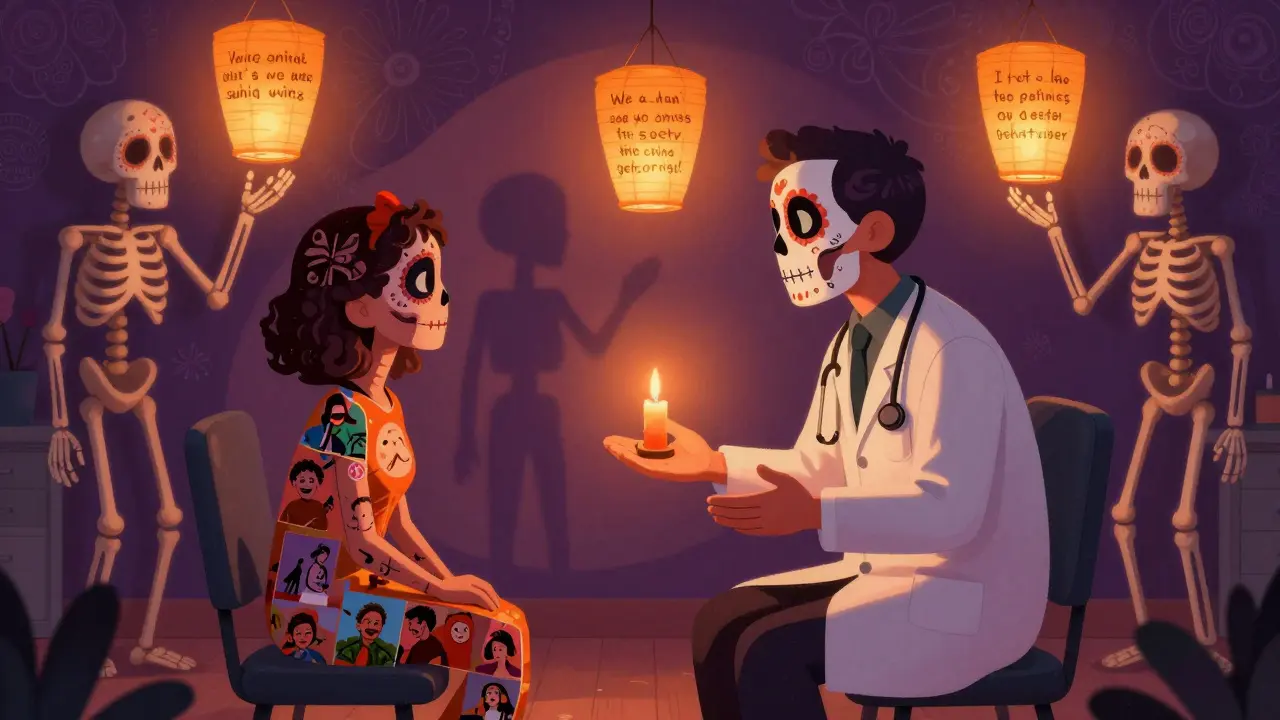
When a doctor says, "You have diabetes," the patient doesn’t just hear words. They hear fear. They hear loss. They hear a life suddenly rewritten. But too often, the conversation stops there. The prescription is handed out. The instructions are given. And the patient walks out - silent, confused, or worse, resigned.
What if the real barrier to treatment isn’t cost, access, or side effects - but acceptance? What if the medicine works, but the person doesn’t believe they can live with it? This is where narrative medicine steps in - not as a soft add-on, but as a necessary part of healing.
What Is Narrative Medicine, Really?
Narrative medicine isn’t poetry in a hospital. It’s not about making patients write memoirs for fun. It’s a structured, evidence-based practice born in 1996 at Columbia University, developed by physician and literary scholar Rita Charon. She noticed something broken: doctors were treating diseases, not people. They listened for symptoms, not stories.
Charon defined it simply: the ability to acknowledge, absorb, interpret, and act on the stories and plights of others. That’s it. No fancy jargon. Just listening - deeply - to what patients say, what they don’t say, and how they say it.
Think about it. When someone says, "I feel like my body is betraying me," they’re not describing a lab result. They’re revealing shame, grief, or isolation. A good doctor doesn’t just write a script. They pause. They ask: "What does that mean to you?"
Narrative medicine trains clinicians to read these hidden layers - the metaphors, the silences, the trembling voice. It uses tools from literature: close reading, reflective writing, group discussions. Not to replace science, but to deepen it.
Why Stories Matter More Than Data
Let’s say a patient is prescribed a daily pill for high blood pressure. The numbers make sense: 120/80 is safe. The science is clear. But if the patient believes taking medication means they’re "weak," or that they’ve failed at being healthy, they won’t take it.
A 2023 study in The Permanente Journal found that over half of pediatric residents showed signs of burnout. Why? They were exhausted from treating symptoms without hearing the stories behind them. But those same residents who participated in narrative medicine sessions reported higher empathy, better self-compassion, and more confidence in their care.
That’s not magic. That’s connection.
When a patient tells their story - about losing a parent to heart disease, about working two jobs and skipping meals, about being told "it’s all in your head" - the provider doesn’t just hear a diagnosis. They hear context. And context changes everything.
One woman at the University of Kentucky shared how her narrative medicine session helped her reconcile her lupus diagnosis. "I didn’t just get a disease," she said. "I got a label. And for years, I believed that label was all I was." After writing her story, she realized: "I’m still the same person who hikes, paints, and laughs too loud. The lupus is just part of my life now. Not the whole thing."
That shift - from identity loss to identity integration - is what makes treatment stick.
How Narrative Medicine Changes Treatment Acceptance
Acceptance isn’t about giving up. It’s about owning the reality of your health. And stories help people get there.
Here’s how:
- They humanize the condition. A patient with chronic kidney disease isn’t just a creatinine level. They’re a grandparent who can’t play with their grandkids because they’re too tired. When that story is heard, the treatment plan shifts from "take this pill" to "how can we help you stay active?"
- They reduce isolation. Many patients feel alone in their struggle. Hearing others tell similar stories - even in a group setting - creates belonging. The VA Whole Health Library reports this reduces anxiety and helps patients feel seen.
- They reveal hidden barriers. A man refuses insulin because he thinks it means he’s "failing." His story reveals a deep fear of dependency. The provider doesn’t argue. They say: "Tell me more about what insulin means to you." That opens the door to real change.
- They rebuild agency. When patients write their own health narratives, they reclaim control. A 2021 study showed that patients who wrote about their illness were 37% more likely to follow their treatment plan six months later.
It’s not about replacing pills with poetry. It’s about making sure the pills are taken because the person believes they matter - not because they were told to.
Real-World Impact: From Clinic to Community
Narrative medicine isn’t just theory. It’s being used right now.
At Columbia, every medical student takes a required seminar in their first year. They read memoirs, write reflective essays, and discuss how silence in a patient’s voice can be more telling than a symptom list.
The Veterans Affairs system trains clinicians to listen for metaphors: "My pain is a storm I can’t escape," or "I feel like I’m carrying a rock in my chest." These aren’t just poetic. They’re diagnostic clues.
At UK HealthCare, facilitators guide patients through structured storytelling sessions. One patient, after sharing his journey with heart failure, said: "For the first time, I didn’t feel like a burden. I felt like a person."
And here’s the kicker: when patients feel heard, they stay in care. They refill prescriptions. They show up for appointments. They tell their families to get checked. That’s not compliance. That’s transformation.
What This Means for Generic Medications
Let’s talk about generics. They’re safe. They’re cheaper. They work just as well as brand-name drugs. But many patients refuse them - not because of science, but because of story.
"I won’t take the generic. It’s not the same."
That belief isn’t irrational. It’s emotional. Maybe they had a bad experience with a generic before. Maybe their parent told them "only the real thing works." Maybe they associate the plain packaging with being poor, or forgotten.
Narrative medicine doesn’t argue. It asks: "What makes you say that?"
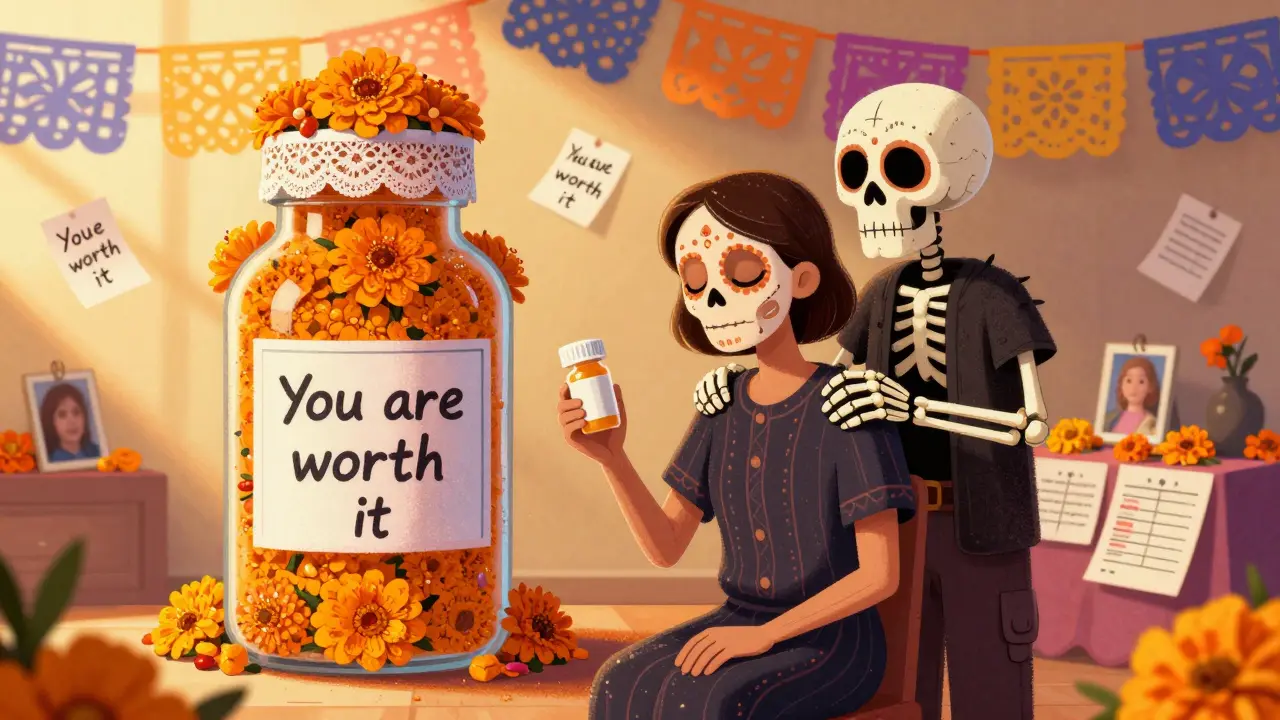
One man refused his generic statin because he thought it was "for people who couldn’t afford the real one." His provider didn’t correct him. They asked: "What did the brand name mean to you?"
The man paused. Then he said: "I guess… I thought taking the expensive one meant I was worth it."
That moment changed everything. The provider didn’t push the generic. They said: "You’re worth it no matter what pill you take. Let’s find one that works for you."
Three weeks later, he filled his prescription - the generic one.
That’s the power of narrative. It doesn’t convince. It connects.
Why This Isn’t Just "Nice to Have"
Some still see narrative medicine as fluffy. "We’re doctors, not therapists," they say.
But here’s the truth: if a patient doesn’t accept their treatment, it doesn’t matter how good the science is. The pill sits on the counter. The glucose monitor gathers dust. The appointment is missed.
Narrative medicine isn’t about replacing medicine. It’s about completing it.
Rita Charon calls it "a basic science mandatory for medical practice." That’s not hyperbole. It’s observation. If you don’t understand the story behind the symptom, you’re treating half the patient.
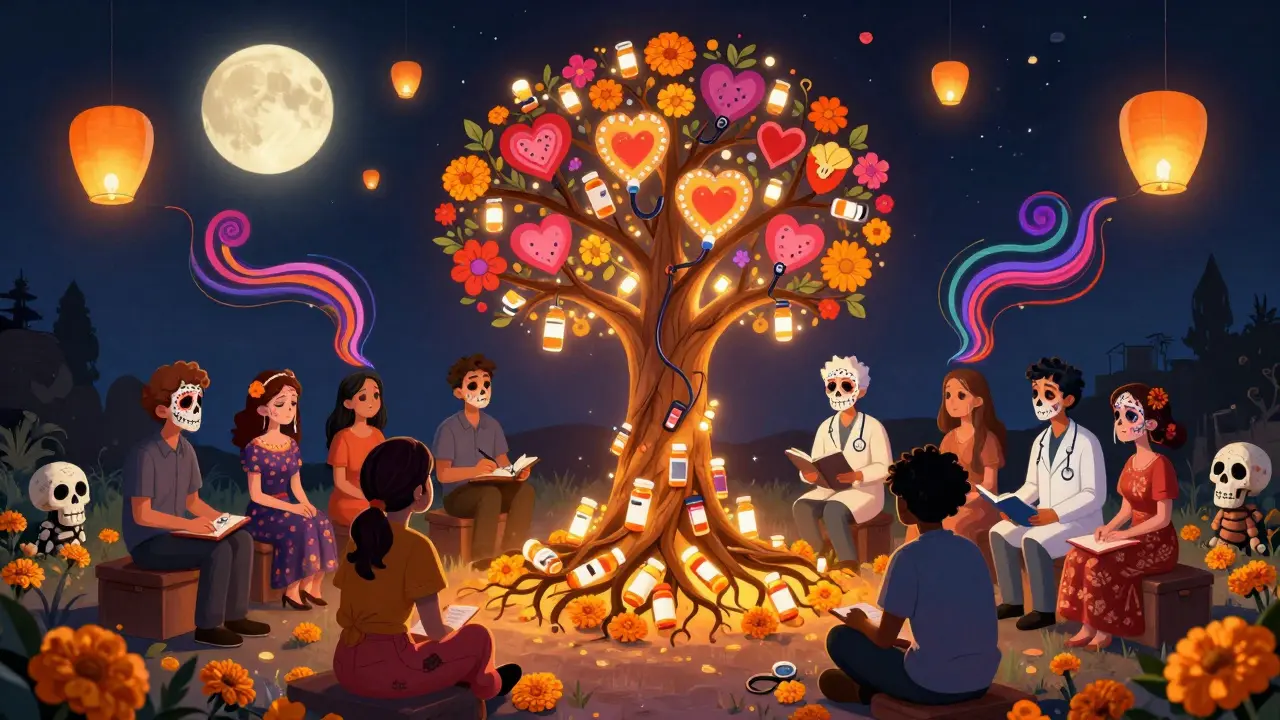
And here’s what’s happening now: more medical schools are requiring narrative training. More hospitals are funding storytelling circles. More insurers are starting to reimburse for narrative sessions - because they see the results: fewer ER visits, better adherence, lower costs.
This isn’t a trend. It’s evolution.
The Future Is Human-Centered
Healthcare is shifting. From disease management to life management. From pills to purpose.
Narrative medicine is leading that shift. It doesn’t promise cures. It promises understanding. And understanding is the quiet engine of acceptance.
When a patient feels truly heard, they stop fighting their diagnosis. They start working with it. They take their pills. They call their doctor when something changes. They tell their kids to get screened.
That’s not compliance. That’s healing.
And it starts with a single question: "Tell me what this means to you."
Is narrative medicine just for therapists or counselors?
No. Narrative medicine is for every healthcare provider - doctors, nurses, pharmacists, social workers. It’s about training anyone who interacts with patients to listen with depth and respond with care. You don’t need to be a therapist to practice it. You just need to be willing to hear the story behind the symptom.
Can narrative medicine help with chronic illness acceptance?
Yes - and that’s where it has the biggest impact. Chronic illness often comes with grief, identity loss, and isolation. Narrative medicine helps patients reconstruct their sense of self after diagnosis. By writing or sharing their story, they move from "Why me?" to "How do I live with this?" That shift is critical for long-term treatment adherence and mental well-being.
Do patients really change their behavior after telling their story?
Studies show they do. One study found that patients who participated in narrative writing sessions were 37% more likely to stick to their medication regimen six months later. Why? Because when they felt understood, they felt empowered. They didn’t just follow orders - they made choices aligned with their values.
How is narrative medicine different from patient education?
Patient education tells you what to do. Narrative medicine asks why you haven’t done it yet. It doesn’t assume ignorance. It assumes complexity. It doesn’t hand out pamphlets - it invites dialogue. Instead of "Take this pill," it says, "Tell me what’s stopping you."
Can narrative medicine reduce healthcare costs?
Yes. When patients understand and accept their treatment, they’re less likely to skip doses, miss appointments, or end up in the ER. Studies link narrative medicine to fewer hospital readmissions and lower overall costs. It’s not a cost center - it’s a prevention tool.


9 Comments
Donnie DeMarco March 11, 2026
I love this. Seriously. I work in primary care and I used to think narrative stuff was just feel-good fluff. Then I had a patient who refused his insulin because he said, 'It means I'm giving up.' I didn't push. I just asked, 'What does giving up look like to you?' He cried. We talked for 20 minutes. He's been on insulin for 8 months now. Turns out, stories aren't soft. They're surgical.
Mike Winter March 12, 2026
This is precisely why medicine needs to be re-anchored in phenomenology. The reductionist model has served us well for acute interventions, but chronic disease? It's a lived experience. The body doesn't just send signals - it narrates. And if we ignore the syntax of that narration, we're not just missing data - we're missing the patient's ontology. Rita Charon wasn't just proposing a technique. She was proposing a philosophical shift.
Miranda Varn-Harper March 12, 2026
I appreciate the sentiment, but let's not confuse storytelling with clinical efficacy. I've seen too many providers waste 45 minutes on a patient's life story while their A1c climbs to 14. Narrative can complement, but it cannot replace. Evidence still matters. Metrics still matter. And if we start treating every patient like a poetry slam participant, we'll drown in anecdote.
Alexander Erb March 13, 2026
bro this is why i love my job 😭 i had a guy last week who refused his generic lisinopril because he thought it was 'the cheap one for poor folks.' i didn't correct him. i asked: 'what did the brand name mean to you?' he said: 'i thought if i took the expensive one, it meant i was worth it.' ... i just sat there. he cried. he took the generic. he called me last week to say his BP is normal. we didn't fix his BP. we fixed his self-worth. this is medicine. ❤️
Tom Bolt March 13, 2026
I’m not crying. You’re crying. I just read about a woman who, after writing her narrative, realized she was still the same person who danced in her kitchen at 3 a.m. with her cats - even with lupus. I’m sitting here in my 3rd hour of paperwork. And I just remembered why I became a doctor. I need to go hug a patient. (Also, if you think this is 'fluffy,' you’ve never had a patient tell you they feel like a burden. And if you have - you know. You know.)
Kenneth Zieden-Weber March 14, 2026
So… narrative medicine is basically therapy with a stethoscope? I mean, I get it. But how do you scale this? Medical school is already a 7-year marathon. Add 'learn to listen' to the curriculum? What’s next - mandatory group hug rotations? 😅 …Actually. Wait. I’m joking. I’ve seen the data. This works. I just didn’t realize how much it mattered until I watched a nurse ask a diabetic patient, 'What’s the hardest part about this?' and the patient said, 'I don’t want to be the reason my kid gets scared when I pass out.' That’s not a diagnosis. That’s a life.
Shourya Tanay March 15, 2026
From an Indian healthcare context, this resonates deeply. In our culture, illness is often stigmatized as a moral failing - 'karma,' 'lack of discipline,' 'not praying enough.' Narrative medicine disrupts this. When a patient says, 'My hypertension is because I work 16 hours to feed my siblings,' we don’t just see hypertension - we see systemic inequity. The story isn’t a distraction. It’s the diagnosis.
Gene Forte March 16, 2026
This isn’t just good practice. It’s the future. When we treat patients as humans - not as data points - we don’t just improve adherence. We rebuild trust. And trust? That’s the most powerful drug we have. Every medical student should experience this. Not as an elective. As a requirement. Because healing isn’t a procedure. It’s a relationship.
Randall Walker March 17, 2026
So… we’re now paying doctors to be therapists? And calling it 'medicine'? Wow. I’m sure the insurance companies are thrilled. Next up: 'empathy credits' and mandatory journaling during rounds. Meanwhile, my aunt’s kidney failure went untreated because the nurse spent 40 minutes listening to her talk about her dead husband. Priorities.