
One in five children in the U.S. today has obesity. That’s not a distant statistic-it’s your neighbor’s kid, your child’s classmate, maybe even your own child. And it’s not just about weight. It’s about blood pressure, insulin resistance, sleep apnea, and a lifetime of health risks that start early. The good news? Childhood obesity isn’t inevitable. And the most effective way to stop it isn’t by putting a child on a diet-it’s by changing how the whole family eats, moves, and lives together.
Why Family-Based Treatment Is the Only Real Solution
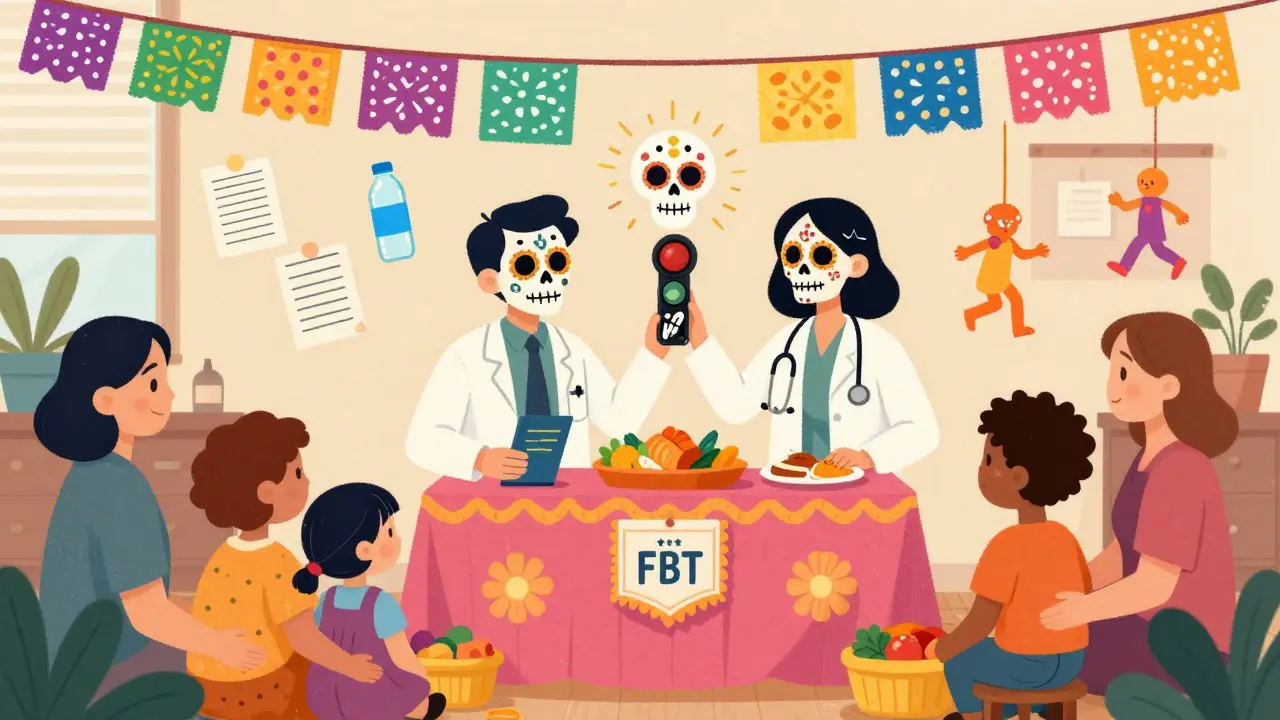
For years, doctors tried treating childhood obesity by focusing only on the child: count calories, eat more veggies, play outside. It didn’t work. Kids didn’t have control over what was bought at the store, what was served at dinner, or how much screen time was allowed. Parents were told to "be more involved," but no one showed them how. Then came family-based behavioral treatment (FBT)-a method built on decades of research, not guesswork. Developed by Dr. Leonard Epstein in the 1980s, FBT doesn’t treat the child in isolation. It treats the family as the system that shapes behavior. The goal isn’t to fix the child. It’s to change the environment where the child lives. Studies show FBT leads to twice the weight loss compared to programs that only work with the child. And it doesn’t stop there. Siblings who aren’t even in the program often lose weight too. Why? Because when one child starts eating more vegetables and playing outside, the whole household shifts. The fridge fills with apples instead of soda. Walks after dinner become routine. TV time drops from four hours to one. This isn’t magic. It’s science. The American Academy of Pediatrics, the American Psychological Association, and the NIH all agree: FBT is the gold standard for treating childhood obesity in kids aged 2 to 18.The Stoplight Diet: Simple Rules That Actually Work
One of the most powerful tools in FBT is the Stoplight Diet. No complicated calorie counts. No food diaries that feel like homework. Just three colors:- Green foods-eat freely: fruits, vegetables, whole grains, lean proteins, low-fat dairy.
- Yellow foods-eat in moderation: whole-grain pasta, lean meats, nuts, fruit juice, lower-sugar cereals.
- Red foods-eat sparingly: sugary drinks, fried foods, candy, processed snacks, sugary cereals.
What a Real FBT Program Looks Like
A typical FBT program isn’t a quick fix. It’s a 6- to 24-month journey with 16 to 32 sessions, usually delivered in a pediatrician’s office by a trained health coach. The average family completes about 20 sessions-not the full 26-but even that’s enough to make a difference. Each session covers four pillars:- Nutrition-learning how to plan meals, read labels, and swap out high-sugar foods for better options.
- Physical activity-aiming for at least 60 minutes of active play every day. That doesn’t mean soccer practice. It means dancing in the kitchen, walking the dog, riding bikes, playing tag.
- Behavior tracking-using simple journals or apps to log meals and activity. Not to judge, but to notice patterns. "We eat dinner in front of the TV 5 nights a week. What if we tried eating at the table?"
- Parenting skills-how to set limits without yelling, praise effort over results, and avoid using food as a reward or punishment.
What Doesn’t Work (And Why)
You’ve probably seen the headlines: "New Weight Loss App for Kids!" or "The 10-Day Challenge to Fix Childhood Obesity." They’re tempting. But they’re not backed by evidence. Child-only programs fail because kids don’t control their food environment. A 2019 meta-analysis showed FBT produced 0.55 standard deviations more weight loss than interventions targeting kids alone. That’s a big difference. "Watchful waiting" is even worse. Waiting until a child is severely obese before acting is like waiting until a car’s engine is smoking before changing the oil. By then, the damage is harder to reverse. The American Academy of Pediatrics recommends starting FBT as early as age 4 or 5-when weight gain trends first become clear. And don’t rely on supplements, detoxes, or extreme diets. There’s zero evidence they help children. In fact, they can cause harm-disordered eating, nutrient deficiencies, and a lifelong struggle with food.Barriers Are Real-But Not Impossible to Overcome
FBT isn’t perfect. It requires time, energy, and access. Many families struggle with scheduling. Others feel ashamed or overwhelmed. And there’s a big equity gap: Black and Hispanic children make up more than half of all childhood obesity cases, but only about one-third of those in FBT programs. Language barriers, lack of culturally relevant materials, and distrust in the medical system all play a role. Some clinics are starting to hire bilingual coaches and adapt meals to include traditional foods like beans, rice, and plantains-just with less added sugar and oil. Cost is another concern. A full FBT program averages $3,200 over two years. But that’s cheaper than specialty care ($4,100) and far less than treating obesity-related diseases later in life. Medicare and Medicaid now cover FBT under code G0447-but most providers don’t bill it because they don’t know how. The solution? Push for integration. If your child’s pediatrician doesn’t offer FBT, ask. Demand it. The market is growing, and primary care is the most scalable way to reach families.Small Changes, Big Impact
You don’t need to overhaul your life overnight. Start with one change:- Replace sugary drinks with water or unsweetened tea. One study showed this alone dropped BMI by 1.0 unit in 12 months.
- Have at least one family meal a day-no screens, no phones. Families who do this have 12% lower obesity rates.
- Limit screen time to under two hours a day. That’s linked to a 0.8 BMI unit reduction.
- Take a 20-minute walk after dinner. It’s not about burning calories-it’s about building a habit together.
What Comes Next
The future of FBT is hybrid. Apps that track meals and activity, text reminders for family walks, video coaching sessions-these tools are making FBT more accessible. A 2023 pilot study found families using apps had 32% higher engagement. The NIH is now funding research into Family Systems Therapy, which looks at how communication, conflict, and boundaries in the home affect eating habits. This isn’t just about food. It’s about relationships. And the message from experts is clear: act early. Don’t wait for a crisis. If your child is gaining weight faster than their peers, talk to your pediatrician. Ask about FBT. Demand it. Because the longer you wait, the harder it gets.When FBT Isn’t Enough
For some children-especially those with severe obesity (BMI above 120% of the 95th percentile)-FBT alone may not be enough. That doesn’t mean failure. It means it’s time to consider other options, like medication or, in rare cases, metabolic surgery for teens. The American Academy of Pediatrics now recommends discussing these options with families when weight loss stalls despite 6-12 months of FBT. It’s not about giving up on behavior change. It’s about adding tools to the toolbox. And remember: even if your child doesn’t lose weight quickly, FBT still works. It improves blood pressure, cholesterol, mood, and self-esteem. Those are wins too.Is childhood obesity just about eating too much?
No. While diet plays a role, childhood obesity is caused by a mix of genetics, environment, sleep, stress, and access to healthy food. Kids don’t choose to be overweight-they’re shaped by their surroundings. That’s why family-based treatment works: it changes the environment, not just the child’s behavior.
Can I do FBT at home without a coach?
You can start with the core principles: use the Stoplight Diet, aim for 60 minutes of daily activity, reduce screen time, and eat meals together. But working with a trained coach increases success by 40%. Coaches help with motivation, problem-solving, and adjusting strategies when things stall. If your pediatrician doesn’t offer FBT, ask for a referral or look for community health programs.
Will my child lose weight if I change my habits?
Yes-and so will your other kids, even if they’re not the focus. When parents model healthy eating and activity, children naturally follow. Studies show siblings in FBT families improve their weight outcomes by 7.2% just by being part of the changed home environment. Your change creates ripple effects.
Is FBT covered by insurance?
Yes, under Medicare and Medicaid as Intensive Behavioral Therapy for Obesity (G0447 code). But most providers don’t bill it because they’re not trained to. Ask your pediatrician if they offer it. If not, push them to learn. The cost is $18,400 per quality-adjusted life year gained-well below the $50,000 benchmark for cost-effectiveness.
How long does it take to see results?
Most families see changes in eating and activity patterns within 2-3 months. Weight loss typically follows after 6 months. But the real win is sustainability. FBT isn’t about quick results-it’s about building habits that last. Studies show families who complete 24 months of FBT maintain weight loss five years later at twice the rate of child-only programs.





11 Comments
Leonard Shit January 6, 2026
so like... i read this whole thing and honestly? my kid eats chicken nuggets for breakfast and still runs like a cheetah. maybe we dont need a whole program. maybe we just need less guilt and more pizza. 🤷♂️
Melanie Clark January 7, 2026
THEY ARE PUTTING POISONS IN OUR FOOD AND CALLING IT GREEN FOODS AND YOU ARE ALL SLEEPWALKING INTO A NEW WORLD ORDER WHERE YOUR CHILDREN WILL BE TRACKED BY THE CDC AND FORCED TO EAT BROCCOLI AND RUN ON TREADMILLS WHILE THE ELITE DRINK CRYSTAL WATER AND LAUGH AT YOUR SUFFERING
Harshit Kansal January 7, 2026
bro this is so true in india too. kids here eat samosas and chips and then sit for 6 hours doing homework. no one walks anywhere. we need more cricket and less screens. also why is everyone talking about soda? we have chai with 5 sugars. same problem.
Brian Anaz January 7, 2026
we dont need family programs. we need strong dads who tell their kids to stop eating junk and go outside. america is soft. we used to raise kids who ran from school to home. now they sit with a tablet and cry because they're tired. fix the culture not the diet.
Venkataramanan Viswanathan January 8, 2026
in india we have a different challenge. our children are not overweight because of fast food. they are overweight because of sugar-laden sweets during festivals and lack of physical activity due to traffic and safety concerns. the stoplight diet could work if we adapt it to include jalebi as yellow and ghee-laden parathas as red. culture matters.
Vinayak Naik January 8, 2026
yo i tried the stoplight thing with my fam and it was wild. we swapped soda for sparkling water with lime and my 7yo started asking for apple slices instead of cookies. my wife cried because she thought we were gonna be miserable. turns out we just ate better and laughed more. no magic. just consistency. also i still eat pizza on fridays. its called balance not ban.
Kiran Plaha January 9, 2026
what if the kid has a disability and can’t do 60 minutes of activity? or if the family works two jobs and doesn’t have time to cook? the article sounds great but feels like it’s written for people who have the luxury of time and resources. what about the rest of us?
Matt Beck January 10, 2026
so… is childhood obesity really just a symptom of late-stage capitalism? we commodify food, infantilize parenting, and then blame the child for existing in a system designed to make them sick? the stoplight diet is cute… but the real red flag is the entire food-industrial complex… 🌎💔
Kelly Beck January 11, 2026
you guys. i did this with my family last year. we started with just one change: no screens at dinner. then we added walks after dinner. then we swapped soda for sparkling water. now my 10-year-old asks to help pick out veggies. my husband says he feels more energy. my 6-year-old says she likes her body now. it’s not about weight. it’s about love. and it’s the most beautiful thing we’ve ever done together. 🌱❤️
Molly McLane January 12, 2026
i work in pediatrics. i’ve seen families do FBT and not lose weight but still become happier. kids stop hiding food. parents stop yelling. siblings stop teasing. the weight comes later. the peace comes first. if you’re reading this and thinking "i can’t afford this" - start with one walk. one water bottle. one dinner without the TV. you’re already doing it right.
Katie Schoen January 13, 2026
my kid gained 15 lbs in a year and i panicked. then i found out his pediatrician offers FBT and i cried because i thought i was failing. turns out i just needed someone to tell me it’s not my fault and here’s how to fix it. we’re 6 months in. we still eat ice cream. but we also dance in the kitchen. and i haven’t yelled once. that’s the win.