
Most people know to ask their doctor about a new prescription. But how many stop to ask the person actually handing them the pills? Your pharmacist is one of the most accessible and underused resources in healthcare. They’re not just filling orders-they’re trained to catch errors, spot dangerous interactions, and help you actually understand what you’re taking. And yet, most people walk out with a bag of pills and zero clarity.
What is this medication for, and how will it help me?
It sounds simple, but 30% of medication errors happen because patients don’t know why they’re taking a drug. You might be handed a pill labeled metoprolol and assume it’s for heartburn. It’s not. It’s a beta-blocker for high blood pressure or irregular heartbeat. If you don’t know the purpose, you won’t know if it’s working-or if you’re taking it unnecessarily. Always ask: What condition is this treating? How does it fix it? If your pharmacist says it’s for "preventing complications," ask for the specific complication. Vague answers mean you’re flying blind.
How and when should I take this?
"Take one daily" doesn’t cut it. Timing matters. Some meds need food to be absorbed. Others can’t touch food or will cause nausea. Some must be taken at night to avoid drowsiness during the day. Others need to be spaced 12 hours apart-no more, no less. Ask: Should I take this with food or on an empty stomach? What’s the best time of day? Can I crush or split the pill? If you’re on multiple pills, ask if any should be taken together or kept apart. A study from Gundersen Health found nearly half of patients mess up dosing because they weren’t given clear timing instructions. That’s not your fault-it’s a system failure. Push for specifics.
What side effects should I expect, and which ones mean danger?
Every drug has side effects. But not all are equal. Some are annoying, like dry mouth or mild dizziness. Others are life-threatening, like swelling, chest pain, or sudden confusion. Ask: What are the most common side effects? What should I do if I feel worse instead of better? Which symptoms require an ER visit? For example, if you’re on an antidepressant and start having suicidal thoughts, that’s not "normal adjustment." That’s a red flag. If you’re on a blood thinner and notice unusual bruising or bleeding gums, that’s not just aging. Your pharmacist knows the difference between "mild" and "medical emergency." They’ve seen the cases where people waited too long to call.
Does this interact with anything else I’m taking?
This is the #1 thing pharmacists catch that doctors miss. You might be on blood pressure meds, but also taking fish oil, St. John’s Wort, or a sleep aid from the shelf. Those can clash. The FDA says 15% of hospital admissions are due to preventable drug interactions. One Reddit user found out their blood pressure medication reacted dangerously with hawthorn berry supplements-something their doctor never asked about. Your pharmacist sees your full list: prescriptions, OTC drugs, vitamins, herbs, even over-the-counter pain relievers. Bring everything-even the stuff you think "doesn’t count." Ask: Do any of my other meds, supplements, or foods interact with this? What should I avoid? Don’t assume your doctor knows everything you’re taking. Pharmacists are the only ones who see the whole picture.
What if I miss a dose?
Life happens. You oversleep. You get busy. You forget. What then? Some meds, like antibiotics, need to be taken on a strict schedule-missing one can kill the treatment. Others, like blood pressure pills, can be doubled up safely. But you don’t know which is which. Ask: What should I do if I miss a dose? Can I take two later? Or should I skip it? If you’re on a once-daily pill and you forget until the next morning, should you take it then? Or wait until the next day? Wrong answers here can lead to overdose or treatment failure. A 2023 University of Michigan study found patients who asked this question had 65% fewer medication-related problems. That’s not luck-it’s knowledge.
Is there a cheaper or generic version?
Brand-name drugs cost 80-85% more than generics-and they work exactly the same. The FDA requires generics to match brand drugs in strength, safety, and effectiveness. Yet most people never ask. Ask: Is there a generic version? What’s the difference in cost? Are there coupons, patient assistance programs, or mail-order options? One woman saved $200 a month just by switching her cholesterol med from brand to generic. Your pharmacist knows which manufacturers offer discounts, which pharmacies have the best prices, and how to apply for free programs from drug companies. Don’t pay more because you didn’t ask.
When will I start to feel better?
Some meds kick in fast. Others take weeks. If you’re on an antidepressant and feel worse after three days, you might quit-thinking it’s not working. But it takes 4-6 weeks to build up. If you’re on a blood thinner and still feel fine after a week, you might think it’s useless. But it’s working silently. Ask: How long until I notice improvement? Will I need blood tests or checkups to monitor this? How will we know if it’s working? Without this, you’re guessing. And guessing leads to stopping meds too early-or staying on them too long.
Are there non-drug alternatives?
Not every problem needs a pill. Sometimes diet, exercise, or sleep changes can reduce or even replace medication. Ask: Are there lifestyle changes that could help? Is this the only option? For prediabetes, weight loss and walking 30 minutes a day can reverse it. For mild anxiety, therapy and breathing techniques can be as effective as pills. Your pharmacist knows the research. They’ve seen patients who got off statins by changing their diet. Or stopped acid reflux meds by avoiding late-night meals. Don’t assume drugs are the only path.
Where can I find reliable information?
The internet is full of bad advice. Blogs, forums, YouTube videos-they’re not medical sources. Ask: Where can I read accurate, science-backed info about this drug? Can you give me a printed guide or point me to a trusted website? The FDA’s MedGuide is a good start. So is the National Library of Medicine’s Drug Information Portal. Your pharmacist can point you to the right place. Avoid random websites that sell supplements or push miracle cures. You’re not buying a gadget-you’re managing your health.
How do I remember to take all my pills?
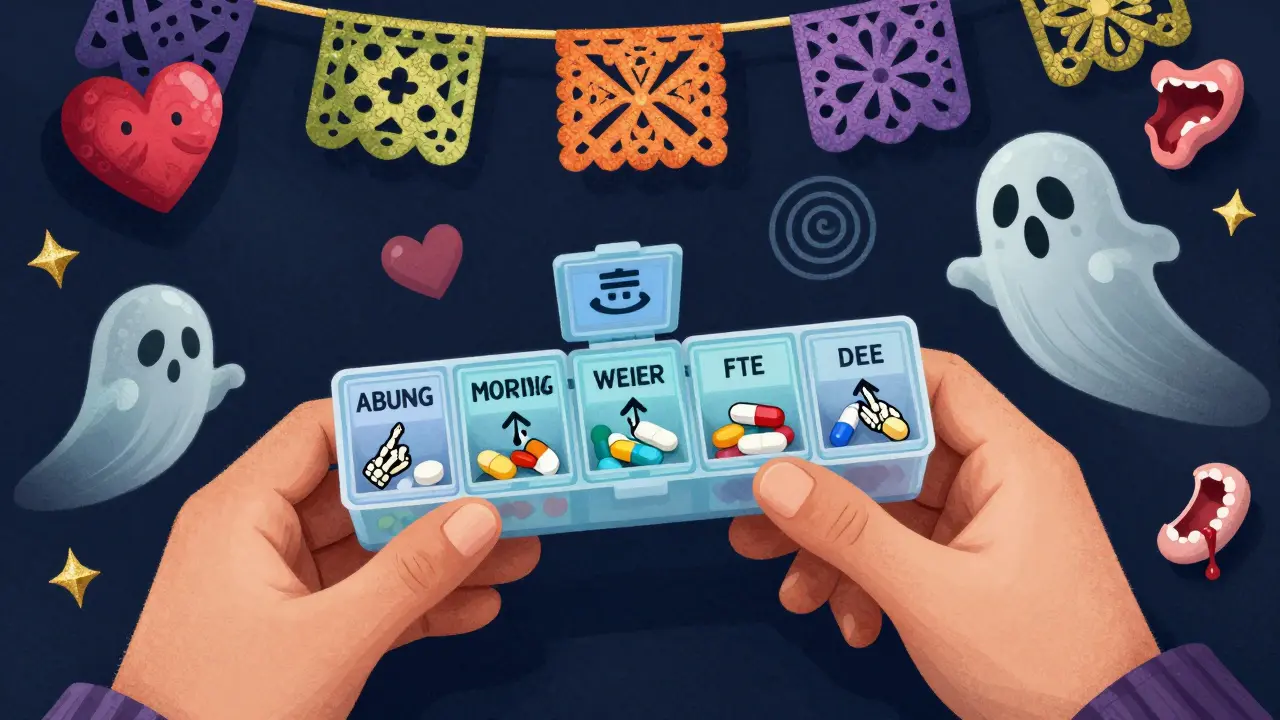
Half of people stop taking chronic meds within a year. Not because they’re stubborn. Because it’s hard. Ten pills a day? Four different times? It’s overwhelming. Ask: What tools or reminders do you recommend? Can you help me organize my meds? Pharmacists can give you pill organizers, set up text reminders, or link you to apps. Some even offer blister packs with labels for morning, afternoon, night. The teach-back method works too: repeat the instructions back in your own words. If you can explain it clearly, you’re more likely to follow it. Studies show this boosts adherence by 40%.
Why this matters more than you think
Pharmacists prevent 1.3 million emergency room visits every year just by asking the right questions. That’s not theory-it’s data from Harvard Health. They catch duplicate prescriptions, flag dangerous combos, and stop mistakes before they happen. In one case, a pharmacist noticed a patient was taking two different acid reducers at the same time-risking kidney damage. They stopped it. In another, they caught serotonin syndrome before it became fatal. These aren’t rare cases. They’re daily wins.
But there’s a catch: most consultations last less than three minutes. Pharmacies are busy. You’re rushed. That’s why you need to come prepared. Write down your questions. Bring a list of everything you take-including vitamins and supplements. Use the FDA’s "My Medicine Record" form. Don’t wait until you’re at the counter to think of things. Show up ready. If you ask at least three specific questions, you’re 65% less likely to have a medication problem.
And if you’re in a rural area? You might be one of the 37 million Americans living in a pharmacy shortage zone. That makes every visit even more critical. Telepharmacy is helping-but it’s not a full replacement. Your pharmacist is your safety net. Don’t let them catch you off guard.
Final tip: Ask for a medication review
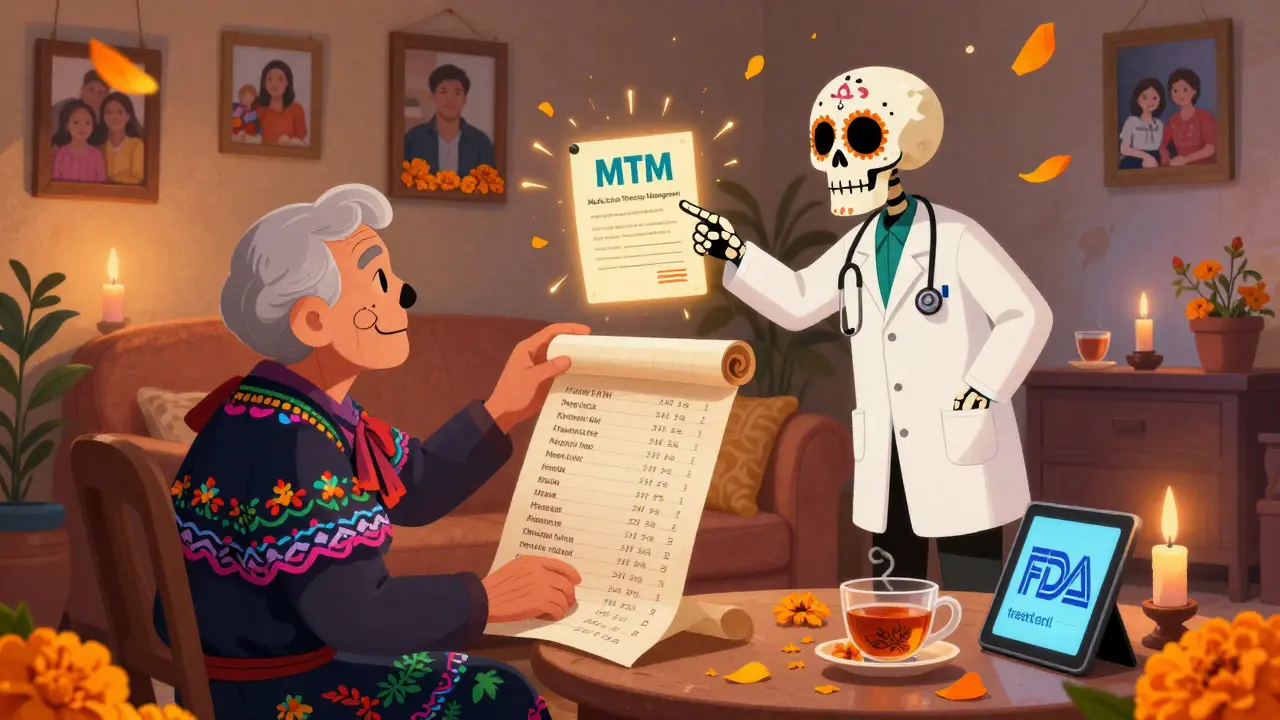
Many pharmacies offer free Medication Therapy Management (MTM) sessions-especially if you’re on Medicare Part D. It’s a 15-30 minute one-on-one with a pharmacist to go over every drug you take. They check for duplicates, interactions, dosing issues, and cost savings. You don’t need to be sick to qualify. You just need to be on multiple meds. Ask: Do you offer a full medication review? Can I schedule one? It’s free. It’s confidential. And it could save your life.
Can I ask my pharmacist about side effects even if I didn’t have them yet?
Absolutely. Pharmacists expect this. They’re trained to explain both common and rare side effects before you even start the medication. Knowing what to watch for helps you act fast if something happens. Don’t wait until you feel bad to ask.
What if my pharmacist doesn’t have time to answer all my questions?
If you’re rushed, ask if you can schedule a longer appointment. Most pharmacies offer 15-30 minute consultations for complex med regimens. You can also call back later or use telepharmacy services. Don’t leave without getting your main questions answered. If they won’t help, ask for a referral to another pharmacist or clinic.
Do pharmacists know about my other doctors’ prescriptions?
They can, if you give them your full list. Pharmacies have access to your fill history, but not always to prescriptions from other providers unless they’re linked through a shared system. Always bring your own list-written down or on your phone. Include over-the-counter meds, supplements, and herbal products. That’s the only way they see the full picture.
Is it okay to ask if a drug is really necessary?
Yes, and you should. Pharmacists are trained to question unnecessary prescriptions. They’ve seen patients on five medications who only needed two. They’ll tell you if a drug is outdated, overprescribed, or could be replaced with lifestyle changes. Your health is your business-they’re there to help, not to defend prescriptions.
Can pharmacists prescribe medications?
In 45 states, pharmacists can prescribe certain medications like naloxone, birth control, or smoking cessation aids without a doctor’s script. They can also adjust doses for chronic conditions under collaborative agreements. This is new, but growing. Ask if your pharmacist has prescribing authority-it could save you a trip to the clinic.
If you’re on more than three medications, you’re at higher risk for errors. But you’re also the person with the most power to prevent them. You don’t need to be an expert. You just need to ask. One question can prevent a hospital visit. Two can save you hundreds of dollars. Three can change your health trajectory. Don’t walk out of the pharmacy without knowing what’s in your bag-and why it matters.

14 Comments
Ryan Pagan January 28, 2026
Just had my first MTM session last week-free, no BS, took 22 minutes. Pharmacist caught that I was doubling up on ibuprofen because two different doctors prescribed it. One was for arthritis, the other for migraines. She switched me to a lower-dose combo and saved me $180/month. Seriously, if you’re on 3+ meds, just ask. It’s not annoying-it’s your right.
rajaneesh s rajan January 30, 2026
Pharmacists are the unsung heroes of healthcare. Doctors write prescriptions. Pharmacists read them. And somehow, we still act like the pill bottle is a magic box. I once got a script for a drug that was banned in 12 countries. My pharmacist called the doctor before I left the store. That’s not service. That’s heroism.
DHARMAN CHELLANI January 31, 2026
Why do people think they need to ‘ask’ for basic info? You’re paying for this. You’re the customer. If your pharmacist acts like you’re bothering them, go somewhere else. Simple.
kabir das February 1, 2026
And what about the 70-year-old widow who can’t read the tiny print? Or the single dad working two jobs who doesn’t have time to sit through a 15-minute lecture? This whole ‘ask more questions’ thing sounds great… until you’re the one drowning in real life.
Alex Flores Gomez February 1, 2026
lol i used to think pharmacists were just people who counted pills. then i got prescribed a med that interacted with my energy drink habit. turns out, caffeine + fluoxetine = panic attacks on a train. my pharmacist said ‘you’re not a coffee drinker, you’re a human capacitor.’ now i bring my whole cabinet every time. no shame.
Kristie Horst February 2, 2026
I’ve worked in pharmacy for 22 years. I’ve seen patients cry because they couldn’t afford their meds. I’ve seen them lie about taking their pills because they were scared to admit they forgot. I’ve seen them walk out with zero understanding. The system isn’t broken-it’s neglected. We need more time, more funding, more respect. Not just for pharmacists. For patients.
Paul Adler February 3, 2026
It’s worth noting that in countries with universal healthcare, pharmacist consultations are routine, not optional. In the U.S., we treat medication management like a bonus feature, not a core service. This isn’t about individual responsibility-it’s about structural reform. We need to fund and normalize these conversations.
LOUIS YOUANES February 3, 2026
You people act like pharmacists are saints. They’re employees. They’re overworked. They’re paid minimum wage to deal with people who think ‘statin’ is a type of cheese. I’ve seen pharmacists get screamed at for not having a brand-name drug in stock. Don’t romanticize the grind. Just ask politely and be done with it.
Robin Keith February 5, 2026
Think about it: every pill you take is a tiny act of faith. You trust a chemist you’ve never met, a machine that printed the label, a doctor you saw for 7 minutes, and a stranger behind the counter who didn’t even look you in the eye. And yet, we live in a world where we’ll spend hours researching a new phone but won’t ask what’s in the little white capsule that’s supposed to keep us alive. That’s not ignorance-it’s existential surrender.
Frank Declemij February 6, 2026
Generic works. I switched my blood pressure med to generic and saved $150/month. No side effects. No difference. Stop paying for brand names unless there’s a medical reason. Simple math.
Laia Freeman February 8, 2026
OMG YES!!! I started using a pill organizer with alarms and my anxiety meds actually WORK now?? I was taking them at 2am because I forgot. My pharmacist gave me a free one with labels for AM/PM/night. I cried. Not because I’m emotional-because I finally felt like someone saw me.
paul walker February 8, 2026
Just asked my pharmacist if my new med could cause weight gain. She said yes, but here’s how to counter it-diet tweaks, timing, and a walking plan. I lost 12 lbs in 3 months without changing anything else. She didn’t just fill a script-she changed my life.
Andy Steenberge February 9, 2026
One thing no one talks about: pharmacists can help you taper off meds safely. I was on benzodiazepines for 8 years. My doctor said ‘just stop.’ My pharmacist said ‘let’s make a plan.’ We cut 5% every two weeks. Took 6 months. No seizures. No panic attacks. Just quiet, smart, human care. That’s the difference.
Keith Oliver February 9, 2026
Why are we still treating pharmacists like order-takers? They have PhDs. They know biochemistry, pharmacokinetics, drug interactions, patient adherence patterns. You wouldn’t let a cashier at Walmart read your MRI. Why are you letting someone who didn’t go to med school decide your meds? You’re not asking questions-you’re surrendering control. And that’s dangerous.