

If you’ve been getting headaches almost every day for months - not the sharp, throbbing kind, but a constant dull pressure around your head like a tight band - you’re not alone. About 2 to 3% of adults worldwide live with chronic tension headaches, and most of them spent years being told it’s just stress. But here’s the truth: chronic tension headaches aren’t caused by tight muscles. They’re caused by your brain becoming too sensitive to pain. And once you understand that, you can finally start treating them right.
What Exactly Is a Chronic Tension Headache?
Chronic tension headaches aren’t just frequent headaches. They’re defined by a strict medical standard: at least 15 headache days a month for three months or more. And on at least eight of those days, the pain has to match the classic tension-type pattern - a steady, band-like pressure on both sides of your head, not pounding or throbbing. It doesn’t make you nauseous. You can still work, read, and talk. But it’s always there. And it wears you down.
Unlike migraines, there’s no flashing lights, no sensitivity to sound or light - at least not usually. Only about 15% of people with chronic tension headaches have real photophobia. That’s a key difference doctors use to tell them apart from chronic migraine, which gets misdiagnosed in nearly 4 out of 10 cases. The real problem? Many doctors still think tension headaches are caused by tight neck and scalp muscles. That idea came from the 1940s. It’s outdated. Modern brain imaging and nerve studies show the real issue is central sensitization: your brain’s pain system gets stuck on high volume. Even normal signals from your neck or jaw get interpreted as painful.
What Actually Triggers These Headaches?
Stress gets blamed a lot. And yes, stress plays a role - but not how you think. A 2023 study found that only 22% of tension headache flare-ups happened during actual stressful moments. The other 78%? They came during the calm afterward. Your body stays wired. Cortisol stays high. Your nervous system doesn’t reset. That’s when the headache hits.
Here are the real, measurable triggers backed by science:
- Sleep disruption: Getting less than six hours of sleep raises your risk by over four times. Even inconsistent bedtimes - like sleeping in on weekends - can trigger headaches.
- Caffeine swings: If you drink more than 200mg of caffeine a day (about two cups of coffee) and then skip it, withdrawal can set off a headache within 12-24 hours.
- Screen time: Spending over seven hours a day on screens correlates with a 63% higher chance of daily headaches. It’s not the screen itself - it’s the posture. Leaning your head forward just 4.5cm beyond your spine doubles the strain on your neck muscles.
- Jaw clenching: Whether you’re grinding your teeth at night or tensing your jaw during work, EMG studies show muscle activity spikes 3.1 times during a headache episode.
- Medication overuse: Taking painkillers like ibuprofen or acetaminophen more than 10 days a month can turn occasional headaches into daily ones. This isn’t just a side effect - it’s a direct cause.
And here’s a surprise: weather changes? Weak link. Poor vision? Only a trigger for about 19% of people who read up close for long periods. The biggest culprits are habits you can control - sleep, caffeine, screen posture, and how often you reach for pain meds.
Why Muscle Relaxants Don’t Work (and What Does)
You’ve probably heard: “Try a muscle relaxant.” Or “Get a massage.” But here’s the hard truth: drugs like cyclobenzaprine or baclofen have no strong evidence for chronic tension headaches. They might make you drowsy, but they don’t change the brain’s pain sensitivity. The same goes for Botox - it works for migraines, but the FDA says it’s not effective for tension headaches.
So what actually helps? Three things, backed by clinical trials:
- Amitriptyline: This old-school antidepressant is still the gold standard for prevention. Start at 10mg at night. Most people see improvement in 4-6 weeks. About 60% of users get at least half their headache days cut. But 28% quit because of side effects - dry mouth, weight gain, fatigue.
- Mirtazapine: A newer option. Same effectiveness as amitriptyline, but fewer side effects. The big trade-off? It makes you ravenous. One patient reported gaining 8kg - but her headaches dropped from 22 days a month to 6.
- Cognitive Behavioral Therapy (CBT): This isn’t just “talk therapy.” It’s structured training to rewire how your brain responds to pain. In a 2021 JAMA study, people did 12 weeks of CBT and cut their headache days by 41%. It teaches you to spot stress patterns, manage tension without muscle clenching, and break the cycle of fear around pain.
Physical therapy also works - if it’s done right. Not just neck stretches. You need craniocervical flexion exercises - slow, controlled movements that retrain the deep neck muscles. Twelve sessions can reduce headache frequency by over 50%. But here’s the catch: only 12% of U.S. physical therapists are certified in this specific technique.
Acute Relief - But Don’t Overdo It
For the headache that hits today, you need fast relief. Ibuprofen 400mg works for about 68% of people, with peak effect in under two hours. Aspirin 900mg helps about half. But here’s the rule: no more than 14 days a month. Cross that line, and you risk turning your occasional headache into a daily one - a condition called medication-overuse headache.
Don’t use opioids. They don’t work for tension headaches. They just make you dependent. And skip nimesulide - it’s banned in 28 countries because of liver damage risk.
Acupuncture? It helps a little. Cochrane Review found it cuts headaches by about 3.2 days per month compared to fake acupuncture. Not a miracle, but better than nothing if you’re open to it.
Prevention Is About Daily Habits, Not Pills
Medication can help, but long-term relief comes from changing your daily routine. The most effective prevention strategies aren’t drugs - they’re behaviors:
- The 20-20-20 rule: Every 20 minutes, look at something 20 feet away for 20 seconds. It’s simple. It’s free. And 83% of people who use it report fewer headaches.
- Consistent sleep: Go to bed and wake up within 20 minutes of the same time every day - even on weekends. One person on HealthUnlocked cut her headaches from 22 days a month to 9 just by fixing her sleep schedule.
- Hydration: Keep your serum osmolality below 295 mOsm/kg. That means drinking enough water. Not “eight glasses,” but enough so your urine is pale yellow.
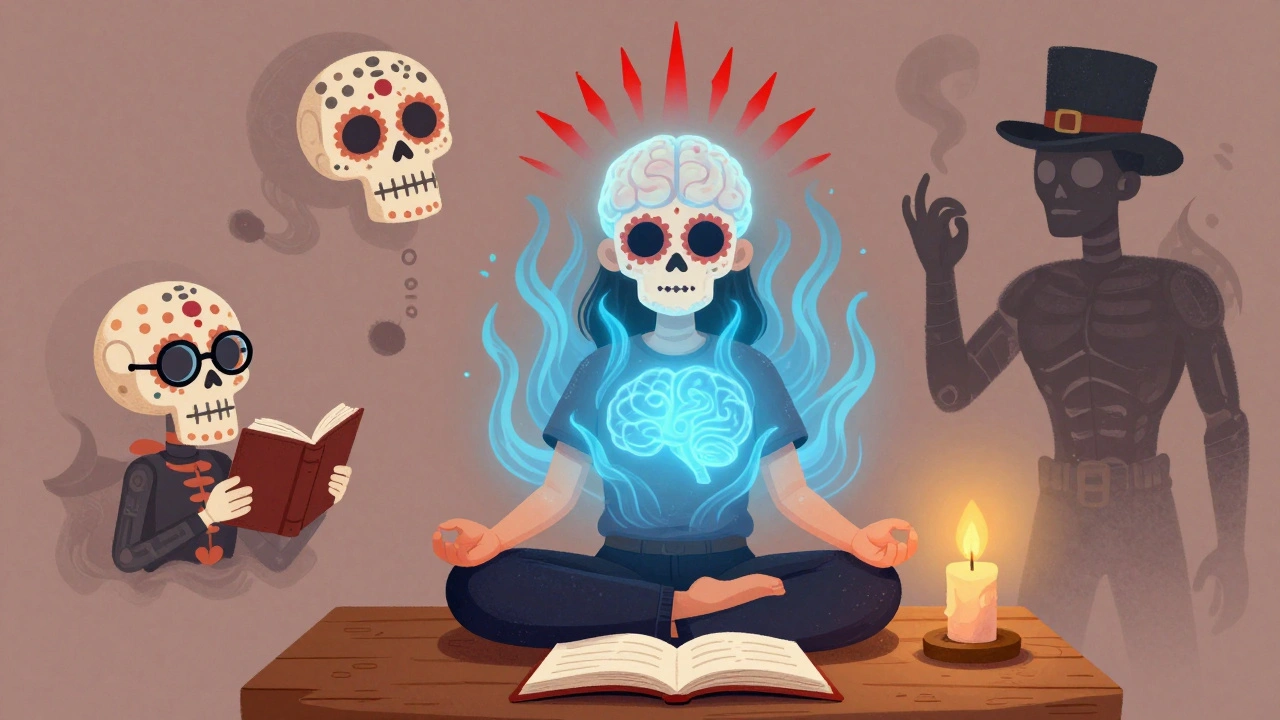
- Daily mindfulness: Just 15 minutes of breathing or meditation lowers cortisol by 29% in eight weeks. You don’t need an app. Just sit quietly, focus on your breath, and let thoughts pass.
- Limit caffeine: If you drink more than two cups of coffee a day, stick to the same amount every day. No skips. No binges.
Keep a headache diary. Apps like Migraine Buddy help track triggers and show patterns. People who use them stick with treatment 76% longer. And if your doctor won’t take your diary seriously, find a headache specialist. General practitioners miss the diagnosis too often - the average delay is 2.7 years.
What’s Next? New Treatments on the Horizon
There’s exciting research happening. Atogepant, a drug originally approved for migraines, just got Fast Track status from the FDA for chronic tension headaches. In early trials, it cut headache days by over five per month. Occipital nerve stimulation - a small implant that sends mild pulses to the back of the head - showed a 62% success rate in a small 2023 study. And scientists are now looking at gut health: people with chronic tension headaches have 40% less of a beneficial gut bacteria called Faecalibacterium prausnitzii. Could probiotics help? We don’t know yet - but it’s a new direction.
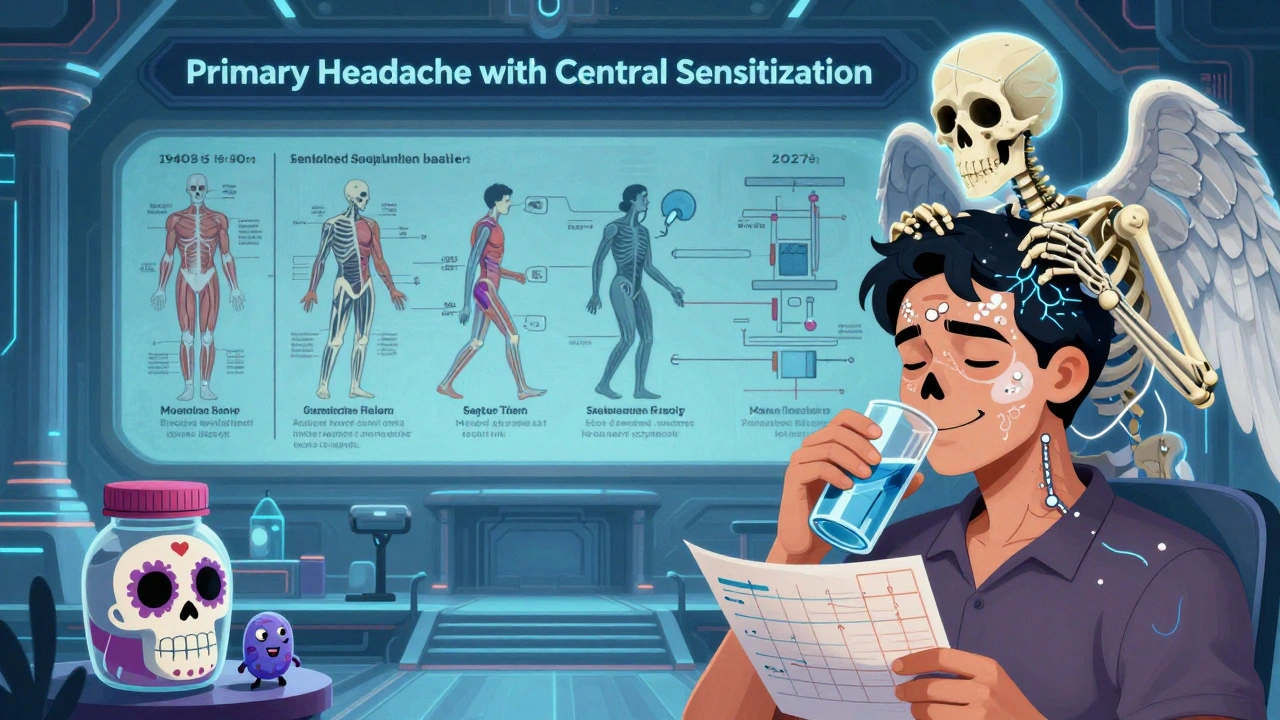
By 2027, the next version of the headache classification system (ICHD-4) will likely rename chronic tension headache to “primary headache with central sensitization.” That’s not just a name change. It’s a shift in how we treat it - from muscles to the brain.
Final Thought: This Isn’t Just “Stress”
If you’ve been told your headaches are “just stress,” you’ve been misled. Chronic tension headaches are a real neurological condition. They’re not dangerous, but they’re debilitating. And they respond to real, evidence-based care - not placebo fixes or muscle massages alone.
You don’t need to live with daily pain. Start with a headache diary. Cut back on painkillers. Fix your sleep. Try CBT. And if your doctor doesn’t know about central sensitization, find one who does. Your brain can unlearn pain - but only if you give it the right tools.
Can chronic tension headaches go away on their own?
Rarely. While some people with episodic tension headaches (fewer than 15 days a month) may see improvement with lifestyle changes, chronic tension headaches - those lasting three months or more - usually require active treatment. Left untreated, they often persist or worsen. The brain’s pain system becomes entrenched, making self-resolution unlikely without targeted intervention like medication, therapy, or behavioral changes.
Is it safe to take ibuprofen every day for chronic tension headaches?
No. Taking ibuprofen or other NSAIDs more than 10-14 days a month can cause medication-overuse headaches, making your condition worse. The FDA and European Headache Federation both warn against regular daily use. If you’re taking painkillers this often, talk to a doctor about switching to a preventive treatment like amitriptyline or CBT instead.
How do I know if I have chronic tension headaches or chronic migraines?
Chronic tension headaches are typically dull, pressing, and on both sides of the head. They don’t cause nausea, vomiting, or strong sensitivity to light or sound. Chronic migraines are often one-sided, throbbing, and come with nausea, light sensitivity, or aura. But the line can blur - up to 38% of chronic daily headaches are misdiagnosed. A detailed headache diary and neurological exam are needed to tell them apart. If you’re unsure, see a headache specialist.
Why do some doctors still say tension headaches are caused by muscle tension?
Because the old theory is still taught in medical schools and repeated in general practice. A 2023 BMJ study found 45% of primary care doctors still believe muscle contraction is the main cause, even though neuroscience has shown it’s not since the early 2000s. It takes time for research to reach front-line providers. If your doctor pushes massage or muscle relaxants as the main solution, ask about central sensitization and whether CBT or preventive medication might be more effective.
Can I use acupuncture instead of medication?
Acupuncture can help reduce headache frequency by about 3.2 days per month, according to the Cochrane Review. It’s not as strong as amitriptyline or CBT, but it’s a good option if you want to avoid medication or have side effects from pills. It works best when combined with other strategies like sleep improvement and stress management. Don’t rely on it alone if your headaches are severe or daily.
What should I do if my headaches aren’t improving?
If you’ve tried consistent sleep, limited painkillers, and CBT for 12 weeks with no improvement, it’s time to see a headache specialist. You may need a different medication, a referral for physical therapy with a cervicogenic specialist, or further testing to rule out other causes. Don’t keep trying the same things - your brain needs a new approach. Organizations like the American Headache Society can help you find a specialist.






15 Comments
Gillian Watson December 5, 2025
I used to think my headaches were just stress until I tracked my sleep and caffeine. Cut out weekend lie-ins and stuck to 2 cups max a day. Headaches dropped from 20+ days a month to maybe 3. No meds needed. Just consistency.
Jordan Wall December 6, 2025
Lmao so the brain is 'sensitized'?? 🤡 Like it's some kind of overstimulated IoT device? This is just neuro-babble dressed up as science. My grandma had headaches for 40 years and she didn't need CBT or amitriptyline - she just drank tea and stopped worrying. Maybe your brain needs less jargon and more tea.
Gareth Storer December 6, 2025
Ah yes, the classic 'it's not your muscles, it's your brain' cop-out. So if I stop clenching my jaw and fix my sleep, I’m supposed to believe my neurons just magically unlearned pain? Cool story. Where’s the double-blind study proving this isn’t just placebo with a fancy label?
Pavan Kankala December 7, 2025
They don't want you to know the real trigger: 5G towers, glyphosate in your coffee, and the government’s secret mind-control program. They push amitriptyline because it’s cheap and keeps you docile. Your 'central sensitization' is just your body screaming for freedom from the matrix. Wake up. They’ve been lying since the 1940s - and now they’ve just added AI to the lie.
Martyn Stuart December 8, 2025
This is actually one of the clearest, most evidence-based summaries I’ve seen on this topic. I’ve worked with chronic headache patients for over a decade, and the misdiagnosis rate is insane. The key is recognizing that muscle tension is a symptom, not the cause. And yes - CBT is underused. It’s not 'just talking'; it’s neuroplasticity training. Also, the 20-20-20 rule? Non-negotiable. I tell every patient to set a timer. It’s that simple.
Jessica Baydowicz December 8, 2025
OMG YES. I was in so much pain for years I thought I was going crazy. Then I started tracking my sleep and cut caffeine to one cup a day - no more weekend binges. My headaches went from daily to maybe once a week. I’m not saying it’s easy, but it’s worth it. You’re not broken - your habits just need a little TLC 💪❤️
Shofner Lehto December 9, 2025
The medication-overuse headache point is critical. I’ve seen too many people self-medicate into a worse condition. Ibuprofen isn’t harmless. It’s like drinking water when you’re dehydrated - it helps short-term but causes long-term damage if abused. Amitriptyline isn’t glamorous, but it’s the closest thing we have to a reset button for the pain system.
Yasmine Hajar December 11, 2025
I was told I was just stressed for five years. Five. Years. Then I found a headache specialist who actually listened. I started CBT and stopped taking Advil every day. My brain didn’t magically heal - I taught it to stop screaming. It took months. I cried a lot. But now I’m not just surviving - I’m living. If you’re reading this and still in pain: you’re not weak. You’re just waiting for the right help. Keep going.
Karl Barrett December 12, 2025
Central sensitization is a fascinating paradigm shift. It reframes the headache not as a peripheral issue but as a maladaptive learning process in the nociceptive network. The fact that CBT reduces frequency by 41% suggests cortical reorganization is possible - which implies neuroplasticity can be harnessed intentionally. This isn’t just medicine; it’s cognitive rehabilitation.
Jake Deeds December 14, 2025
People who say 'just fix your sleep' have never had a real headache. I’ve tried everything. I meditate, I hydrate, I use the 20-20-20 rule, I sleep like a monk - and I still get them. So no, this isn’t about discipline. It’s about your body being broken, and the medical system refusing to admit it. I’m tired of being told I’m not trying hard enough.
val kendra December 15, 2025
I took amitriptyline for 6 months. Dry mouth sucked. Weight gain? Yeah. But my headaches went from 25 days a month to 5. I’d take that trade any day. Also - stop scrolling before bed. Your eyes and neck are screaming. I started using a blue light filter and reading paper books. Game changer.
Isabelle Bujold December 15, 2025
I’ve spent years researching this. The real issue is that the medical community still operates on outdated models. The 1940s muscle tension theory was never proven - it was just convenient. And now, even when science moves on, insurance companies won’t cover CBT unless you’ve tried every muscle relaxant first. It’s not just ignorance - it’s systemic inertia. I’ve seen patients wait years because their doctors won’t believe them. This post is a lifeline for people who’ve been gaslit by the system.
Rachel Bonaparte December 17, 2025
They’re lying about the gut bacteria thing too. Faecalibacterium prausnitzii? That’s just a distraction. The real cause is the fluoridated water supply and the glyphosate in your organic kale. You think your brain is sensitized? No. Your liver is poisoned. And they don’t want you to know because Big Pharma makes more money off antidepressants than probiotics. Wake up.
Scott van Haastrecht December 17, 2025
So let me get this straight - you’re telling me the entire medical establishment has been wrong for 80 years, and now you’re the one who cracked it? With a blog post? And CBT? Please. If this were real science, it’d be in The Lancet, not some Reddit-style rant with bullet points. You’re selling hope like it’s a supplement.
Chase Brittingham December 18, 2025
I appreciate the nuance here. I’ve been dealing with this for 12 years. I tried everything - massages, chiropractors, acupuncture, NSAIDs, even Botox. Nothing worked until I found a physical therapist who did craniocervical flexion. Twelve sessions. No drugs. Just slow, deliberate movement. It didn’t fix me overnight, but it gave me back control. If you’re reading this and feel hopeless - try finding a therapist who knows this technique. It’s rare, but it exists.