

Medication Appetite Change Calculator
This calculator shows expected appetite changes and weight effects for common medications based on clinical data. Enter your medication to see personalized insights and management strategies.
Many people start a new medication expecting relief from their symptoms-but end up dealing with an unexpected side effect: their appetite changes dramatically. One person might feel constantly hungry, snacking all day even when they’re not truly hungry. Another might lose interest in food entirely, barely eating enough to get through the day. These shifts aren’t just inconvenient-they can lead to weight gain, malnutrition, or worsened mental and physical health. The truth is, medication appetite changes are far more common than most patients realize, and they’re not random. They’re built into how these drugs interact with your brain and body.
Why Your Medication Is Changing Your Appetite
Your appetite isn’t controlled by willpower. It’s run by a complex network of hormones and brain chemicals. Medications can hijack this system in surprising ways. For example, many psychiatric drugs like olanzapine and mirtazapine increase levels of histamine and serotonin in the brain, which directly stimulate hunger signals in the hypothalamus. Studies show that within four weeks of starting olanzapine, ghrelin-the “hunger hormone”-can rise by 15-20%. That’s not just feeling a little peckish. That’s your body screaming for food. On the flip side, medications like amphetamines and topiramate work by boosting norepinephrine and dopamine, which suppress appetite. People on these drugs often report feeling full after just a few bites. It’s not because they’re eating less-it’s because their brain no longer registers hunger the way it used to. Even diabetes medications can flip the script. Insulin helps your body store glucose, but it also signals fat cells to hold onto energy. That’s why many people gain 2-4 kg in the first six months of starting insulin. Meanwhile, metformin does the opposite-it improves insulin sensitivity and can lead to a 2-3 kg weight loss over the same period. The same drug class, two totally different effects.Which Medications Are Most Likely to Cause Appetite Changes?
Not all drugs affect appetite the same way. Some are notorious for causing weight gain, others for weight loss. Here’s a clear breakdown based on clinical data:| Medication Class | Examples | Typical Weight Change | Appetite Effect |
|---|---|---|---|
| Second-generation antipsychotics | Olanzapine, quetiapine, risperidone | 4-10 kg in first 3 months | Strong increase |
| Antidepressants | Mirtazapine, amitriptyline, paroxetine | 2-5 kg in 6 months | Increase (especially carbs) |
| Antidepressants (weight-neutral/loss) | Bupropion, vortioxetine | 0-2 kg loss | Decrease or neutral |
| Diabetes meds | Insulin, sulfonylureas | 2-4 kg gain | Increased hunger |
| Diabetes meds (weight-neutral/loss) | Metformin, GLP-1 agonists | 2-5 kg loss | Decreased hunger |
| Appetite suppressants | Amphetamines, topiramate | 3-5 kg loss in 6 months | Strong decrease |
| Antihistamines | Diphenhydramine, hydroxyzine | 1-3 kg gain | Moderate increase |
What’s striking is how dramatic the differences are. Mirtazapine, for example, causes weight gain in 40% of users within six months. Bupropion, on the other hand, leads to weight loss in nearly 30%. That’s not a small difference-it’s life-changing. And yet, many patients aren’t warned about this before starting treatment.
How to Manage Increased Appetite from Medication
If your medication is making you hungry all the time, you’re not weak. You’re not lazy. You’re just responding to a biological signal your brain can’t ignore. The good news? You can manage it-without stopping your meds. Start with protein. Eating 15-20 grams of protein every 3-4 hours keeps your blood sugar stable and reduces those intense hunger spikes. A hard-boiled egg, a small serving of Greek yogurt, or a handful of almonds can make a big difference. Studies show this simple habit cuts hunger spikes by 40%. Next, focus on fiber. Whole grains, beans, vegetables, and fruits fill you up longer. Kelty Mental Health found that switching from white bread to whole grain added 20-30 minutes of satiety per meal. That’s not just a trick-it’s science. Fiber slows digestion, and your gut sends signals to your brain that you’re full. Meal prepping is another game-changer. When you don’t have food ready, you grab whatever’s handy-chips, cookies, fast food. People who prep meals twice a week eat 200 fewer calories a day on average. That’s over 1,400 fewer calories a week. You don’t need to cook fancy meals. Just cook once, eat twice. And don’t underestimate water. Drinking a glass of water 15-20 minutes before meals reduces total calorie intake by 13%, according to user reports from over 200 people managing medication-induced hunger. It’s not magic-it’s just filling your stomach so your brain doesn’t confuse thirst for hunger.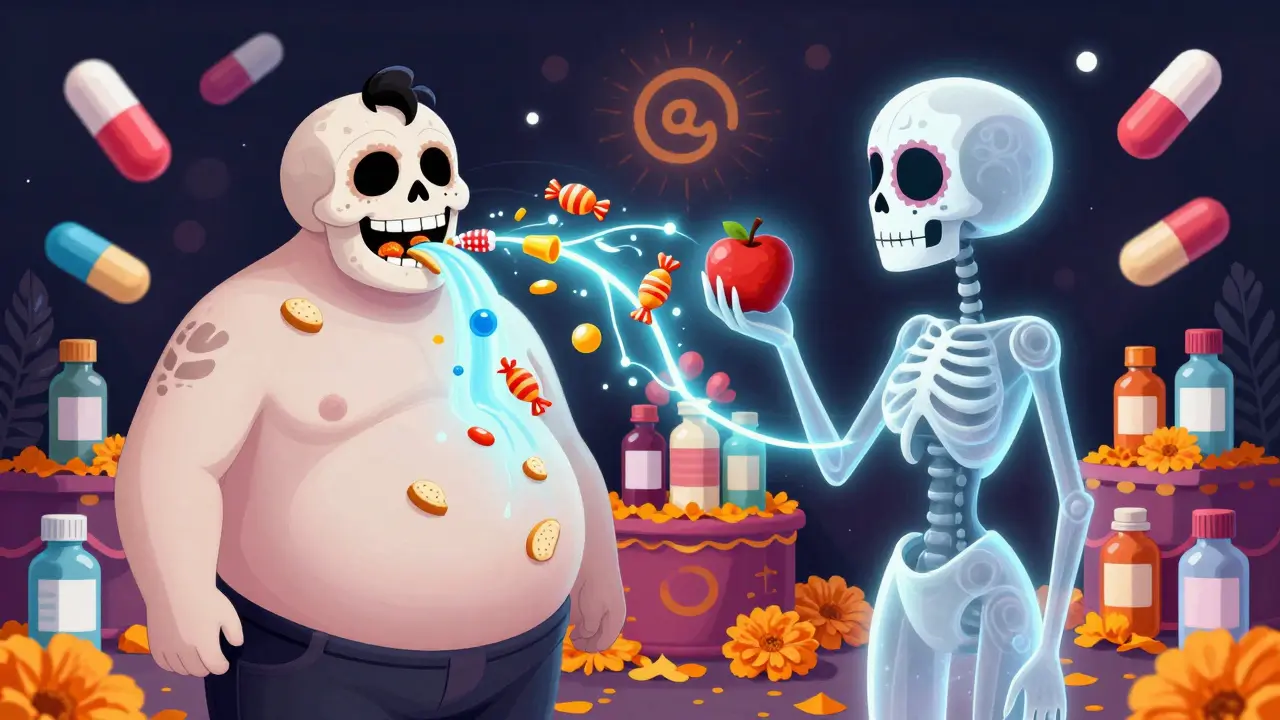
How to Handle Loss of Appetite from Medication
Losing your appetite isn’t just about not feeling hungry. It’s about losing energy, muscle, and strength. If you’re on a drug like topiramate or an amphetamine-based ADHD medication, you might skip meals without even noticing. That’s dangerous. Set alarms to eat. Even if you’re not hungry, your body still needs fuel. Try eating smaller, more frequent meals-five mini-meals instead of three big ones. Add calorie-dense, nutrient-rich foods: peanut butter on whole grain toast, avocado on eggs, smoothies with protein powder and banana. Make meals enjoyable. If food feels like a chore, you’ll avoid it. Add flavor. Use herbs, spices, sauces. Eat with people. Even if it’s just a quick lunch with a friend, social eating can trigger appetite. Resistance training helps too. Lifting weights or doing bodyweight exercises two to three times a week increases muscle mass by 1-2% per month. More muscle means a higher resting metabolic rate-your body burns 50-100 extra calories a day just by existing. That helps you maintain weight even if you’re eating less.When to Talk to Your Doctor
You should never stop or change your medication on your own. But you should speak up if your appetite changes are affecting your health. If you’ve gained more than 5% of your body weight in three months, or lost more than 3% without trying, it’s time to talk. Your doctor can check your BMI and waist circumference every three months, as recommended by the Endocrine Society. They might switch you to a weight-neutral alternative. Vortioxetine, for example, causes only 0.5 kg of weight gain over six months-far less than traditional SSRIs. Or they might add metformin to counteract insulin-induced weight gain. Some doctors now use genetic testing to predict who’s more likely to gain weight on certain drugs. A 2023 study in Nature Medicine identified 12 genetic markers linked to antipsychotic-induced weight gain. While not yet routine, this is the future of personalized medicine.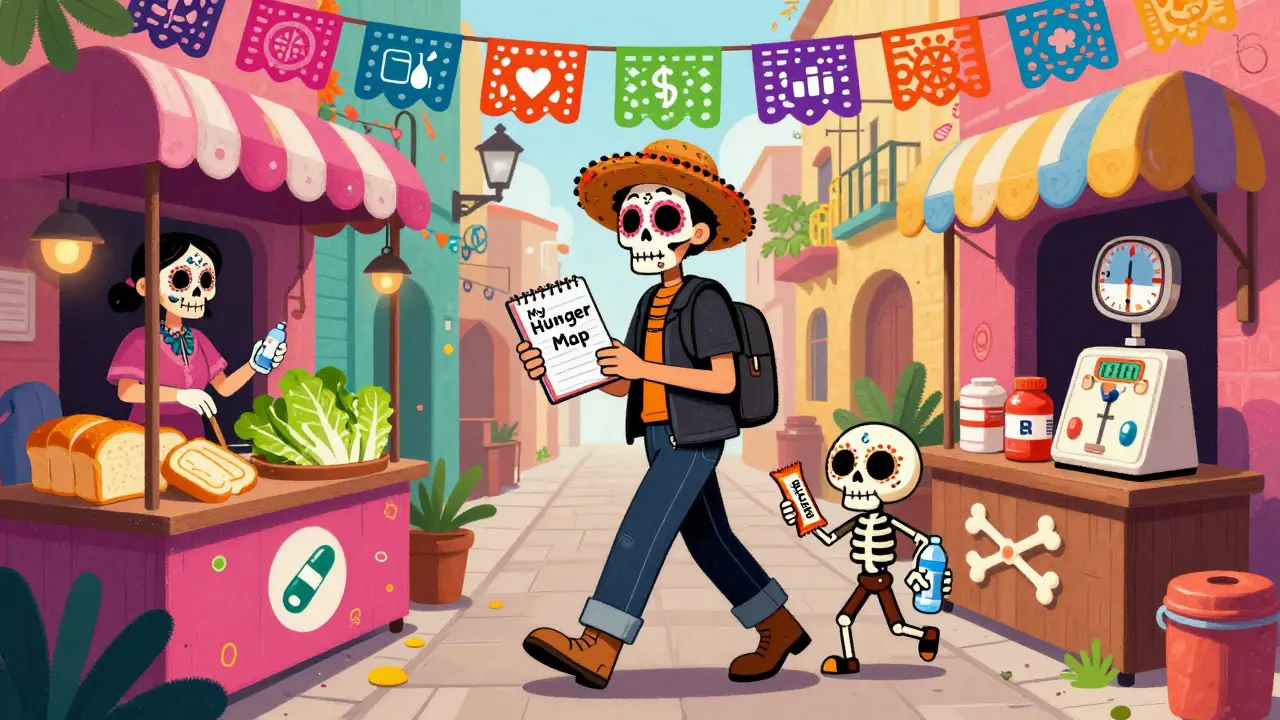
Real People, Real Results
One Reddit user shared how they gained 30 pounds on quetiapine in just four months. They felt out of control-constantly eating, even when full. After switching to bupropion and starting meal prepping, they lost 15 pounds in six months without worsening their depression. Another person on insulin struggled with constant hunger and cravings. They started drinking water before meals, eating protein at every snack, and walking after dinner. Within two months, their weight stabilized. They didn’t stop insulin-they just changed how they lived with it. These aren’t outliers. They’re people who learned how to work with their medication, not against it.What’s Changing in Medicine
The medical community is waking up to this issue. The FDA now requires drug makers to report detailed weight change data for new psychiatric medications. Pharmaceutical companies are developing new drugs with appetite-neutral profiles. KarXT, a new schizophrenia treatment, causes only 0.4 kg of weight gain in five weeks-compared to 3.2 kg with olanzapine. Digital tools are helping too. Platforms like Noom offer personalized coaching for people managing medication-related weight changes. In one 2022 trial, users on Noom reported 45% satisfaction with weight management-compared to just 28% with standard care. This isn’t just about weight. It’s about dignity, energy, and quality of life. If your medication is making you feel out of control with food, you deserve better. And you can get it-with the right support.Can medication-induced appetite changes be reversed?
Yes, in many cases. Weight gain or loss from medication can be managed or reversed through dietary changes, exercise, and sometimes switching to a different drug. For example, switching from mirtazapine to bupropion often leads to weight loss without losing mental health benefits. The key is acting early-most weight changes happen in the first 3-6 months of treatment.
Why do antidepressants make me crave carbs?
Long-term use of some antidepressants, especially SSRIs and SNRIs, can cause serotonin receptors in your brain to become less responsive. This leads to a drop in mood and energy, which your brain tries to fix by craving carbohydrates. Carbs boost serotonin temporarily, giving you a short-term mood lift. That’s why you might suddenly want bread, pasta, or sweets-even if you didn’t before.
Is it safe to stop my medication if I’m gaining weight?
No. Stopping psychiatric, diabetes, or other chronic medications suddenly can cause serious withdrawal symptoms, relapse, or even life-threatening complications. Always talk to your doctor first. They can help you taper safely or switch to a better option without risking your health.
How long does it take for appetite changes to start?
Appetite changes can begin within days to weeks. With antipsychotics like olanzapine, hunger often increases within 1-2 weeks. Weight gain usually becomes noticeable after 4-6 weeks. For antidepressants, appetite shifts may take longer-sometimes 2-3 months-before you notice major changes. The first three months are the most critical for monitoring.
Can exercise help counteract medication-related weight gain?
Yes. Resistance training-like lifting weights or doing push-ups and squats-builds muscle, which increases your resting metabolism. Just two to three sessions a week can raise your daily calorie burn by 50-100 calories. Combined with dietary changes, this can prevent or reverse most medication-related weight gain. Cardio helps too, but muscle is the real game-changer.
What to Do Next
If you’re experiencing appetite changes from medication, here’s your action plan:- Track your weight weekly for the first three months of starting a new drug.
- Write down your hunger patterns-when you feel hungriest, what you eat, and how you feel after.
- Start small: drink water before meals, add protein to snacks, prep meals twice a week.
- Ask your doctor if your medication has a weight-neutral alternative.
- Don’t wait until you’ve gained 20 pounds to speak up. Early intervention makes all the difference.



9 Comments
Sarthak Jain December 16, 2025
man i didnt realize how much mirtazapine was wrecking my hunger cues until i started tracking my meals. one day i was eating like 4 bowls of cereal before noon and i thought i was just stressed. turns out my brain was screaming for carbs because of serotonin weirdness. the fiber + protein tip? life saver. now i snack on almonds and cottage cheese instead of junk. still on the med, but at least i dont feel like a hungry ghost anymore.
Daniel Wevik December 17, 2025
From a clinical pharmacology standpoint, the H1 histamine receptor antagonism in second-gen antipsychotics is the primary driver of hyperphagia. Olanzapine’s Ki for H1 is ~0.1 nM, which is orders of magnitude higher than its affinity for D2 receptors. This directly upregulates NPY/AgRP neurons in the arcuate nucleus, overriding leptin signaling. The 15-20% ghrelin increase cited is corroborated by multiple RCTs. Metformin’s AMPK activation partially counteracts this by enhancing insulin sensitivity in hypothalamic nuclei.
Edward Stevens December 18, 2025
So let me get this straight. We’re giving people drugs that turn them into snack robots, then telling them to eat more protein and drink water? Brilliant. Next we’ll prescribe kale as a substitute for brain chemistry. At least the pharma companies are making bank on both the meds and the ‘lifestyle coaching’ add-ons. Thanks for the 2022 Noom trial citation. Real subtle there.
Alexis Wright December 19, 2025
You think this is about appetite? It’s about control. The entire psychiatric industrial complex is built on chemical compliance. They give you a drug that makes you ravenous, then sell you a $200/month app to ‘manage’ the side effect you were never warned about. They don’t care if you gain 30 pounds-they care that you’re still taking the pill. And don’t get me started on how they call it ‘weight-neutral’ when metformin causes 2kg loss but mirtazapine causes 5kg gain. That’s not neutrality. That’s fraud wrapped in a white coat.
Genetic testing? Please. It’s a marketing gimmick for patients who can afford $1,500 tests. The real solution? Stop prescribing antipsychotics like candy. But hey, maybe you’d rather blame your willpower than the system.
Dwayne hiers December 20, 2025
For those managing insulin-induced hyperphagia: the key is matching insulin timing with macronutrient intake. Bolus insulin should be administered 15-20 minutes pre-meal to align with peak glucose absorption. Delayed administration leads to postprandial hyperinsulinemia, which drives fat storage and subsequent hunger via reactive hypoglycemia. Pair this with 30g protein per meal and 25g fiber daily, and you stabilize ghrelin and PYY oscillations. Studies show this reduces snacking frequency by 62% in T2DM cohorts on insulin.
Also, resistance training enhances GLUT4 translocation independently of insulin-this is why muscle mass is protective. Two sessions/week minimum. Don’t skip leg day.
jeremy carroll December 20, 2025
im so glad someone finally said this. i was terrified to tell my doc i was eating like a bear hibernating, but after i started prepping meals and drinking water before eating, i lost 8 lbs without changing my meds. still on seroquel but now i have energy again. you’re not broken, you’re just on a med that messes with your body. small steps matter.
Rulich Pretorius December 22, 2025
There’s a deeper truth here: our medical system treats symptoms, not systems. We fix the depression with a drug, then fix the weight gain with a diet plan, then fix the low self-esteem with therapy-all while ignoring that the root trigger was a pharmacological intervention we didn’t fully understand before prescribing. This isn’t about willpower. It’s about humility. We need to ask: who benefits when patients become dependent on both medication and lifestyle management? Maybe the answer isn’t better apps, but better prescribing.
Wade Mercer December 23, 2025
Stop blaming the drugs. If you can’t control your eating, maybe you shouldn’t be on psychiatric meds in the first place. Food is fuel, not therapy. People who snack all day are just lazy and using medication as an excuse. I’ve been on topiramate for years and I’ve lost 40 lbs. If I can do it, so can you. Just stop being weak.
Daniel Thompson December 25, 2025
Regarding the FDA’s new weight-change reporting requirements: this is a step forward, but inadequate. The threshold for mandatory reporting is a 5% weight change-yet many patients experience clinically significant metabolic dysregulation at 3%. Furthermore, the data is self-reported by pharmaceutical sponsors, not independently verified. Until we mandate third-party longitudinal monitoring and publish individual-level outcomes in public registries, this remains performative transparency.