
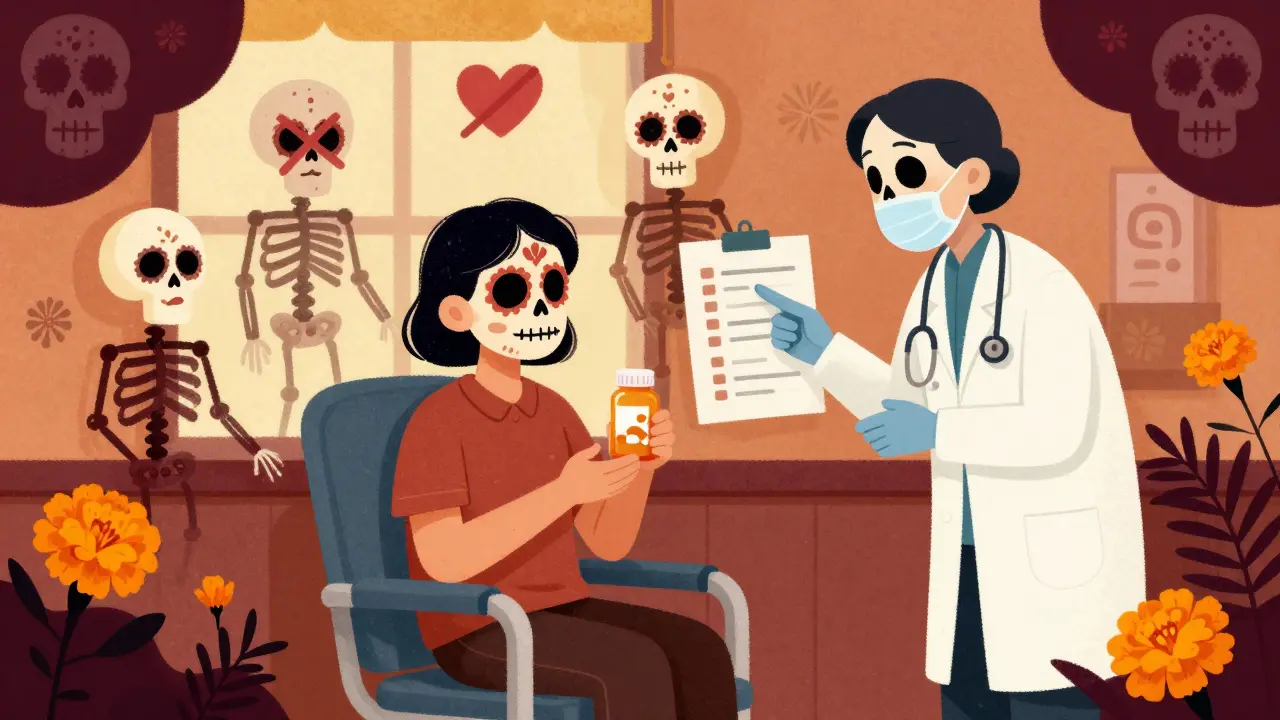
When you start a new medication for depression, anxiety, or another mental health condition, you’re focused on feeling better. But what if that same medication starts to make your sex life disappear? It’s not rare. In fact, sexual side effects from medications affect more than half of people taking antidepressants. And yet, most patients never hear about it until it happens - and by then, they’re already considering quitting their treatment.
Why This Happens - And Why It’s Often Ignored
Selective serotonin reuptake inhibitors, or SSRIs, are among the most commonly prescribed antidepressants. Drugs like fluoxetine, sertraline, and paroxetine work by increasing serotonin in the brain - which helps lift mood. But serotonin also plays a role in sexual response. Too much of it can shut down desire, delay or block orgasm, and make erections harder to get or keep. For women, it can lead to dryness, pain during sex, or just a total lack of interest. The numbers are startling: 58% to 70% of people on SSRIs report some form of sexual dysfunction. That’s more than 6 out of 10. And it’s not just SSRIs. Other psychiatric medications, including some antipsychotics and even certain blood pressure pills, can have the same effect. The problem? Most doctors don’t bring it up before prescribing. A 2023 Reddit survey of over 1,200 people found that 68% were never warned about this risk. Patients assume it’s normal - or worse, that they’re being dramatic. So they stay silent. For months. Sometimes years.How Sexual Side Effects Differ Between Men and Women
Men and women experience these side effects differently, but both are deeply affected. For men, the most common issues are:- Low or gone libido (62% of cases)
- Erectile problems (48%)
- Delayed or absent orgasm (up to 50%)
- Occasional painful, prolonged erections (priapism - rare, but serious)
- Lack of sexual desire (57%)
- Pain during sex (38%)
- Difficulty reaching orgasm (at least 30%)
- Reduced vaginal lubrication
The Medications That Are Least Likely to Cause Problems
Not all antidepressants are created equal when it comes to sexual side effects. Some are much gentler on your libido and function. SSRIs like fluoxetine and sertraline? High risk - 50-70% of users report issues. But if you switch to one of these alternatives, the odds drop dramatically:- Bupropion (Wellbutrin): Only 5-10% of users report sexual side effects. It’s one of the few antidepressants that may even improve libido.
- Mirtazapine (Remeron): Also low risk - around 5-10%. Often used when sleep and appetite are also problems.
- Vilazodone and vortioxetine: Newer options with lower rates of sexual dysfunction than older SSRIs.

What You Can Do - Real, Proven Strategies
You don’t have to just live with it. There are six evidence-backed ways to manage sexual side effects - and counseling is the first step. 1. Talk to your provider before you start. The best time to address this is before you take your first pill. Ask: “What are the chances this will affect my sex life?” A good provider will tell you the numbers. They’ll say: “This happens to 6 out of 10 people. It doesn’t mean you’re broken. It means we can fix it.” 2. Schedule a follow-up at 4 weeks. Don’t wait for a crisis. Ask your doctor to check in about your sexual health at your next appointment. A 2022 study found that patients who had this kind of structured follow-up were 32% less likely to quit their medication. 3. Try a drug holiday. For some people, skipping your pill for 2-3 days before planned intimacy helps. This works best with medications that leave your system quickly, like sertraline. But it’s risky with others - like paroxetine, which can cause withdrawal symptoms. Only do this under medical supervision. 4. Consider a switch. If your current drug is causing problems, switching to bupropion or mirtazapine is often the most effective solution. It’s not a last resort - it’s a standard option. 5. Use a rescue medication. For men with erectile issues, drugs like sildenafil (Viagra) or tadalafil (Cialis) can help. But here’s the catch: they don’t fix low desire or delayed orgasm. They only help with erections. And if you’re not told how to use them properly, they won’t work. One study found that improper use was the main reason people gave up on them. 6. Try couples therapy. If your relationship is strained because of this, therapy can help. A 2023 review found that couples counseling improved sexual satisfaction in half of the cases where emotional distance had developed.What’s Not Working - And Why
Some advice you hear online just doesn’t hold up. - “Just wait it out.” Sexual side effects rarely go away on their own. If they haven’t improved by 6-8 weeks, they’re probably not going to. - “It’s just part of getting better.” No. Depression can cause low libido - but so can your medication. You shouldn’t have to choose between mental health and sexual health. - “Try herbal supplements.” There’s no solid evidence that ginseng, maca, or L-arginine fix medication-induced sexual dysfunction. And some can interact dangerously with antidepressants. The truth? The most effective fix is usually a simple conversation - and a smart adjustment.
What Providers Should Be Doing - But Often Aren’t
Doctors and pharmacists are trained to monitor for weight gain, sleep changes, or suicidal thoughts. But sexual side effects? Often ignored. A 2021 survey found that 64% of resident doctors felt uncomfortable bringing up sex with patients. Many don’t know how to ask. But it’s changing. The American Psychiatric Association now requires providers to routinely ask about sexual function during medication check-ins. Some clinics use a quick 5-minute tool called the Arizona Sexual Experience Scale (ASEX) to screen for problems. Pharmacists are being trained too - with new certification modules that teach them how to talk about this without flinching. And patients? They notice. One person on HealthUnlocked said: “When my doctor switched me to bupropion after I mentioned sexual problems at our 6-week check-in, my sex life improved within 2 weeks. I’ve stayed on treatment for 18 months now.”What’s Next - And Why You Should Stay Hopeful
This isn’t a dead end. New treatments are coming. A drug called a 5-HT2C receptor antagonist is in phase 3 trials right now - designed to block sexual side effects without hurting the antidepressant’s effect. Results are expected in 2024. Digital tools are helping too. Apps like MoodFX now let you track your mood and sexual function together. Over 127,000 people are using them to spot patterns and talk to their doctors with data, not just feelings. And awareness is growing. The FDA now requires clearer warnings on antidepressant labels. Telehealth services like Ro and Hims are seeing 45% of their consultations related to medication-induced sexual dysfunction. That means more people are speaking up - and more providers are listening.What You Can Do Right Now
If you’re on medication and your sex life has changed:- Don’t blame yourself.
- Don’t wait until you’re ready to quit.
- Don’t assume your provider knows.
- Write down what’s changed - desire, arousal, orgasm, pain.
- Bring it up at your next appointment. Say: “I’ve noticed changes in my sex life since starting [medication]. Can we talk about what might be causing it?”
- Ask: “Are there other medications with fewer sexual side effects?”
- Ask: “Can we try a short break or a lower dose?”
- Ask: “Is there a specialist who can help with this?”
Do all antidepressants cause sexual side effects?
No. While SSRIs like fluoxetine and sertraline cause sexual side effects in 50-70% of users, other antidepressants like bupropion (Wellbutrin) and mirtazapine (Remeron) have much lower rates - around 5-10%. Some people even report improved libido on these alternatives.
Can I just stop taking my medication if sex life is affected?
Stopping abruptly can cause withdrawal symptoms and increase the risk of depression returning. Instead, talk to your provider. They can help you safely adjust your dose, switch medications, or add a solution like bupropion or a PDE5 inhibitor. Never stop without medical guidance.
Is it normal to feel embarrassed talking about this with my doctor?
Yes - many people feel this way. But your doctor has heard it before. In fact, 6 out of 10 patients on antidepressants experience this. The more you speak up, the more they’ll know to ask. Providers who bring it up early see better adherence and fewer treatment dropouts.
Can women benefit from Viagra or Cialis?
PDE5 inhibitors like sildenafil (Viagra) and tadalafil (Cialis) are approved for men with erectile dysfunction. For women, they don’t reliably improve desire or arousal. Some small studies show minor benefits for arousal issues, but they’re not a standard solution. The focus for women should be on switching medications, counseling, or addressing pain and dryness with non-drug approaches.
How long should I wait before seeking help for sexual side effects?
If you notice changes within the first 2-4 weeks of starting a new medication, bring it up. If it hasn’t improved by 6-8 weeks, it’s unlikely to get better on its own. Waiting longer only increases the chance you’ll stop treatment entirely. Early intervention leads to better outcomes.
Are there any natural remedies that help?
Herbal supplements like ginseng, maca, or L-arginine have no strong evidence for fixing medication-induced sexual dysfunction. Some may even interact dangerously with antidepressants. The safest and most effective solutions are medical: switching medications, adjusting doses, or using proven adjuncts like bupropion or counseling.



10 Comments
Robert Shiu February 20, 2026
Just wanted to say this article hit home. I was on sertraline for 18 months and thought my sex life was just... gone forever. Turned out it was the med. Switched to bupropion, and within three weeks, I felt like a human again. Not just physically - emotionally too. You don’t have to choose between mental health and intimacy. That’s the lie they sell you. It’s not either/or. You can have both. Just talk. Seriously. Just say it.
Greg Scott February 21, 2026
Yeah, I didn’t even know this was a thing until my girlfriend left me. Then I Googled ‘why can’t I get hard on Zoloft’ and found this exact article. 68% of people aren’t warned? That’s wild. My doc never mentioned it. Not once. I’m glad I didn’t quit cold turkey. But man, if someone had just told me upfront, I wouldn’t have wasted a year feeling broken.
Scott Dunne February 22, 2026
It is, of course, entirely predictable that modern medicine has become so preoccupied with the genitalia of its patients that it neglects the more essential task of curing disease. This is not a medical issue - it is a cultural one. We have turned intimacy into a metric, a performance, a commodity. The pharmaceutical industry profits from this anxiety. You are being manipulated.
Caleb Sciannella February 24, 2026
It’s important to contextualize this within the broader paradigm shift in psychiatric care over the past two decades. The pharmacological revolution of the 1990s prioritized symptom suppression over holistic patient experience, and sexual function was systematically deprioritized in clinical guidelines due to perceived ‘low clinical significance.’ However, longitudinal studies from the 2010s - particularly those published in JAMA Psychiatry and The Lancet Psychiatry - have demonstrated that sexual dysfunction is not merely a side effect, but a critical determinant of treatment adherence and long-term recovery outcomes. The fact that 64% of resident physicians report discomfort in broaching this topic reflects a systemic failure in medical education, not patient over-sensitivity. We must institutionalize structured screening protocols - like the ASEX - as standard of care, not as optional add-ons. This isn’t about sex; it’s about dignity.
Oana Iordachescu February 26, 2026
Wait - are we sure this isn’t a Big Pharma marketing ploy? I’ve read that the FDA only requires labeling after 5,000 adverse reports... and how many people actually report sexual side effects? Probably less than 10%. Also, isn’t it suspicious that ‘bupropion’ is now being pushed as the ‘sex-positive’ alternative? Who funds those studies? I’m not saying it’s fake - but I’m not trusting it either. 🤔
Davis teo February 28, 2026
I had a 3-week affair with a guy who said I was ‘emotionally unavailable’ because I didn’t want to have sex. Turns out I was on paroxetine. I cried for three days after I found out it was the drug. My therapist said, ‘You’re not frigid - you’re pharmacologically neutered.’ I still think about that. I didn’t know I could be so sad about not being able to come. Like, I didn’t even miss the orgasm - I missed the feeling that I was still alive. This article? It’s the first time I’ve felt seen.
Michaela Jorstad February 28, 2026
So many people don’t realize that sexual side effects aren’t just about desire - they’re about connection. I stopped wanting to touch my partner because I felt like a robot. I’d lie there, thinking, ‘Is this normal? Am I broken?’ And no one asked. Not my doctor, not my friends. I finally brought it up after reading a Reddit thread that said, ‘If you feel numb, it might not be you - it might be the pill.’ I switched to mirtazapine. Two weeks later, I hugged my partner and actually felt it. Not just the touch - the warmth. It’s not about sex. It’s about being human again.
Chris Beeley February 28, 2026
Let me tell you something, my American friends - this obsession with sexual performance is the direct result of your capitalist, consumerist culture. In Nigeria, we understand that depression is a spiritual malady, not a chemical imbalance. We do not medicate the body into submission; we cleanse the soul. Your doctors are not healers - they are technicians. You have been taught to believe that your libido is a product that can be optimized, like a smartphone. This is madness. I have seen men in Lagos who have been on antidepressants for years, and they do not speak of erections - they speak of peace. You have lost your way. This article is not helpful - it is a symptom of your decay.
James Roberts March 2, 2026
Wow. I literally just read this whole thing while waiting for my urologist appointment. And guess what? He asked me, ‘How’s your sex life?’ out of nowhere. I was stunned. I said, ‘Uh… bad.’ He said, ‘Which med?’ I said, ‘Lexapro.’ He said, ‘Switch to bupropion. Done.’ I left with a prescription and a sense of hope. I didn’t even ask. He just knew. Maybe the system’s not broken - maybe we just need to stop being so embarrassed to say the word ‘sex’ in front of a doctor. Also, yes, I’m now a bupropion evangelist. Send help. And maybe a coupon for Cialis. 😎
Danielle Gerrish March 4, 2026
Okay, so I’ve been on fluoxetine for 4 years. I stopped having orgasms 6 months in. I told my therapist. She said, ‘That’s common. Try Kegels.’ I tried Kegels. I tried yoga. I tried watching porn. I tried dating. Nothing worked. Then I switched to vortioxetine. Two weeks later, I had my first orgasm in 3.5 years. I cried. I called my mom. I sent a voice note to my ex. I didn’t know I could feel like that again. And now? I’m in couples therapy. Because it’s not just the sex - it’s the shame. The silence. The belief that you’re broken. You’re not. You’re just on the wrong pill. And you deserve better.