
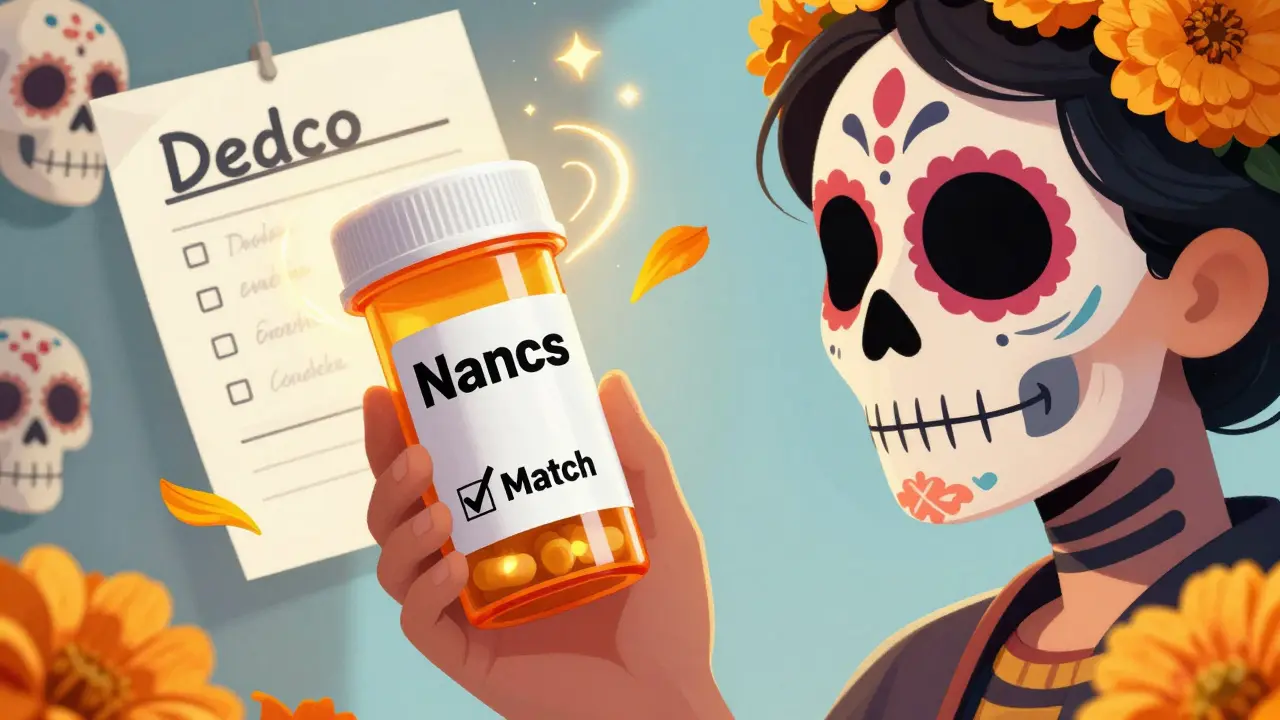
Every year, over 1.5 million people in the U.S. experience a medication error - and nearly a quarter of those mistakes happen because the label on the bottle doesn’t match what the doctor prescribed. It’s not always a pharmacy mistake. Sometimes, it’s a mix-up at home. You grab a bottle, assume it’s right, and take it. That’s why confirming your name and medication on a prescription label isn’t just a good habit - it’s your last line of defense.
What’s on the label? Know what to look for
When you pick up a prescription, the label has to include six key pieces of information by law. If any of these are missing, wrong, or hard to read, stop and ask. The FDA requires every prescription label to show:- Your full legal name (first and last - sometimes middle initial too)
- The exact name of the medication (both brand and generic, like "Lisinopril" and "Zestril")
- The strength (e.g., "5 mg", "10 mg", not just "pill")
- The dosage instructions (e.g., "Take one tablet by mouth twice daily")
- The pharmacy’s name and phone number
- The prescription number and date
Some labels also include the National Drug Code (NDC) - a 10- or 11-digit number that tracks the exact batch of medicine. It’s not something you need to memorize, but if the label looks different from past prescriptions, check it.
Pharmacies are required to use at least 12-point font for critical info like your name and medication. But many still use smaller text, especially on Walgreens labels, which have drawn criticism from older patients. If you’re over 65 or have trouble reading small print, ask for a large-print label. Most CVS and Walgreens locations now have magnifiers at the pickup counter.
Step-by-step: How to verify your prescription in 30 seconds
You don’t need to be a doctor to spot a mistake. Just follow these six steps every time you pick up a new prescription:- Hold the bottle at eye level under bright light. Natural daylight or a lamp works best. Avoid checking labels under dim fluorescent lights - they make small print harder to read.
- Check your name. Does it say "John Smith" and you’re "John A. Smith"? That’s a mismatch. Even a missing middle initial can mean it’s not yours. Never assume it’s close enough.
- Match the medication name. Did your doctor say "metformin"? Is that what’s on the label? Or does it say "Glucophage"? Both are correct - one’s the generic, one’s the brand. But if it says "Warfarin" and you were prescribed "Apixaban", that’s a red flag.
- Confirm the strength. This is where most errors happen. A 5 mg pill can look identical to a 50 mg pill. If your doctor said "5 mg twice a day" and the label says "50 mg", don’t take it. Call the pharmacy immediately.
- Read the directions. Are you supposed to take it with food? At bedtime? Twice a day? If the instructions don’t match what your doctor told you, ask why.
- Check the pharmacy info. Is the phone number legible? If you need to call later, can you actually dial it? If not, the label may have been printed poorly - and that’s a sign of sloppy handling.
This whole process takes less than 30 seconds. But it’s the step that stops 67% of preventable errors, according to a 2020 study in the Journal of the American Pharmacists Association.
Common mistakes - and how real people caught them
People often think, "It’s my name, so it must be right." But that’s exactly how mistakes slip through.One Reddit user, "NurseInTX," shared how she caught a dangerous error: Her mom was supposed to get 5 mg of warfarin (a blood thinner). The label said 10 mg. She checked the doctor’s note, called the pharmacy, and they fixed it before her mom took a single pill. A double dose of warfarin could have caused internal bleeding.
Another case from a Drugs.com forum: A man picked up his blood pressure med, saw his name on the label, and didn’t look further. The pill looked different - paler, smaller. He didn’t question it until he noticed the strength said "25 mg" instead of his usual "12.5 mg." He called the pharmacy. Turns out, it was his roommate’s prescription - accidentally labeled with his name.
A 2023 National Patient Safety Foundation survey found that 18% of patients discovered an error on their label in the past year. The top three mistakes:
- Wrong strength (42%)
- Wrong medication (28%)
- Wrong patient name (15%)
Don’t wait for something to feel "off." If the pill looks different from your last refill, even if the name matches, ask.
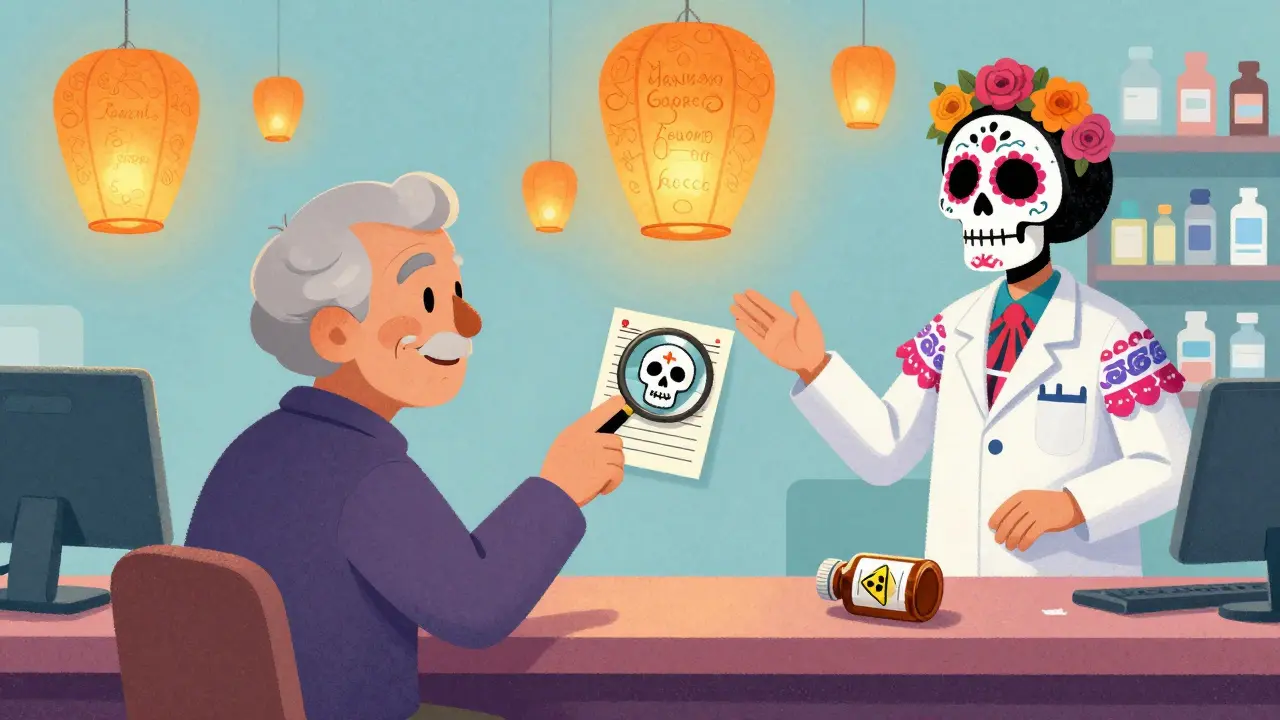
Why your eyes and your brain can trick you
It’s not just about vision. Many people struggle with health literacy - understanding medical terms. About 36 million U.S. adults have trouble reading and understanding health information, according to the National Assessment of Adult Literacy.Abbreviations like "q.d." (once daily) or "b.i.d." (twice daily) confuse people. So do similar-sounding names: "Hydrochlorothiazide" vs. "Hydralazine." One’s a water pill. The other is for high blood pressure. Mix them up, and you could get seriously sick.
Pharmacists are trained to spot these, but they’re busy. If you’re unsure, say: "Can you explain what this medicine is for?" or "Can you read the label out loud so I can compare it to what my doctor said?" Most will be happy to help.
For people with low vision, smartphone magnifiers work great. Turn on the camera app, zoom in, and hold the label up to the screen. You don’t need a special app. iPhone and Android phones have this built in.
What to do if you find an error
If you spot a problem - wrong name, wrong pill, wrong dose - don’t panic. Don’t take it. Don’t throw it away. Do this:- Call the pharmacy right away. Have your doctor’s name and prescription number ready.
- Ask: "Can you double-check this prescription with my doctor’s office?"
- If they say it’s correct, ask to speak to the pharmacist in charge.
- If the pharmacy refuses to fix it, call your doctor’s office directly.
- If you still feel unsafe, go to another pharmacy. You have the right to get your prescription filled elsewhere.
Pharmacies are required to correct errors. They won’t charge you extra. And if you report a mistake, you’re helping them improve - and protecting others too.
What’s changing in 2025 and beyond
The FDA is pushing for a major change: by the end of 2025, every prescription label in the U.S. must follow a new standard format. The biggest change? Your name will be printed in 24-point font at the top of the label - much bigger than before.Also, more pharmacies are adding QR codes to labels. Scan it with your phone, and you’ll get a short video in your language explaining what the medicine is for and how to take it. By 2026, 60% of prescriptions for seniors will include this feature.
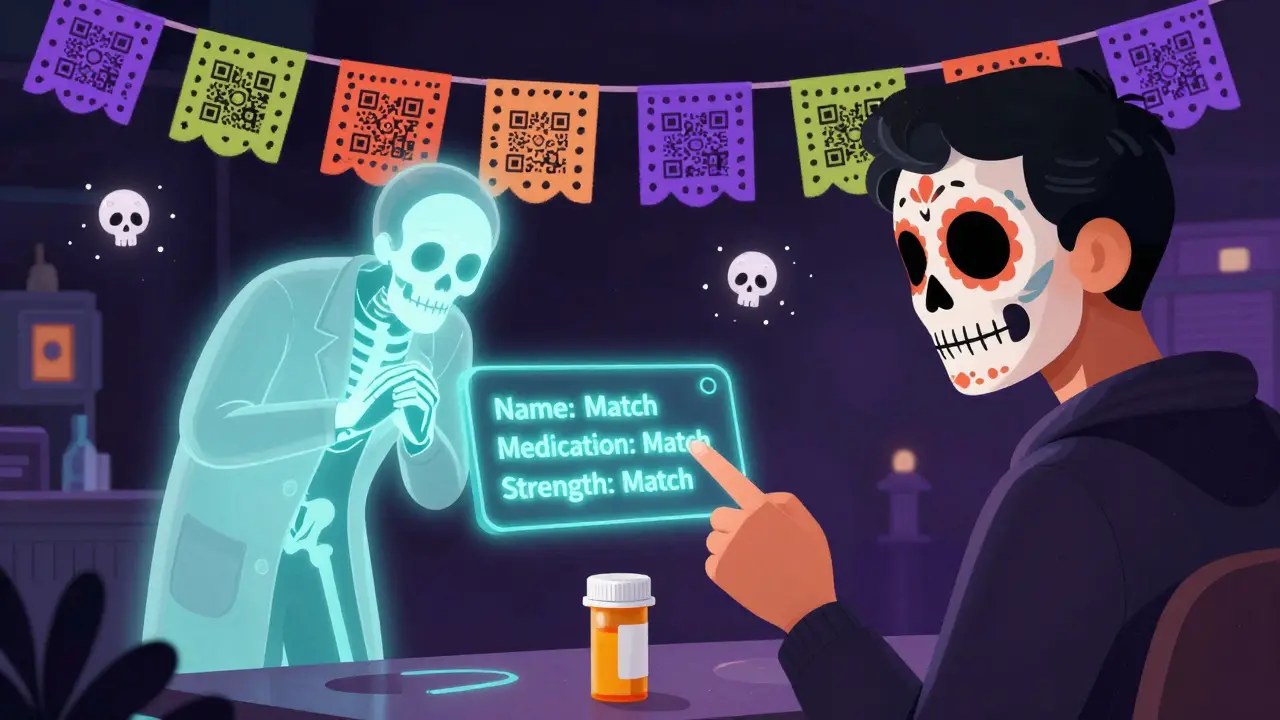
Some pharmacies, like Amazon Pharmacy, are testing augmented reality apps that let you point your phone at the bottle and see a pop-up confirmation: "Name: Match. Medication: Match. Strength: Match." But even with all this tech, the FDA still says: "The patient is the final safety check."
Bottom line: Your safety is your responsibility
No system is perfect. Pharmacists work hard, but they’re human. Doctors make mistakes. Machines misprint labels. Technology helps - but it doesn’t replace your eyes and your questions.Confirming your name and medication on a prescription label is simple. It takes less time than checking your phone. But it could save your life.
Next time you pick up a prescription - pause. Look. Ask. You’ve got nothing to lose and everything to gain.
What if my name on the prescription label is misspelled?
Even a small misspelling - like "Johm" instead of "John" - means the label isn’t yours. Never take the medication. Call the pharmacy immediately and ask them to verify your identity with your ID and the doctor’s prescription. Most pharmacies will re-print the label at no cost.
Can I ask the pharmacist to read the label out loud to me?
Yes, absolutely. Pharmacists are trained to explain prescriptions. You can say, "Can you please read the label out loud so I can make sure it matches what my doctor told me?" Most will be happy to help - and some pharmacies even offer this as a standard service for older adults or patients on multiple medications.
What if the pill looks different from my last refill?
Generic medications can look different - different color, shape, or markings - even if the name and strength are the same. But if the pill looks completely unfamiliar, or if the strength changed without your doctor’s approval, ask the pharmacist to confirm it’s the correct medication. Don’t rely on appearance alone.
Is it okay to use a smartphone app to verify my prescription?
Apps like Medisafe or GoodRx can help you track your meds and remind you when to take them, but they’re not a replacement for checking the physical label. Apps can misread barcodes or have outdated info. Always verify the label in your hand - especially if you’re on blood thinners, insulin, or other high-risk medications.
What if the pharmacy refuses to fix a labeling error?
If the pharmacy won’t correct a clear error, call your doctor’s office directly and ask them to reissue the prescription. You can also go to another pharmacy - you have the legal right to have your prescription filled anywhere. If you feel unsafe or ignored, report the issue to the FDA’s MedWatch program or your state’s pharmacy board.


8 Comments
sagar patel December 24, 2025
The label must have your full legal name. No exceptions. If it says John instead of John A. Smith, it’s not yours. I’ve seen people die because they assumed the middle initial didn’t matter. It does.
Christopher King December 26, 2025
Let’s be real - this whole system is a scam. The FDA doesn’t care about you. They just want you to think you’re safe while the pharmaceutical giants profit. QR codes? Augmented reality? That’s just distraction. The real problem is they’re poisoning us with controlled substances and calling it medicine. You think your name being misspelled is the worst of it? Wait till you find out what’s *really* in that pill.
Terry Free December 27, 2025
Wow. So we’re supposed to trust a label printed by a pharmacy that’s understaffed, overworked, and run by people who couldn’t spell ‘pharmacy’ if their life depended on it? Great. And you want me to check the strength? The dosage? The damn NDC code? Look, I’m not a pharmacist. I’m not a doctor. I’m just a guy trying to survive his diabetes. If the label says ‘metformin’ and it looks like the last one, I’m taking it. The system is broken. Stop pretending a 30-second check fixes systemic incompetence.
Sophie Stallkind December 27, 2025
While the intent of this guide is commendable, the practical implementation remains fraught with structural inequities. Many elderly patients, particularly those with limited digital literacy or visual impairments, are systematically disadvantaged by the current labeling infrastructure. The onus placed upon the individual to perform a safety audit - while morally sound - is institutionally unjust. A standardized, federally mandated, accessible labeling protocol must be enacted without further delay.
Linda B. December 29, 2025
QR codes on prescriptions? Really? Next they’ll be embedding microchips in the bottles to track your compliance. You think this is about safety? No. It’s about surveillance. They want to know when you take your meds. They want to know if you skip doses. They want to know if you’re noncompliant so they can raise your premiums or deny your insurance. And now they’re giving you a fancy app to feel good about it? Wake up. This isn’t medicine. It’s control.
Michael Dillon December 31, 2025
Look, I get it. Check the label. But honestly? I’ve been on the same meds for 12 years. The pill looks different every time. Sometimes it’s blue, sometimes it’s white, sometimes it’s round, sometimes it’s oval. The name’s the same, the strength’s the same. I don’t panic. I just take it. If I felt something weird, I’d call my doc. But I’m not going to turn every pharmacy run into a forensic investigation. We’re all gonna die someday anyway.
Gary Hartung December 31, 2025
Oh, wonderful. Another sanctimonious, self-congratulatory manifesto from the health-literate elite. ‘Pause. Look. Ask.’ How quaint. As if the average person - the one working two jobs, raising kids, and juggling three chronic conditions - has the time, energy, or cognitive bandwidth to conduct a pharmaceutical audit every time they pick up a script. This isn’t empowerment. It’s victim-blaming dressed up as public health advice. The real failure? The system that expects you to be your own pharmacist.
Ben Harris December 31, 2025
So let me get this straight - you’re telling me I need to call the pharmacy, verify with my doctor, maybe go to another location, and still not trust the label because the system is broken? And you think that’s reasonable? I’ve got a 7-year-old with asthma, a wife on insulin, and a dog who needs heart meds. I don’t have time to be a detective. I just need the damn pill to be right. And if it’s not? Then the system should be on fire. Not me. Not my family. The system.