
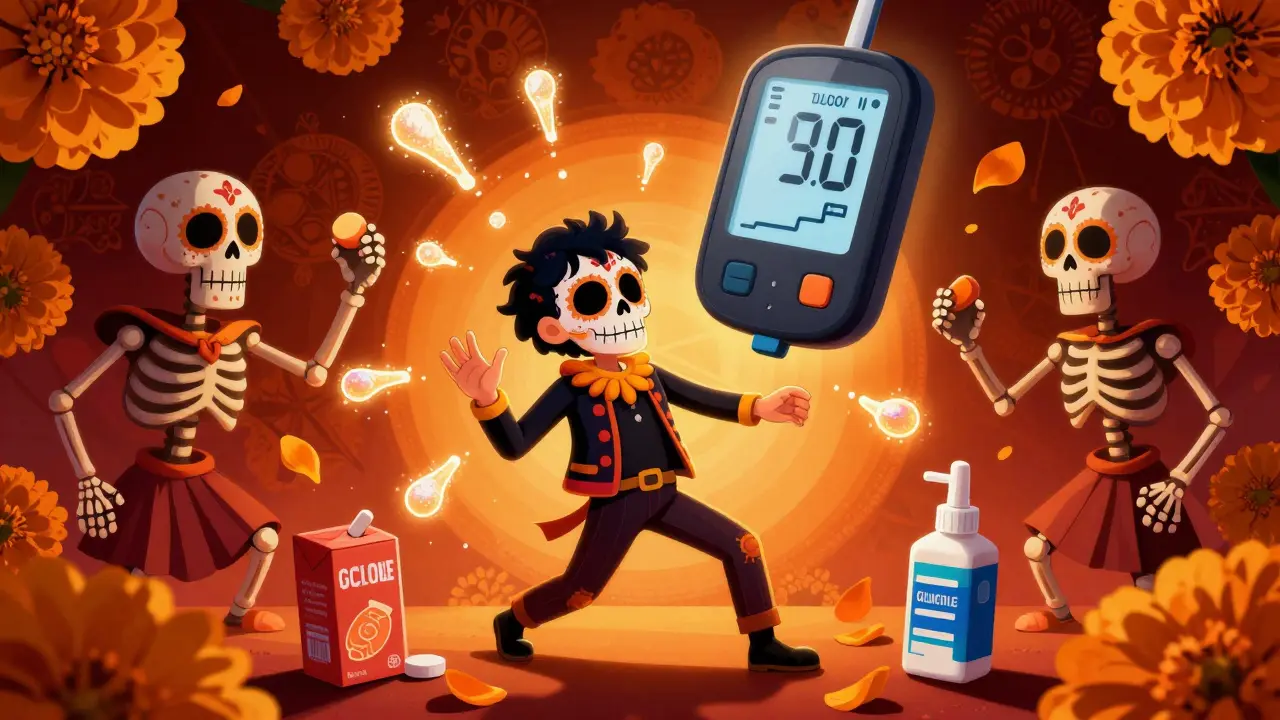
What Is Hypoglycemia?
Hypoglycemia is a condition where blood sugar drops below 70 mg/dL (3.9 mmol/L), most commonly in people with diabetes who take insulin or certain medications. It’s not just a minor inconvenience-it’s a medical event that can lead to confusion, seizures, or even unconsciousness if not treated quickly. Even if you don’t have diabetes, low blood sugar can happen, but it’s far less common. For people managing diabetes, especially Type 1, hypoglycemia is the most frequent acute complication. About 47% of Type 1 diabetes patients and 33% of insulin-treated Type 2 patients experience at least one episode per year.
How Do You Know You’re Having a Low?
Your body gives you signals before things get dangerous. These come in two types: physical and mental.
- Physical symptoms: Shaking, sweating, rapid heartbeat, hunger, dizziness. These happen because your body releases adrenaline to try to raise your blood sugar. Your heart might race to over 100 beats per minute, and you might feel clammy even if it’s not hot.
- Mental symptoms: Blurry vision, trouble concentrating, confusion, irritability, slurred speech. These are more serious. They mean your brain isn’t getting enough glucose. At 55 mg/dL, you might start seeing double. Below 50 mg/dL, you could lose coordination. Below 45 mg/dL, you may pass out.
Here’s the catch: after years of diabetes, some people lose these warning signs. This is called hypoglycemia unawareness. It affects about 25% of long-term Type 1 patients. Without shaking or sweating, they don’t realize their blood sugar is crashing until it’s too late.
What Causes Low Blood Sugar?
In people with diabetes, the most common cause is an imbalance between medication, food, and activity.
- Too much insulin or medication: 73% of episodes happen because someone took more insulin than needed-maybe they miscalculated their carb intake or injected too much.
- Not eating enough: Skipping meals, eating less than planned, or delaying a snack can trigger a drop. Even a light lunch after a morning insulin dose can be risky.
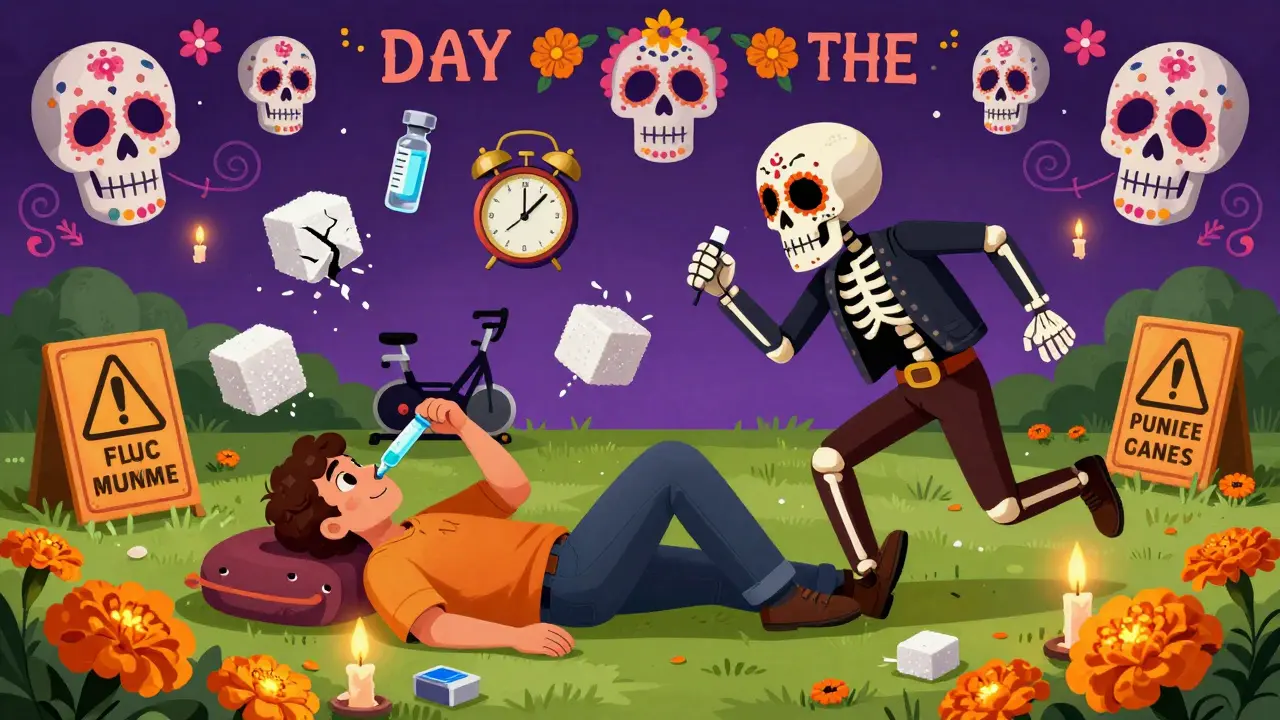
- Exercise without adjustment: Physical activity makes your body use glucose faster. A 45-minute walk or bike ride can drop blood sugar by 30-50 mg/dL if you don’t eat extra carbs or reduce insulin.
- Alcohol: Especially on an empty stomach, alcohol blocks the liver from releasing stored glucose. One drink can cause a drop hours later-often while sleeping.
- Delayed digestion: After bariatric surgery, food moves too quickly into the intestines, causing a sugar spike followed by a crash. This is called reactive hypoglycemia.
Non-diabetics rarely get hypoglycemia, but when they do, it’s often tied to rare conditions like insulinomas (tumors that make too much insulin) or organ failure.
How to Treat It-Fast
Time matters. If your blood sugar is below 70 mg/dL, you need to act within 15 minutes.
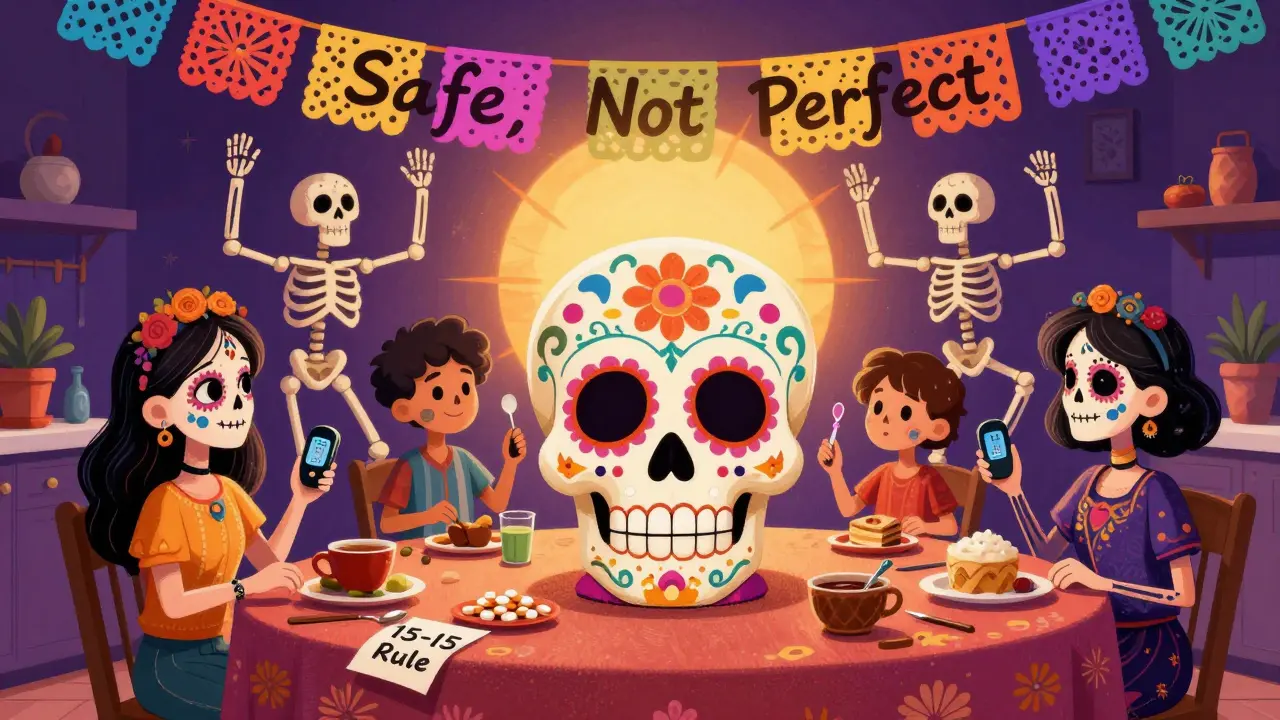
The standard method is the 15-15 rule:
- Take 15 grams of fast-acting carbohydrates. Examples: 4 glucose tablets, 1/2 cup of fruit juice, 1 tablespoon of honey, or 6-8 hard candies.
- Wait 15 minutes.
- Check your blood sugar again.
- If it’s still below 70 mg/dL, repeat the process.
This works in 78% of mild to moderate cases. But if you’re too confused to eat, or you’re passing out, this won’t help. That’s when you need glucagon.
Glucagon is a hormone that tells your liver to release stored sugar. It comes as a nasal spray (Zegalogue) or injection. A single 1 mg nasal dose works in 94% of cases within 15 minutes. It’s easy to use-even someone with no medical training can give it. If you have diabetes and take insulin, make sure your family, coworkers, or friends know where your glucagon kit is and how to use it.
What Not to Do
Some common mistakes make things worse.
- Don’t use chocolate or candy bars. They have fat and protein, which slow sugar absorption. You need fast-acting carbs-no delays.
- Don’t wait to see if it gets better. Every minute counts. A drop from 60 to 40 mg/dL can happen in under 10 minutes.
- Don’t drive when you feel low. At 50 mg/dL, your reaction time is as impaired as if you had a 0.08% blood alcohol level-the legal limit for drunk driving.
- Don’t assume your CGM is always right. Sensors can lag. If you feel low but your monitor says 98 mg/dL, treat it anyway. Real blood sugar can be 40 mg/dL while the sensor reads high.
How to Prevent Low Blood Sugar
Prevention is better than treatment-and it’s possible.
- Use a continuous glucose monitor (CGM). CGMs track your sugar levels every 5 minutes. Most can alert you when your sugar is dropping too fast. Studies show they reduce hypoglycemia time by 35%. Newer models even predict drops 45 minutes ahead.
- Adjust insulin for activity. If you’re going to exercise for more than 45 minutes, reduce your basal insulin by 20-50%. Eat 15-30g of carbs before or during.
- Check your sugar before bed. Nighttime lows are dangerous. If your sugar is below 100 mg/dL, have a small snack with protein and carbs. Consider setting your CGM to alert you at 60 mg/dL while sleeping.
- Carry glucose everywhere. Keep glucose tablets or juice boxes in your car, purse, desk, and gym bag. Don’t rely on your phone to remember.
- Teach people around you. 54% of people with hypoglycemia have been mistaken for being drunk. Make sure coworkers, friends, or teachers know what to do if you collapse.
- Review your insulin-to-carb ratio. If you’re frequently low after meals, your ratio might be off. Work with your diabetes educator to fine-tune it.
Technology Is Changing the Game
In 2023, new tools made prevention easier.
- Predictive low-glucose suspend systems (like Guardian 4) automatically pause insulin delivery if your sugar is about to drop. They reduce nighttime lows by 44%.
- Artificial pancreas systems (like Tandem Control-IQ) adjust insulin automatically based on real-time data. Users spend 3.3 fewer hours per week below 54 mg/dL.
- Glucagon nasal spray replaced messy injections. It’s now FDA-approved, easier to store, and works faster.
These aren’t just gadgets-they’re lifesavers. But they’re not perfect. Alarm fatigue is real: 41% of CGM users turn off alerts because they’re too frequent. That’s why education still matters.
Who’s at Highest Risk?
- People with Type 1 diabetes: Average of 19 episodes per month. Nocturnal lows are common.
- Older adults (>65): Often show atypical symptoms like falls, confusion, or dizziness-mistaken for dementia. Each severe episode raises dementia risk by 4.7%.
- Those with hypoglycemia unawareness: 25% of long-term Type 1 patients. Their body no longer sends warnings.
- People who’ve had severe hypos before: One episode doubles the chance of another.
And here’s a scary fact: hypoglycemia contributes to 6% of sudden deaths in Type 1 diabetics under 40-known as the "dead-in-bed" syndrome. You go to sleep fine. You don’t wake up.
When to Call for Help
Call 911 or get emergency help if:
- You or someone else is unconscious or having a seizure.
- Glucagon was given but there’s no improvement after 15 minutes.
- You’ve had multiple low episodes in 24 hours with no clear cause.
Emergency rooms see about 100,000 hypoglycemia cases a year in the U.S. Many are misdiagnosed as stroke or intoxication. If you’re with someone who’s confused and sweating, don’t wait-treat for low blood sugar first.
Final Thoughts
Hypoglycemia isn’t something you just "deal with." It’s preventable. With the right tools-CGMs, glucagon, education, and smart habits-you can live without fear of crashing. The goal isn’t perfect numbers. It’s staying safe. If you’re managing diabetes, your next step isn’t more insulin. It’s making sure you never have to ask, "What do I do if I feel like this?"
Can you have low blood sugar without having diabetes?
Yes, but it’s rare. Non-diabetic hypoglycemia usually happens in two forms: reactive (after eating) or fasting (during long periods without food). Reactive hypoglycemia can follow bariatric surgery or occur in people with rapid digestion. Fasting hypoglycemia may signal serious issues like insulinoma or liver disease. If you’re not diabetic and keep getting low blood sugar, see a doctor.
How long does it take to recover from a low?
Most people feel better within 10-15 minutes after taking fast-acting carbs. But full recovery-especially mental clarity-can take up to an hour. Don’t drive or return to work until you’re fully alert. Even if your sugar is back to normal, your brain might still be recovering.
Why does my glucose monitor show a different number than my finger prick?
CGMs measure sugar in interstitial fluid, not blood. There’s a natural lag of 5-20 minutes. During rapid drops-like after exercise or insulin-you might feel low while the CGM still reads high. Always trust your symptoms over the screen. If you feel low, treat it, even if the monitor says you’re fine.
Can stress cause low blood sugar?
Stress usually raises blood sugar, not lowers it. But chronic stress can lead to poor eating habits, missed meals, or forgetting insulin doses-all of which can trigger lows. Also, anxiety can mimic hypoglycemia symptoms (shaking, sweating), making it hard to tell if your sugar is actually low.
Should I eat more carbs to avoid lows?
Not necessarily. Eating too many carbs can lead to highs, which increases long-term risks. The goal is balance-not avoidance. Work with a diabetes educator to adjust your insulin, timing, and activity instead of just adding carbs. Precision matters more than quantity.
Is it safe to use glucagon if I’m not diabetic?
Yes. Glucagon is safe for anyone to use in an emergency. It’s designed to raise blood sugar quickly, regardless of whether someone has diabetes. If someone is unconscious and you suspect low blood sugar, giving glucagon won’t hurt them-it could save their life.
Next Steps
- If you have diabetes and take insulin: Get a CGM if you don’t have one. Set low alerts at 60 mg/dL.
- Keep glucagon in your home, car, and work bag. Show someone how to use it.
- Track your low episodes: When? Why? What helped? This helps you spot patterns.
- Ask your doctor about your insulin-to-carb ratio and basal rates. They might need adjusting.
- If you’ve had a severe low in the past year, ask about a referral to a diabetes educator. Specialized training reduces severe hypos by 37%.





9 Comments
Jane Lucas December 27, 2025
just ate a banana and felt fine but my finger prick said 68 so i treated anyway lol
dean du plessis December 27, 2025
i used to ignore the shakes until i passed out at work. now i keep glucose tabs in every pocket. life changed.
Gerald Tardif December 27, 2025
glucagon nasal spray is a game changer. my wife can administer it while i'm still conscious. no more fumbling with syringes in the dark.
also, don't sleep with your CGM on silent. i learned that the hard way.
John Barron December 28, 2025
The notion that non-diabetics rarely experience hypoglycemia is statistically misleading. In clinical practice, reactive hypoglycemia following bariatric surgery is far more prevalent than literature suggests, and often misdiagnosed as IBS or anxiety. Moreover, the 25% unawareness statistic in long-term Type 1 patients fails to account for the confounding variable of autonomic neuropathy progression, which is underreported due to inconsistent CGM compliance in longitudinal studies. Furthermore, the 15-15 rule, while widely endorsed, lacks robust RCT validation in pediatric populations, and its efficacy diminishes significantly when administered during postprandial states due to delayed gastric emptying.
Additionally, the promotion of glucose tablets as the gold standard ignores the glycemic variability induced by synthetic dextrose versus natural fructose-glucose matrices in fruit juice, which may provide more sustained stabilization. Lastly, the assertion that glucagon is universally safe disregards the rare but documented cases of glucagon-induced hyperkalemia in renal insufficiency patients, a contraindication rarely mentioned in patient-facing materials.
Miriam Piro December 30, 2025
they don't want you to know this but CGMs are part of a secret surveillance program by Big Pharma to track your habits and sell you more insulin.
why do you think they make the alarms so annoying? to keep you dependent.
they even program the sensors to lag so you'll treat more often and buy more glucose tabs.
my cousin's neighbor's dog got a CGM implanted after a walk-in clinic visit and now it barks every time the sugar drops.
the government uses the data to predict when you're about to crash so they can send an ambulance and charge you $12,000.
they also use the patterns to adjust your basal rates remotely.
you think your insulin pump is helping you? it's tracking you.
and don't get me started on the nasal spray - that's not glucagon, it's a microchip that records your voice when you scream.
they're coming for your pancreas next.
Paula Alencar December 31, 2025
To every individual reading this - whether you are newly diagnosed, managing for decades, or supporting someone who does - please understand that hypoglycemia is not merely a physiological event; it is a profound psychological burden that erodes autonomy, trust in one’s own body, and peace of mind.
Each episode, no matter how mild, carries the invisible weight of fear - the fear of collapsing in public, of being mistaken for intoxicated, of waking up in a hospital with no memory of how you got there.
It is not enough to carry glucose tablets. It is not enough to set alerts. You must also cultivate a community that sees you, believes you, and acts swiftly when you cannot speak for yourself.
Teach your coworkers. Educate your children. Arm your friends with glucagon. Normalize the conversation.
Because when someone says, ‘I feel weird,’ and you respond with, ‘Is your sugar low?’ - you are not just offering a solution.
You are offering dignity.
Alex Lopez January 1, 2026
Ah yes, the 15-15 rule. The diabetes equivalent of ‘shake it off’ while your brain is on fire.
Fun fact: chocolate doesn’t work because of fat - but also because most people pick the wrong chocolate.
Dark chocolate with 70% cocoa? Still too slow. Milk chocolate with 30% sugar? Still too slow.
Only the sugary, greasy, neon-orange candy bars with ‘sugar rush’ on the wrapper are truly useless.
And yes, your CGM lagging by 15 minutes while you’re hallucinating your cat is speaking in binary? That’s not a glitch - it’s a feature designed to keep you humble.
Also, if you think stress causes lows… I have a bridge in Brooklyn to sell you.
Monika Naumann January 1, 2026
In my country, we do not allow such reckless medical advice to be spread without proper oversight.
Using glucagon without a prescription is illegal.
CGMs are expensive and only for those who can afford them - not for the masses who should be learning discipline and fasting instead.
Why do you need to eat every 3 hours? You are weak.
My grandmother lived to 98 without ever checking her blood sugar.
She never had a CGM. She never used glucagon.
She had willpower.
You have excuses.
Gerald Tardif January 2, 2026
I know you're trying to help, but the 'willpower' argument ignores the fact that hypoglycemia unawareness isn't a choice - it's a neurological adaptation.
My body stopped warning me after 18 years.
That's not weakness. That's biology.
And if your grandma never had a low, maybe she never had diabetes.
Or maybe she was just lucky.