

When a migraine hits, it’s not just a headache-it’s a full-body storm of pain, nausea, light sensitivity, and brain fog. For many people, a single pill doesn’t cut it. That’s where migraine combination medications come in. These aren’t just two drugs thrown together. They’re carefully designed to attack migraine from multiple angles at once, giving you faster, longer-lasting relief. And the best part? You don’t need to pay hundreds of dollars for them anymore.
What Exactly Are Migraine Combination Medications?
Migraine combination medications use two or more active ingredients that work on different parts of the migraine process. Migraines aren’t just about blood vessels expanding. They involve nerve signaling, inflammation, and brain chemistry changes. A single drug can’t fix all of that. But when you combine a triptan (which calms overactive nerves) with an NSAID (which reduces swelling and pain), you get a one-two punch that works better than either alone. The most common and well-studied combo is sumatriptan and naproxen. You might know the brand name Treximet, but since its patent expired in 2020, generic versions are now widely available. Each tablet contains 85 mg of sumatriptan and 500 mg of naproxen sodium. That’s the exact dose proven in clinical trials to give you the best shot at being pain-free in two hours. Another popular option is the over-the-counter combo: acetaminophen, aspirin, and caffeine. That’s what’s in Excedrin Migraine. Each tablet has 250 mg of acetaminophen, 250 mg of aspirin, and 65 mg of caffeine. You take two tablets at once for a full dose. This combo works because caffeine helps your body absorb the painkillers faster and even has its own mild pain-blocking effect.Why Do These Combinations Work Better Than Single Drugs?
Let’s say you take a regular 50 mg sumatriptan pill. About 37% of people are pain-free in two hours. Take 500 mg of naproxen alone? Only 29% get relief. But take them together? That jumps to 48%. That’s not a small bump-it’s a game-changer. The same pattern shows up in other areas:- Complete pain relief at 2 hours: 48% with combo vs. 37% with sumatriptan alone
- Pain relief that lasts 24 hours: 35% with combo vs. 26% with sumatriptan alone
- Reduced migraine recurrence: Only 22% of people get another attack within 24 hours with the combo, compared to 40% with a single drug
Generic Sumatriptan/Naproxen: The Real Deal
The big news since 2020? Generic sumatriptan/naproxen is here-and it’s just as good as the brand. You don’t need to buy Treximet anymore. You can buy generic sumatriptan (50 mg or 100 mg) and generic naproxen (500 mg) separately and take them together. Multiple studies show this works just as well as the fixed-dose pill. Here’s the cost difference:- Branded Treximet (85 mg/500 mg): $350-$450 per dose
- Generic sumatriptan (50 mg) + naproxen (500 mg): $15-$25 per dose
Excedrin Migraine and Its Generic Counterparts
If you prefer something you can grab off the shelf, Excedrin Migraine is still a solid choice. But here’s the thing: the generic version of Excedrin Migraine (sold under store brands like CVS Health or Equate) is chemically identical. It has the same 250 mg acetaminophen, 250 mg aspirin, and 65 mg caffeine per tablet.- Branded Excedrin Migraine: $5-$7 per pack (2 tablets)
- Generic version: $0.50-$1.00 per pack

What About Other Combinations?
You might hear about people mixing rizatriptan with naproxen, or using ketorolac and metoclopramide in the ER. Those are real options too. A 2024 study found that combining generic rizatriptan (10 mg) with naproxen (500 mg) works just as well as sumatriptan/naproxen for people who didn’t respond to the first triptan. That’s huge for patients who need alternatives. In emergency rooms, doctors often use IV combos like ketorolac (a strong NSAID), metoclopramide (for nausea), and dexamethasone (to prevent recurrence). These aren’t for home use-they’re for when a migraine won’t quit. But they show how powerful multi-target treatment can be.Who Should Use Combination Therapy?
Not everyone needs it. If your migraines are mild and you get relief with ibuprofen or a single triptan, stick with that. But if you have:- Moderate to severe pain (rated 4 or higher on a 0-10 scale)
- Attacks that come back within 24 hours
- Failed to respond to single-drug treatments
Potential Risks and When to Avoid Them
Combination meds aren’t risk-free. Naproxen can irritate your stomach and isn’t safe if you have kidney problems or a history of ulcers. Sumatriptan can raise blood pressure and shouldn’t be used if you have heart disease or uncontrolled hypertension. The biggest danger? Overuse. Taking any migraine medication (even OTC ones) more than 10 days a month can cause medication-overuse headaches. That’s when the treatment itself starts causing more headaches. The risk jumps to 70% if you’re using combination meds too often, compared to 30% with single drugs. Avoid any combo that includes butalbital (like Fiorinal) unless absolutely necessary. These carry a high risk of dependence and are only meant for rare, severe cases.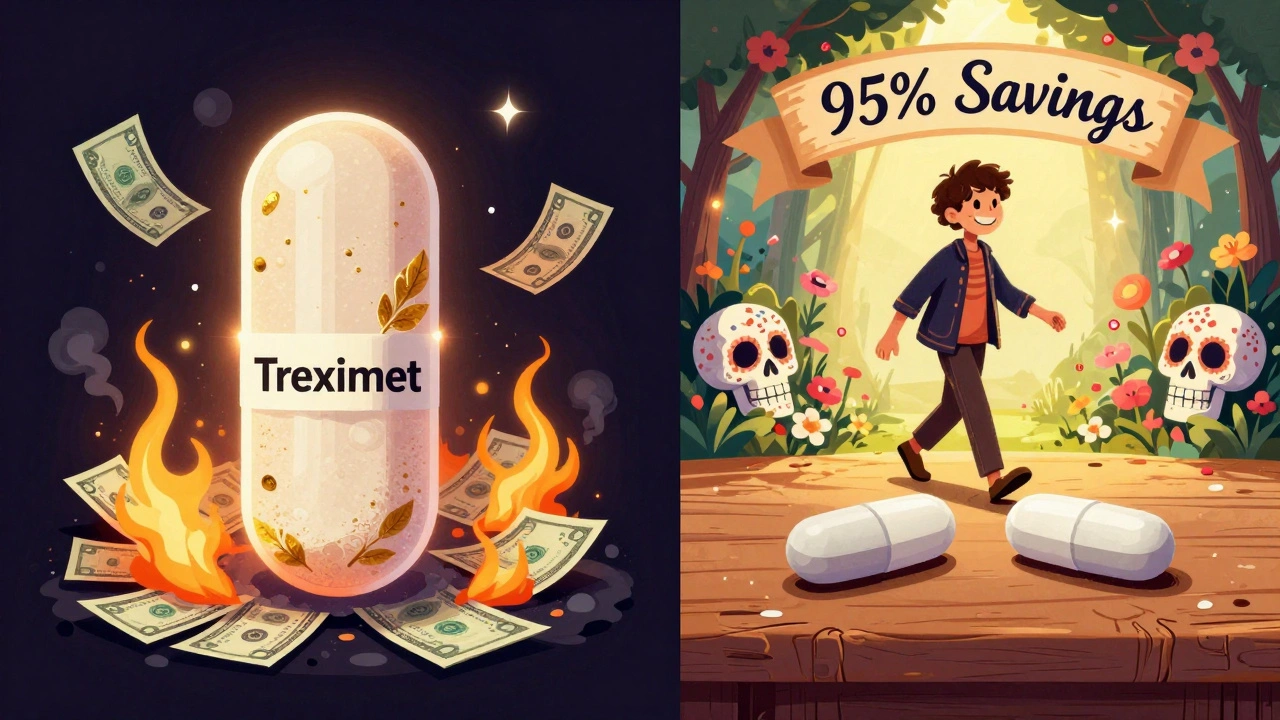
How to Get Started
If you’re considering combination therapy:- Track your migraines. Note the intensity, how long they last, and what helps.
- Try a single triptan or NSAID first. If it doesn’t work well or wears off too fast, move to a combo.
- Ask your doctor about generic sumatriptan (50 mg) + naproxen (500 mg). Take them together at the first sign of a migraine.
- If you prefer OTC, try the generic Excedrin Migraine combo. Take two tablets.
- Don’t exceed the maximum daily dose: no more than 2 doses of sumatriptan/naproxen per day, and no more than 2 Excedrin Migraine doses in 24 hours.





12 Comments
Bonnie Youn December 2, 2025
Finally someone gets it! I’ve been taking generic sumatriptan + naproxen for years and it’s the only thing that doesn’t leave me curled up on the floor like a soggy napkin. My insurance pays $8 for a month’s supply. Treximet? That’s a luxury for people who like throwing money at headaches. This combo works. Period. No fluff. Just science and savings.
Lauryn Smith December 2, 2025
I used to think migraine meds were all the same until my neurologist showed me the numbers. That 48% pain-free rate with the combo? That’s not just a stat-it’s the difference between missing work and picking up my kid from school. I’m so glad generics are available now. No one should have to choose between relief and rent.
Amber-Lynn Quinata December 2, 2025
Ugh I can’t believe people still buy brand name Excedrin. 😒 Like you’re paying for the packaging and not the chemicals. I buy the CVS generic and it’s literally the same pills in a different box. $0.75 vs $6? That’s not smart, that’s just being robbed. 🤦♀️
Charlotte Collins December 3, 2025
Let’s not romanticize these combos. Yes, they work-but they’re also chemical band-aids that mask symptoms while the root cause festers. You’re not curing migraines, you’re just numbing the alarm system. And overuse? It’s a silent epidemic. People don’t realize they’re training their brains to need more pills just to feel normal. The real problem isn’t the cost-it’s the medical system that rewards quick fixes over real solutions.
Rachel Stanton December 4, 2025
For those considering combination therapy, remember: triptans are vasoconstrictors. If you have any cardiovascular risk factors-hypertension, history of stroke, or even just high cholesterol-talk to your doctor before combining with NSAIDs. The benefit-risk calculus changes. Also, naproxen isn’t safe for long-term daily use. This isn’t a maintenance drug. It’s a rescue tool. Use it like one.
Edward Hyde December 4, 2025
Wow. Another article telling me I’m a lazy failure because I don’t take two pills at once. Newsflash: I tried the combo. It gave me a stomach ulcer and a headache that lasted three days. So yeah, I’ll stick with my $3 ibuprofen and my coffee. Not every migraine needs a nuclear option. Some of us just want to sleep through it, not become pharmaceutical test subjects.
Margaret Stearns December 6, 2025
Just wanted to say thank you for this. I’ve been suffering for 12 years and never knew generics worked just as well. I bought the 50mg sumatriptan and 500mg naproxen separately last week. Took them together at 7am. By 9am, I was making coffee. I cried. Not from pain-from relief. You don’t know how much this means.
Scotia Corley December 6, 2025
While the pharmacokinetic synergy between sumatriptan and naproxen is empirically validated, one must consider the pharmacoeconomic implications of polypharmacy in chronic migraine management. The risk of medication-overuse headache is statistically significant, particularly when adherence to dosage thresholds is inconsistent. A multidisciplinary approach incorporating behavioral neurology and prophylactic regimens remains the gold standard.
Kenny Leow December 8, 2025
As someone who moved here from Singapore, I’m amazed at how accessible these generics are here. Back home, even the brand-name Treximet was crazy expensive and hard to get. The fact that you can buy this for $15? That’s healthcare done right. I wish more countries had this kind of access. 🙏
Kelly Essenpreis December 8, 2025
Why are we letting big pharma dictate our medicine? The FDA should’ve forced Treximet to stay cheap. Instead we got a whole decade of price gouging. Now that generics are here, we should be screaming about it. This isn’t medicine-it’s corporate theft. And if you’re still buying the brand? You’re part of the problem.
Erin Nemo December 10, 2025
Just took my first combo dose yesterday and I’m already back to normal. I didn’t even need to nap. Thank you for sharing this. I’m telling everyone I know.
ariel nicholas December 11, 2025
But… have you considered the metaphysical implications of pain relief? If we chemically silence the migraine’s warning signal, are we not also silencing the soul’s cry for stillness? In a world that glorifies productivity, is our reliance on combination therapy not a surrender to the tyranny of the clock? The body doesn’t lie-but the pill… the pill just… stops the noise.