
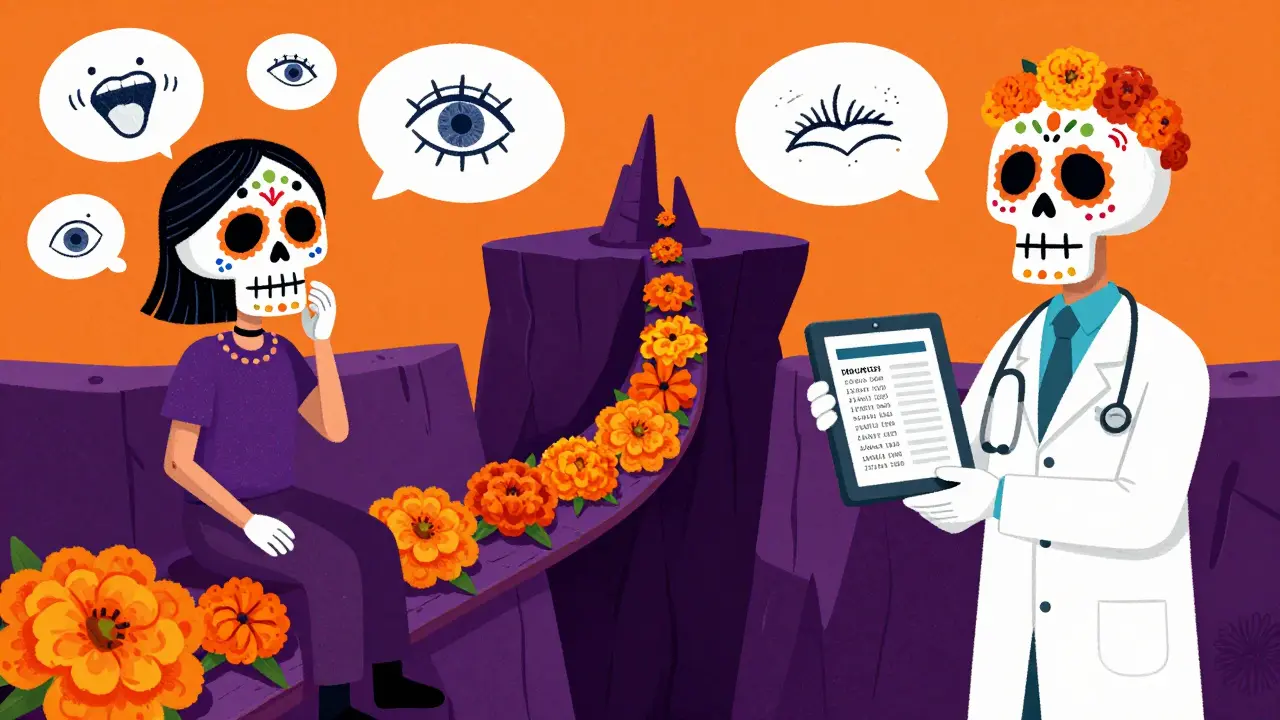
Medical Terminology Translator
Enter a clinical term, shorthand, or code you found in your medical portal to see the patient-friendly meaning.
💡 Communication Tip: The Teach-Back Method
If you are unsure about a label in your record, don't just nod. Try the Teach-Back method: Explain the diagnosis or plan back to your doctor in your own words to ensure 100% understanding.
The Language Barrier: Codes vs. Conversations
When a doctor looks at a chart, they aren't looking for a story; they are looking for a classification. To keep things consistent across the globe, providers use systems like ICD-10 (International Classification of Diseases, 10th Revision), which boasts about 70,000 unique diagnosis codes. They also rely on CPT (Current Procedural Terminology) codes to track exactly what procedure was performed for insurance purposes. For a patient, these labels are meaningless. While a provider writes "Type 2 Diabetes Mellitus, ICD-10 code E11.9," the patient is thinking, "I feel constantly exhausted and thirsty." This gap is wider than it looks. Research in the Journal of General Internal Medicine found that 68% of patients misunderstand common medical terms. For instance, 61% of people misidentify "colitis," and 42% struggle with "hypertension." When we use words that patients don't understand, we create a wall that prevents them from taking ownership of their own health.How Electronic Health Records Fuel the Divide
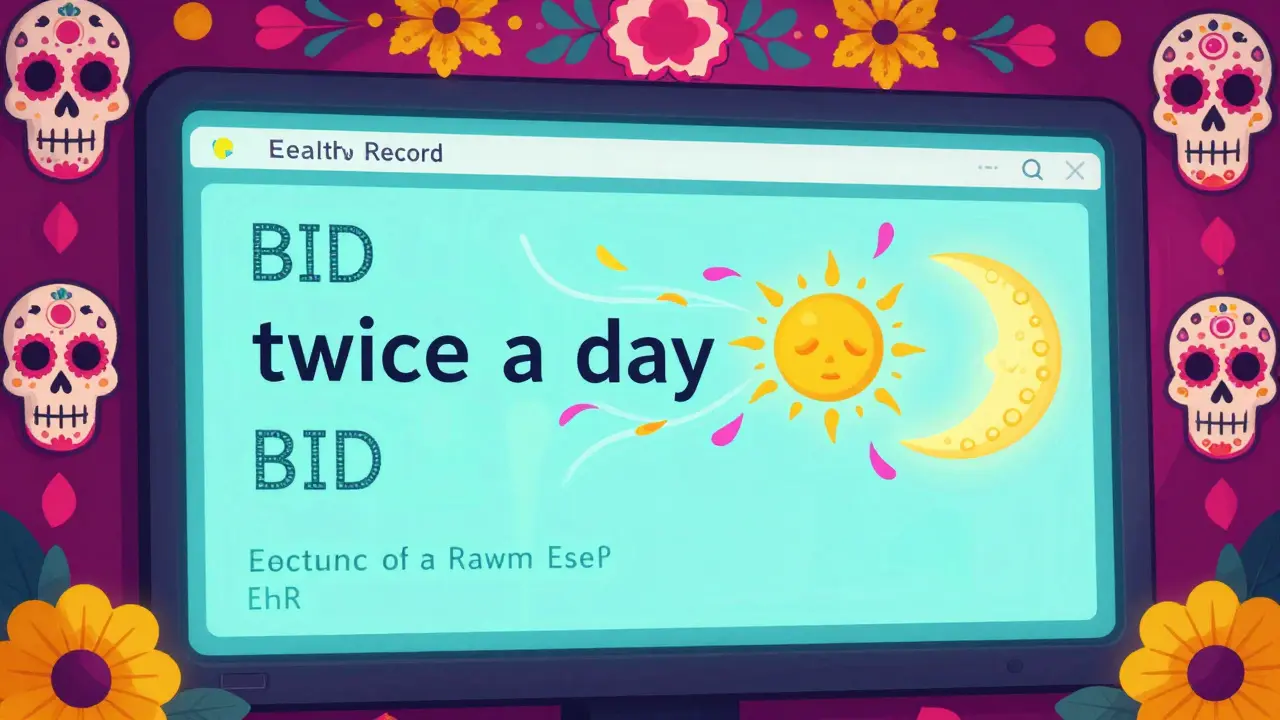
Most of this data lives inside an Electronic Health Record (EHR). Systems like Epic and Cerner are designed for efficiency and billing. They are built for the clinician, not the patient. Because these tools prioritize clinical workflow, the notes are often written in a "shorthand" that is efficient for a nurse but cryptic for a layperson. Consider the difference in treatment labeling. A provider might log "metformin 500mg BID." To them, "BID" is a standard Latin abbreviation for twice a day. To a patient, it's just "that white pill I take with meals." When the record doesn't match the patient's lived experience, the risk of error spikes. In fact, experts suggest that this language barrier contributes to 30-40% of medication errors.| Feature | Patient Information | Provider Information |
|---|---|---|
| Format | Narrative / Experiential | Coded / Standardized |
| Primary Goal | Meaning and Symptom Relief | Diagnosis and Billing Accuracy |
| Common Tool | Patient Portals (MyChart) | EHRs (Epic, Cerner) |
| Key Standard | Plain Language | ICD-10, CPT, SNOMED |
| Perspective | "I feel..." | "Patient presents with..." |
The Role of Health Information Management
Bridging this gap is the primary job of Health Information Management (HIM) professionals. These specialists are trained to ensure data is accurate for the government (CMS) while remaining protected under HIPAA. They act as the translators of the medical world. HIM professionals must maintain a high level of accuracy-usually 95%-to ensure hospitals get reimbursed. However, the industry is shifting. With the 21st Century Cures Act, providers are now required to share clinical notes with patients without blocking them. This has forced a move toward "Open Notes," where patients can read exactly what the doctor wrote. While this increases transparency, it also exposes the labeling gap, making it more urgent for providers to use patient-friendly terms.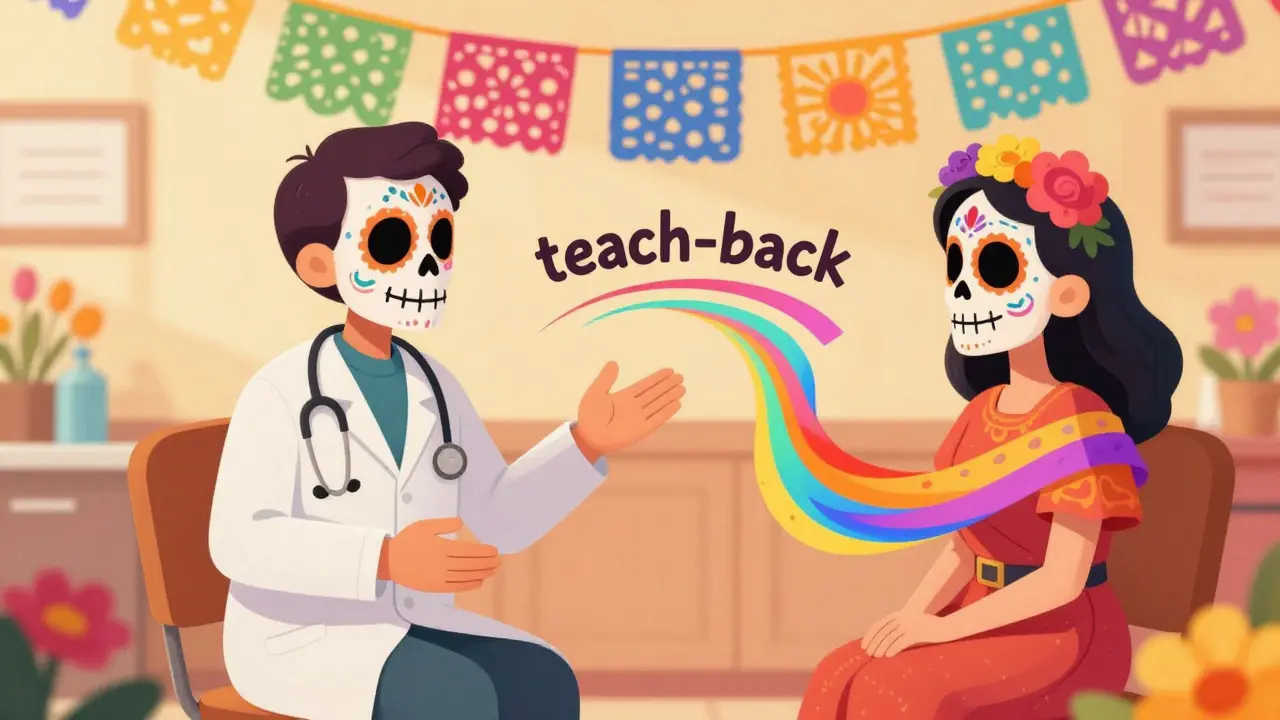
Practical Strategies to Close the Gap
Closing the gap requires more than just a dictionary; it requires a change in how we communicate in the exam room. One of the most effective tools is the "teach-back" method. Instead of asking "Do you understand?" (to which most patients will simply say "yes"), the provider asks the patient to explain the plan back to them in their own words. This simple shift has been shown to reduce miscommunication by 45%. Some leading organizations are using technology to automate this translation. The Mayo Clinic, for example, piloted "plain language" templates that automatically switch "myocardial infarction" to "heart attack" when a document is sent to a patient. Similarly, the HL7 FHIR standard now allows systems to store both a clinical code and a patient-friendly description side-by-side, so the user sees what they actually need.The Future: AI and Universal Literacy
We are moving toward a world where AI handles the translation in real-time. Tools like Google Health's Med-PaLM 2 are already attempting to convert complex clinical notes into simple language. While they aren't yet accurate enough to replace a human (they hit around 72% accuracy, while clinical standards require 95%), they represent the direction of the industry. By 2027, it is predicted that 60% of EHRs will have real-time translation features. This means the "poorly controlled DM" label will be automatically translated to "Your blood sugar levels have been higher than our target," before the patient ever sees it. This shift doesn't just make things clearer-it saves lives by increasing medication adherence and reducing the anxiety that keeps people from seeking follow-up care.Why is it necessary to have complex medical codes if they confuse patients?
Standardized codes like ICD-10 are essential for population health management, global research, and insurance billing. Without a universal "language," a doctor in New York couldn't accurately communicate a diagnosis to a specialist in London, and insurance companies wouldn't have a consistent way to process claims.
What is the 'teach-back' method?
The teach-back method is a communication confirmation technique where the healthcare provider asks the patient to repeat the instructions or information in their own words. This ensures the patient actually understands the label or treatment plan rather than just nodding along.
Does the 21st Century Cures Act affect my medical records?
Yes. It prohibits "information blocking," meaning your healthcare provider must give you access to your electronic health information, including clinical notes, without unnecessary delays. This is why more patients are now seeing their raw clinical notes via portals like MyChart.
What should I do if I don't understand a term in my patient portal?
You should send a message to your provider through the portal or write down the specific term to ask about during your next visit. Avoid guessing the meaning of clinical shorthand, as it can lead to unnecessary stress or incorrect self-treatment.
What are EHRs and why do they matter for labeling?
Electronic Health Records (EHRs) are digital versions of a patient's paper chart. They matter because the software design often dictates how information is entered. If the software only allows for dropdown codes (like ICD-10), the nuance of the patient's actual experience is often lost in favor of a label.


13 Comments
Rauf Ronald April 7, 2026
This is such a critical point for patient safety. As someone who works in the field, I've seen firsthand how a simple abbreviation like BID can cause total chaos if the patient isn't clear on the timing. We really need to push for these plain language templates across all networks, not just the big ones like Mayo. It's all about empowering the patient to be an active participant in their own care. Let's keep pushing for more transparency and better education for providers on how to communicate effectively!
jack hunter April 8, 2026
classic case of oversimplfying a complex system just to make feel-good stories. you think a doctor has time to write a novel for every patient when they have 15 mins per slot. the real problem is that people cant handle the truth of their own medcal records and need a hand-holding service to read them. its just basic efficiency and people hate it
Ethan Davis April 9, 2026
The 21st Century Cures Act is just a front to make it easier for insurance companies to scrape your raw data. Now they've got you "seeing" the notes while the real algorithms are just tagging you for higher premiums based on those codes. Wake up people, the EHR is a surveillance tool, not a communication bridge.
Vivek Hattangadi April 9, 2026
I totally agree with the point about the teach-back method! It is such a powerful tool for ensuring everyone is on the same page. I've used similar techniques in coaching and it completely changes the dynamic from a lecture to a partnership. Maybe we could even find ways to incorporate this into the patient portal itself, like a quick quiz after reading a note to make sure the key points landed!
Jay Vernon April 10, 2026
I just want to understand my health 🩺 It sounds like AI will help a lot! 😊
shelley wales April 10, 2026
It is so heart-wrenching to think about the anxiety people feel when they see terms like "poorly controlled" without any context. Imagine being scared for days just because of a shorthand note. I'm really hopeful that these AI tools and the move toward Open Notes will help people feel more seen and understood in a system that often feels very cold. We all deserve to have our stories heard, not just our codes recorded.
Timothy Burroughs April 12, 2026
absolute joke that we even discuss this the US healthcare system is a disaster because we prioritize profit over patients and these codes are just ways to squeeze every cent from insurance while the doctors just click boxes in Epic and never look the patient in the eye honestly the whole thing is a circus
Srikanth Makineni April 12, 2026
codes are for billing patients are for healing stop mixing them
Dhriti Chhabra April 13, 2026
The integration of HL7 FHIR standards to provide dual-layer descriptions is a most commendable advancement. It ensures that the rigorous requirements of clinical interoperability are maintained without sacrificing the patient's right to comprehension. Such a balanced approach is essential for the ethical evolution of medical informatics.
Brady Davis April 14, 2026
Oh yes, because an AI with 72% accuracy is exactly what I want deciding if my heart is exploding or if I just have indigestion. Can't wait for the future where my doctor is a chatbot that hallucinates my diagnosis while the insurance company denies the claim because the AI used the wrong adjective. Pure bliss.
Danielle Kelley April 14, 2026
Exactly! The EHRs are designed to track us. They aren't "bridging gaps," they are building a digital cage where every symptom is a data point for some government database. Once they automate the translation, they'll just use it to manipulate how we perceive our own illnesses so we don't question the meds they're pushing!
charles mcbride April 15, 2026
It is truly heartening to see the industry moving toward more transparency. The transition to Open Notes is a wonderful step forward for patient autonomy. While the learning curve for medical terminology remains, the ability to see one's own records is a victory for patient rights everywhere!
Rupert McKelvie April 16, 2026
It's great to see the potential for AI to make this more accessible. Even if it's not 100% yet, any step toward removing the fear and confusion from a medical portal is a win. The future looks much brighter for patient-provider relationships if we can just get the language right.