Imagine you're in the middle of a panic, struggling to catch your breath, and you reach for the plastic device in your pocket. You take a puff, but nothing happens. No relief. Ten minutes later, you're in the ER. This terrifying scenario happens more often than you'd think, usually because the person grabbed their maintenance inhaler instead of their rescue one. While they look almost identical, using the wrong one during an attack isn't just a mistake-it can be life-threatening.
If you've just been diagnosed with asthma or have been using your medication for years, understanding the hard line between "relievers" and "controllers" is the most important part of your treatment. One stops a crisis in its tracks; the other prevents the crisis from happening in the first place. Let's break down exactly how they differ so you never have to guess in an emergency.
| Feature | Rescue Inhalers (Relievers) | Maintenance Inhalers (Controllers) |
|---|---|---|
| Purpose | Immediate relief of acute symptoms | Long-term prevention and inflammation control |
| Onset of Action | Fast (1-5 minutes) | Slow (Days to weeks for full effect) |
| Typical Ingredients | Albuterol, Levalbuterol | Fluticasone, Budesonide, Salmeterol |
| Usage Frequency | As needed (PRN) | Daily, even when feeling well |
The Fire Extinguisher: How Rescue Inhalers Work
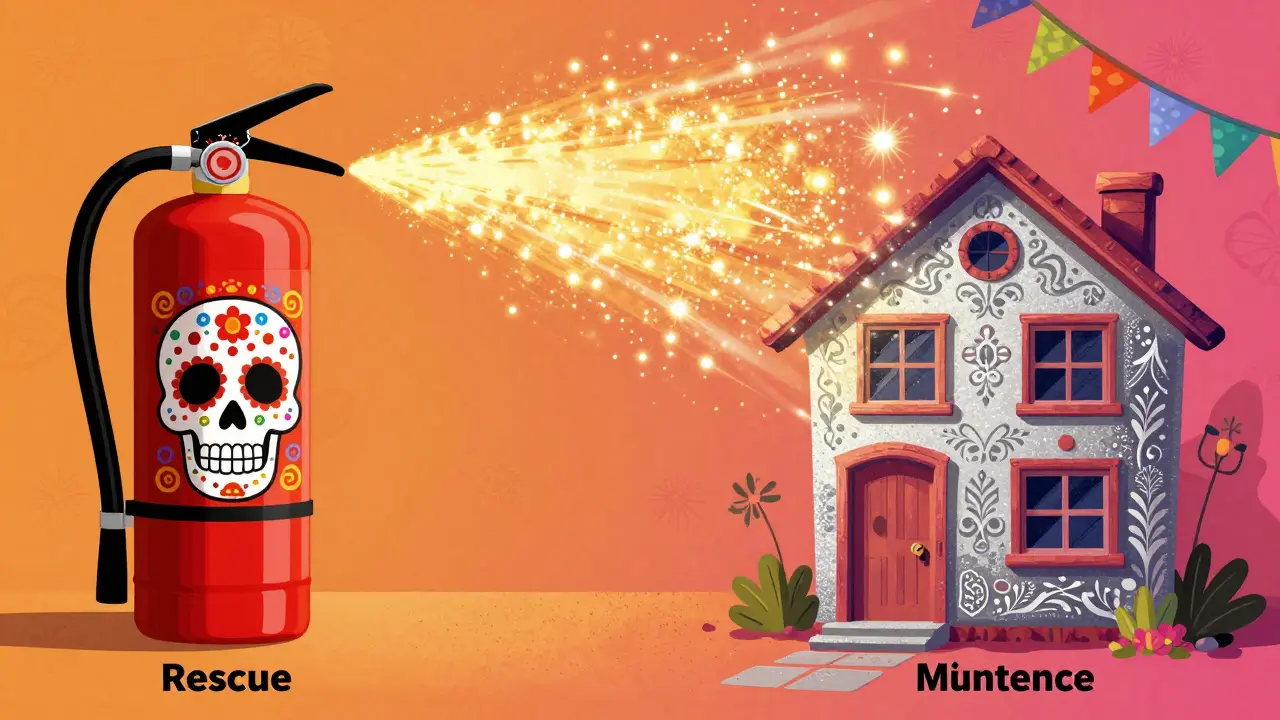
Think of a rescue inhaler is a short-acting medication designed to rapidly open constricted airways during an asthma attack like a fire extinguisher. You don't keep a fire extinguisher running all day, but when there's a fire, it's the only tool that matters. These are technically called Short-Acting Beta Agonists (or SABAs for short). They work by binding to receptors in your bronchial smooth muscles, forcing them to relax almost instantly.
If you use a common rescue medication like Albuterol (found in brands like Ventolin or ProAir), you'll typically feel your chest loosen within one to five minutes. This relief usually lasts about four to six hours. While they are amazing for emergencies, they have a major flaw: they don't treat the underlying cause of the asthma. They stop the "squeeze" of the airway, but they don't stop the inflammation that caused the squeeze in the first place.
The Daily Vitamin: The Role of Maintenance Inhalers
If the rescue inhaler is the fire extinguisher, a maintenance inhaler is like a fire-proofing system for your house. These controllers, often containing Inhaled Corticosteroids (ICS) like fluticasone or budesonide, are designed to reduce swelling and mucus production in your lungs over time.
Here is the catch: maintenance inhalers are not for emergencies. They don't work instantly. In fact, it can take 24 to 48 hours to start feeling a difference and up to three weeks of consistent daily use to hit maximum effectiveness. If you use a maintenance-only inhaler during a severe attack, you're essentially waiting for a slow-acting medicine to work while your oxygen levels are dropping. This is why relying solely on controllers during a crisis is dangerous.
The Danger Zone: When the Two Get Confused
Because many inhalers are the same size and shape, mix-ups happen. In one documented case, a child at summer camp grabbed his maintenance inhaler instead of his rescue device during an attack because both were red. This led to a terrifying 12-minute delay in treatment. This isn't just a fluke; experts suggest that confusing these two is one of the top five preventable reasons children end up hospitalized for asthma.
Another common danger is "over-reliance." Some people use their rescue inhalers several times a day and feel "fine," thinking their asthma is controlled. In reality, if you're using your rescue inhaler more than twice a week, your asthma is likely uncontrolled. Using a SABA too often without a controller can actually make your lungs more reactive, leaving you more vulnerable to a severe attack.

Bridging the Gap: Combination and SMART Therapy
Medical science has evolved to reduce this confusion. We now have combination inhalers like Symbicort (budesonide and formoterol) and Advair (fluticasone and salmeterol). These put both a long-term controller and a bronchodilator in one device.
The newest gold standard for moderate-to-severe asthma is called SMART therapy (Single-Inhaler Maintenance and Reliever Therapy). With this approach, you use one specific combination inhaler for both your daily maintenance and your rescue needs. This removes the "which one do I grab?" panic and ensures that every time you need a rescue puff, you're also getting a dose of anti-inflammatory medication to treat the root cause.
Pro Tips for Better Inhaler Use
Simply having the right medicine isn't enough; how you use it changes everything. Clinical data shows that proper technique can increase the amount of medicine that actually reaches your lungs from 15% to nearly 40%. To get the most out of your dose, follow these steps:
- The Breath Hold: After inhaling the medication, hold your breath for 10 seconds. This gives the particles time to settle in the lower airways.
- The Slow Pull: Don't gasp. Use a slow, deep inhalation over 5-7 seconds.
- Visual Cues: If you have two separate devices, use a color-coding system. Many patients use the "Red for Rescue" rule to make a split-second decision easier.
- Temperature Control: Keep your inhalers below 86°F (30°C). Extreme heat can degrade the medication, making it less effective when you need it most.
Keep a simple log of your rescue inhaler use. If you notice you're reaching for it more often-perhaps due to a change in season or new triggers in your environment-don't just increase the rescue doses. Call your doctor to adjust your maintenance therapy. It's much safer to ramp up the "fire-proofing" than to keep fighting fires with a rescue inhaler.
Can I use my maintenance inhaler for a sudden attack?
Generally, no. Most maintenance inhalers (like those containing only corticosteroids) take hours or days to work. Using them during an acute attack will not open your airways quickly enough and can lead to dangerous delays in receiving the necessary rescue medication. The only exception is if you are on a specific SMART therapy regimen using a combination inhaler approved by your doctor for both purposes.
What happens if I use my rescue inhaler too often?
Overusing a rescue inhaler (typically defined as more than two times per week) is a red flag that your asthma is poorly controlled. Excessive use of SABAs can lead to a decrease in how well the drug works over time and may increase the risk of severe asthma exacerbations because the underlying inflammation is not being treated.
How do I know if my maintenance medication is working?
You'll know it's working when you find yourself needing your rescue inhaler less frequently. A successful maintenance plan usually results in fewer nighttime awakenings, a decrease in the number of rescue puffs per month, and an overall increase in your ability to perform physical activities without wheezing.
Do rescue inhalers expire?
Yes. Most rescue inhalers are typically effective for about 12 months after opening, though you should always check the expiration date printed on the canister. Using an expired inhaler can be risky because the medication may have lost its potency, meaning it won't open your airways effectively during an emergency.
Is it okay to skip a dose of my maintenance inhaler if I feel fine?
No. Maintenance inhalers are designed to prevent symptoms, not treat them. Missing even 20% of your weekly doses can significantly reduce the effectiveness of the medication. The goal is to keep the inflammation down constantly so that you never have an attack in the first place.