
Switching from a brand-name drug to a generic version is supposed to save money - and for most people, it does. But generics aren't always invisible replacements. Sometimes, your body reacts differently. You might feel off, worse, or just not like yourself. That’s not in your head. It’s real. And knowing when to call your doctor could prevent a hospital visit.
Why Do Some People React to Generics?
Generic drugs are required by the FDA to contain the same active ingredient, strength, and dosage as their brand-name counterparts. They must also deliver that ingredient into your bloodstream at the same rate and amount - within an 80% to 125% range. That sounds precise, but here’s the catch: that 20% margin of error can matter. A lot. For drugs like warfarin, levothyroxine, or lamotrigine, even a small shift in how much medicine reaches your blood can throw your whole system out of balance. These are called narrow therapeutic index (NTID) drugs. Your body needs a very specific amount. Too little? You could have a seizure, a blood clot, or your thyroid could crash. Too much? You could bleed internally, go into a manic episode, or suffer heart damage. The problem isn’t the active ingredient. It’s the rest. Generics use different fillers, dyes, binders, and preservatives. One person might react to a dye in a generic version of sertraline. Another might get nausea because the filler in their new generic metformin doesn’t dissolve the same way. These inactive ingredients don’t treat your condition - but they can make you feel terrible.Red Flags: When to Call Your Doctor
You don’t need to panic every time you switch. But if you notice any of these signs within the first week - especially if they’re new or worse than before - call your doctor right away.- Skin rash, hives, or itching - These are the most common reactions. A 2022 FDA review found that 14.3% of all adverse events linked to generic switches involved skin issues. A rash might seem minor, but it could be the start of something serious.
- Persistent nausea, vomiting, or diarrhea - If you’re throwing up or can’t keep food down for more than 24 hours, it’s not just a stomach bug. It could mean your body isn’t absorbing the drug properly.
- Unexplained fatigue or dizziness - Feeling tired all the time? That’s not normal. Especially if you used to feel fine on your old medication. This is a top complaint among patients switching generics for thyroid or epilepsy drugs.
- Changes in how well your medication works - If your seizures are coming back, your migraines are worse, your heart is racing, or your depression is creeping back, this isn’t coincidence. A 2018 study in Epilepsia showed a 25% spike in seizure recurrence after switching generic lamotrigine brands.
- Changes in lab results - If you’re on warfarin, your INR should stay between 2 and 3. If it jumps to 4 or drops to 1, you’re at risk. Same with TSH levels for levothyroxine - if they go outside 0.5 to 4.5 mIU/L, your thyroid is out of control. Ask your doctor to check these after a switch.
Which Drugs Are Riskiest?
Not all generics are created equal. Some have far more reported issues than others.- Levothyroxine (Synthroid) - A 2017 study found that 15.3% of patients switched from brand to generic had TSH levels that went out of range. That’s 1 in 7 people. Even small shifts can cause weight gain, fatigue, or heart problems.
- Lamotrigine (Lamictal) - The American Academy of Neurology warns against automatic substitution. Studies show patients switching between generic versions have a 25% higher chance of seizure recurrence. One 2023 case report described a bipolar patient who went into mania after switching - and only stabilized after going back to the brand.
- Sertraline (Zoloft) - On Drugs.com, 37.2% of reviews reported side effects after switching to generic. Anxiety, insomnia, and mood swings were common. Many patients say they felt “numb” or “flat” - a sign the drug isn’t working the same way.
- Warfarin (Coumadin) - Even a 5% change in absorption can lead to dangerous bleeding or clots. Patients switching to generic warfarin have been shown to have higher INR fluctuations.
- Sumatriptan (Imitrex) - A 2022 case study documented a 54-year-old woman whose migraines returned after switching to generic. They didn’t stop until she went back to the brand.
On the flip side, drugs like metformin, atorvastatin, and lisinopril show almost no difference between brand and generic in large studies. If you’re on one of these, you’re likely fine. But if you’re on any of the above? Proceed with caution.
What to Do If You Think It’s the Generic
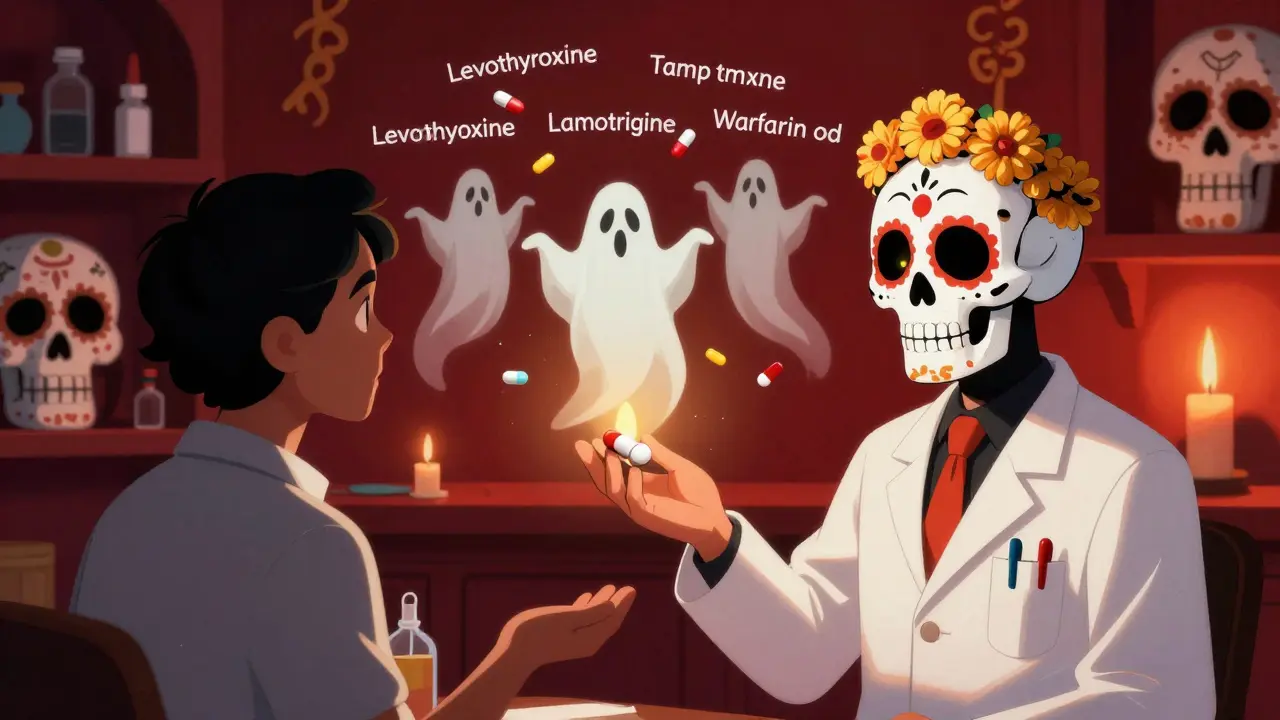
Don’t stop taking your medication. Don’t double up. Don’t guess. Do this:- Call your doctor within 24 hours if you have any of the warning signs listed above. Tell them exactly when you switched and what symptoms started.
- Ask for your old brand - if it worked before, it’s worth trying again. Your doctor can write “Dispense as written” or “Do not substitute” on the prescription.
- Request a lab test - If you’re on a narrow therapeutic index drug, ask for a blood test. TSH, INR, or serum drug levels can tell you if the generic is working the same way.
- Check the pill - Look at the shape, color, and imprint. If it looks different from your last bottle, that’s normal - but if you’ve switched back and forth, write down the differences. Pharmacists sometimes switch suppliers without telling you.
- Know your state’s rules - California, New York, and 26 other states now require pharmacists to notify your doctor before switching NTID drugs. If you’re in one of these states, you have more control.
When to Go to the ER
Some reactions need immediate help:- Swelling of the throat or tongue
- Difficulty breathing
- Sudden drop in blood pressure (feeling faint, cold skin, rapid pulse)
- Severe chest pain or irregular heartbeat
If you have any of these, call 911. These are signs of anaphylaxis - a life-threatening allergic reaction. It’s rare (only 0.02% of cases), but it can happen.
What’s Changing in 2026
The FDA is now using AI to predict bioequivalence problems before generics even hit the market. Their new Generic Drug Target Action Program has already cut post-market side effects by 22%. That’s good news. Pharmacogenomic testing is also becoming more common. Companies like Color Genomics now offer tests that look at 14 genes involved in how your body breaks down drugs. If you’re on multiple meds or have had bad reactions before, this test could tell you if you’re likely to react to certain fillers or absorption patterns. Meanwhile, insurers are starting to allow brand-name exceptions more easily. If you’ve had a documented reaction, your doctor can appeal - and many approvals are now granted.Bottom Line
Generics are safe - for most people, most of the time. But they’re not magic. They’re medicine. And like all medicine, they can have side effects. If you feel different after switching - really different - trust that feeling. Your body knows. Don’t wait for it to get worse. Call your doctor. Ask for your old pill. Get your numbers checked. You’re not overreacting. You’re being smart.Can I switch back to the brand-name drug if the generic makes me feel worse?
Yes. If you experience side effects or reduced effectiveness after switching, your doctor can write a prescription with "Do Not Substitute" or "Dispense as Written." Many insurers will cover the brand if there’s documented medical need - especially for narrow therapeutic index drugs like levothyroxine or lamotrigine. Keep a symptom log to help your doctor make the case.
Are all generics the same, or do different manufacturers make a difference?
Different manufacturers use different inactive ingredients, which can affect how the drug is absorbed. Two generics of the same drug may not be identical. For example, one generic of lamotrigine might use a different binder than another, leading to slower absorption. If you switch between generics and feel worse, it could be the manufacturer - not the drug itself. Ask your pharmacist which company made your pill.
Why do some doctors say generics are always fine?
Most generics are safe - and for common drugs like statins or antibiotics, the evidence is overwhelming. But doctors who say generics are always fine often aren’t seeing patients with narrow therapeutic index drugs. For medications where small changes matter - like thyroid, seizure, or blood thinner drugs - even 5% variation can be dangerous. It’s not that generics are bad. It’s that some patients need extra care.
How long should I wait before deciding the generic isn’t working?
For most drugs, give it 1-2 weeks. But for drugs like levothyroxine or warfarin, changes can happen within days. If you notice symptoms within 72 hours, don’t wait. Call your doctor. For antidepressants or antiseizure meds, if symptoms persist beyond 10-14 days, it’s likely the generic isn’t right for you. Keep track of your symptoms daily - timing matters.
Can I ask my pharmacist to give me the same generic manufacturer every time?
Yes. While pharmacists are allowed to switch suppliers, you can ask them to keep you on the same generic brand. Some pharmacies will honor this request, especially if you’ve had problems before. Write the name of the manufacturer (e.g., Teva, Mylan) on your prescription, or ask your doctor to specify it. Consistency matters more than you think.




14 Comments
Milad Jawabra March 5, 2026
Bro, I switched my levothyroxine to generic and felt like a zombie for two weeks. No joke. My energy was gone, I was gaining weight, and my brain felt like it was wrapped in cotton. I called my doc, they checked my TSH - it was at 8.5. I asked for my old brand, they wrote "Do Not Substitute" on the script. Now I'm back to normal. Don't let them gaslight you into thinking it's "all in your head." Your body knows. Trust it.
Lebogang kekana March 7, 2026
YOOOOOOOOO I JUST HAD THE SAME THING 😭😭😭 I switched my Lamictal and had a full-on manic episode for 3 days. Thought I was Elon Musk for a bit. Then I crashed into depression so hard I couldn't get out of bed. Called my neurologist - he nearly cried. Said "You're lucky you didn't end up in psych." Now I get the brand. My insurance fights me, but I won. You don't mess with brain meds. #GenericWoes
Justin Rodriguez March 7, 2026
As a pharmacist for 18 years, I've seen this happen too often. The FDA's 80-125% bioequivalence range is a legal loophole, not a medical standard. For NTID drugs, even a 5% shift can be catastrophic. I’ve had patients on warfarin whose INR went from 2.4 to 4.8 after a generic switch - no warning, no notice. Always ask for the manufacturer. Write it on the script. And yes - pharmacists can and do switch suppliers without telling you. It’s not fraud. It’s systemic negligence.
Raman Kapri March 9, 2026
Let’s be clear - this is just fearmongering. Generics are 99% safe. The FDA tests them rigorously. If you’re having side effects, it’s likely noncompliance, placebo effect, or you’re just anxious. Stop blaming the pill. The system works. Your body should adapt. This article reads like a marketing piece for brand-name drug companies. Wake up.
Tildi Fletes March 10, 2026
While the article presents compelling anecdotal and clinical evidence, it is critical to contextualize the data within the broader pharmacovigilance framework. The incidence of adverse events related to generic substitution remains statistically low across population-level studies. That said, for individuals with polypharmacy or genetic polymorphisms affecting CYP450 metabolism, individualized care is not merely prudent - it is imperative. I recommend documenting symptom onset, pill characteristics, and lab values in a longitudinal log. This facilitates clinical decision-making and supports prior authorization appeals.
Siri Elena March 11, 2026
Oh honey, you switched your Zoloft to generic and now you’re ‘feeling numb’? 🤔 Maybe you’re just… emotionally underwhelmed by the economy? I mean, it’s not like your serotonin receptors are *that* sensitive. Also, who still takes brand-name meds? Are you a CEO? Or just rich? I’m just saying - if you can’t handle a 20% variance, maybe you shouldn’t be on meds at all. Just saying. 😘
RacRac Rachel March 13, 2026
I switched my levothyroxine last year and went from feeling like a human to feeling like a ghost. 😔 I kept telling myself "it’s fine, it’s fine" - but my skin got dry, my hair fell out, and I cried during commercials. I called my doctor on day 5. Got my old brand back. Now I’m back to my self. I’m not dramatic. I’m just alive again. 🌞 If you’re feeling off - don’t wait. Don’t doubt yourself. Call. Your body isn’t lying. And you deserve to feel like YOU again. 💛
Jane Ryan Ryder March 14, 2026
Ugh. Another crybaby post. People just don’t want to pay $20 for meds anymore. If you can’t handle a little change, go live in a cave. I’ve been on generics for 12 years. No issues. Stop being weak. Also, your doctor probably doesn’t care. Just take the pill. 💪
Callum Duffy March 15, 2026
Thank you for this thoughtful and meticulously referenced piece. As someone who has worked in public health policy across three continents, I can confirm that the variability in inactive ingredients - particularly in low-cost generics manufactured in regions with lax regulatory oversight - remains an under-addressed global issue. The 2022 FDA review cited is indeed alarming. I would add that patient education must be standardized, not left to chance. A simple pamphlet at the pharmacy counter could save lives.
Chris Beckman March 17, 2026
bro i had the same thing with my atorvastatin. switched to generic and my muscles felt like cement. i thought i was just getting old. turned out my cpk was 1200. went to er. doc said "you got rhabdo from a generic." now i only take the brand. also i think my pharmacist is a spy. the pills look different every time. wtf.
Levi Viloria March 19, 2026
In my family, we’ve had three generations on thyroid meds. My grandma switched to generic in the 80s and had a stroke. My mom switched in 2005 and lost 20 lbs without trying. I switched last year - felt fine. But I still track my TSH every 3 months. The point isn’t that generics are bad. It’s that medicine isn’t one-size-fits-all. We need to stop treating patients like numbers. I’m from Nigeria - we don’t have this problem because we can’t afford brand names. But we also don’t have the labs to monitor. So yeah. It’s complicated.
Zacharia Reda March 20, 2026
So I switched my warfarin to generic last month. My INR jumped from 2.2 to 4.1 in 72 hours. I didn’t even know what INR meant until I Googled it. Now I have a little notebook: brand name, manufacturer, date, symptoms. I’ve been switched back and forth 3 times. The only one that works? The one with the green pill that says "Teva" on it. I asked my pharmacist - he said "we can’t guarantee that." I said, "then I’ll find a pharmacy that will." Now I drive 45 minutes for my pills. Worth it.
Jeff Card March 21, 2026
I just want to say thank you for writing this. I’ve been silent for years because I thought I was crazy. My seizures came back after switching lamotrigine. I didn’t tell anyone because I didn’t want to sound dramatic. But I had two full tonic-clonic episodes in one week. My neurologist didn’t believe me until I showed him the pill bottles side by side. The generic looked different. The dose was the same. But my brain knew. I’m back on brand now. I don’t care how much it costs. I’m alive. Thank you for saying what I couldn’t.
Matt Alexander March 22, 2026
Just take the generic. Most people are fine. If you feel weird, go to the doctor. But don’t freak out. Your body will adjust. And if it doesn’t, switch back. Simple. No drama. No drama.