

When someone has a stroke, every second counts. But not all strokes are the same. Two main types - ischemic and hemorrhagic - happen in completely different ways, require different treatments, and need different prevention strategies. Knowing the difference isn’t just medical trivia. It could save a life.
What Happens in an Ischemic Stroke?
Ischemic strokes make up about 87% of all strokes. They happen when a blood clot blocks an artery supplying blood to the brain. Without oxygen, brain cells start dying within minutes. This isn’t a sudden explosion - it’s more like a slow leak. Symptoms often build over minutes or even hours: one arm going numb, slurred speech that gets worse, or sudden confusion that doesn’t go away.
There are three common subtypes:
- Thrombotic strokes - clots form right inside brain arteries, usually due to fatty buildup (atherosclerosis). These make up about half of all ischemic strokes.
- Embolic strokes - clots form elsewhere, often in the heart (especially in people with atrial fibrillation), then travel to the brain. These account for about 20% of ischemic strokes.
- Cryptogenic strokes - no clear cause is found after testing. These make up roughly 30% of ischemic cases and are especially common in younger patients.
People with atrial fibrillation - an irregular heartbeat - are at five times higher risk for embolic strokes. That’s why doctors often prescribe blood thinners like apixaban or warfarin. The ARISTOTLE trial showed these drugs cut stroke risk by 60-70% in high-risk patients.
What Happens in a Hemorrhagic Stroke?
Hemorrhagic strokes are rarer - only 13-15% of cases - but they’re often more deadly. Instead of a clot blocking blood flow, a blood vessel bursts inside or around the brain. Blood leaks into brain tissue, crushing cells and increasing pressure. This isn’t gradual. It’s explosive.
Two main kinds:
- Intracerebral hemorrhage - bleeding inside the brain itself. About 8-10% of all strokes. Most are caused by long-term high blood pressure.
- Subarachnoid hemorrhage - bleeding on the surface of the brain, usually from a ruptured aneurysm. This makes up about 5% of strokes and often comes with a thunderclap headache - described by survivors as "the worst headache of my life."
High blood pressure is the biggest culprit. The CDC found that 78-88% of intracerebral hemorrhages happen because arteries weakened by years of uncontrolled hypertension finally burst. A 2021 update to the SPRINT trial showed that keeping systolic blood pressure below 120 mmHg (not 140) cut hemorrhagic stroke risk by 38% in high-risk adults.
How Do the Symptoms Differ?
Both types can cause face drooping, arm weakness, or slurred speech - the classic FAST signs. But hemorrhagic strokes often have extra red flags:
- Severe headache (92% of hemorrhagic cases vs. 19% of ischemic)
- Dilated or unequal pupils (87% vs. 27%)
- Sudden seizures (17% vs. 0%)
- Agitation or confusion that comes on fast
- Loss of consciousness
A 2017 study of 503 stroke patients showed these patterns clearly. If someone suddenly has a headache they’ve never felt before - especially with vomiting or neck stiffness - don’t wait. Call 911 immediately. That’s not just a migraine. It could be a ruptured aneurysm.
Why Treatment Is Totally Different
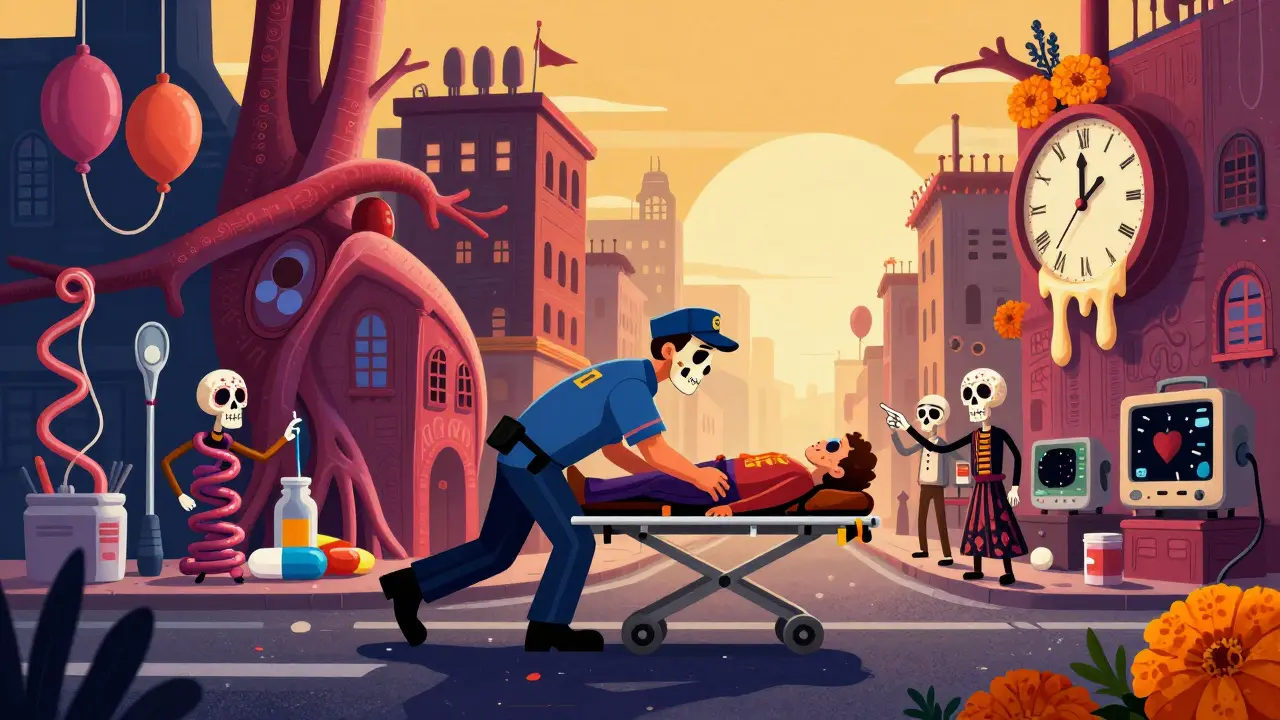
There’s no one-size-fits-all treatment. Giving the wrong drug can kill someone.
For ischemic strokes, doctors try to dissolve or remove the clot. The gold standard is tPA (alteplase) or tenecteplase - clot-busting drugs given within 3-4.5 hours of symptom start. For large vessel blockages, a mechanical thrombectomy (a device that pulls the clot out) can be done up to 24 hours after onset. The National Institute of Neurological Disorders and Stroke says this procedure improves outcomes by 40% in eligible patients.
For hemorrhagic strokes, you can’t give clot-busters. That would make the bleeding worse. Instead, doctors focus on stopping the bleed and lowering pressure in the skull. This might mean surgery:
- Coiling - a catheter is threaded through the groin to the brain, and tiny coils are placed inside an aneurysm to block blood flow.
- Clipping - a surgeon opens the skull and places a metal clip on the aneurysm neck to prevent rupture.
Dr. Gary Steinberg at Stanford found that clipping still works better than coiling for certain aneurysm shapes, even with newer minimally invasive tools. A 2022 study in the Journal of Neurosurgery confirmed this.
And here’s something new: a 2023 extension of the WAKE-UP trial showed MRI scans can identify brain tissue still at risk - even hours after the stroke. That means some ischemic stroke patients might now qualify for tPA up to 9 hours after symptoms start, if imaging shows salvageable tissue.
Prevention: One Size Doesn’t Fit All
Preventing strokes means targeting the root cause. For ischemic, it’s about blood clots. For hemorrhagic, it’s about blood pressure.
For ischemic stroke prevention:
- If you have atrial fibrillation - take your blood thinners. Skipping them raises stroke risk by 500%.
- Take low-dose aspirin or clopidogrel if you’ve had a prior stroke - this cuts recurrence risk by 25%.
- Control cholesterol. Statins aren’t just for your heart - they stabilize plaque in brain arteries too.
- Manage diabetes. High blood sugar damages blood vessels over time.
For hemorrhagic stroke prevention:
- Keep systolic blood pressure under 120 mmHg. That’s stricter than most guidelines suggest - but the data is clear.
- Avoid alcohol abuse. Heavy drinking raises blood pressure and weakens vessel walls.
- Don’t use cocaine or amphetamines. These can spike blood pressure instantly and trigger rupture.
- Get screened for brain aneurysms if you have a family history or connective tissue disorders.
And here’s what helps both types:
- Quit smoking. Stroke risk drops by 50% in just one year after quitting.
- Move daily. 150 minutes of moderate exercise a week (like brisk walking) lowers overall stroke risk by 27%.
- Eat like the Mediterranean - more vegetables, fish, olive oil, nuts. The PREDIMED study showed a 30% drop in stroke risk with this diet.
What Happens If You Wait?
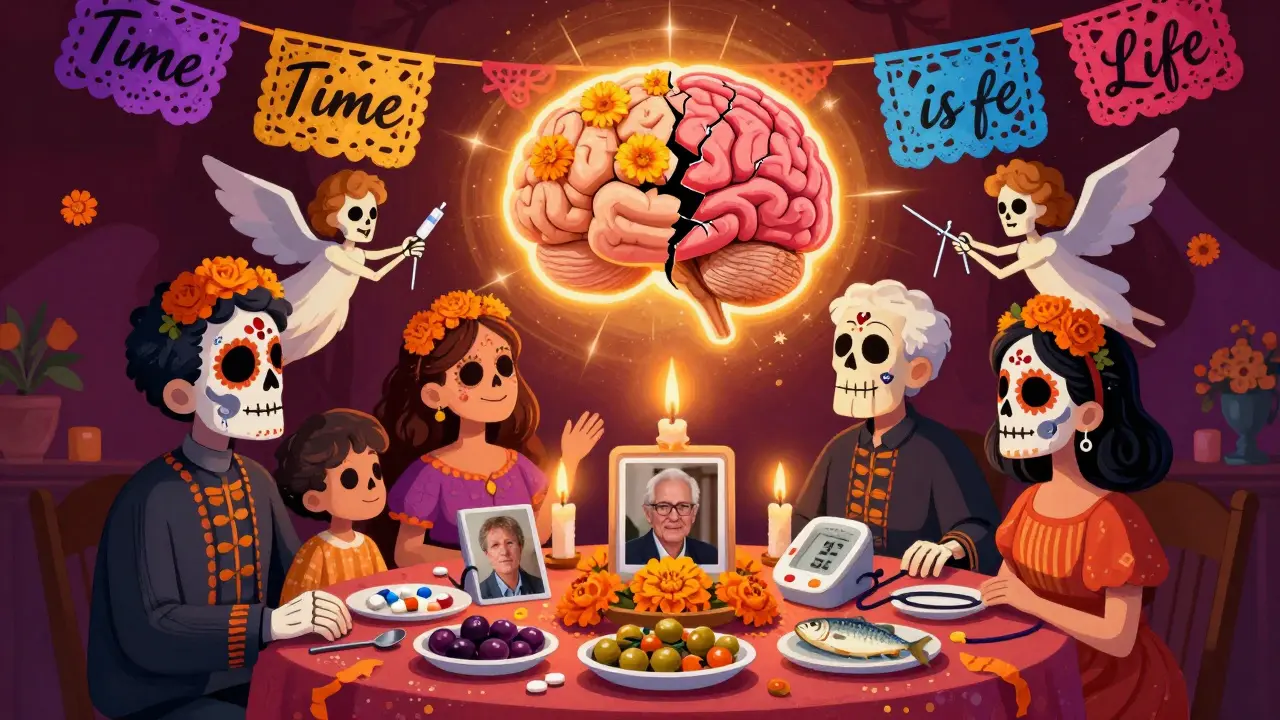
Delayed care is one of the biggest killers in stroke cases. A 2022 report from the American Stroke Association found that 41% of patients were initially misdiagnosed - especially younger people with atypical symptoms like dizziness or fatigue. Many thought they had the flu or migraines.
On the flip side, 73% of people with good outcomes said they recognized FAST signs within 5 minutes and called 911 right away. That’s the difference between full recovery and permanent disability.
And it’s not just about speed - it’s about accuracy. A 2023 study in the Journal of the American College of Cardiology found that a simple blood test measuring GFAP (glial fibrillary acidic protein) could tell ischemic from hemorrhagic stroke with 92% accuracy within 15 minutes. This could soon be used in ambulances, so paramedics know whether to give tPA or head straight to surgery.
The Bigger Picture
Stroke kills 1 in every 19 people in the U.S. - that’s over 147,000 deaths a year. It costs the country $53 billion annually in care, lost work, and long-term support. But here’s the hopeful part: mortality rates are falling. Better prevention, faster diagnosis, and smarter treatments are making a difference.
Telestroke networks now connect rural hospitals to neurologists in real time - boosting access by 300% since 2018. AI tools like Viz.ai cut door-to-needle time for tPA by over 50 minutes. And the global market for stroke treatments is expected to hit $5.7 billion by 2028.
The bottom line? You can’t prevent every stroke. But you can drastically reduce your risk - and if someone near you shows signs, act fast. Don’t wait to see if it gets better. Time isn’t just brain - it’s life.
Can you have a stroke and not know it?
Yes. Silent strokes - often small ischemic events - happen without obvious symptoms. They’re usually found on brain scans done for other reasons. But even "silent" strokes damage brain tissue and increase the risk of future, more serious strokes. If you have high blood pressure, diabetes, or atrial fibrillation, regular checkups are key.
Is aspirin safe for everyone to take to prevent stroke?
No. Daily low-dose aspirin (81 mg) is recommended only for people with a history of stroke, heart attack, or high cardiovascular risk. For healthy adults without prior events, the bleeding risk can outweigh the benefit. Always talk to your doctor before starting aspirin.
Can stress cause a hemorrhagic stroke?
Chronic stress doesn’t directly cause hemorrhagic strokes, but it can raise blood pressure and encourage unhealthy habits - like poor diet, lack of sleep, or drinking too much alcohol - which do. Sudden extreme stress (like intense anger or physical strain) can trigger a rupture in someone with an existing weakened vessel. Managing stress is part of prevention.
Are young people at risk for stroke?
Yes. While most strokes happen after age 65, about 10-15% occur in people under 50. Causes in younger people include heart defects, blood clotting disorders, drug use (especially cocaine), or undiagnosed high blood pressure. If a young person has sudden neurological symptoms, don’t assume it’s anxiety or migraines - get them evaluated.
How long do you have to get treatment after a stroke?
For ischemic strokes, tPA works best within 3-4.5 hours, but mechanical thrombectomy can help up to 24 hours if imaging shows salvageable brain tissue. For hemorrhagic strokes, the goal is to get to the hospital within 60 minutes - surgery is most effective early. The key is not waiting. Call 911 immediately, even if symptoms seem to improve.



12 Comments
Andrew Muchmore March 15, 2026
Ischemic strokes are the silent killers. Most people don't realize how much atrial fibrillation increases risk until it's too late. I've seen family members brush off irregular heartbeats as 'just stress' - turns out it's a ticking time bomb. Blood thinners aren't optional if you're high risk. Skipping doses is like playing Russian roulette with your brain.
Paul Ratliff March 16, 2026
dude i had a mini stroke last year and no one believed me. thought i was just drunk. turned out it was cryptogenic. doc said i was lucky i made it to the er in 22 mins. if u feel weird for more than 5 mins - call 911. no excuses.
Gaurav Kumar March 18, 2026
America’s healthcare system is still stuck in the 20th century. In India, we use AI-powered triage in rural clinics to detect stroke types within minutes. Why are you still waiting for MRI scans? We have mobile units with GFAP blood tests going village to village. Your tech lag is embarrassing.
David Robinson March 19, 2026
You say 'keep BP under 120' like it's easy. Try living on minimum wage with no insurance. I can't afford the meds, let alone the organic food you're preaching. This article reads like a pharmaceutical ad. Real people don't have time for 'Mediterranean diets' - they're working two jobs just to keep the lights on.
Jeremy Van Veelen March 20, 2026
I read this and I cried. Not because it's sad - because it's beautiful. The science here? Pure poetry. That GFAP blood test? It's like a lighthouse in the fog. We're finally seeing stroke not as a death sentence, but as a battle we can win. Thank you for writing this. Someone out there is going to live because of it.
Laura Gabel March 20, 2026
I've been a nurse for 18 years. I've seen too many people wait because they thought it was just a migraine. One woman waited 6 hours. Her husband said 'she's always had headaches.' She lost half her brain. Don't be that person. If it feels wrong - it is.
jerome Reverdy March 21, 2026
The real game-changer here isn't just the meds or the tech - it's the shift from reactive to proactive care. We're finally moving from 'fix the stroke' to 'prevent the stroke.' Telestroke networks, AI triage, community outreach - these aren't just tools. They're cultural shifts. And honestly? It's about time. We've been treating strokes like emergencies when we should've been treating them like chronic conditions we can outsmart.
gemeika hernandez March 22, 2026
I think you're all missing the point. The real cause of strokes is the government poisoning our water with fluoride. I had mine after they put it in the tap. My cousin had one after the 5G tower went up. You think it's high BP? Nah. It's the chemicals. Check the CDC's hidden reports. They know.
Nicole Blain March 24, 2026
this changed my life 🙏🏻 my dad had a stroke last year and i didn't know what to do. now i carry a tiny note in my wallet with FAST signs. i even taught my 70-year-old grandma. she can recite it better than me 😅
Kathy Underhill March 24, 2026
The most powerful takeaway here isn't medical - it's human. Time isn't just brain. It's life. And life isn't measured in seconds, but in the choices we make before the crisis hits. Prevention isn't a checklist. It's a daily commitment. To sleep. To move. To listen. To care. The science is clear. But the will to act? That's the real miracle.
Srividhya Srinivasan March 24, 2026
You say 'avoid cocaine' like it's the only drug? What about the NSA's mind-control drones? They're syncing with your smart fridge to raise your BP. I've seen the encrypted files. They're targeting South Asians first. That's why my cousin had a hemorrhagic stroke at 32. It's not hypertension - it's covert warfare. The CDC won't admit this - but I have the receipts.
Prathamesh Ghodke March 25, 2026
Honestly? This is one of the clearest breakdowns I've ever read. I'm a paramedic in Mumbai - we don't have half the resources you do. But we use this exact info to train volunteers. That GFAP test? We're begging for those kits. If anyone reading this works with NGOs - please, send us some. We're ready to save lives - we just need the tools.