
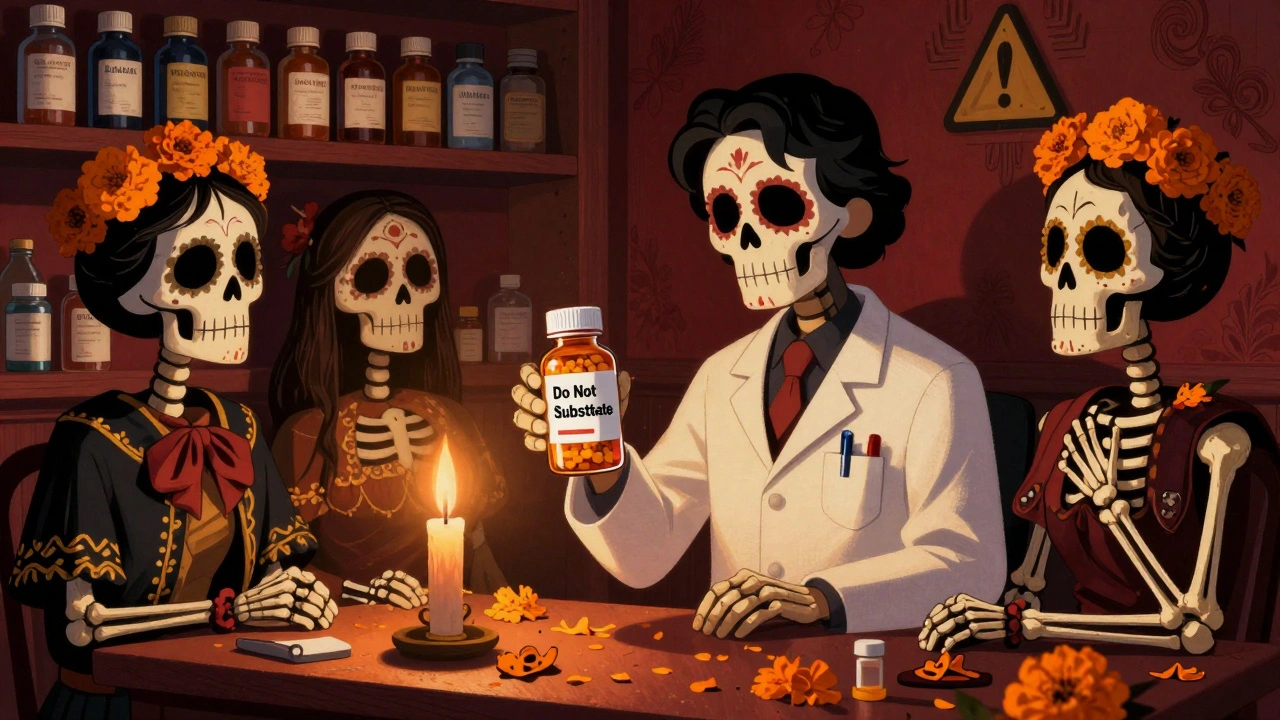
Most people assume that when a doctor writes a prescription, the pharmacy can swap in a cheaper generic version. It’s usually fine - and saves money. But sometimes, that swap isn’t allowed. When a doctor writes "Do Not Substitute" or "Dispense as Written" on a prescription, it means the patient must get the brand-name drug, no matter the cost. This isn’t about corporate greed or doctor preferences. It’s about safety, biology, and real patient outcomes.
What "Do Not Substitute" Actually Means
"Do Not Substitute" (DNS), also called "Dispense as Written" (DAW), is a legal instruction from a prescriber that overrides state laws allowing pharmacists to swap brand-name drugs for generics. In 49 U.S. states, pharmacists can substitute generics unless the doctor explicitly blocks it. DNS isn’t a suggestion - it’s a binding order. If a pharmacist fills a DNS prescription with a generic, they could face disciplinary action or legal liability. The system was created by the 1984 Hatch-Waxman Act, which gave us the modern generic drug market. It balanced two goals: lowering drug costs and protecting patient safety. The FDA’s Orange Book lists every approved drug and its therapeutic equivalence rating. Most generics are rated "AB," meaning they’re bioequivalent to the brand. But not all drugs are created equal.When Generics Aren’t Enough
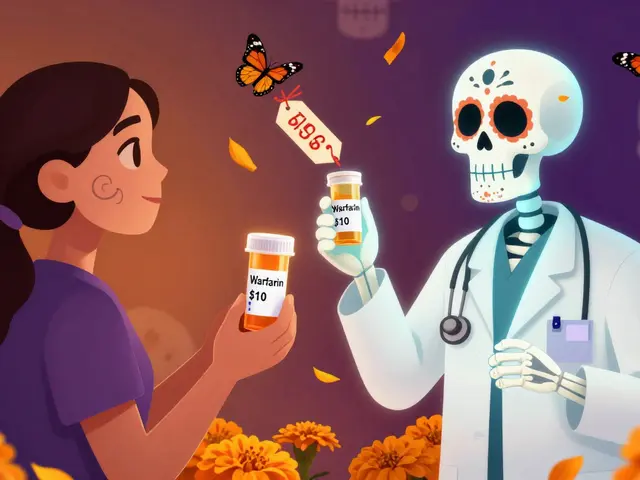
Not every drug can be safely swapped. Some medications have what’s called a narrow therapeutic index (NTI). That means the difference between a dose that works and one that’s dangerous is tiny. For these drugs, even small differences in how the body absorbs the medicine can cause serious harm. Examples include:- Warfarin (blood thinner) - a 10% change in absorption can trigger a stroke or dangerous bleeding.
- Levothyroxine (thyroid hormone) - switching brands has caused palpitations, weight loss, or fatigue in sensitive patients.
- Phenytoin (seizure control) - inconsistent levels can lead to breakthrough seizures.
Biologics and the Complexity of Substitution
Biologic drugs - like Humira, Enbrel, or insulin - are made from living cells, not chemicals. They’re far more complex than traditional pills. Even if two biologics have the same active ingredient, slight differences in manufacturing can change how the body responds. The FDA has a special category called "interchangeable" biosimilars. As of late 2023, only 12 out of hundreds of biosimilars had this designation. That means 98% of biologic prescriptions still require DNS. Why? Because the FDA requires extra proof that an interchangeable biosimilar will behave exactly like the original in every patient - every time. In states like California and New York, pharmacists can’t substitute a biosimilar unless it’s labeled "interchangeable." Even then, many doctors still prefer the original brand. For patients with autoimmune diseases or diabetes, stability matters more than cost.
Why Doctors Write DNS - The Real Reasons
Doctors don’t write DNS lightly. It’s not about profit. It’s about what they’ve seen in practice. According to the American Society of Health-System Pharmacists, the top three reasons for DNS are:- Narrow therapeutic index drugs - 38% of DNS prescriptions.
- Previous bad reaction to a generic - 29%. Some patients develop rashes, nausea, or worsening symptoms with generics due to inactive ingredients (fillers, dyes, coatings).
- Special delivery systems - 22%. Prefilled pens, inhalers, or extended-release tablets can’t be swapped even if the active drug is the same. The delivery mechanism matters.
The Cost of "Do Not Substitute"
DNS prescriptions cost more. On average, brand-name drugs are 237% pricier than generics. A brand prescription might cost $487. The generic? $144. That’s a $343 difference per fill. And it adds up. In 2022, DNS prescriptions contributed to $15.7 billion in avoidable healthcare spending, according to the American College of Physicians. Insurance companies push back. Some deny coverage unless the doctor provides documentation. Others require prior authorization. But here’s the catch: switching a patient from brand to generic and then having them end up in the ER because their seizure returned or their thyroid crashed? That costs far more than the $343 difference.Confusion Among Patients and Pharmacists
Most patients don’t understand DNS. A 2022 Kaiser Family Foundation survey found 68% of patients had no idea why their $10 pill became an $85 one. They assume the pharmacist made a mistake. They blame the doctor. Some even refuse to pick up their prescription. Pharmacists are caught in the middle. A National Community Pharmacists Association survey found 73% of pharmacies have insurance systems that reject DNS prescriptions 15-20% of the time. The system thinks it’s an error. The pharmacist has to call the doctor’s office, wait on hold, explain, and resubmit. It wastes time. It frustrates everyone. One Reddit user wrote: "My doctor wrote DAW on my Synthroid. Insurance charged me $85. I thought they messed up. I called the pharmacy, then the doctor, then my insurer. Took three days to figure out it was correct. I felt like I was fighting a machine."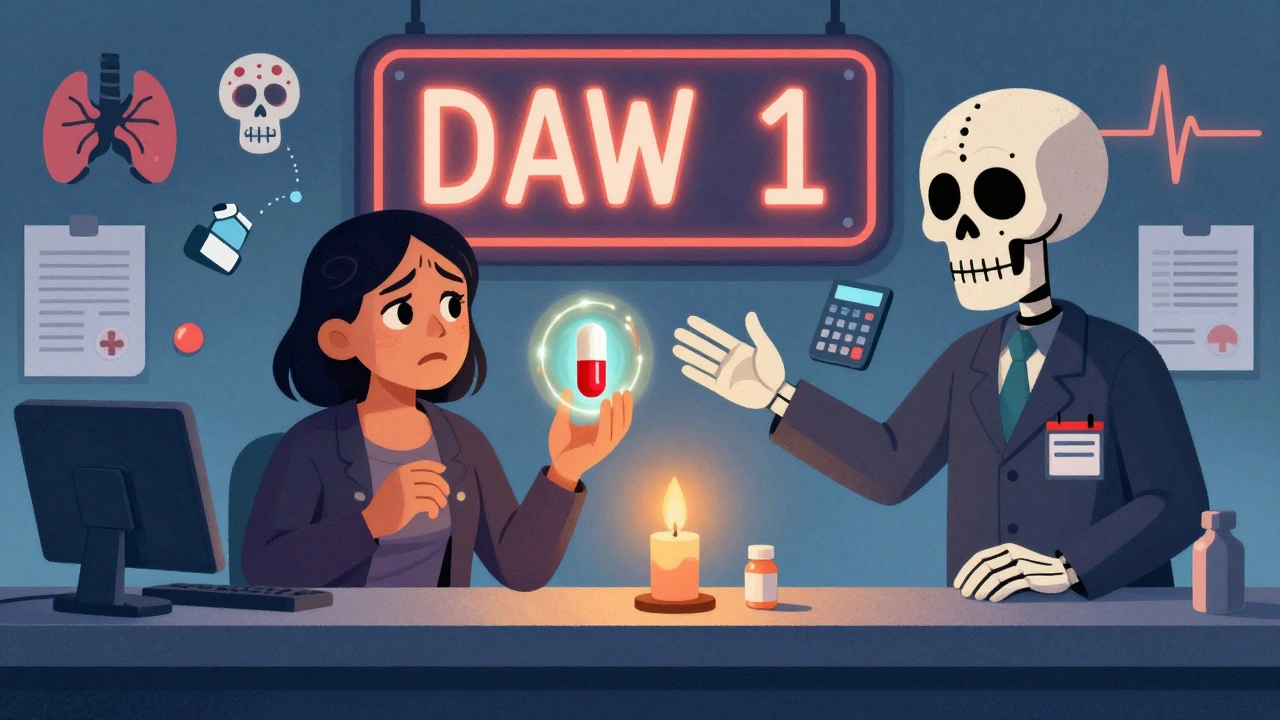
How Doctors Get It Right
To make DNS work, doctors need to follow state rules. In New York, they must write "Dispense as Written" and sign their initials. In California, they can check a box on an e-prescription, but they still need to authenticate it. In 27 states, e-prescribing systems require a DAW code - like "DAW 1" for "brand necessary." Many electronic health records (EHRs) default to generic substitution. Doctors have to manually override it. A Johns Hopkins study found it takes an average of 2.3 minutes per DNS prescription to document properly. For a doctor seeing 50 patients a day, that’s nearly two extra hours of work. The American Medical Association offers a free CME course on appropriate DNS use. Over 45,000 doctors have taken it. The goal isn’t to stop generics. It’s to use DNS only when needed.The Future of Generic Substitution
The FDA is investing $50 million over the next five years to improve bioequivalence testing for narrow therapeutic index drugs. If they can prove generics are just as safe for levothyroxine or warfarin, DNS rates for those drugs could drop by 25%. Meanwhile, Medicare will start tracking DNS usage in 2024. Some states are already passing laws to limit DNS to only clinically justified cases. The message is clear: generics are great - but not always safe. By 2027, experts predict DNS use for small-molecule drugs will fall to 5-7%. For biologics? It’ll stay above 50%. Why? Because you can’t easily copy a living cell. And when it comes to your health, sometimes the brand is the only safe choice.What Patients Should Do
If your prescription says "Do Not Substitute":- Ask your doctor why. Don’t assume it’s about cost.
- Check if there’s a generic with the same formulation - some brands have multiple generics, and not all are equal.
- Ask your pharmacist to explain the difference between the brand and the generic.
- If you can’t afford the brand, ask about patient assistance programs. Many drugmakers offer them.
Can a pharmacist refuse to fill a "Do Not Substitute" prescription?
No, a pharmacist cannot refuse to fill a valid DNS prescription. If the doctor clearly writes "Do Not Substitute," "Dispense as Written," or uses the correct DAW code, the pharmacist is legally required to dispense the brand-name drug. Refusing could result in disciplinary action by the state pharmacy board. However, if the prescription is missing required information (like a signature or DAW code), the pharmacist may contact the prescriber to clarify.
Why does my insurance deny coverage for a brand drug with DNS?
Insurance companies often require prior authorization for brand-name drugs, even with DNS. They assume the doctor is overprescribing. To get coverage, your doctor may need to submit documentation proving medical necessity - like lab results showing instability after switching generics, or a history of adverse reactions. Some insurers have formularies that list which brand drugs are covered with DNS and which aren’t. Always check your plan’s formulary before the prescription is filled.
Are all generics unsafe?
No. Over 99.5% of approved generics are therapeutically equivalent to their brand-name counterparts, according to the FDA. For most drugs - like antibiotics, blood pressure meds, or cholesterol pills - generics work just as well and are perfectly safe. DNS is only needed for specific cases: narrow therapeutic index drugs, complex delivery systems, or documented patient reactions to inactive ingredients. Don’t assume all generics are risky.
Can I switch from a brand to a generic if I’m doing fine?
If your doctor didn’t write "Do Not Substitute," you can usually switch. But if you’re on a drug with a narrow therapeutic index - like warfarin, levothyroxine, or phenytoin - even a small change can cause problems. Never switch on your own. Talk to your doctor first. If you’ve been stable on a brand for years, switching might not be worth the risk. Your doctor can help you weigh the cost savings against potential side effects.
What’s the difference between a generic and a biosimilar?
Generics are exact chemical copies of small-molecule drugs (like pills). Biosimilars are similar, but not identical, copies of complex biologic drugs (like injections). Because biologics are made from living cells, they can’t be copied exactly. A biosimilar must be "highly similar" to the original, but it’s not interchangeable unless the FDA specifically approves it as such. Only 12 biosimilars have that status as of 2023. For most biologics, the original brand is still the only option.



8 Comments
Paul Dixon December 10, 2025
I used to think generics were just as good for everything until my mom switched from Synthroid and started having heart palpitations. She went back to the brand, and boom-her numbers stabilized. Turns out, biology doesn’t care about cost savings. Just glad doctors can still say "do not substitute" when it matters.
Aman deep December 12, 2025
bro i had this exact thing with my levothyroxine… switched to generic, felt like i was run over by a truck for 3 weeks. weight gain, brain fog, the whole deal. doc said "dns" next time and now i’m human again. also, why does insurance act like we’re trying to scam them? it’s not a luxury, it’s survival. 🤦♂️
Sylvia Frenzel December 12, 2025
Another example of why American healthcare is broken. If you can’t afford the brand, you’re out of luck. The system punishes the sick for being poor. Meanwhile, pharma CEOs take vacations in the Caribbean. This isn’t medicine-it’s a profit scheme wrapped in medical jargon.
Doris Lee December 12, 2025
Thank you for explaining this so clearly. I didn’t realize how many people get confused by DNS. My cousin thought her pharmacist messed up when she got charged $80 for a pill she used to pay $10 for. Once she understood why, she was relieved. Knowledge is power.
Stephanie Maillet December 12, 2025
It’s fascinating-this isn’t just about pharmacology; it’s about epistemology: how we define "equivalence," what counts as "safe," and who gets to decide. The FDA’s AB rating assumes homogeneity in human physiology, but bodies aren’t lab samples. We’re messy, variable, and deeply individual. DNS, then, is an acknowledgment of that complexity-and a quiet rebellion against reductionist systems.
john damon December 14, 2025
Bro, my dad’s on warfarin and they switched him to generic… he ended up in the ER with a bleed. Now we fight insurance every time. I just want him to live. 💔😭
Taylor Dressler December 16, 2025
Important clarification: generics are safe for 99.5% of drugs. DNS isn’t about distrust of generics-it’s about precision medicine for high-risk cases. The real issue is the administrative burden on doctors and pharmacists. EHRs should auto-flag NTI drugs and auto-apply DAW 1. That’s the fix, not eliminating DNS.
Aidan Stacey December 17, 2025
Let me tell you about my friend who’s been on Humira for 12 years. Switched to a biosimilar because insurance forced it. Three months later, her RA flared so bad she couldn’t hold her kid. She’s back on the brand now-and insurance won’t cover it unless she files a 17-page appeal. This isn’t healthcare. It’s a bureaucratic nightmare with a side of suffering.