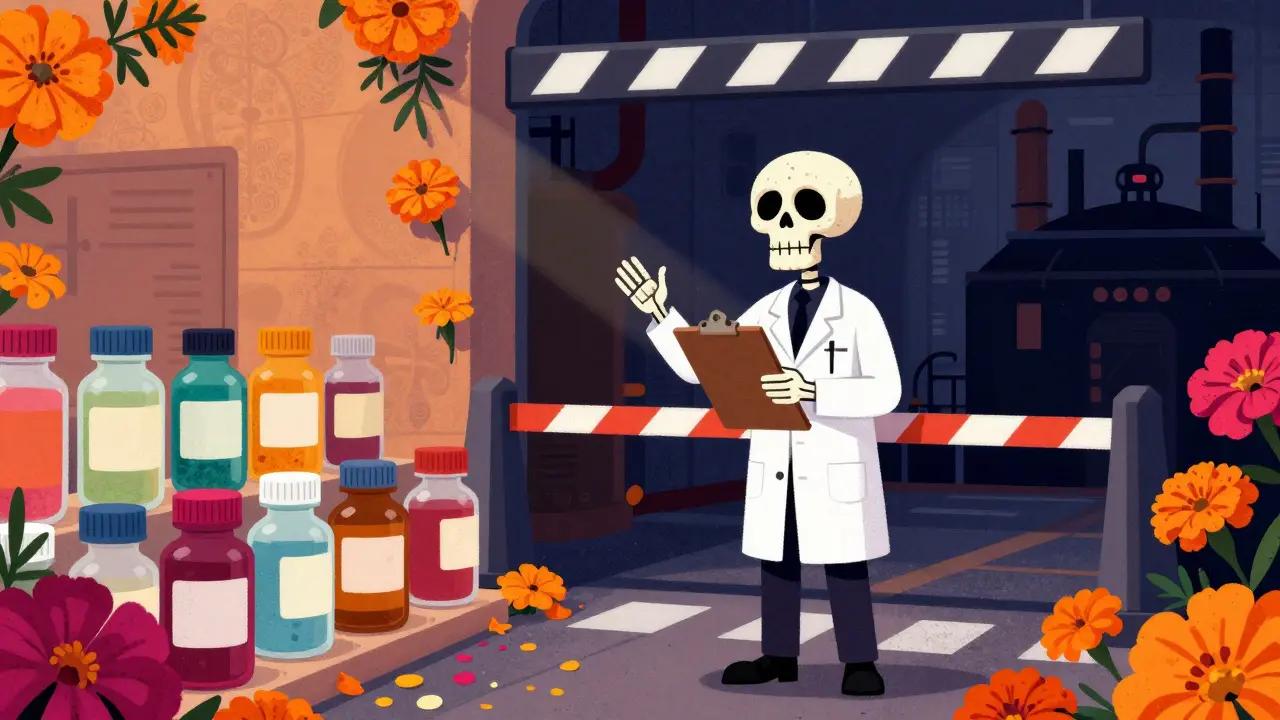
Imagine you just bought a life-saving medication. You open the bottle, take a pill, and expect it to work exactly as intended. Behind that simple action stands a massive, silent checkpoint called batch release testing. This isn't just a formality; it's the final gatekeeper between a factory line and your pharmacy shelf. In 2025, regulators flagged over 1,200 potentially harmful batches solely because this step worked correctly. Without it, the cost would be measured in health crises rather than dollars.
What Exactly Is Batch Release Testing?
Batch Release Testing is a mandatory quality control process where manufacturers verify every produced batch of medicine meets strict safety, identity, and strength standards before distribution. It acts as the final barrier preventing unsafe products from reaching patients. Unlike routine checks during production, this verification happens after manufacturing but before shipping. Think of it like a passport inspection before you leave a country. You have the right papers, but an official needs to stamp your file. In pharmaceuticals, that "stamp" comes from rigorous analytical data. Every tablet, vial, or capsule gets assigned a unique batch number. The lab runs a full suite of tests on samples taken from that specific group. Only when the data matches the approved specifications does the quality unit sign off.The Step-by-Step Workflow
The process follows a standardized path designed to catch errors before they become public health issues. While details vary slightly between regions, the core logic remains consistent across major markets like the US and Europe.
- Sampling: Trained technicians collect representative samples from the finished product using statistical methods to ensure no bias.
- Analytical Testing: Lab analysts run chemical, physical, and microbiological tests using validated instruments.
- Data Review: Two independent reviewers check raw data, calculations, and instrument logs for integrity issues.
- Production Record Audit: A specialist confirms the manufacturing team followed the exact recipe (batch record) without deviations.
- Certification: A designated authority grants final approval for shipment.
In the United States, this responsibility often falls to the quality unit manager. However, in the European Union, a specific role known as the Qualified Person (QP) holds personal legal liability. This individual must have at least five years of industry experience plus specific GMP training. As of 2026, Europe faces a shortage of qualified individuals, sometimes creating bottlenecks that delay drug availability by weeks.
Critical Tests in the Lab
What exactly do they look for? It depends on the product, but certain parameters are non-negotiable. For a standard oral tablet, the lab confirms several key attributes.
| Parameter | Method Example | Typical Acceptance Limit |
|---|---|---|
| Identity | HPLC or FTIR | Match reference spectrum |
| Assay / Potency | High Performance Liquid Chromatography | 90-110% of label claim |
| Dissolution | USP <711> | f2 similarity factor ≥50 |
| Impurities | Chromatography | Unknown impurities <0.10% |
| Microbial Limits | USP <61> and <62> | <100 CFU/g (non-sterile) |
For sterile injectables, the stakes rise significantly. You cannot tolerate bacteria in an IV solution. Labs perform endotoxin testing per USP <85> standards, checking for bacterial toxins that could cause fever or shock. They also scan for particulate matter-tiny bits of glass or plastic that shouldn't be there. If the count exceeds 600 particles larger than 25 microns per milliliter, the entire lot fails.

Navigating Regulatory Differences
Global trade means drugs often cross borders, but rules aren't perfectly aligned yet. The US Food and Drug Administration (FDA) focuses heavily on the quality system controls during the manufacturing process itself. Under recent guidance from 2025, facilities using advanced continuous manufacturing may qualify for reduced batch testing frequencies if they can prove robust process control.
Contrast this with the European Medicines Agency (EMA) approach. Their Annex 1 guidelines require full testing of every single batch, regardless of manufacturing history. There is a divergence here regarding efficiency versus caution. A company producing in Germany might face stricter release requirements than one in California for the same product type. This creates complexity for global supply chains. Companies often run parallel testing protocols to satisfy both jurisdictions simultaneously, increasing costs but ensuring market access.
Why Delays Happen
If everything goes smoothly, a generic small molecule might take seven to ten days to clear this stage. Biologics can take up to thirty-five days. So why do delays occur? Staff shortages play a huge role. In 2024, survey data showed nearly half of quality units struggled to find senior analysts capable of interpreting complex chromatograms.
Method transfer is another hidden killer. When Research & Development hand over a test to the manufacturing lab, slight differences in equipment or water quality can trigger false failures. Resolving these discrepancies takes time. Some organizations report waiting over two weeks just to validate that a test method works on their specific machines before testing even begins. Automation helps. Labs using integrated Laboratory Information Management Systems (LIMS) reported cutting release cycles by roughly 22% in 2024 studies.
The Cost of Failure
This isn't just about paperwork. Releasing a bad batch costs real money and trust. According to 2023 data, a single pharmaceutical recall averages $10.7 million in direct costs. That includes logistics, destroyed inventory, and regulatory fees. But the reputational damage lasts longer.
In 2023, a major manufacturer released subpotent monoclonal antibody vials due to inadequate review procedures. The recall reached 12,000 vials. The result was an 18-month import alert on their facility. Patients missed doses, hospitals lost confidence, and investors saw stock prices drop. Proper batch release testing prevents this domino effect. It ensures that the identity, strength, purity, and quality match what the patient expects based on clinical trials.
Future Trends: AI and Prediction
We are standing on the edge of a shift toward predictive quality. By late 2026, pilot programs allow some facilities to use real-time analytics instead of waiting for traditional lab results. This concept, often called Real-Time Release Testing (RTRT), uses sensor data collected during mixing or drying to calculate quality instantly.
However, regulators remain cautious. The FDA requires 99.9% confidence levels for these digital proxies. Industry reports suggest companies using AI-driven predictive release testing see a 34% reduction in batch failures, but the validation timeline stretches to 18 months. For now, the traditional wet chemistry lab remains the backbone of safety. Digital tools assist, but they haven't replaced the analyst's signature on the certificate of analysis.
Frequently Asked Questions
Can a batch be released without full testing?
Generally, no. Most regulatory bodies require full specification testing. Exceptions exist for continuous manufacturing under specific FDA waivers, but those are rare and require extensive prior validation.
Who signs off on batch release?
In the US, it is usually a designated quality unit representative within the company. In the EU and UK, a specific licensed individual called a Qualified Person must personally certify each batch.
How long do records stay on file?
Regulations typically mandate keeping complete test data and raw records for at least one year past the expiration date of the product to ensure traceability.
What happens if a test fails?
If any critical parameter fails outside acceptance criteria, the batch cannot be shipped. It is either quarantined for rework (if permitted) or rejected for destruction pending investigation.
Does stability testing affect release?
Initial release relies on immediate testing, but stability data determines the shelf life. Ongoing stability samples are pulled throughout the product's life cycle to ensure it remains effective over time.