
Drug Interaction Checker
Check Your Medications
Enter medications you're currently taking. Include prescriptions, over-the-counter drugs, supplements, and vitamins. Separate each with a comma or new line.
Every year, thousands of people end up in the hospital-not because their condition got worse, but because a new medication they started clashed with something else they were already taking. It’s not rare. It’s not mysterious. It’s preventable. And it starts with one simple habit: checking for drug interactions before you take that new pill.
Why Drug Interactions Are More Dangerous Than You Think
A drug interaction happens when two or more substances-medications, supplements, even foods-change how one of them works in your body. This isn’t just about feeling a little weird. It can mean your blood pressure spikes, your liver gets damaged, your heart rhythm goes haywire, or worse. The FDA estimates that preventable adverse drug reactions cause about 7,000 deaths in the U.S. each year. A big chunk of those? Drug interactions. Take statins, for example. These are common cholesterol-lowering drugs. If you’re on simvastatin and also take amiodarone (a heart rhythm drug), your risk of a rare but deadly muscle breakdown called rhabdomyolysis jumps 15 times higher. That can lead to kidney failure. Or consider warfarin, a blood thinner. Mix it with common painkillers like ibuprofen or naproxen, and you could bleed internally without warning. Even something as simple as grapefruit can be dangerous. It blocks an enzyme your liver uses to break down dozens of medications-including some statins, blood pressure drugs, and anti-anxiety pills. One grapefruit can mess with your meds for up to 72 hours.The Four Questions You Must Ask Before Starting Any New Medication
Don’t assume your doctor already knows everything you’re taking. Most people don’t tell their doctors about every supplement, herbal remedy, or over-the-counter pill they use. That’s a problem. Before you leave the office with a new prescription, ask these four questions out loud:- Can I take this with my other medications?
- Should I avoid certain foods, drinks, or alcohol?
- What are the warning signs I should watch for if there’s a bad interaction?
- How will this drug work in my body-especially with what I’m already on?
Keep a Real, Updated Medication List
Most people think they remember what they’re taking. They don’t. Not when they’re on five, seven, or ten different pills. A 2022 survey found that patients over 65 see an average of 4.7 different doctors-but only share their full medication list with 1.2 of them. Start a simple list. Write down:- The name of each medication (brand and generic if you know it)
- The dose (e.g., 10 mg, 500 mg)
- How often you take it (e.g., once daily, every 8 hours)
- Why you’re taking it (e.g., “for blood pressure,” “for arthritis pain”)
Use a Reliable Drug Interaction Checker-But Don’t Rely on It Alone
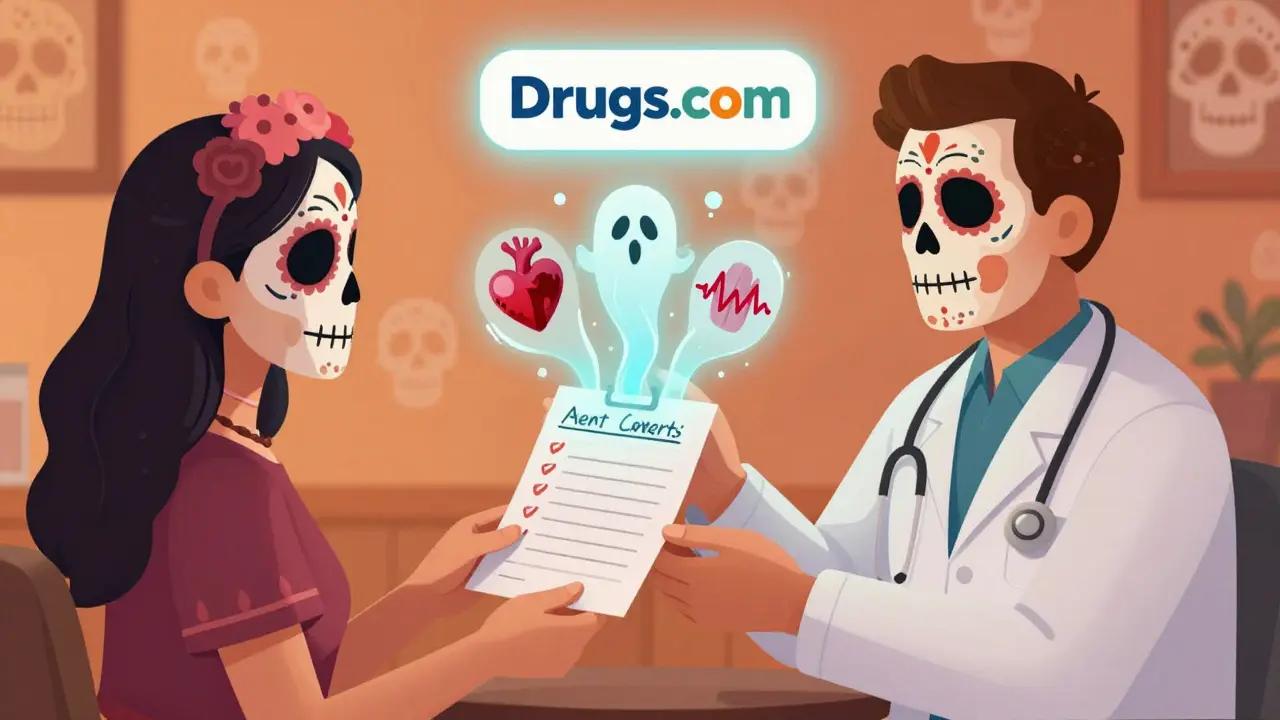
There are free tools you can use right now. The best one for most people is Drugs.com Drug Interactions Checker. It checks over 24,000 prescription drugs, 7,000 supplements, and 4,000 foods. It’s updated daily and used by over a million people every month. It’s not perfect. But it’s better than most. A 2021 study found it caught 92.4% of clinically significant interactions-higher than WebMD’s tool (87.1%) and close to the University of Liverpool’s HIV-specific checker (95.7%). But here’s the catch: no online tool replaces a human expert. The FDA warns that these tools don’t know your kidney function, your age, your genetics, or whether you’ve had a bad reaction before. A 2022 study showed that even with computer alerts in 92% of U.S. pharmacies, pharmacists still filled 8.3% of prescriptions with known dangerous interactions-often because patients used multiple pharmacies and records were split. Use the checker as a conversation starter, not a final answer. Print out the results and bring them to your doctor or pharmacist.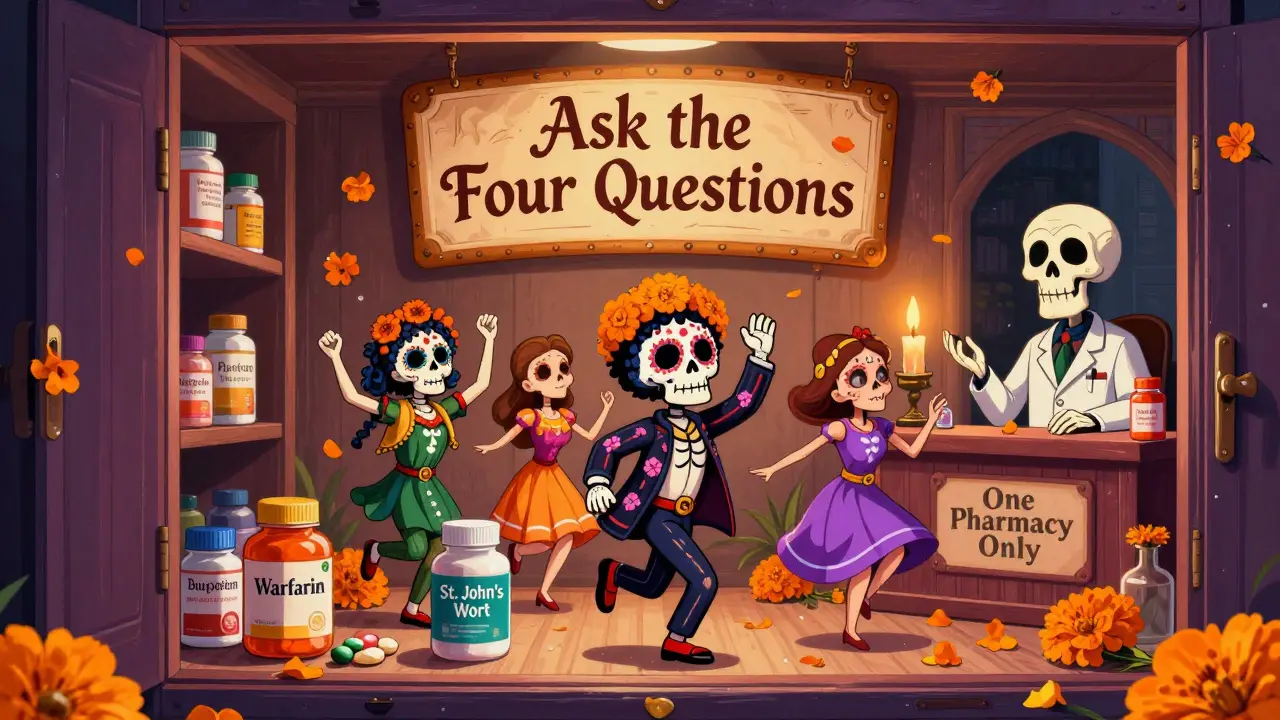
Know the High-Risk Combinations That Cause Most Hospitalizations
You don’t need to memorize every possible interaction. Focus on the big ones. According to the American Academy of Family Physicians, seven combinations cause 63% of serious interaction-related hospitalizations:- Warfarin + NSAIDs (like ibuprofen or naproxen)
- SSRIs (like sertraline) + MAOIs (like phenelzine)
- Digoxin + clarithromycin (an antibiotic)
- Statins (like simvastatin) + fibrates (like fenofibrate)
- Calcium channel blockers (like diltiazem) + protease inhibitors (used for HIV)
- Sildenafil (Viagra) + nitrates (like nitroglycerin)
- Theophylline + fluvoxamine (an antidepressant)
Stick to One Pharmacy
This might sound small, but it’s huge. Using multiple pharmacies means each one only sees part of your medication history. If you get your blood pressure pill at CVS, your painkiller at Walgreens, and your supplement at a health store, no one has the full picture. A 2021 study of 22,000 Medicare patients found that using just one pharmacy reduced serious drug interactions by 31%. Why? Because that one pharmacy can run full interaction checks across everything you take. Even if another pharmacy has a lower price, stick with the one that knows your full list. It’s worth paying a few dollars extra to avoid an ER visit.Watch for the Warning Signs
Not every interaction causes immediate symptoms. But some do. Know what to look for:- Unexplained bruising or bleeding (could mean warfarin clash)
- Severe muscle pain or weakness (could mean statin interaction)
- Fast or irregular heartbeat
- Confusion, dizziness, or fainting
- Extreme drowsiness or trouble breathing
- Yellowing skin or eyes (liver stress)
What About Supplements and Herbal Products?
Many people think “natural” means “safe.” That’s a dangerous myth. St. John’s wort can make birth control, antidepressants, and even some cancer drugs useless. Garlic and ginkgo can thin your blood like aspirin. Turmeric can interfere with blood sugar control. A 2023 survey found that 58% of patients don’t tell their doctors about supplements. That’s a huge blind spot. Always disclose them-even if you think they’re “just vitamins.”Future Tools Are Coming-But You Can’t Wait
There’s exciting progress. The FDA is testing AI systems that predict your personal risk based on your health records. Some hospitals now check your DNA for gene variants that affect how you metabolize drugs. These tools could cut interaction risks by 30-40%. But they’re not everywhere. And even if they were, they still need your input. Your list. Your questions. Your honesty.Bottom Line: Your Life Depends on This
Drug interactions aren’t something that happens to other people. They happen to people who didn’t check. Didn’t ask. Didn’t tell. Didn’t bring their bottles. You don’t need to be a doctor. You don’t need to memorize pharmacology. You just need to be proactive. Make a list. Bring the bottles. Ask the four questions. Use Drugs.com. Stick with one pharmacy. Speak up when something feels off. That’s it. That’s how you stay safe.Can I rely on my pharmacist to catch all drug interactions?
Pharmacists are trained to spot interactions, and most pharmacies use software to flag them. But they only see what you bring in. If you use multiple pharmacies, each one only gets part of your picture. Also, pharmacists may miss interactions if you don’t tell them about supplements or if you’re taking something you bought online. Always tell your pharmacist everything-and don’t assume they know.
What if my doctor says a combination is fine, but the checker says it’s dangerous?
Ask your doctor for clarification. There’s a difference between a theoretical interaction and a clinically proven one. Some checkers flag low-risk or rare interactions. Your doctor may know your history well enough to judge the risk is acceptable. But if you’re unsure, get a second opinion from a pharmacist or a specialist. Never ignore a warning without asking why.
Are there any apps I should download for drug interaction checks?
Yes. Drugs.com has a free app that works offline and syncs with your list. Medscape’s drug reference app is also trusted by clinicians. The University of Liverpool’s HIV interaction checker is excellent if you’re on HIV meds. Avoid apps that aren’t updated regularly or don’t cite sources. Stick to tools backed by medical institutions.
Do over-the-counter drugs really cause serious interactions?
Absolutely. Common OTC painkillers like ibuprofen and naproxen can increase bleeding risk when taken with blood thinners. Cold medicines with decongestants can raise blood pressure if you’re on hypertension meds. Even antacids like Tums can interfere with antibiotics and thyroid meds. Never assume OTC means safe to mix.
How often should I update my medication list?
Update it every time you start, stop, or change a dose of any medication-even if it’s just for a week. Also update it after every doctor visit, ER trip, or pharmacy refill. Keep a digital copy (like in your phone notes) and a printed copy in your wallet. You never know when you’ll need it.
Can grapefruit really affect my meds even if I eat it days before?
Yes. Grapefruit contains compounds that block an enzyme in your liver and gut that breaks down many drugs. This effect can last up to 72 hours. So even if you eat grapefruit on Monday and take your pill on Wednesday, the interaction can still happen. If you’re on a medication that interacts with grapefruit, avoid it entirely-no exceptions.
What if I forget to tell my doctor about a supplement I took once?
Tell them the next time you see them-even if it was weeks ago. One-time use can still matter, especially with supplements like St. John’s wort, which stays in your system for days. Better to mention it late than never. Most providers appreciate the honesty, even if it’s late.

8 Comments
Paul Ong January 2, 2026
Just started my new blood pressure med and checked Drugs.com before taking it
Turns out my fish oil and ibuprofen were a bad combo
Didn’t know OTC stuff could be this dangerous
Thanks for the wake up call
Richard Thomas January 4, 2026
There’s something deeply human about how we treat our own bodies like machines we can upgrade without reading the manual
We’ll download a new app in seconds but hesitate to write down what pills we’re actually taking
It’s not ignorance-it’s avoidance. We don’t want to face how little control we really have
That’s why the four questions matter. They force a pause. A moment of humility
And humility is the first step toward safety
Not because we’re afraid of the drugs, but because we’re finally willing to admit we don’t know everything
Even the ones we think we understand
Even the ones we’ve taken for years
Even the ones labeled ‘natural’
It’s not about memorizing interactions
It’s about learning to ask
And to listen
And to carry the list in your wallet like a sacred text
Because sometimes the most dangerous thing isn’t the chemical reaction
It’s the silence between you and your doctor
Ann Romine January 4, 2026
I’m from the Philippines and we have this thing called ‘herbal tonics’-people swear by them
My aunt took one with her heart meds and ended up in the ER
Turns out the ‘natural’ herb blocked her blood thinner
No one told her it could be dangerous
It’s not just an American problem
It’s a global one
And the language barrier makes it worse
Doctors assume you know what you’re taking
But if you don’t speak the language well, you just nod and smile
That’s why your list idea is so powerful
It bypasses the noise
It speaks for you
Even when you’re too scared to ask
gerard najera January 5, 2026
One list. One pharmacy. Four questions.
That’s it.
Todd Nickel January 6, 2026
There’s a study from 2023 in JAMA Internal Medicine that looked at 12,000 patients over 60 who used multiple pharmacies
Those who switched between CVS, Walgreens, and local clinics had a 41% higher rate of hospitalization from drug interactions
Even when they were prescribed by the same doctor
The issue isn’t just the meds-it’s the fragmentation of data
And the assumption that someone else is keeping track
It’s like driving with three different GPS apps, each showing a different route
And hoping one of them gets you there
Pharmacists aren’t superheroes
They’re only as good as the information they’re given
Which is why bringing the bottles isn’t just good advice
It’s an act of self-advocacy
And if you’re too embarrassed to do it
Remember this
They’ve seen worse
And they’ll thank you for it
Austin Mac-Anabraba January 8, 2026
Let’s be real-this whole post is just fearmongering dressed up as advice
You’re telling people to panic over every pill they take
Meanwhile, the real problem is overprescribing
Doctors hand out meds like candy
Then blame patients for not reading the 87-page insert
And don’t get me started on supplements
St. John’s wort doesn’t ‘make birth control useless’-it’s a mild CYP3A4 inducer
For most people, the risk is negligible
But you want clicks, so you turn every interaction into a death sentence
And now people are terrified to take anything
Good job
Next time, maybe check your own sources before scaring the public
Phoebe McKenzie January 8, 2026
If you’re not bringing your pill bottles to your doctor, you’re not just careless-you’re selfish
You think it’s about saving time
But it’s not
It’s about not wanting to be held accountable
And when you don’t tell your doctor about that turmeric powder you take every morning
Or that ‘natural’ energy pill from the gas station
You’re gambling with your life
And if something happens
Don’t come crying to me when you’re in the ICU
Because you had the tools
You had the guide
You had the list
And you still chose ignorance
That’s not a mistake
That’s negligence
And if you’re still not convinced
Ask yourself-would you do this if your kid was on the meds?
Thought so
Andy Heinlein January 8, 2026
Just did my med list last night
Turns out I’ve been taking melatonin with my blood pressure med for 2 years
Drugs.com flagged it as moderate interaction
Called my pharmacist-she said ‘oh yeah, that’s a thing’
Switched to a different sleep aid
Feels good to actually know what’s in my body
Thanks for the nudge
And yeah I brought my bottles
They looked at me like I was weird
But then they said ‘we wish everyone did this’
So… yeah
Do it
It’s not weird
It’s smart