
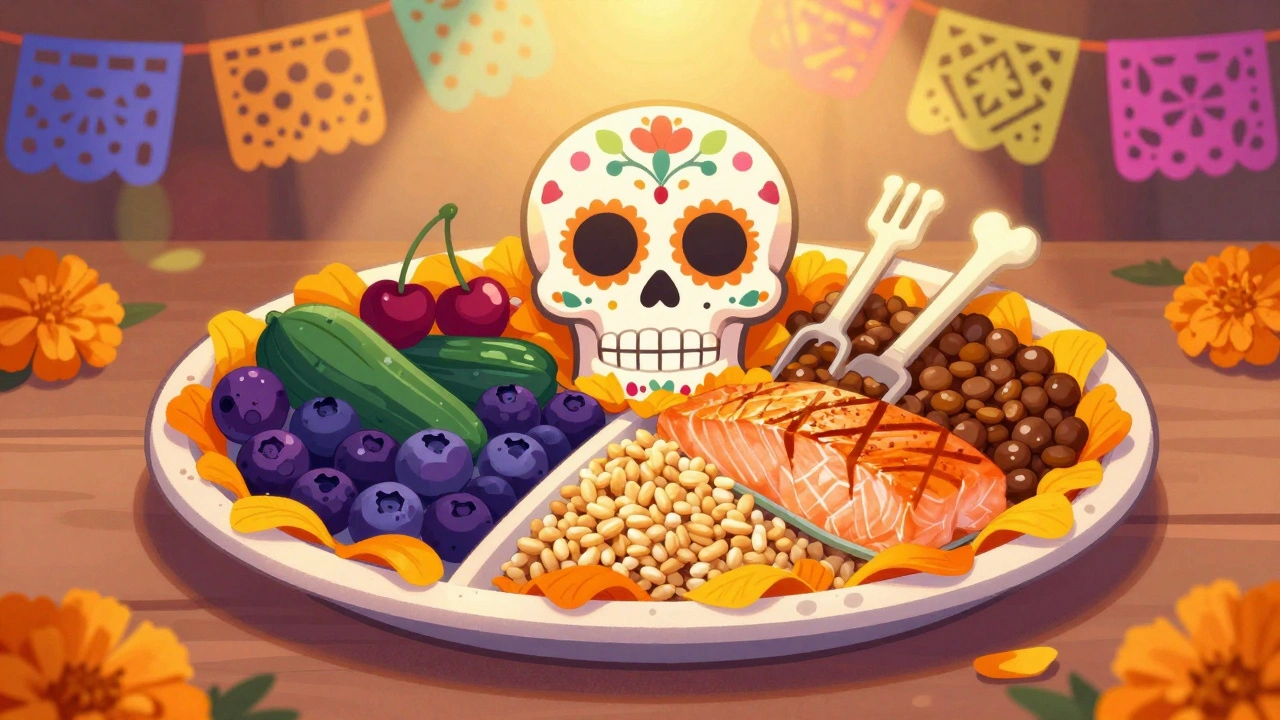
When your liver is struggling, food isn’t just fuel-it’s medicine. For millions with fatty liver disease, early cirrhosis, or metabolic dysfunction, what you eat can reverse damage, lower liver enzymes, and stop progression. No pills. No surgery. Just real food, eaten the right way. And the science is clear: a liver-healthy diet works better than most drugs for early-stage liver disease.
What a Liver-Healthy Diet Actually Means
There’s no magic list of ‘liver superfoods.’ You won’t find a single diet endorsed by every doctor. But there is one pattern that keeps showing up in study after study: the Mediterranean diet. It’s not a trend. It’s not a 30-day cleanse. It’s a lifelong way of eating backed by over a decade of clinical trials. In 2013, researchers at UCLA published a landmark study in Hepatology showing that people with non-alcoholic fatty liver disease (NAFLD) who followed a Mediterranean diet for a year cut their liver fat by nearly 40%. Their ALT and AST levels-key markers of liver damage-dropped by 20-30%. And they didn’t even need to lose weight to see results. Today, the American Association for the Study of Liver Diseases (AASLD), the Mayo Clinic, and Harvard T.H. Chan School of Public Health all point to this same pattern. It’s not about cutting calories. It’s about changing what you eat.The Core Rules of a Liver-Healthy Plate
Think of your plate like a traffic light: green for go, yellow for slow, red for stop.- Half your plate: Vegetables and fruits. Aim for at least 3 servings of veggies and 2 of fruit daily. Color matters. Dark leafy greens, broccoli, Brussels sprouts, blueberries, and cherries are packed with antioxidants that reduce liver inflammation. A 2023 study showed that eating purple fruits like blueberries lowered liver inflammation by 25% in just 8 weeks.
- One-quarter: Lean protein. Stick to 3 ounces per meal-that’s about the size of a deck of cards. Choose fish (especially salmon, mackerel, sardines), skinless chicken, tofu, beans, or lentils. Avoid processed meats like bacon, sausage, and deli meats. They’re loaded with sodium and preservatives that stress your liver.
- One-quarter: Whole grains. Swap white bread, pasta, and rice for brown rice, quinoa, oats, barley, or whole-wheat products. These are high in fiber, which helps your liver process sugar and fat more efficiently.
What to Cut Out-For Good
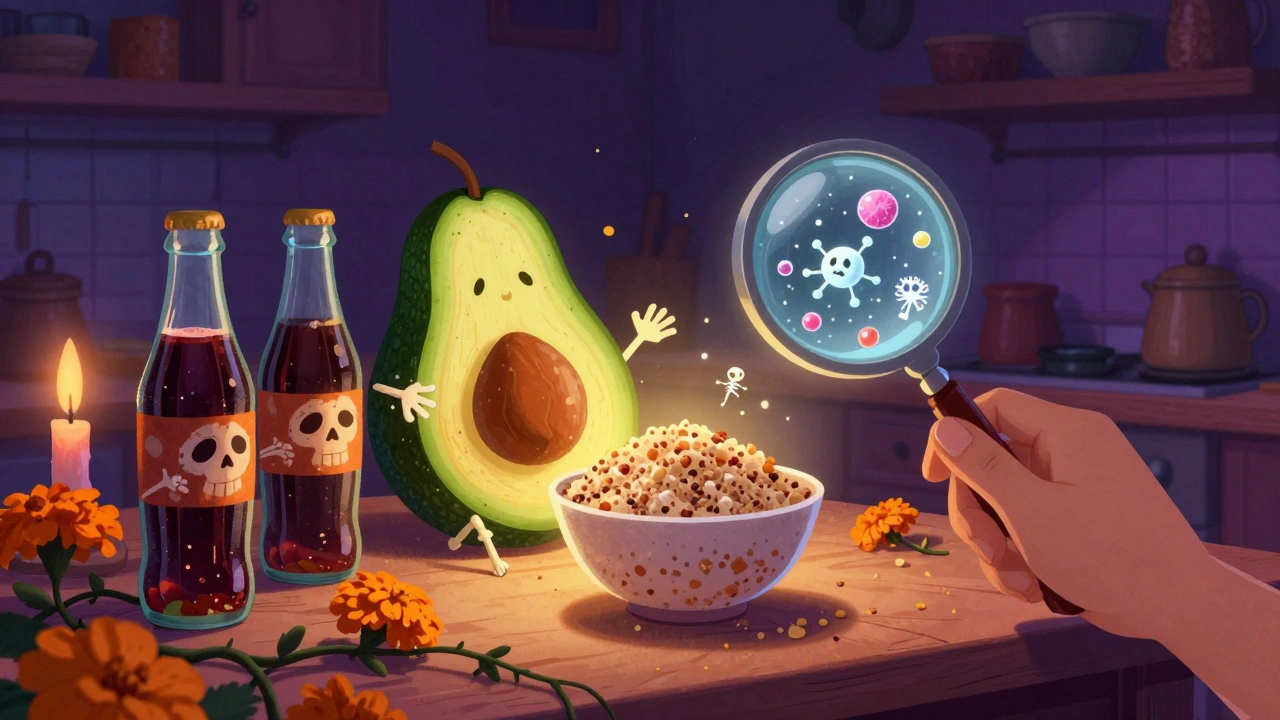
Some foods don’t just do nothing for your liver-they actively harm it.- Sugary drinks. Soda, sweet tea, energy drinks, even fruit juice. One 12-ounce can adds 150-200 empty calories and floods your liver with fructose. That’s like pouring oil into a clogged drain. A 2023 FDA update to nutrition labels now forces manufacturers to list added sugars-use it. If sugar is in the top 3 ingredients, don’t buy it.
- Refined carbs. White bread, pastries, crackers, and cereal spike blood sugar and turn into fat in your liver. Even ‘whole grain’ products can be misleading. Check the ingredient list: if it says ‘enriched flour,’ it’s not truly whole grain.
- Trans fats. Found in fried foods, margarine, and packaged snacks. They’re labeled as ‘partially hydrogenated oils.’ Avoid them completely. They raise bad cholesterol and trigger liver inflammation.
- Excess salt. Keep sodium under 2,000 mg per day. Too much leads to fluid retention, especially dangerous if you have advanced liver disease. Skip the salt shaker. Use lemon juice, garlic, herbs, or vinegar instead.
Why the Mediterranean Diet Wins Over Other Diets
You’ve probably heard of keto, low-fat, or intermittent fasting for liver health. Here’s what the data says:| Diet | Liver Fat Reduction (12 months) | Fibrosis Improvement | Heart Health Benefit | Sustainability |
|---|---|---|---|---|
| Mediterranean | 30-40% | Significant | High (30% lower heart disease risk) | High |
| Low-Fat | 15-20% | Marginal | Moderate | Moderate |
| Ketogenic | 20-25% | Minimal | Low to Moderate | Low |
| Detox/Juice Cleanse | None | None | None | Very Low |
Real People, Real Results
John M., 58, from Ohio, was diagnosed with stage 2 liver fibrosis. His FibroScan score was 12.5 kPa-above the danger line. He started eating Mediterranean-style: fish three times a week, vegetables with every meal, no sugar drinks, and walking 30 minutes daily. After 9 months, his FibroScan dropped to 6.2 kPa. His ALT (a liver enzyme) fell from 112 to 45. He didn’t lose 50 pounds. He just changed what he ate. On Reddit’s r/FattyLiver community, 68% of 1,247 users reported better energy within 3 months. But 42% said the hardest part was avoiding processed food. It’s expensive. A 2023 USDA study found that eating whole, unprocessed foods costs about $1.50 more per meal. That’s not nothing. Sarah K., from Texas, tried cutting all sugar and got migraines. Her hepatologist adjusted her plan: she could have 15 grams of natural sugar daily-just from berries. That’s the key. This isn’t about perfection. It’s about progress.How to Start Without Getting Overwhelmed
You don’t need to overhaul your life overnight.- Start with one meal. Make lunch Mediterranean. Swap your sandwich for grilled chicken, spinach, tomatoes, olives, and quinoa.
- Swap one drink. Replace soda or juice with sparkling water and lemon. That one change cuts 150-200 calories daily.
- Use frozen veggies. They’re just as nutritious, cheaper, and last longer. Keep a bag in the freezer.
- Read labels. Look for ‘added sugars’ and ‘partially hydrogenated oils.’ If you see them, put it back.
- Batch cook on Sundays. Cook a big pot of lentil stew, roast a tray of veggies, boil eggs. You’ll have meals ready for the week.
Special Considerations: Advanced Liver Disease
If you have cirrhosis, your needs change. Protein used to be restricted-but that’s outdated. The European Association for the Study of the Liver now says: don’t cut protein. Muscle wasting is deadly. You need 1.2-1.5 grams of protein per kilogram of body weight daily. That’s about 80-100 grams for most people. Choose plant-based proteins (beans, tofu) and fish. Avoid alcohol completely. No exceptions. For those with hepatic encephalopathy (brain fog due to liver failure), a doctor might temporarily limit protein. But this should be monitored closely. Don’t self-restrict. Talk to your hepatologist.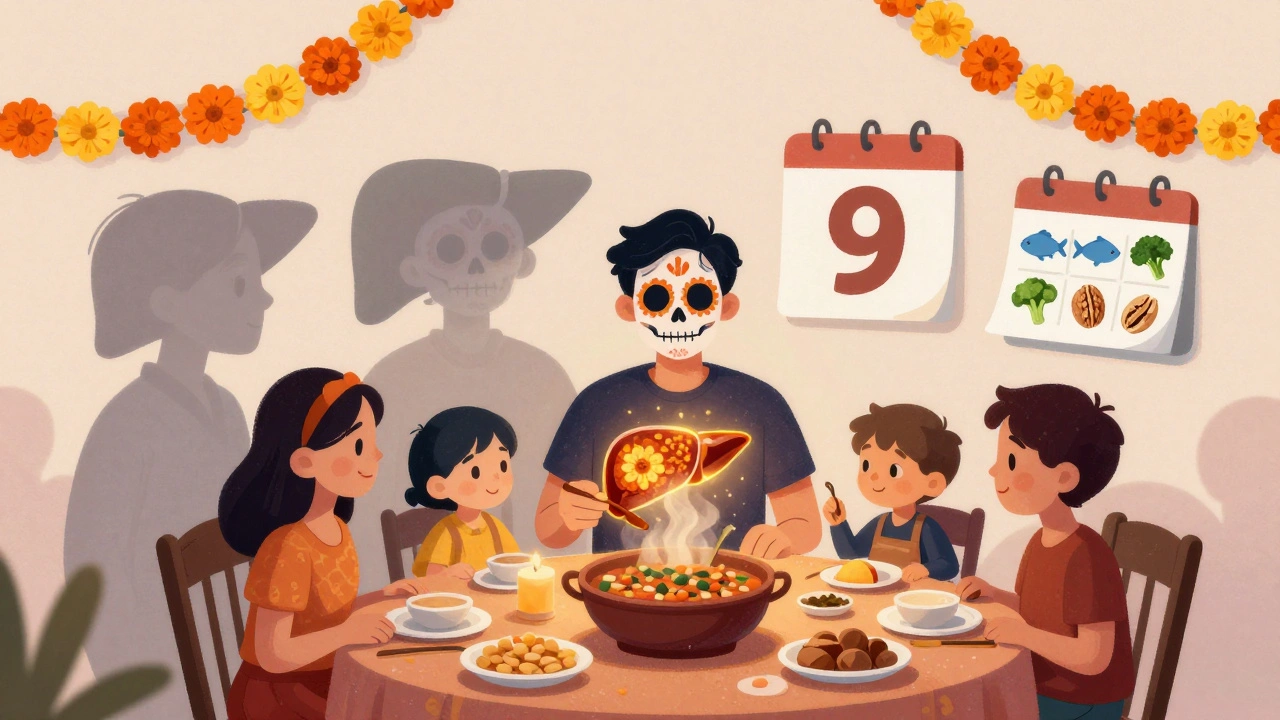
What’s New in 2025
The science keeps evolving. In March 2024, the American Liver Foundation updated its guidelines to highlight walnuts. Just 30 grams (about a handful) a day lowered LDL cholesterol by 15% in NAFLD patients. Cruciferous veggies like broccoli and kale got a boost too-they contain indole-3-carbinol, shown to reduce liver fat by 18% in six months. A major clinical trial launched in September 2024 is testing time-restricted eating: eating all meals within a 10-hour window (e.g., 8 a.m. to 6 p.m.). Early data shows it boosts liver fat loss by 27% compared to diet alone. Meanwhile, Mayo Clinic is running a $2.1 million study to see if your gut bacteria can predict which foods work best for your liver. Personalized nutrition is coming-and fast.Support Is Out There
You don’t have to do this alone.- The VA Health System offers a free 12-week telehealth nutrition program. 87% of participants rated it ‘excellent.’
- The American Liver Foundation’s helpline handled over 12,000 calls in 2023-mostly about meal planning for shift workers or budget meals.
- Meal kits like Factor_75 now offer a ‘Liver Health’ menu line. Sales grew 200% in 2023.
- UnitedHealthcare added liver nutrition counseling to 12 state Medicaid plans in 2024, covering 2.3 million people.
You Don’t Need to Be Perfect
The goal isn’t to eat perfectly every day. It’s to make better choices most days. One study found that even people who followed the Mediterranean diet 80% of the time still saw 20% improvement in liver enzymes. If you miss a meal? Eat clean at the next one. If you have a slice of cake at a birthday party? Don’t guilt-trip yourself. Just get back on track. This isn’t a diet. It’s a lifestyle. And it’s the most powerful tool you have to heal your liver.By 2030, doctors will track your dietary adherence like they track your blood tests. Because food isn’t just part of the treatment-it’s the treatment.


10 Comments
parth pandya December 3, 2025
man i tried this diet after my doc said i had fatty liver and holy crap it worked. swapped soda for sparkling water with lemon and my alt dropped like 50 points in 2 months. no magic, just no more sugar bombs. thanks for the post!
Myson Jones December 4, 2025
As someone who’s been managing NAFLD for nearly a decade, I can confidently say that the Mediterranean approach isn’t just effective-it’s sustainable. I didn’t lose weight, but my liver enzymes normalized because I stopped treating food like a punishment and started treating it like a ritual of care. The key is consistency, not perfection. Even eating this way 80% of the time yields measurable benefits. I’ve shared this with my book club, and three of us have reversed early fibrosis without medication. It’s not hype-it’s science.
Albert Essel December 6, 2025
The data here is solid, but I want to emphasize something the article barely touches on: gut microbiome diversity. Emerging research from Stanford and the University of Copenhagen shows that people who follow a Mediterranean diet for even 6 weeks develop significantly higher microbial richness, which directly correlates with reduced hepatic inflammation. It’s not just the food-it’s how the food feeds your gut, and your gut feeds your liver. This is why fiber from whole grains and vegetables matters more than we used to think.
Also, the USDA’s $1.50-per-meal premium for whole foods? That’s true, but it’s misleading. Frozen produce, bulk legumes, and seasonal fruits bring the cost down dramatically. I feed my whole family this way for under $80/week. It’s not about affluence-it’s about priorities.
Charles Moore December 8, 2025
Hey everyone-just wanted to say this is one of the most balanced, realistic takes on liver health I’ve seen in years. Too many diets scream ‘DO THIS OR DIE,’ but this? It says ‘try this, it helps.’ That’s huge. I’ve been telling my clients at the community center to start with one swap-like ditching juice for water with lime. Small wins build momentum. One woman went from drinking 3 sodas a day to one, then none. Now she’s making veggie stir-fries with her grandkids. That’s the real win.
Also, the part about frozen veggies? YES. People think fresh is better, but frozen is flash-frozen at peak ripeness. Same nutrients, less waste, cheaper. I keep a bag of spinach and broccoli in my freezer at all times. Game-changer.
Gavin Boyne December 9, 2025
Oh wow, another ‘eat like your ancestors did’ article. Next they’ll tell us to walk barefoot and chant to the liver gods. Look, I get it-Mediterranean diet sounds fancy, but let’s be real: people are tired of being told what to eat by people who’ve never had to choose between ramen and rent. The real issue isn’t the diet-it’s the system that makes healthy food a luxury and processed junk the default. And yes, walnuts help. But if you’re working two jobs and your kid’s got soccer practice, you’re not roasting Brussels sprouts at 10 p.m. This article is nice. It’s just… out of touch.
Rashi Taliyan December 9, 2025
OMG I CRIED READING THIS. My mom had cirrhosis and they told her to cut protein… so she wasted away. Then I found out she needed MORE protein-plant-based, fish, tofu-and now she’s walking again. I’ve been feeding her lentil curry with turmeric and brown rice every night. She says it tastes like home. I’m so glad someone finally said: DON’T CUT PROTEIN. I’ve been screaming this on every forum. THANK YOU.
Kara Bysterbusch December 10, 2025
While the Mediterranean diet is indeed the most robustly supported intervention for NAFLD, I would like to propose a more nuanced framework: the ‘Adaptive Hepatic Nutrition Model.’ This model posits that dietary efficacy is not monolithic but rather contingent upon genetic polymorphisms in PNPLA3, TM6SF2, and MBOAT7 genes-each of which modulates fat metabolism differently. For instance, carriers of the PNPLA3 rs738409-G allele demonstrate significantly greater reductions in hepatic steatosis with increased omega-3 intake, whereas non-carriers benefit more from polyphenol-rich fruits. Thus, while the general guidelines here are sound, the future of liver health lies not in one-size-fits-all dietary dogma, but in pharmacogenomic tailoring. The Mayo Clinic’s gut microbiome study, referenced herein, may be the most promising step toward that horizon.
Rashmin Patel December 12, 2025
YESSSSSSS I’M SO GLAD THIS WAS POSTED 😭 I’VE BEEN DOING THIS FOR 10 MONTHS AND MY LIVER ENZYMES ARE NORMAL NOW!! I started with just swapping soda for sparkling water with lime and now I meal prep like a boss 🙌 I roast 4 trays of veggies every Sunday, cook a big pot of black beans, boil eggs, and freeze portions. I even got my whole family on board-my husband used to eat pizza every Friday, now he makes salmon and quinoa bowls with mango salsa. We still have cake on birthdays, but now it’s homemade with maple syrup and almond flour 😘 And guess what? I lost 12 pounds without trying! But honestly? The best part is having energy to play with my daughter after work instead of collapsing on the couch. This isn’t a diet-it’s a whole new life. I’m not perfect, but I’m better than I was. And that’s enough 💪❤️
sagar bhute December 13, 2025
Everyone’s acting like this is revolutionary. Newsflash: people have known for decades that sugar and processed carbs wreck your liver. This isn’t science-it’s repackaged common sense. And don’t get me started on the ‘Mediterranean diet’ hype. That’s just a fancy way of saying ‘eat less junk.’ Meanwhile, people are still dying from cirrhosis because they’re told to ‘eat better’ while living in food deserts with no access to fresh produce. This article is a luxury pamphlet for people who already have the privilege to care. The real problem? Corporate greed, not bad choices.
Cindy Lopez December 15, 2025
Interesting. I’ll believe it when I see a double-blind RCT with liver biopsies. Until then, it’s just observational data with self-reported adherence. Also, ‘eat more vegetables’ is not a diet. It’s a suggestion.