
Immunosuppressant Probiotic Risk Calculator
Your Risk Assessment
Risk Assessment Results
Important Recommendation
Consult your infectious disease specialist for personalized guidance before taking any probiotics.
What You Should Do
Key Takeaways
Never assume probiotics are safe. If you're on immunosuppressants, your immune system is already compromised. What's harmless to others could be life-threatening to you.
Always ask your doctor:
- Am I in a high-risk category for probiotic-related infection?
- If I take a probiotic, which specific strain do you recommend, and what's the strain number?
- Is there a safer alternative, like a prebiotic or postbiotic?
- Should I stop probiotics during chemotherapy or if I get a fever?
- Can you refer me to an infectious disease specialist for a second opinion?
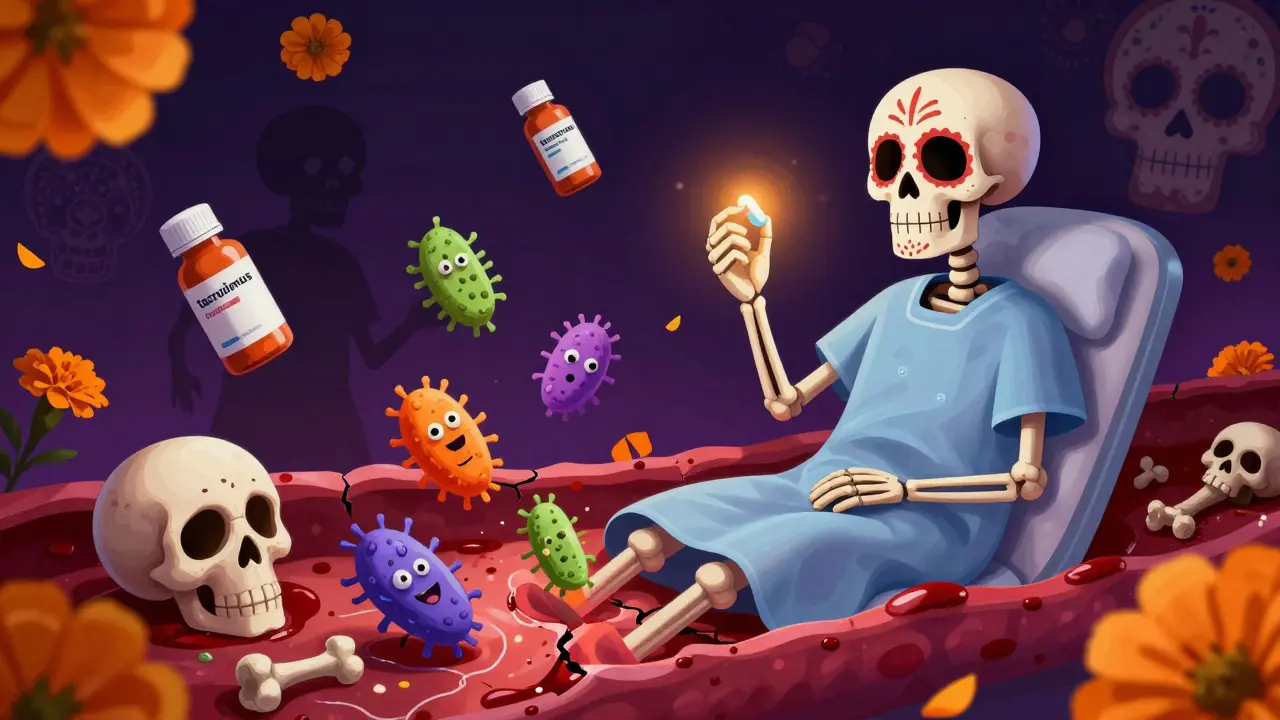
When you're on immunosuppressants-whether after a transplant, for lupus, rheumatoid arthritis, or cancer treatment-your body is already fighting an uphill battle. Your immune system is turned down on purpose to stop it from attacking your own tissues or a new organ. But that same lowered defense makes you vulnerable to infections you’d normally shrug off. Now add probiotics into the mix: those tiny live bacteria or yeasts sold in pills, yogurts, and powders, often marketed as "gut health boosters." For most people, they’re harmless. For you? They could be dangerous.
Why Probiotics Can Be Risky When Your Immune System Is Down
Probiotics aren’t medicine. They’re supplements. That means they don’t go through the same safety checks as drugs. The FDA doesn’t require proof they’re safe for people with weakened immune systems before they hit store shelves. And yet, millions of people on immunosuppressants take them anyway, thinking they’re helping their digestion or boosting immunity. The real danger isn’t the probiotics themselves. It’s what happens when they escape your gut. Healthy people have strong gut barriers and active immune cells that keep microbes like Lactobacillus or Saccharomyces boulardii contained. But when your immune system is suppressed by drugs like tacrolimus, cyclosporine, or rituximab, those microbes can slip through the intestinal lining. Once in your bloodstream, they can cause serious infections: sepsis, bloodstream infections (bacteremia or fungemia), heart infections, or even pancreatitis. A 2021 review in Frontiers in Cellular and Infection Microbiology found that while these infections are rare-occurring in just 0.01% to 0.1% of high-risk patients-they’re often deadly. In one case series, 36% of probiotic-related infections in immunocompromised people ended in death.Who’s at the Highest Risk?
Not everyone on immunosuppressants is equally at risk. Your level of danger depends on what you’re taking, how long you’ve been on it, and your overall health.- Neutropenia (ANC <500 cells/µL): If your neutrophil count is this low-common during chemotherapy-you’re in the highest-risk group. At 87% of U.S. cancer centers, probiotics are outright banned during this time.
- Recent organ transplant (first 3 months): Your body is flooded with strong drugs to prevent rejection. A 2020 study in Blood Advances found bone marrow transplant patients using probiotics had over four times the risk of bloodstream infection.
- Central venous catheters: If you have a port or PICC line for meds or nutrition, you’re already at higher risk for infections. Saccharomyces boulardii, a yeast strain found in 32% of probiotics, has been linked to 22% fatality rates when it causes infection in these patients.
- Severe autoimmune disease on multiple drugs: Someone on methotrexate alone may be okay. Someone on methotrexate + prednisone + azathioprine? That’s a red flag.
Who Might Be Safe to Use Them?
It’s not all doom and gloom. Some people on immunosuppressants can use probiotics safely-if they’re careful. Liver transplant patients, for example, have the strongest evidence for benefit. A 2022 meta-analysis in Liver Transplantation showed a 34% drop in bacterial infections among those taking specific probiotic strains-with no increase in serious side effects. Why? Because their gut barrier and immune environment may respond differently than other transplant patients. HIV patients with CD4 counts above 200 also show minimal risk. But if your CD4 drops below 100, your risk of fungal infection from probiotics jumps nearly fourfold. The key? Strain matters. Not all Lactobacillus is the same. Lactobacillus rhamnosus GG (ATCC 53103) is one of the most studied strains-and also one of the most common causes of infection in immunosuppressed people. Other strains, like Lactobacillus plantarum 299v, have better safety profiles in some studies. But most probiotic labels don’t list the exact strain or even the strain number. That’s a problem.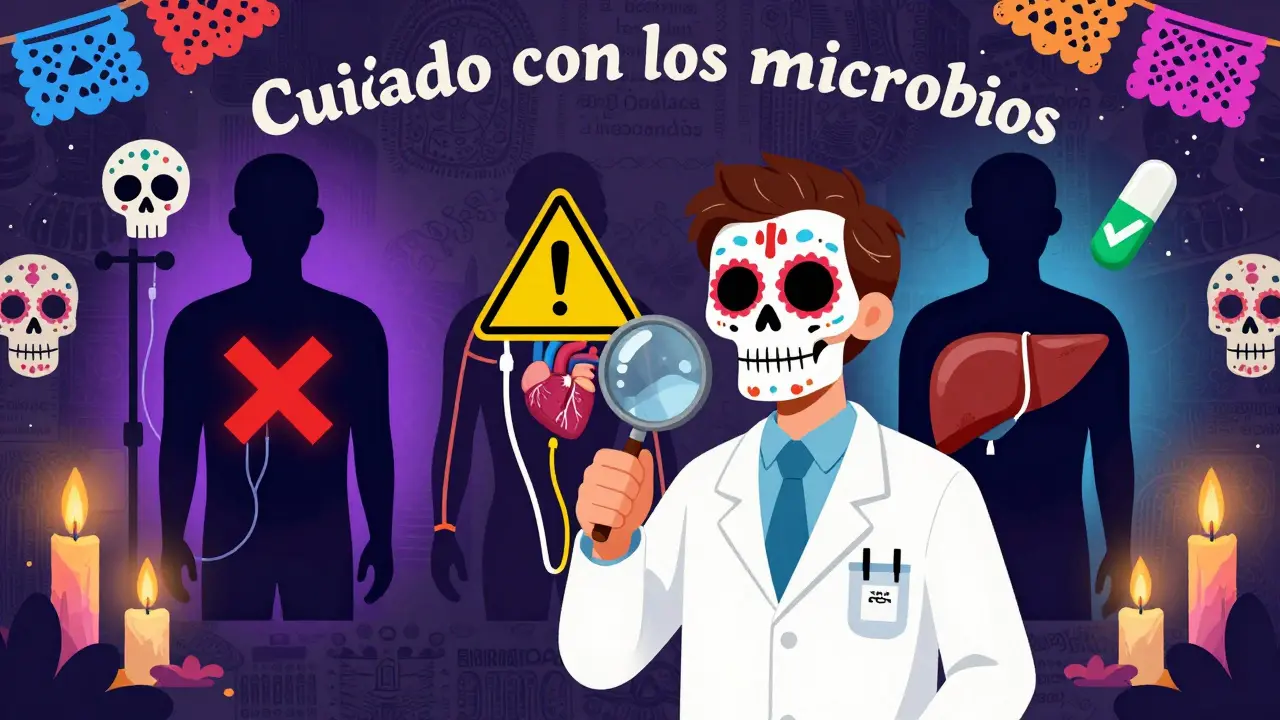
What the Experts Say
There’s no universal rule. Different organizations give different advice. The European Society for Clinical Nutrition and Metabolism (ESPEN) says: Avoid probiotics entirely in critically ill or severely immunocompromised patients. Strong recommendation. Moderate evidence. The American Gastroenterological Association (AGA) says: Consider specific probiotics for cirrhosis patients with hepatic encephalopathy. Weak recommendation. Low evidence. Only for this one condition. The Infectious Diseases Society of America (IDSA) breaks it down into four risk tiers:- Category 1 (Highest Risk): Neutropenia, recent stem cell transplant, central lines. Absolute contraindication.
- Category 2 (Moderate Risk): Solid organ transplant within 3 months, severe autoimmune disease on multiple drugs. Only use with infectious disease specialist approval.
- Category 3 (Lower Risk): Stable autoimmune disease on one drug, CD4 >200. Selective strains only, under doctor supervision.
- Category 4 (Low Risk): No immunosuppression. Standard use okay.
What You Should Avoid
Some products are riskier than others.- Saccharomyces boulardii: This yeast is the most common culprit in fatal infections. It’s in many over-the-counter probiotics. Avoid it entirely if you’re immunosuppressed.
- Multi-strain products: A 2022 study found single-strain probiotics had 63% less chance of translocation than multi-strain blends. More strains don’t mean better-they mean more unknowns.
- Unlabeled or poorly regulated brands: Many probiotics don’t list the strain, dose, or even guarantee live bacteria at expiration. If you can’t verify what’s inside, don’t take it.
What to Do Instead
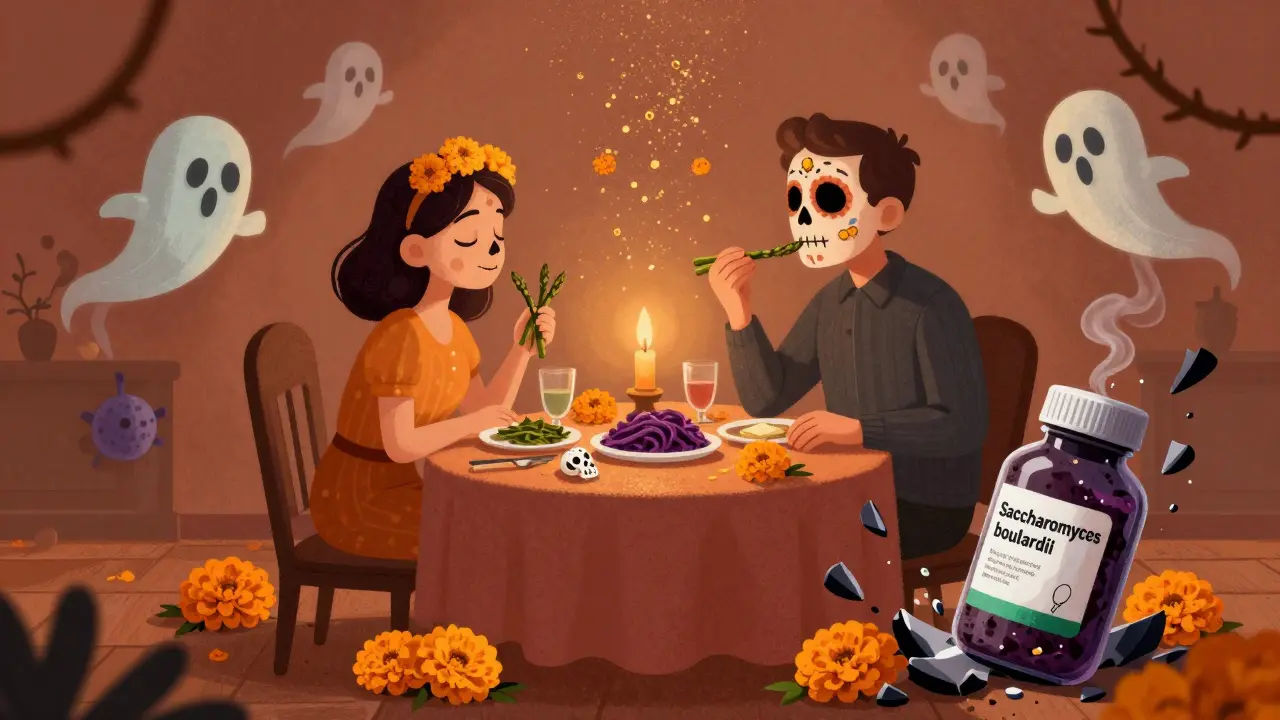
If you’re on immunosuppressants and struggling with gut issues-diarrhea, bloating, constipation-you don’t have to suffer. There are safer alternatives.- Prebiotics: These are fibers that feed your good gut bacteria. Think chicory root, garlic, onions, asparagus. They don’t introduce live microbes, so they’re safe.
- Postbiotics: These are inactivated bacterial cells or their metabolic byproducts. They offer immune-modulating benefits without infection risk. A 2023 clinical trial showed a 40% drop in C. difficile infections in immunocompromised patients using postbiotics-with zero adverse events.
- Dietary changes: Fermented foods like yogurt (with live cultures, but not probiotic supplements), kefir, sauerkraut, and kimchi can be safe in moderation if you’re not in a high-risk category. But check with your doctor first.
What to Ask Your Doctor
Don’t guess. Don’t rely on Reddit or Instagram influencers. Have this conversation:- “Am I in a high-risk category for probiotic-related infection?”
- “If I take a probiotic, which specific strain do you recommend, and what’s the strain number?”
- “Is there a safer alternative, like a prebiotic or postbiotic?”
- “Should I stop probiotics during chemotherapy or if I get a fever?”
- “Can you refer me to an infectious disease specialist for a second opinion?”

13 Comments
Kitt Eliz December 19, 2025
PROBIOTICS ON IMMUNOSUPPRESSANTS ARE A TERRIBLE IDEA. I work in oncology and saw a patient die from Lactobacillus sepsis after taking that 'gut health' gunk. Stop listening to influencers. The FDA alert in 2023? It’s a start. But hospitals still don’t educate patients enough. If you’re on tacrolimus or chemo-DON’T. Period. 🚫
Aboobakar Muhammedali December 19, 2025
i read this and just cried. my cousin is on meds after kidney transplant and she was taking probiotic yogurt every day thinking it was healthy. no one told her it could kill her. this post saved her life. thank you.
Laura Hamill December 21, 2025
THIS IS ALL A BIG PHARMA LIE. THEY WANT YOU TO THINK PROBIOTICS ARE DANGEROUS SO YOU’LL BUY THEIR EXPENSIVE POSTBIOTIC PRESCRIPTIONS. SACCHAROMYCES BOULARDII IS NATURAL! THE GOVT IS SCARING YOU TO CONTROL YOU. MY TIA TOOK IT FOR YEARS AND SHE’S FINE. YOU’RE ALL SHEEP.
William Storrs December 22, 2025
Hey, you’re not alone in feeling confused about this. I’ve been on azathioprine for 8 years and I was terrified to ask my doctor about probiotics. But when I finally did, we found a safe strain-L. plantarum 299v-and now my digestion is way better. Don’t be afraid to ask for specifics. Your doctor wants you to be safe, not silent.
Guillaume VanderEst December 23, 2025
My dad’s a liver transplant patient. He’s been on L. rhamnosus GG for two years now. No issues. But he only uses the one from the hospital’s pharmacy-label says ATCC 53103. So yeah, strain matters. Not all probiotics are created equal. And no, he doesn’t take that yeast crap. Too risky.
Nina Stacey December 25, 2025
i just found out my friend on methotrexate took a probiotic and got a fever last week and now shes in the hospital and i feel so bad because i told her probiotics were good for you i didnt know they could be dangerous like this i feel so stupid and scared for her
Kevin Motta Top December 26, 2025
Postbiotics are the future. No live bugs. No risk. Just clean metabolites that modulate immunity. Companies like Seres Therapeutics are already in Phase 3 trials. If your doctor doesn’t know about them, ask them to look it up. This isn’t 2010 anymore.
Nancy Kou December 26, 2025
Prebiotics are the real MVP. Garlic, onions, asparagus, bananas-these are free, safe, and actually help your gut bacteria thrive without introducing foreign microbes. Why risk a deadly infection when you can just eat better? I’ve been on prednisone for 5 years. I eat fiber. I feel great.
Hussien SLeiman December 28, 2025
Everyone’s panicking over probiotics but no one’s talking about how immunosuppressants themselves are the real problem. Why are we even giving people drugs that turn off their immune system? It’s like giving a child a loaded gun and then blaming them for shooting themselves. The whole medical system is broken. We’re treating symptoms, not root causes. Probiotics? They’re just the scapegoat.
Janelle Moore December 30, 2025
THEY’RE LYING ABOUT SACCHAROMYCES BOULARDII! I read on a forum that the FDA banned it because it’s too cheap and big pharma doesn’t profit from it. My uncle used it for 12 years after his transplant and he’s 84 and still hiking. They’re hiding the truth. The PROTECT registry? Probably funded by drug companies. I’m not taking anything until I see the raw data.
Henry Marcus December 31, 2025
Probiotics? More like probi-SCAM. These companies don’t even know what’s in their own bottles. I bought one labeled ‘10 billion CFU’-lab test showed 3 million, and half were mold. And now they want us to trust them with our lives? Give me a break. Postbiotics? Yes. Live cultures? No. I’d rather eat kimchi than risk a fungemia.
Chris porto January 2, 2026
It’s funny how we treat microbes like enemies. We evolved with them. The real issue isn’t probiotics-it’s how we’ve severed our connection to natural microbial ecosystems. Maybe the answer isn’t banning probiotics, but rebuilding gut diversity through diet, sleep, and stress reduction. The drugs are necessary-but maybe we need to think beyond pills.
William Liu January 2, 2026
My brother got sepsis from a probiotic after his bone marrow transplant. He almost died. Now he only eats fermented foods-no pills. I’m so glad this info is out there. Please, if you’re immunocompromised-listen to the science, not the ads.