
When you pick up a prescription, you might see a label that says generic drugs, lower-cost versions of brand-name medications that contain the same active ingredient, dosage, and intended use. Also known as generic medications, they're meant to work just like the original—but not always in practice. The FDA says they’re bioequivalent, meaning they should deliver the same amount of medicine into your bloodstream at the same rate. But for some drugs, that’s where things get messy.
Take phenytoin, an anti-seizure drug with a very narrow window between effective and toxic doses. Even tiny differences in how a generic version dissolves in your body can cause seizures or dangerous toxicity. That’s why doctors often stick to one brand or generic maker for patients on phenytoin—and why therapeutic drug monitoring is non-negotiable. The same goes for warfarin, a blood thinner where small changes in absorption can lead to clots or bleeding. These aren’t just theoretical risks. Real people have been hospitalized after switching generics.
Not all generic drugs are risky, though. For most medications—like high blood pressure pills, antibiotics, or antidepressants—switching between brands and generics is perfectly safe. But you need to know which ones to watch. bioequivalence, the scientific process used to prove a generic matches the original isn’t foolproof. Some manufacturers use different fillers, coatings, or manufacturing methods that change how the drug behaves in your body. And while the FDA allows waivers for certain drugs based on lab tests instead of human studies, those waivers don’t always catch subtle differences that matter to patients.
What you’ll find here isn’t just a list of generic drugs. It’s a collection of real stories and science-backed warnings about what happens when you swap pills. From how long-term care insurance handles drug coverage to why some people lose their hair after switching antidepressants, these posts show that generics aren’t just about price—they’re about safety, timing, and knowing when to ask questions. You’ll learn when to demand brand names, how to verify your prescription at the pharmacy, and which drugs absolutely require close monitoring. This isn’t about fear. It’s about control. You have the right to know what’s in your medicine—and when a cheaper option might cost you more than you think.
Visual tools help patients understand generic medications. Learn how FDA infographics explain safety and cost savings to improve health outcomes.
Read more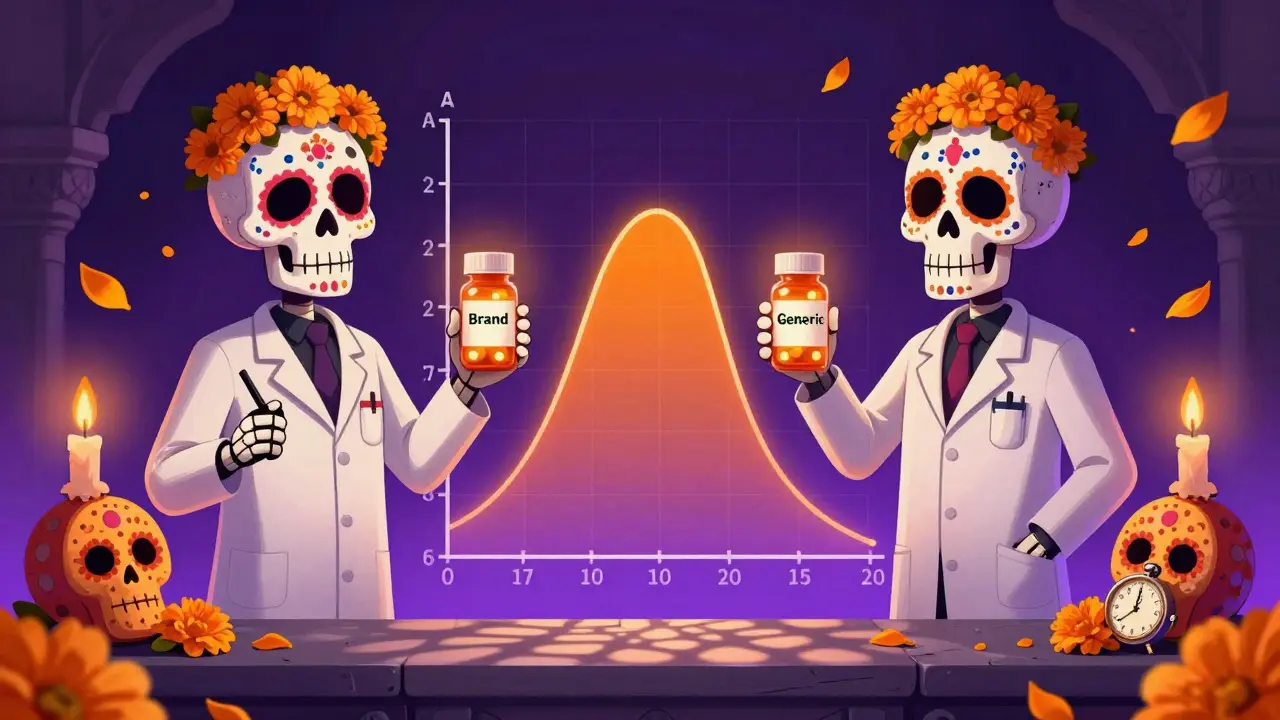
Partial AUC (pAUC) is a precise pharmacokinetic tool used by the FDA and EMA to ensure generic drugs match brand-name versions in early absorption-critical for extended-release, abuse-deterrent, and CNS medications where timing affects safety and efficacy.
Read more
Generics make up 90% of prescriptions but only 25% of drug spending - yet they drive 96% of pharmacy profits. Learn how PBMs, consolidation, and spread pricing are squeezing independent pharmacies - and what they're doing to survive.
Read more
Hospital formularies make strategic decisions on generic drugs based on clinical safety, cost, and supply reliability-not just price. Learn how P&T committees choose generics to balance savings with patient outcomes.
Read more
Generic drugs look different from brand-name medicines due to U.S. trademark laws, not because they're less effective. Learn why the color, shape, and size change - and what it really means for your health.
Read more
Generic prescribing saves billions and improves patient adherence - but only when done right. Learn when to use generics, when to stick with brands, and how to explain it to patients.
Read more